

How to Unwind After Work: A Simple 3-Step Reset | MONQ
By Eric Fishman, MD | 11-minute read
Quick answer: If you are wondering how to unwind after work, use three deliberate steps: Close the workday, Transition with a repeatable boundary cue, and Restore with a low-stakes activity. Research on work recovery supports the value of psychological detachment, although this three-step sequence is a practical framework, not a clinically validated protocol.
Have you ever closed your laptop and still felt mentally at work hours later? Perhaps you were replaying a conversation, rewriting an email in your head, or looking at a screen without really enjoying what was on it. That experience does not mean you are bad at relaxing. It means that ending a task and feeling finished are not always the same event.
I trained as a physician before founding MONQ, and the useful question is often narrower than "How do I relax?" It is: "How do I move from the state I am in at the end of work to the kind of evening I want?" This guide offers a practical after-work wind-down routine for creating that transition.
Why It Can Be Hard to Switch Off After Work
Recovery from work has both mental and physical dimensions, but it is not a simple on-and-off switch. Attention can stay attached to unfinished tasks, and work-related thoughts can continue after the official day ends. Researchers call the experience of mentally stepping away from work psychological detachment. A randomized pilot study of a work-recovery program found that training can improve recovery-related skills, while also showing that outcomes vary and that no single ritual is universal. Read the recovery-training study.
After-hours work communication can make that separation harder. Research involving employees who used work email during nonwork time found associations with poorer detachment and other well-being outcomes. This does not mean that every evening screen is harmful. It does suggest that work-related messages can keep the work role active when the goal is to recover. Review the work-email study.
The challenge can be especially noticeable when working from home because the usual environmental boundaries, such as leaving a building or commuting, are absent. The practical response is to create a clear endpoint and repeat it often enough that it becomes familiar. At the beginning of the day, a productivity routine for working from home can establish the opposite boundary and make the first task easier to begin.
If work pressure is the larger issue, MONQ's guide to coping with stress at work offers additional strategies for the workday itself.
A 3-Step Transition From Work to Home
The Close, Transition, Restore framework is intentionally simple. It is a way to organize useful recovery behaviors, not a claim that everyone must unwind in the same order or on the same timetable.
1. Close: End the Workday Deliberately
An abrupt stop can leave you wondering what is unfinished. A brief closing practice gives the next work period a starting point:
- Write down tomorrow's first task.
- Capture any open loop that you do not want to keep rehearsing.
- Close work applications and silence work notifications when your responsibilities allow.
- Use a simple closing phrase, such as "Work is complete for today."
The goal is not to eliminate every work-related thought. It is to put unfinished work somewhere reliable so you do not have to hold it continuously in your attention.
Make the note specific enough that tomorrow's first action is obvious. For example: "At 9:30 tomorrow, open the proposal and revise the pricing section before sending it." That gives you more to return to than "finish proposal."
There is research behind this approach. In a study following 103 employees, unfinished work goals were harder to mentally leave behind than completed ones. A planning intervention improved detachment among employees who typically found switching off difficult; the plans specified where, when, and how unfinished goals would be addressed. Read the study on planning and leaving work at work.
2. Transition: Mark the Boundary
A transition cue is a short action that separates one part of the day from the next. Commuters already have a change of place, although work calls can erase some of that boundary. Remote workers may need to create an equivalent cue.
- Walk outside for five minutes.
- Change clothes or shoes.
- Close the office door or put the laptop away.
- Play one song reserved for the end of work.
- Use a consistent drink, light, or aroma as an optional sensory marker.
Repeated cues can become associated with a context through learning. They do not bypass thought or automatically change physiology. Their value is that they make the boundary easier to recognize and repeat.
![[APPROVED] Person pausing outdoors during an evening transition ritual after work](https://cdn.shopify.com/s/files/1/0596/5266/9638/files/girl-on-a-wooden-deck-relaxing.jpg?v=1740505875&width=1000)
A brief change of place can mark the transition from work to personal time.
3. Restore: Choose What Fits Your Energy
Once you have marked the end of work, choose an activity that feels manageable. Recovery does not have to look impressive. A quiet meal, a walk, stretching, reading, gardening, music, or time with someone you enjoy may all fit. The useful activity is the one that reduces work-related demands and gives your attention a different home.
Slow breathing can also be used as a brief focus practice. If you want a starting point, read MONQ's overview of diaphragmatic breathing.
A Simple Evening Routine You Can Actually Keep
The simple routine
- Close: Write tomorrow's first task and turn off work notifications.
- Transition: Change your location, clothing, music, or sensory setting.
- Restore: Choose one low-stakes activity for at least five minutes.
- Protect: Decide when, if ever, you will look at work again that evening.
A simple evening routine should fit the life you already have. Start with one version for ordinary days and one compressed version for difficult days. Consistency matters more than complexity.
If your job requires evening availability, replace an absolute phone ban with a defined check-in time or an agreed channel for urgent messages. The boundary can be realistic without disappearing.
Research on everyday habit formation followed people repeating a chosen behavior in a consistent context. The behavior generally became more automatic with repetition, although the time involved varied substantially. Missing one opportunity did not materially disrupt the process in that study. Read the habit-formation research.
Things to Do After a Long Workday
Choose according to the energy you have left, not the routine you think you should perform.
When energy is low
- Take a warm shower with your phone in another room.
- Sit outside for five minutes with no task to complete.
- Listen to one familiar piece of music.
- Prepare a simple drink and give it your full attention.
When energy is moderate
- Cook something with a few uncomplicated steps.
- Take a slow walk without a work call.
- Stretch or practice a few minutes of controlled breathing.
- Read a physical book or write in a notebook.
When energy is higher
- Exercise at an intensity that suits you.
- Work on a physical hobby, such as an instrument, craft, or garden.
- Spend time with other people if connection feels replenishing.
- Try a new recipe, route, or small project.
Relaxing After Work Without Screens
Screen-free time is not a moral requirement. The more specific issue is whether a screen keeps you connected to work or encourages rapid, reactive attention. If you want a clearer contrast with the workday, try:
- Music or quiet instead of video.
- Cooking, drawing, tidying one small area, or another hands-on task.
- A walk that allows you to notice your surroundings.
- A physical book, magazine, puzzle, or notebook.
- A consistent evening aroma or beverage used as part of the transition.
If work is affecting the rest of your evening or night, the article why stress affects sleep provides useful context.
Special After-Work Routines
The 5-Minute After-Work Routine
A five-minute after-work routine can include all three phases:
- One minute to Close: Write tomorrow's first action.
- One minute to Transition: Step outside, change rooms, or begin a consistent song or aroma cue.
- Three minutes to Restore: Stretch, breathe slowly, sit quietly, or prepare a warm drink.
The short version is not guaranteed to change how you feel within five minutes. It simply creates a reliable beginning to your personal time.
A Work-From-Home Shutdown Routine
A work-from-home shutdown routine has to replace the boundary that a commute normally provides:
- End with the same small action each day, such as covering the monitor or putting the laptop in a bag.
- Change one physical cue, such as shoes, clothing, lighting, or seating.
- Leave the workspace for a few minutes before beginning the evening.
- Avoid checking work email during the first part of your transition when possible.
If you are searching for how to switch off after work, this manufactured boundary is often more useful than adding an elaborate evening activity.
How to Make Evenings Feel Longer
You cannot add clock time, but you can make an evening feel less blurred. Attention, novelty, and memory all influence how a period is experienced and remembered. Try creating a clear start, doing one thing at a time, and including one small event that differs from the night before. A walk, conversation, recipe, or chapter of a book can give the evening a more distinct shape.
Where Scent Can Fit Into an After-Work Wind-Down Routine
Smell has strong connections with memory, emotion, and associative learning. Reviews of odor-evoked memory describe distinctive links between olfactory processing and brain regions involved in emotion and memory. That makes aroma a reasonable candidate for a repeated contextual cue, but it does not make every scent calming or guarantee a particular response. Personal history, preference, and setting matter. Explore the review of odor-evoked memory.
Scent is optional. If you prefer a fragrance-free space, music or a tactile detail can serve as the marker instead. In a shared home, choose an aroma—or a fragrance-free alternative—with the people around you in mind.
The broader evidence for aromatherapy is mixed. A systematic review of controlled trials found that the evidence was too limited and methodologically weak to support broad clinical conclusions. That is why this guide presents scent as an optional ritual marker, not as a clinical intervention or a substitute for healthy boundaries, sleep, movement, or professional care. Read the systematic review.
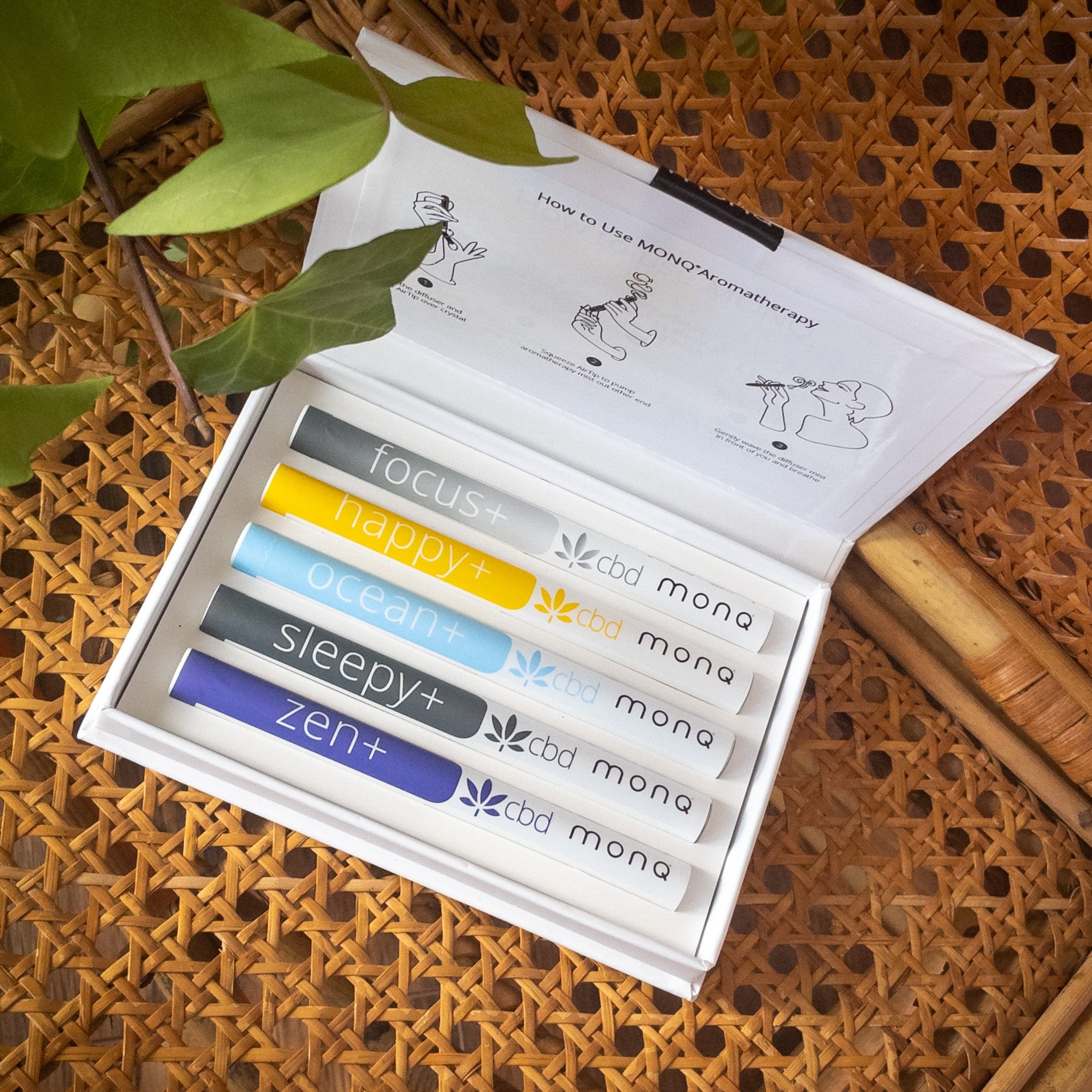
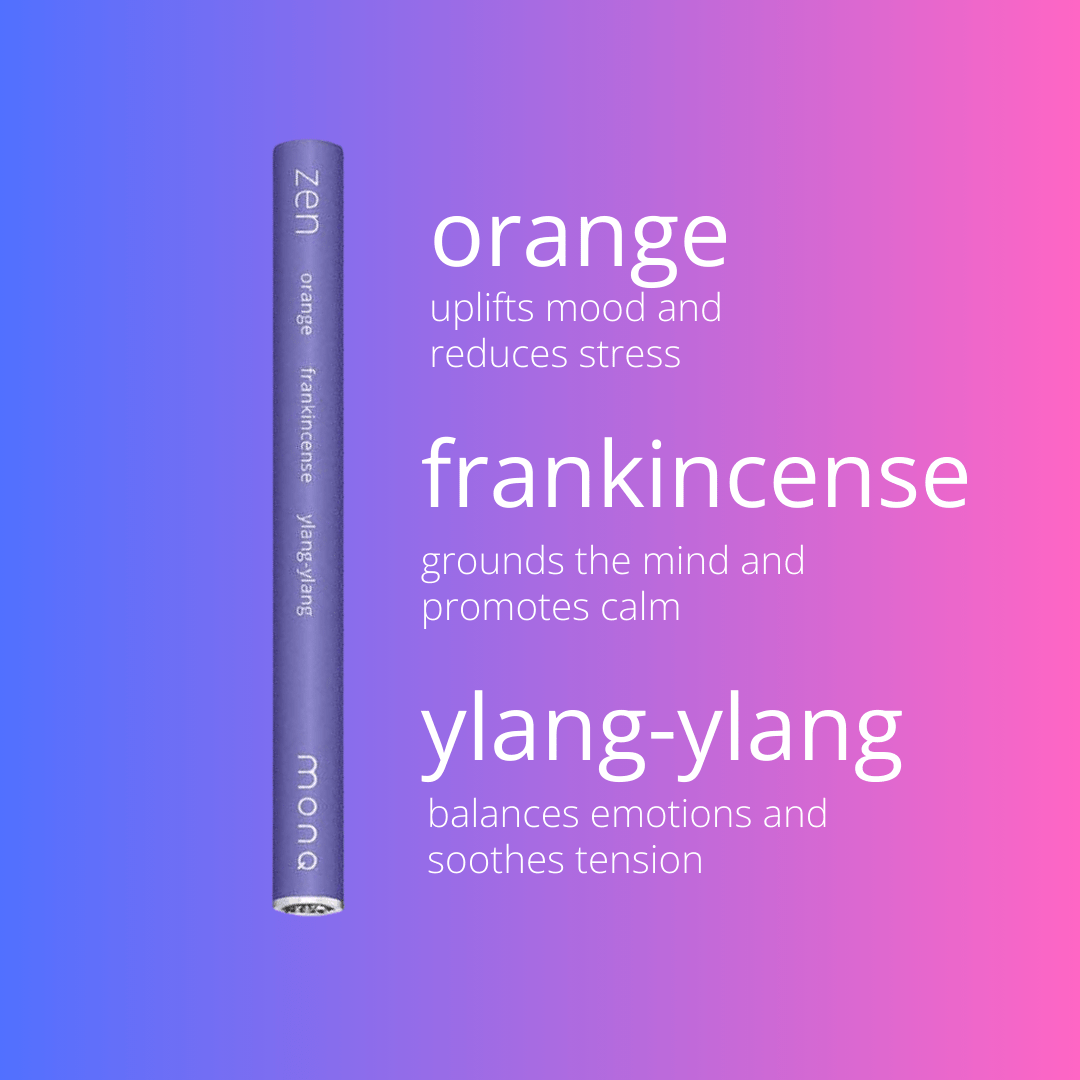
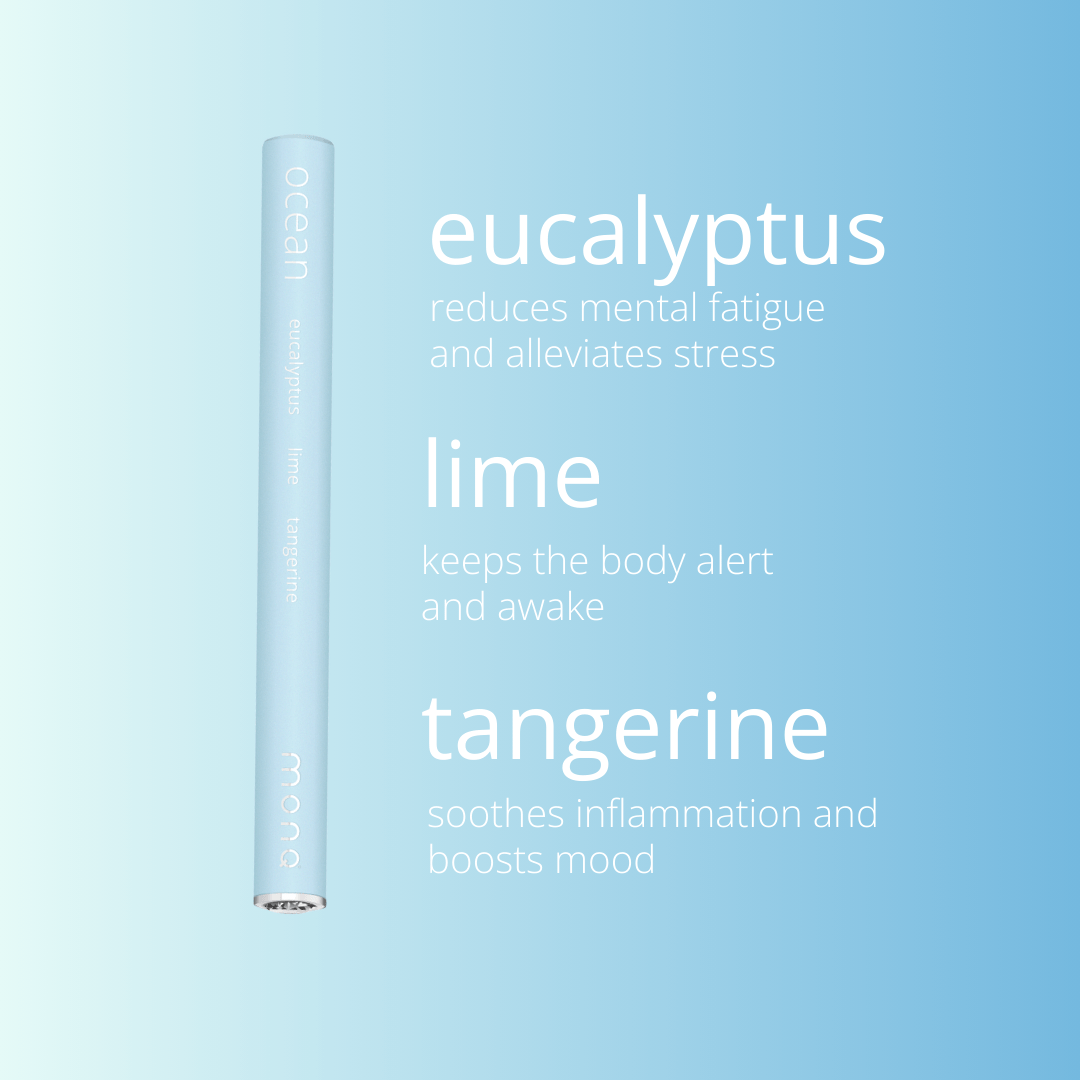
You can use a MONQ aromatherapy diffuser as a consistent sensory marker if you enjoy the experience. The repeated ritual is the cue. The product is not presented here as a mechanism for resetting the nervous system. You can browse the MONQ aromatherapy diffuser collection, explore Sleepy MONQ, or use the Blend Personality Quiz to consider which aroma profile you prefer.
![[APPROVED] Sleepy MONQ aromatherapy diffuser beside a candle during an evening wind-down routine](https://cdn.shopify.com/s/files/1/0596/5266/9638/files/monq-multipack-lifestyle-sleep-sleepy-with-candle.jpg?v=1787872814&width=900)
A consistent aroma can serve as an optional marker within a broader evening routine.
MONQ blends should not be inhaled into the lungs. Draw gently into the mouth, then exhale through the nose.
Frequently Asked Questions
How long does it take to unwind after work?
There is no reliable universal number. A short ritual can begin changing what you are doing and where your attention is directed, but complete recovery varies with workload, sleep, health, environment, and the individual. Avoid promises that everyone will feel different in five minutes or that specific hormones will clear on a fixed schedule.
What is the difference between an after-work routine and self-care?
An after-work routine marks the end of a role and the beginning of personal time. Self-care is a broader category of activities that support well-being. They can overlap, but a shutdown cue has a more specific job: helping you stop performing work and redirect attention.
Why does working from home make it harder to unwind?
For some people, the lack of a commute or change of location makes the work-home boundary less visible. A deliberate shutdown routine can recreate some of those missing environmental cues. Others may find working from home easier, so the routine should match your actual experience.
Is screen time after work bad for relaxing?
Not necessarily. Video calls, work messages, passive viewing, games, and reading are different activities. The strongest practical concern is continuing work-related communication or choosing highly reactive content when your goal is to detach. Notice how a particular activity affects you rather than viewing all screens as identical.
What is the fastest way to relax after a long workday?
Start by reducing demands: record the next work task, silence work communication when possible, change your setting, and choose one slow activity. The 5-minute routine above is a useful experiment, not a guaranteed physiological shortcut.
Start With One Repeatable Boundary
You do not need a perfect routine to get more of your evening back. Choose one closing action, one transition cue, and one activity that fits your energy. Repeat the same sequence for a week, notice what genuinely helps, and adjust it to your life.
For more on the relationship between aroma and personal memory, read Nostalgia Therapy: Making Sense of Smells.
These statements have not been evaluated by the Food and Drug Administration. This product is not intended to diagnose, treat, cure, or prevent any disease. No Nicotine Ever in MONQ Diffusers.










Leave a comment