

Why Cities Need More Parks with Trees and Forests
Urban green space is not a luxury - it is infrastructure. The science has been clear for decades: cities with more trees, parks, and green corridors have healthier, happier, and more economically productive residents. Yet globally, trees continue to lose ground to asphalt and development. Understanding what urban forests actually do, and what we lose when they disappear, is the first step toward protecting them.

It is never inspiring to see trees being pushed aside to make room for parking lots or greater urban sprawl. It can be difficult to fight this, which is why you can benefit from the same terpenes that come from the trees and greenery in essential oil blends. Research explored in our guide to the magical dance of aromas in nature explains how these airborne plant compounds reach us and why they matter.
Even in urbanization pushes, it is comforting to see many cities incorporating more trees and greenery in city planning. Take Portland, Oregon, for example. Recent urban projects have transformed drab grey parking lots into urban forests that can help freshen the air. Other projects included a freeway that was changed to a beautiful riverside recreational area. Cities like Austin, Denver, and Minneapolis deserve mention in a list of greener cities.
The Importance of Trees and Green Areas in Urban Planning
Trees add infinite value to cityscapes and have been an iconic part of the world's most beautiful cities, like the Hanging Gardens in ancient Babylon. Trees and plant life in a city connect with the humans who live there in a number of special ways.
As the harsh geometries and other unpleasant visual aspects of the city increase, trees can be used to add a pleasant sign of life and natural motion. When the application of trees in the urban landscape is planned masterfully, the results can be marvelous. The Jacarandas of Johannesburg and Pretoria testify to this.
Trees can be used to add instant beautification to a city that is rapidly losing its character. As a concentrated expression of the forces of nature, trees can brighten up the outdoors and make the city streets a positive and pleasant environment.
Despite their enormous contribution to the livability of urban regions and the fine examples set by many beautiful cities, urban trees are in short supply. Furthermore, the art of planting and replacing trees within a city sprawl is deeply complex. Large trees provide the greatest benefits to the city scene but are hard to replace when they reach the end of their lifespan. Furthermore, the environment will never produce another tree quite the same.
Over the years there has been abundant scientific research that clearly illustrates the need for parks and trees in urban environments. Many organizations are in operation with goals to increase greenery within a city and protect what forests may be close to regions of human expansion. The USDA Urban Forests program is one such effort, tracking the measurable contributions of city trees across the United States.
Top Benefits Forests and Parks Provide to a City

Trees and Parks Provide Beauty
Without a doubt, cities are exciting high-energy locations with something for everyone. However, cities are not known for their beauty. Nevertheless, the city park is always a sight for sore eyes and soothing relief from the fast-paced city.
Some of the most beautiful city parks in the world offer millions of people the opportunity to view exotic wildlife and diverse plant species without having to travel too far. In Melbourne, the Royal Botanical Gardens sits on more than 100 acres of lovingly pampered gardens and waterways in one of the most pristine urban settings in the world.
New York City's own Central Park features extensive acres of greenery and some grand old trees aging over a few hundred years. The rolling hills and wooded regions create a stunning impact on the urban environment that surrounds them.
Across the globe in cities big and small, the parks and tree-lined streets are invariably the most serene and attractive.
Urban Trees Provide Air Filtration
The more trees there are in a city, the better the urbanites can breathe and avoid diseases caused by contaminated air. According to a report from the World Health Organization (WHO) dated 2012, 2.4 million people die each year from respiratory conditions caused by air pollution. A detailed breakdown of how stress affects physical and mental health shows precisely which pollutants urban canopies remove most effectively.
Streets that are lined with a proper selection of trees can help reduce the pollution created by automobiles and road traffic. Trees are also essential to removing the carbon emissions from the air and storing them safely in a process called sequestration.
It has been postulated that increasing the trees within city limits is the best way to reduce levels of carbon dioxide, carbon monoxide, sulfur dioxide, and other contaminants and particulate matter from the air. A single mature tree can remove as much as 20 kg of CO2 in a year and then produce enough oxygen for several people depending on the size and species of the tree.
By removing poisons and toxins from the air and infusing the atmosphere with life-supporting oxygen and other healthy compounds, trees make themselves an integral part of the healthy city scene.
Greenery Improves Human Health
Some of the most common ailments of modern society include respiratory conditions like asthma, inflammatory conditions, and conditions of hypertension and undue stress. In addition to removing poisonous particulate matter from the atmosphere, trees provide a number of health-supporting benefits to those humans in their vicinity.
The heat and glare of the city at high noon is no joke and has caused conditions from heat stroke to death and worsening of underlying health conditions. A tall mature tree can extend its canopy over half a city block, providing shade and cooling the atmosphere.
Urban parks with a large tree population are also high in volatile organic compounds, the vast majority of which are terpenes and possess a lengthy list of wellness benefits. Anti-inflammatories, antibacterials, phytoncides, mood-boosters, and immune-supporting agents are all there for the taking. A study on phytoncides and immune function found that exposure to compounds released by trees can support the body's natural defenses. A broader comprehensive review of forest bathing research confirms that regular time in green spaces promotes well-being. A practical guide to forest bathing and its health benefits breaks down how to make the most of this practice in everyday life.
Trees Make Money
No intelligent city plan can overlook the economic value of its tree population. In Tennessee, the value of each urban tree was set at $2.25 in equivalent benefits provided to the city and human population. That hardly seems like much to someone with a $700 chainsaw and the intent to capitalize on that grove of 90-year-old walnuts ($650 apiece).
But when the numbers are tallied together the figures become more impressive.
The trees in urban Tennessee have been precisely appreciated for their contributions to carbon storage, energy savings, and water filtering. The Forest Service of the U.S. Department of Agriculture released a statement accrediting $638 million dollars a year from benefits provided by urban trees across Tennessee.
The statement also described some serious losses, to the tune of $80 billion dollars, should this trove of urban trees be destroyed. Not to mention the ecological disaster that would ensue.
Trees Protect the Earth and Manage Stormwater
Stormwater runoff in the big city allows the pollutants of the air, water and city streets to be sent directly to the rivers, lakes, streams, and groundwater. These contaminants can poison fish and water creatures downstream as well as carry their harmful effects to agricultural regions.
With their massive roots and pervasive presence through the soil, trees filter the water and sequester harmful pollutants including nitrogen dioxide, sulfur dioxide, and many other pollutants. This makes the human living environment more eco-friendly and a far more inspiring place to live.
Trees Increase Property Value
Trees contribute to the properties around them in a number of ways. In addition to filtering the air, increasing oxygen levels and enhancing the beauty of the surroundings, trees boost property value in the commercial or residential real estate market.
Mature trees in the right location have been appraised as high as $10,000 and just having trees on the property or even lining the side of the road can increase property value between 5% and 15%. In Portland, urban trees alone increase overall real estate value by $1.1 billion, or the equivalent of $7,000 per property.
Finally, as a big part of staging and improving property value before a sale, landscaping alone can rake in 20% ROI. A stately and fragrant Juniper could be the centerpiece of your garden in as little as 3 years.
Trees Help Take a Bite Out of Crime
It is hard to think of gentle dogwoods flowering in the spring air as any sort of crime prevention unit, but they are. As a matter of fact, those trees lining your sidewalk may be the only things keeping you and your neighbors from allowing minor disagreements to escalate to assault and battery.
Think of it - trees are soothing to the environment and indicate the presence of life and more importantly water. The presence of trees in an environment connects deeply with the human psyche and communicates that all is well. This allows human interactions to be conducted from the "rest and digest" or "feed and breed" mode as opposed to the "fight or flight" mode.
Studies have shown that the urban scene can drive humans into a state of fight or flight and this can cause terrible interactions resulting in legal fracas and regrets. So next time your temper suggests you say something you will soon regret, take a walk through the park and spend some time in the company of trees. The application of trees and parks in the home and neighborhood security is an important part of effective city planning. Read more about how how your environment can contribute to stress connects to time spent in nature.
Trees Help Beat the Summer Sun
Trees have their own cooling system very much as humans do. They release an enormous amount of water and organic compounds into the air around them, which is why the temperature in a forest is always comfortably cool. This cooling effect allows nutrients and moisture to be held in the soil where it can be used to extend forest life.
Trees offer this benefit to their neighbors in urban environments. Trees can help to reduce the cooling bills due to their enormous spread of foliage. Deciduous trees will then shed their leaves in the winter and allow the full strength of the sun to keep the homes warmer.
Cities without trees are at a serious risk of developing urban heat islands where the temperatures may rise a full 7 degrees Fahrenheit higher than the surrounding areas. The EPA's overview of urban heat island mitigation explains how tree canopy is one of the most effective tools for cooling cities. Without trees, the concrete and asphalt jungle becomes a sweltering sunbaked oven. Trees combat this because of their cooling benefits, making cities livable in the summer.
Trees Act as Wind and Sound Barriers
In a city, the tall buildings and street dynamics can allow the wind to accelerate to an alarming degree. This can pull hats from heads, topple sidewalk cafes, and generally make things unpleasant for those outdoors. Trees can be planted at strategic locations to reduce the strength of the wind and even eliminate the biting cold or dust carried thereby.
The acoustics and din of the city, though greatly romanticized in pop culture, are nothing to brag about. But trees can effectively block out the noise of a busy street or factory district. Choosing trees with extensive spread and foliage can also help to block out those unwanted views and provide a property with a measure of privacy as well.
The Clear Importance of Trees

Clearly, trees are crucial. They calm us and provide us with a number of other benefits. Forest therapy in the city can soothe even the most hardened urbanite. Green spaces are also deeply connected to our relationship with plants and the broader natural world - a connection explored in our piece on how plants affect human behavior. Caring for these spaces also aligns with a commitment to sustainability - our guide on embracing a zero-waste lifestyle shows how small everyday choices add up to meaningful environmental impact.
Photo Credits: Kckate16/shutterstock.com, Behedix/shutterstock.com, LaneV.Erickson/shutterstock.com, JacekChabraszewski/shutterstock.com
Bring the Forest to You
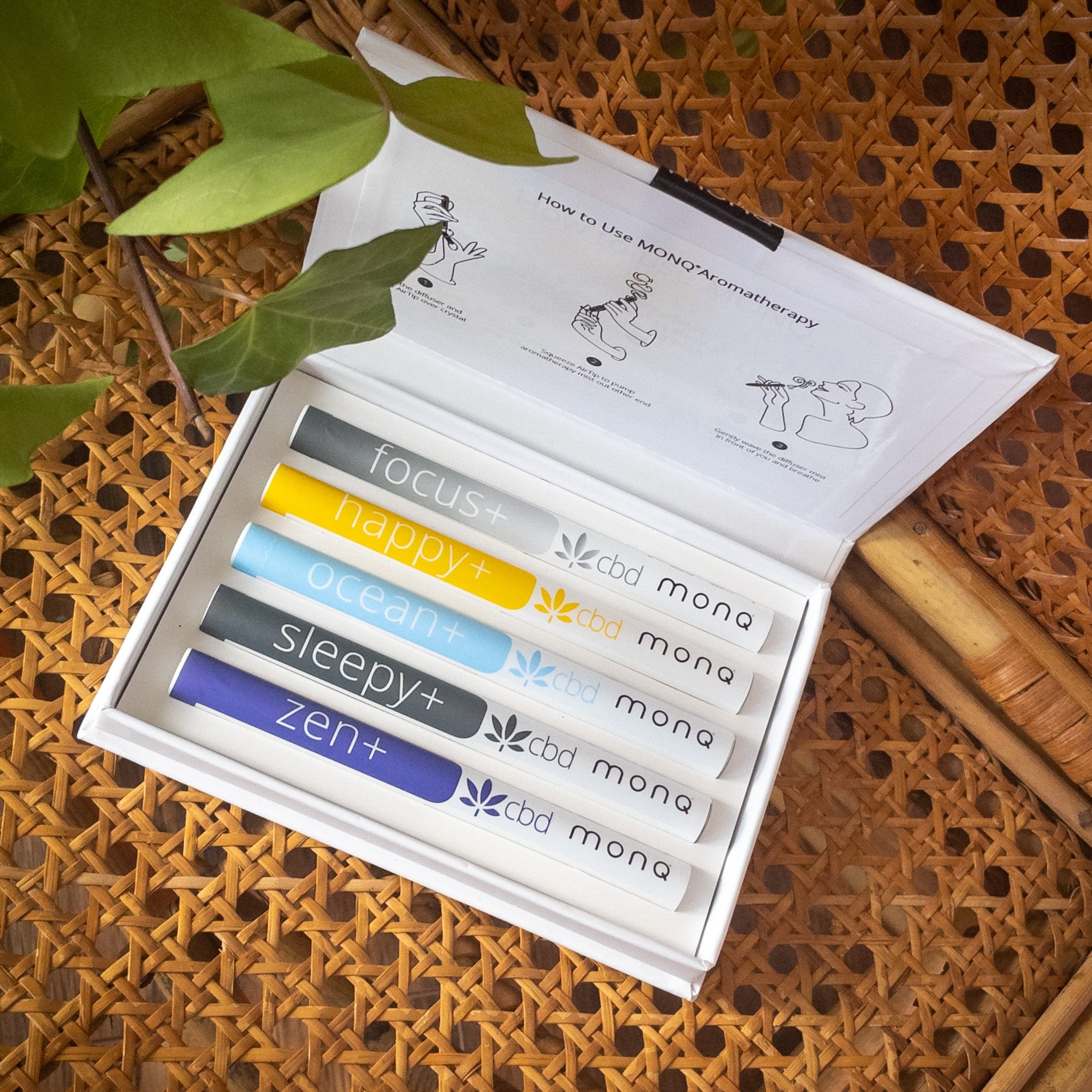
Cannot get to a park? The core therapeutic benefit of urban green space - exposure to terpenes and phytoncides released by trees - can be accessed through aromatherapy. Forest MONQ concentrates the aromatic compounds of the deep forest in a portable personal diffuser. Breathe in. Exhale through the nose. Aromatherapy Anywhere. Explore our full range at MONQ diffusers or discover more in our article on discovering the magic of the forest with MONQ. You can also learn how essential oils are nature's wellness tools.
Continue reading: Forest Therapy in the City · How Plants Affect Behavior · Reclaiming Terpenes: Urban Wellness Solutions
Disclaimer: The above information is provided for general wellness and educational purposes only. Please note that while individual essential oil ingredients may have been shown to exhibit certain independent effects when used alone, the specific blends of ingredients contained in MONQ diffusers have not been tested. No specific claims are being made that use of any MONQ diffusers will lead to any of the effects discussed above. Additionally, please note that MONQ diffusers have not been reviewed or approved by the U.S. Food and Drug Administration. MONQ diffusers are not intended to be used in the diagnosis, cure, mitigation, prevention, or treatment of any disease or medical condition. If you have a health condition or concern, please consult a physician or your alternative health care provider prior to using MONQ diffusers. MONQ blends should not be inhaled into the lungs. Why? It works better that way. No Nicotine Ever. Inhale through the mouth, exhale through the nose. MONQ Diffusers are not intended for individuals under 18, or women who are pregnant or nursing.













Leave a comment