

Coffee Essential Oil - Improves More Than Just Your Energy Levels
With its distinctive aroma, coffee is one of the most easily recognizable and highly consumed substances in the world, second only to tea. In fact, coffee is the greatest source of antioxidants in the Western diet, and studies have shown that individuals who consume a standard Western diet receive more antioxidants from coffee than from fruits and vegetables combined.

Coffee is widely associated with morning routines and its familiar roasted aroma. This article focuses on the aroma and traditional uses of coffee essential oil rather than the health effects of drinking coffee.
What many people don't realize is that the benefits of coffee extend well beyond the beverage - coffee essential oil brings a concentrated form of these properties into the world of aromatherapy. To understand the full landscape of aromatic plant extracts, our complete guide to essential oils is a great starting point.
The History of Coffee
While many people assume coffee is a bean, it is actually the pit inside a stone-fruit referred to as a "cherry." The flesh of the fruit ranges in color from purple to red, and the seed contained within is commonly referred to as the "bean." Typically, coffee cherries contain two green stones with the flat sides facing each other, visually resembling beans - hence the name "coffee beans."
According to ancient legend, coffee was discovered by an Ethiopian goat herder named Kaldi. He decided to try coffee cherries after noticing that his goats had boundless levels of energy after eating from the coffee bush, and the rest is history. The coffee plant is native to East Africa, with the first known plant in the mountains of Yemen and the earliest recorded evidence of its consumption in the Sufi monasteries in the 15th century.
It wasn't until the 1600s that coffee was first cultivated commercially. This occurred in the small town of Chikmagalur in the Indian state of Karnataka. From here, cultivation spread around the world, with Europe quickly following suit in 1616, Java in 1699, the Caribbean in 1715, the Dutch East Indies in 1720, and South America in 1730.
The majority of coffee cherries are hand-picked before being prepared for processing, which involves soaking the extracted seeds in water for approximately two days to soften the mucilage around their exterior. The beans are then dried before undergoing the roasting process, which turns them from vibrant green into varying shades of brown. It is during roasting that coffee beans develop the aroma and flavor that the world knows and loves. Though there are many different types of coffee available, Robusta and Arabica are the most common.
Of course, all of the above involves the preparation for coffee as a beverage. However, the benefits of coffee essential oil should not be overlooked - it can provide a range of perks beyond, or in addition to, those of the popular drink.
Terpene Properties
It may come as a surprise that coffee essential oil can contain up to 800 different chemical compounds. In addition to terpenes and alcohols, coffee also has a range of other compounds that contribute to its beneficial effects.
First, oleic acid - also known as Omega-9 - is a fatty acid commonly found in olive oil and fish oil supplements and is vital for proper functioning of the organs. Another fatty acid found in coffee essential oil is the Omega-6 in linoleic acid, which helps prevent airborne toxins from entering the body via the skin. Palmitic acid is another component that functions as a potent antioxidant beneficial for the skin.
The chemical compound responsible for giving coffee its smoky, woody, and sweet fragrance is 2,3-dimethyl benzofuran. Changes in serotonin activity have been associated with mood, memory, and appetite.
Coffee Essential Oil Also Contains:
- 3,5-Dicaffeoylquinic acid
- Chlorogenic acid
- Polyphenols
- Phenylalanine
- Ferulic acid
- Caffeic acid
The compounds in coffee essential oil work together in the body, allowing for health benefits both physically and mentally.
Uses for Coffee Essential Oil

Coffee essential oil provides many of the same benefits as those provided by the beverage. In fact, the scent of coffee alone is so potent that it can provide a stimulating effect on its own. As noted by Medical News Today's overview of aromatherapy, the olfactory system's connection to the brain means that aromatic compounds can influence mood and cognitive state in meaningful ways.
Coffee essential oil is known for its rich, roasted aroma and is used in a variety of aromatic and properly diluted topical applications. Some of its traditional and sensory uses are highlighted below.
Antioxidant
As mentioned previously, coffee is the primary source of antioxidants in the Western world and provides more dietary antioxidants than any other food group. It contains several potent antioxidants that help protect the body from the damage caused by free radicals, which harm the DNA and proteins found in the body due to oxidative stress.
Coffee contains several powerful antioxidants in large quantities, including polyphenols and hydrocinnamic acids. These compounds can work to prevent the onset of conditions such as type 2 diabetes or heart disease by neutralizing free radicals. Research on the chemical composition and anti-inflammatory activity of essential oils highlights how these compounds interact at the cellular level.
Free radicals have unpaired electrons, which makes them incredibly damaging to the cells throughout the body. Antioxidants, in effect, donate electrons and ultimately disarm them, providing protection from oxidative stress. Coffee also has beneficial effects on the liver and limits the risk of cirrhosis, making it one of the most versatile sources of antioxidants in the world.
Weight Management
When it comes to managing body fat, caffeine is found in nearly all weight-management supplements sold commercially. This is because caffeine is one of several organic compounds that has been clinically studied for its role in supporting fat metabolism. Caffeine works by boosting the metabolism, leading to an increase in the number of calories burned at the resting metabolic rate. In some cases, metabolic rate has been shown to increase by up to 11 percent.
Additional studies have shown that caffeine can boost fat burning by as much as 29 percent in lean individuals and 10 percent in those who are overweight. Caffeine works by increasing the body temperature and heart rate, causing the body to use more calories to maintain optimal temperature while powering the heart. Caffeine has also been shown to increase the levels of epinephrine in the blood - stimulating the central nervous system and prompting the body to metabolize fat cells for fuel as part of its natural energy response.
Anti-Inflammatory
Coffee essential oil has a rich, roasted aroma that may complement massage and other sensory wellness routines. When used topically, it should first be diluted appropriately in a carrier oil.
Its rich aromatic character can also be incorporated into personal sensory wellness routines.
SKIN CARE and Photoprotective
Used as part of a daily routine, coffee essential oil not only improves the appearance and texture of skin but also provides meaningful protective properties.
Due to the antioxidants it contains, coffee essential oil has strong skin care properties. These antioxidants actively work to reduce oxidative stress on the skin, leading to increased blood flow and oxygen delivery to cells. This stimulates collagen production in the epidermis and results in the reduction of fine lines and wrinkles, blemishes, and age spots. A 2024 study exploring the dermatological benefits of coffee extracts found promising evidence for coffee's role in skin health and photoprotection. The caffeine content in this essential oil has also been shown to reduce the appearance of crow's feet by decreasing their depth.
Topical application of coffee essential oil can also protect against photoaging, limiting the amount of skin damage caused by UVA and UVB rays. A peer-reviewed evidence-based review of botanicals in dermatology supports the use of plant-derived compounds like those found in coffee for skin-protective applications.

Coffee Essential Oil in Aromatherapy
Beyond topical use, coffee essential oil has a distinct place in the world of aromatherapy. For natural ways to support concentration that do not depend on any one aroma, pair a clear task with a prepared workspace and a consistent start cue. Its rich, warm, and grounding scent profile makes it a natural pairing with other botanicals known for their mental-clarity and mood-supporting properties.
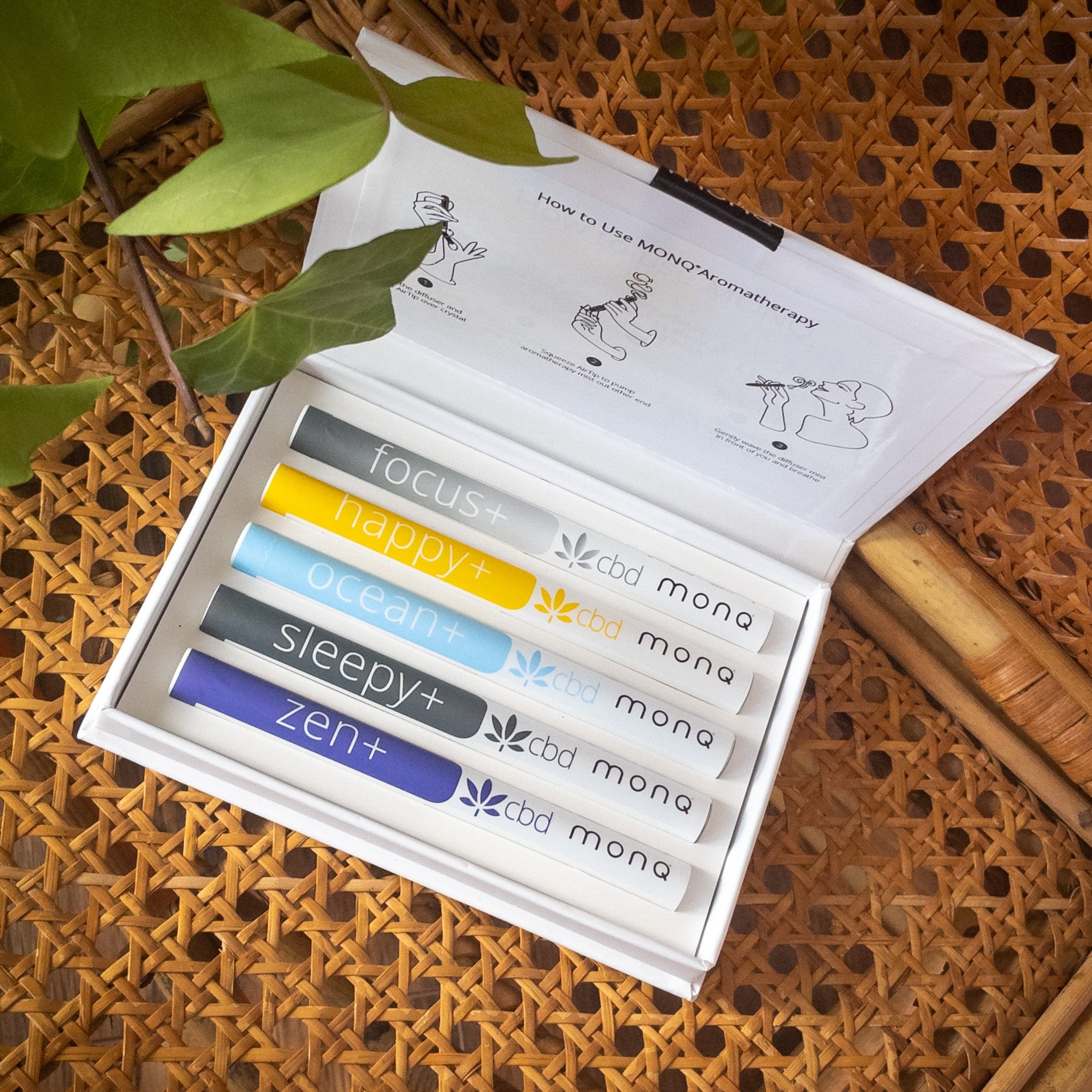
For those seeking to support focus and mental sharpness, Focus MONQ blends coffee, ginger, and rosemary - ingredients long associated with cognitive alertness. The warm, earthy undertones of coffee essential oil share aromatic kinship with frankincense, making them natural complements in any focus-oriented routine.
For mood support and a sense of uplift, Happy MONQ - with fennel, thyme, and vanilla - offers a lighter, botanical counterpart. Research reviewed by Medical News Today on aromatherapy and mental health underscores how scent-based interventions can meaningfully support emotional wellbeing and reduce everyday stress and mental fatigue.
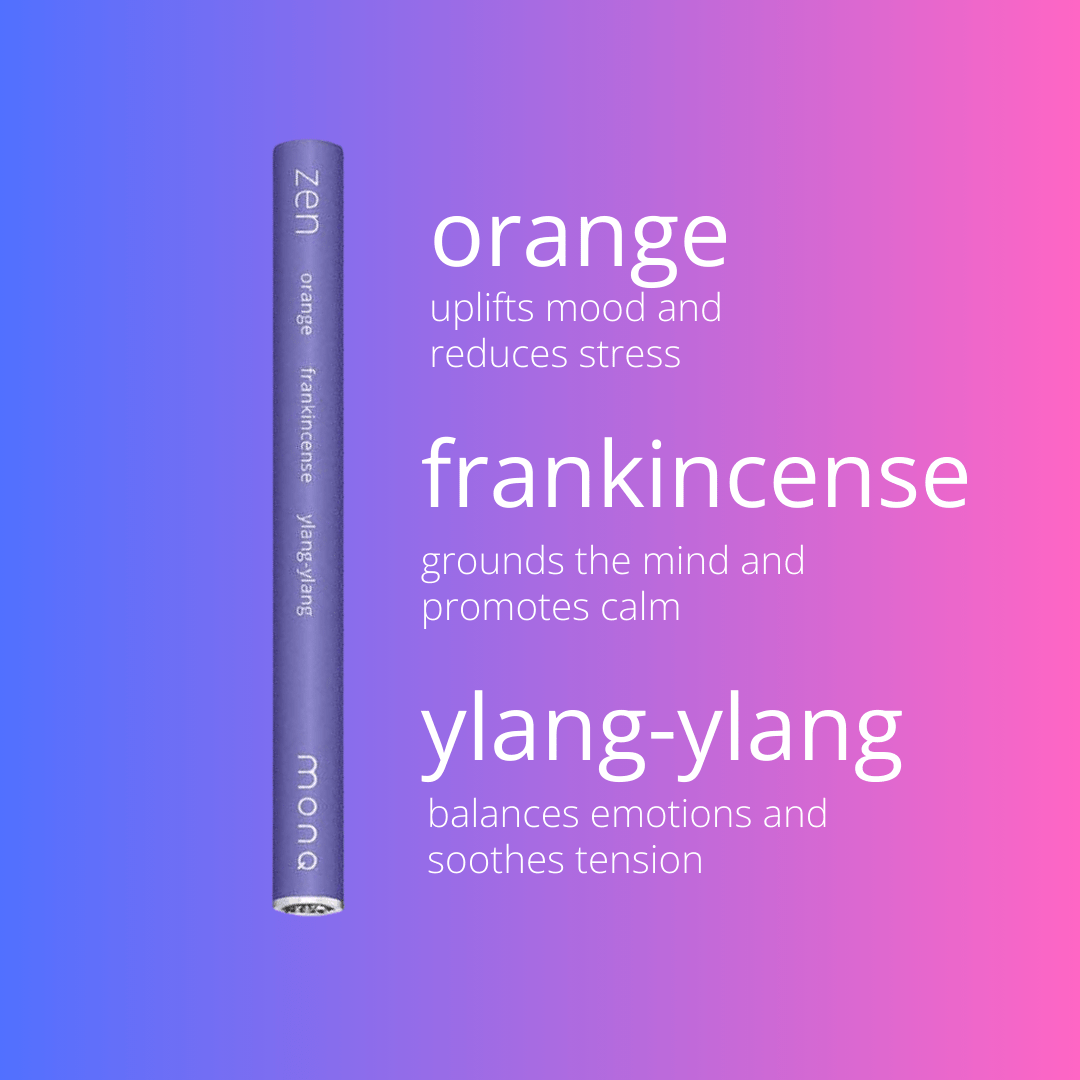
When the goal is grounding and calm, Zen MONQ - a blend of frankincense, sweet orange, and ylang-ylang - offers a centering aromatic experience. The deep, resinous quality of coffee essential oil pairs naturally with these grounding botanicals.
And for those who are drawn to coffee essential oil's energizing and refreshing qualities, Fresh MONQ - with ginger, lemon, and peppermint - channels a similarly invigorating spirit.
Safety and Precautions
As is true with most essential oils, coffee oil is considered quite safe when used correctly. However, there are several precautions that should be taken.
Coffee essential oil should never be ingested. While it is common to drink freshly brewed coffee, the concentrated essential oil is not suitable for internal use.
When applying coffee essential oil topically, it is important to first dilute it with a suitable carrier oil. Applying undiluted essential oil to the skin can lead to allergic reactions, including pain, burning, and inflammation. Before applying this essential oil to large areas of the body, it is recommended to perform a patch test to ensure the absence of an allergic or adverse reaction. Individuals with an intolerance or sensitivity to caffeine should exercise caution, as coffee essential oil can be absorbed into the bloodstream through the skin once applied.
Use of coffee essential oil is discouraged while pregnant or nursing, as is the case with many essential oils.
Final Thoughts
The health benefits that coffee essential oil provides highlight exactly why it deserves a spot in your daily routine - alongside, rather than instead of, your morning cup. Looking at coffee as more than a beverage will allow you to reap the benefits that the essential oil has to offer. Try it for yourself by mixing it into a lotion and applying it to the skin, or by using it in aromatherapy in a room diffuser or personal essential oil diffuser.
MONQ personal aromatherapy diffusers are a convenient, portable way to experience the world of essential oil blending. Each diffuser delivers a carefully crafted blend of botanical ingredients as a light, cool mist - no heat, no nicotine, no additives. Whether your goal is focus, calm, uplifted mood, or refreshed energy, there's a blend designed with that intention.

Disclaimer: The above information is provided for general wellness and educational purposes only. Please note that while individual essential oil ingredients may have been shown to exhibit certain independent effects when used alone, the specific blends of ingredients contained in MONQ diffusers have not been tested. No specific claims are being made that use of any MONQ diffusers will lead to any of the effects discussed above. Additionally, please note that MONQ diffusers have not been reviewed or approved by the U.S. Food and Drug Administration. MONQ diffusers are not intended to be used in the diagnosis, cure, mitigation, prevention, or treatment of any disease or medical condition. If you have a health condition or concern, please consult a physician or your alternative health care provider prior to using MONQ diffusers. MONQ blends should not be inhaled into the lungs. Why? It works better that way. No Nicotine Ever. Inhale through the mouth, exhale through the nose. MONQ Diffusers are not intended for individuals under 18, or women who are pregnant or nursing.










Leave a comment