Sage Essential Oil Uses

What Is Sage?
Sage (Salvia officinalis) is one of the most historically significant aromatic plants on earth. Its genus name derives from the Latin word salvere - to save or to heal - a name bestowed by ancient Romans who regarded it as a sacred botanical with the power to restore clarity, memory, and vitality. Native to the Mediterranean basin, sage has been cultivated and used across European, North African, and Middle Eastern traditions for at least two thousand years, appearing in ancient Greek medical texts, Roman agricultural writings, and medieval monastery herb gardens alike.
The aromatic profile of sage essential oil, steam-distilled from the plant's leaves and flowering tops, is one of the most distinctive in all of aromatherapy: sharp, herbal, slightly camphoraceous, with an earthy warmth that deepens as it dries down. This complex scent profile contributed to sage's long association with mental clarity and purposeful action. Native American traditions employed white sage (a related but distinct species) in smudging ceremonies intended to clear the air and create mental space for intentional presence - a practice that reflects the cross-cultural intuition that sage's aroma carries clarifying energy.
Through the Middle Ages and into the Renaissance, sage was considered so powerful a wellness botanical that the famous English proverb arose: "Why should a man die who grows sage in his garden?" Its widespread use in culinary, folk wellness, and ceremonial contexts speaks to the depth of the relationship between this plant and human wellbeing across history.
The Science Behind Sage
Sage essential oil is rich in thujone, camphor, 1,8-cineole (eucalyptol), borneol, and camphene. The presence of 1,8-cineole is particularly significant from an aromatherapy perspective - this compound is widely researched for its effects on cognitive performance and mental clarity when inhaled. Cineole interacts with olfactory receptors directly connected to brain regions governing attention, memory processing, and executive function. Several research teams have studied cineole-rich botanicals in relation to cognitive states, with sage earning particular interest as a clarity-supporting botanical.
Camphor contributes the sharp, penetrating quality of sage's scent and is associated with a bracing, wake-up quality when inhaled - the kind of sensory signal that tells the brain to sharpen its attention. Thujone adds depth and a slightly resinous quality. The combination of these compounds creates an aromatic profile that is simultaneously clarifying and grounding: stimulating enough to cut through mental fog, but earthy enough to feel anchored rather than agitated. The olfactory pathway carries all of these compounds directly to the limbic and prefrontal regions of the brain, making inhalation an efficient route for sage's botanical intelligence to interact with emotional and cognitive processing.
Common Sage and MONQ
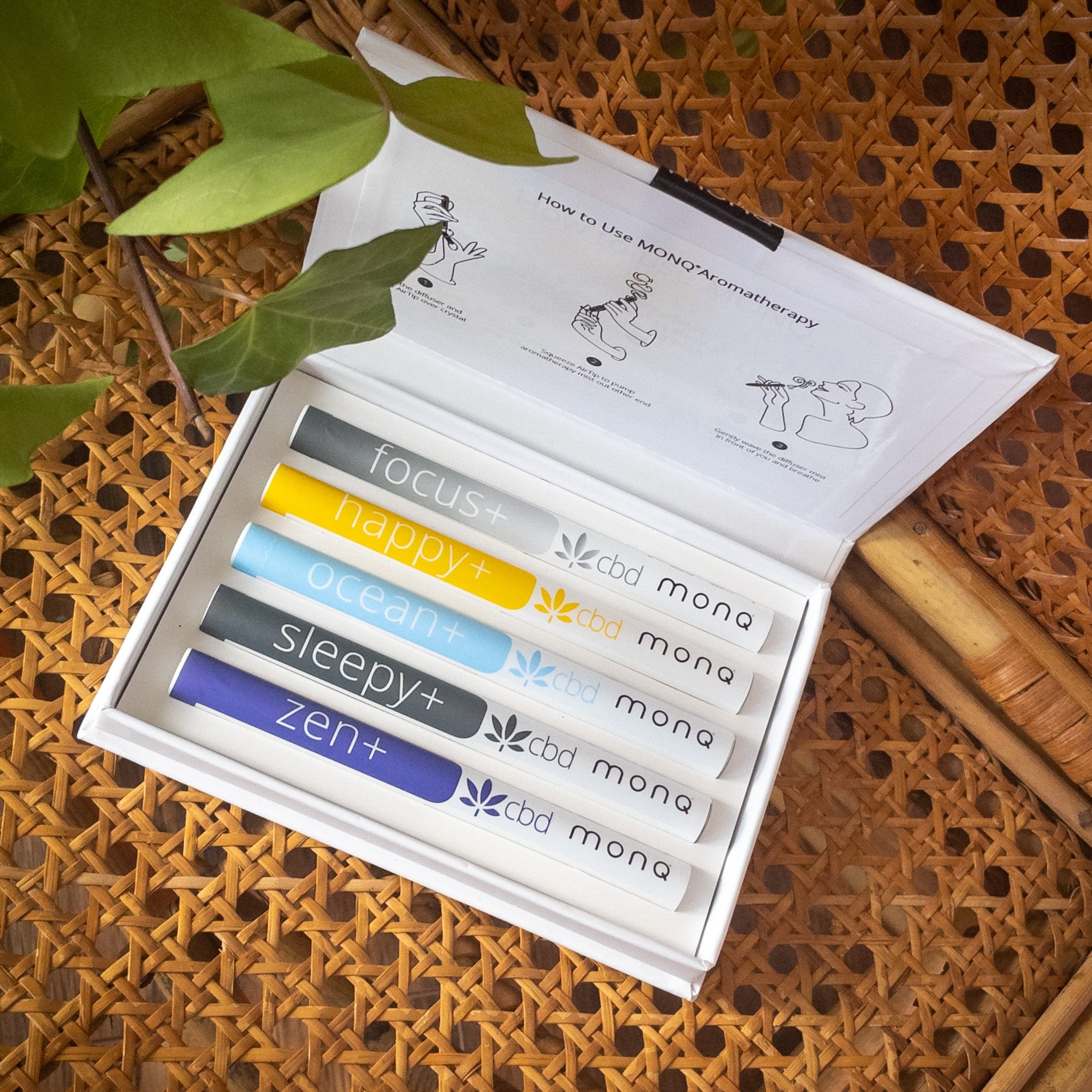
Common sage (Salvia officinalis), the subject of this article, is not an ingredient in Focus MONQ. The Focus formula uses clary sage, a distinct botanical species, alongside its other verified ingredients.
MONQ's retronasal breath method involves inhaling through the mouth and exhaling through the nose. References to sage elsewhere in the MONQ ingredient library should distinguish common sage from clary sage.
Explore More
Disclaimer: The above information is provided for general wellness and educational purposes only. Please note that while individual essential oil ingredients may have been shown to exhibit certain independent effects when used alone, the specific blends of ingredients contained in MONQ diffusers have not been tested. No specific claims are being made that use of any MONQ diffusers will lead to any of the effects discussed above. Additionally, please note that MONQ diffusers have not been reviewed or approved by the U.S. Food and Drug Administration. MONQ diffusers are not intended to be used in the diagnosis, cure, mitigation, prevention, or treatment of any disease or medical condition. If you have a health condition or concern, please consult a physician or your alternative health care provider prior to using MONQ diffusers. MONQ blends should not be inhaled into the lungs. Why? It works better that way. No Nicotine Ever. Inhale through the mouth, exhale through the nose. MONQ Diffusers are not intended for individuals under 18, or women who are pregnant or nursing.