Forest Bathing Benefits

What Is Forest Bathing?
Forest bathing - known in Japan as shinrin-yoku, literally "forest atmosphere bathing" - is the practice of spending unhurried time among trees with the specific intention of absorbing the forest environment through all the senses. The practice was formally developed in Japan in the 1980s as a public wellness initiative by the Japanese Ministry of Agriculture, Forestry, and Fisheries, though the intuitive understanding that time among trees is restorative is as old as human civilization itself. Across cultures and centuries, forests have been treated as places of restoration, contemplation, and reconnection with something larger than daily life.
What distinguishes forest bathing from ordinary walking or hiking is its pace and intention. Practitioners are encouraged to move slowly, pause frequently, use all five senses, and resist the goal-orientation that governs most modern movement. The forest is experienced rather than traversed. Japanese researchers and practitioners developed specific protocols for guided forest bathing walks, and the practice has been formally adopted as part of preventive wellness programs in Japan, South Korea, and increasingly across Europe and North America.
The aromatic dimension of forest bathing is central to its effects. Forests produce a complex mixture of volatile organic compounds collectively known as phytoncides - particularly alpha-pinene and beta-pinene from conifers, limonene from citrus-bearing trees, and camphene and myrcene from various hardwoods and shrubs. These aromatic compounds fill the air of healthy forests and are absorbed through inhalation with every breath. Researchers studying forest bathing have identified the aromatic environment itself as a primary mechanism behind the practice's measurable effects on human physiology.
The Science Behind Forest Bathing
The most extensively studied biological mechanism behind forest bathing's effects involves the phytoncide compounds that trees release into forest air. Alpha-pinene, one of the most abundant, has been shown in multiple studies to interact with the autonomic nervous system when inhaled - specifically with the parasympathetic branch, which governs rest, digestion, and recovery states. Researchers measuring physiological markers in forest environments have documented decreases in cortisol levels, reduced blood pressure, and shifts in heart rate variability consistent with relaxation and recovery states among forest walkers compared to urban walkers covering the same distance.
The olfactory pathway is the fastest direct route from the external environment to the brain's limbic system, and the aromatic richness of healthy forest environments ensures continuous low-level stimulation of scent receptors connected to emotional regulation and stress response systems. The forest isn't only visually restorative - it is aromatically restorative, and that aromatic channel runs at full capacity with every breath taken among the trees. The practice of forest bathing is, in part, a protocol for maximizing exposure to this aromatic environment by slowing down, breathing deliberately, and staying present long enough for the botanical signals to accumulate. Natural killer (NK) cell activity - part of the immune system's monitoring function - has also been studied in relation to phytoncide exposure, with forest environments showing associations with measurably elevated NK activity in multiple Japanese research cohorts.
How MONQ Captures Forest Bathing
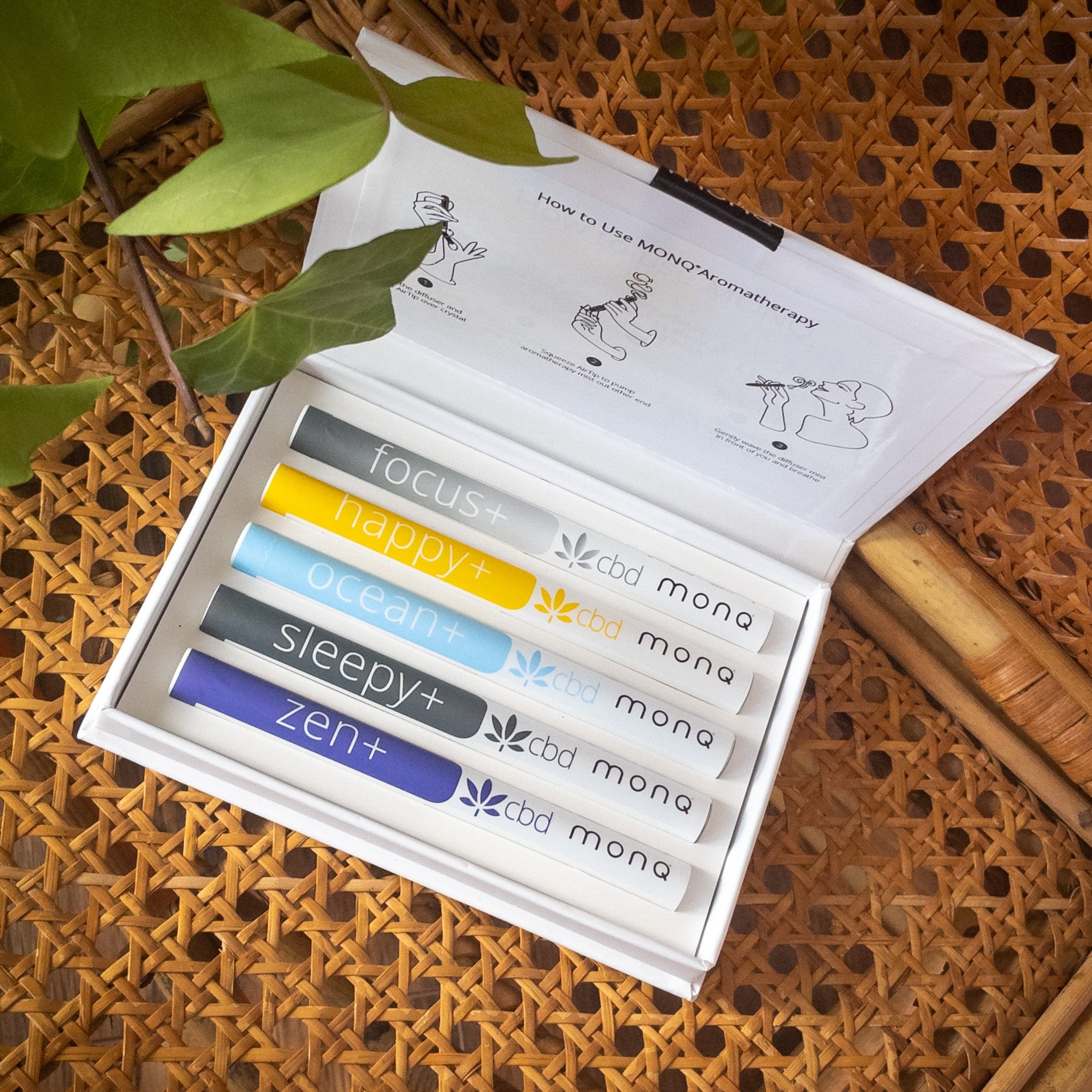
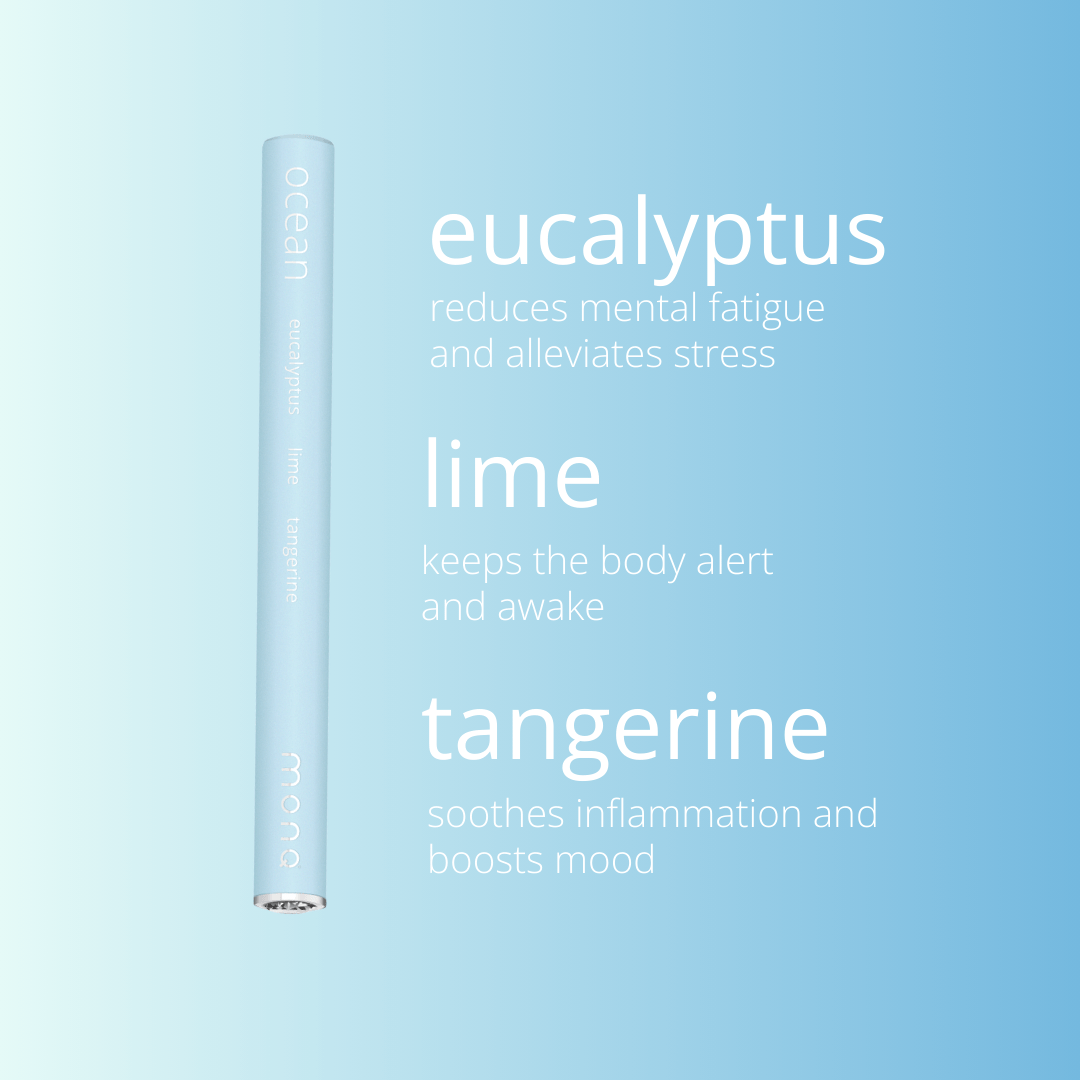
Ocean MONQ was created to bring the aromatic experience of being immersed in natural environments into a portable, breath-accessible form. The blend draws on coastal and forest-adjacent botanicals to create an aromatic experience that activates the same olfactory pathways engaged during time in natural settings. For those who cannot access forest environments daily, Ocean MONQ offers a way to signal the nervous system toward the open, receptive state associated with immersion in nature.
MONQ's retronasal breath method mirrors the deliberate breathing recommended in formal shinrin-yoku practice: slow, intentional inhalation through the mouth, followed by exhalation through the nose, allowing the aromatic compounds to travel the full olfactory pathway. Just as forest bathing works best when practiced with unhurried attention, a few deliberate breaths with MONQ - taken with the same quality of presence recommended in shinrin-yoku - allow the botanical compounds to do their most meaningful work. Nature built the forest bathing mechanism into the olfactory system; MONQ is a portable interface for accessing it.
Explore More
Disclaimer: The above information is provided for general wellness and educational purposes only. Please note that while individual essential oil ingredients may have been shown to exhibit certain independent effects when used alone, the specific blends of ingredients contained in MONQ diffusers have not been tested. No specific claims are being made that use of any MONQ diffusers will lead to any of the effects discussed above. Additionally, please note that MONQ diffusers have not been reviewed or approved by the U.S. Food and Drug Administration. MONQ diffusers are not intended to be used in the diagnosis, cure, mitigation, prevention, or treatment of any disease or medical condition. If you have a health condition or concern, please consult a physician or your alternative health care provider prior to using MONQ diffusers. MONQ blends should not be inhaled into the lungs. Why? It works better that way. No Nicotine Ever. Inhale through the mouth, exhale through the nose. MONQ Diffusers are not intended for individuals under 18, or women who are pregnant or nursing.