Chamomile Essential Oil

A Brief Introduction to Chamomile
Chamomile is one of the oldest and most widely documented aromatic herbs in the Western herbal tradition. Its name derives from the Greek words for "earth apple" (khamai - on the ground, melon - apple), a reference to the fresh, apple-like scent of the flowers when bruised or pressed. For over two thousand years, herbalists across Europe and the Mediterranean have turned to chamomile as one of the gentlest and most reliable botanicals in the apothecary. The essential oil distilled from chamomile flowers concentrates this long aromatic and botanical history into a form that is particularly accessible for contemporary aromatherapy practice.
Roman Chamomile vs. German Chamomile: Two Distinct Plants
When chamomile essential oil is discussed in aromatherapy, it is important to distinguish between two quite different plants that share the common name:
Roman Chamomile (Anthemis nobilis / Chamaemelum nobile)
Roman chamomile is a low-growing perennial native to western Europe, where it has been cultivated in gardens for centuries. Its essential oil is steam-distilled from the flower heads and produces a pale yellow to slightly blue oil with a warm, sweet, fruity aroma that clearly references the apple quality embedded in the plant's Greek name. Roman chamomile oil is lighter and more delicate than its German counterpart - its chemistry is dominated by esters (particularly isobutyl angelate and isoamyl angelate) that give it a soft, calming character. In the European herbal tradition, Roman chamomile has long been associated with gentle soothing of the nervous system and the promotion of easy, quiet rest.
German Chamomile (Matricaria chamomilla / Matricaria recutita)
German chamomile is an annual wildflower common throughout Europe and western Asia, with a distinctly different aromatic profile from its Roman counterpart. The essential oil produced from German chamomile flower heads is one of the most visually distinctive in the aromatic world: it is a deep, inky blue, the color resulting from the conversion of matricine (present in the fresh plant) to chamazulene during steam distillation. This transformation produces an oil with a more complex, somewhat bitter-sweet, herbaceous aroma - less immediately sweet than Roman chamomile, more medicinal in character, and with an almost woody depth on drydown.
The blue color of German chamomile oil has made it a recognizable presence in skin care formulations, where it has been used for its known skin-supportive properties. In aromatherapy, German chamomile tends to be associated with deeper emotional states - a more grounding, less immediately soothing quality than Roman chamomile.
Key Aromatic Compounds
Alpha-Bisabolol
Alpha-bisabolol is one of the primary sesquiterpene alcohols found in German chamomile essential oil (and present in smaller amounts in Roman chamomile). It is the compound most associated with chamomile's skin-compatible properties and contributes a subtle, clean, slightly floral note to the oil's overall aroma. Alpha-bisabolol is particularly notable for the gentleness of its sensory profile - it adds depth without heaviness, which is part of why chamomile essential oil remains accessible and pleasant even in blends where it plays a significant role.
Chamazulene
Chamazulene is not present in the living chamomile plant - it is formed during the steam distillation process as the plant compound matricine undergoes thermal decomposition. Chamazulene is responsible for German chamomile essential oil's characteristic deep blue color and contributes a warm, slightly bittersweet aromatic quality. It is a sesquiterpene hydrocarbon and one of the most distinctive markers of authentic German chamomile oil; the presence of chamazulene is often used as a quality indicator in essential oil analysis.
Esters in Roman Chamomile (Isobutyl Angelate, Isoamyl Angelate)
Roman chamomile essential oil is distinguished by its unusually high ester content - esters can account for more than 80% of the oil's total composition in high-quality specimens. These esters are responsible for the oil's sweet, fruity, apple-like character and its light, gentle aromatic quality. Ester-rich oils are generally among the most user-friendly in aromatherapy because esters tend to be non-irritating and their aromatic effect is associated with calming and balancing rather than stimulating or cooling properties.
Farnesene
A sesquiterpene hydrocarbon found in both Roman and German chamomile oils, farnesene contributes subtle green, apple-skin notes that reinforce the overall fresh, herbal character of the oil. It is present in much smaller concentrations than chamazulene or alpha-bisabolol but forms part of chamomile oil's overall aromatic signature.
Traditional Use in European Herbalism
Chamomile's documented use in European herbal medicine goes back to ancient Egypt, Greece, and Rome. The Roman physician Dioscorides included it in his De Materia Medica in the first century CE, and it continued to appear in European herbal compilations throughout the medieval and early modern period. In traditional European herbalism, chamomile flowers prepared as an infusion (chamomile tea) were among the most widely used domestic remedies - given to children and adults alike as a gentle support during periods of physical or nervous discomfort.
The essential oil distilled from chamomile flowers carries the same aromatic heritage in a more concentrated form. European aromatherapy traditions dating to the work of practitioners like Rene-Maurice Gattefosse and Marguerite Maury consistently placed chamomile among the gentlest and most broadly applicable essential oils, particularly suitable for sensitive individuals and for evening or bedtime use.
Aromatherapy Applications
In contemporary aromatherapy practice, chamomile essential oil - whether Roman or German - is most consistently associated with calm and the gentle transition from wakefulness toward rest:
- Evening wind-down: The soft, sweet character of Roman chamomile in particular makes it a natural addition to an evening aromatic practice. Its ester-rich chemistry creates a gentle, unhurried sensory effect that aligns well with the physiological shift toward rest.
- Emotional steadying: Both varieties are associated in aromatherapy tradition with supporting emotional steadiness during periods of tension or overwhelm - not by suppressing or blunting the experience, but by creating a soft aromatic environment that feels safe and contained.
- Pairing with other calming botanicals: Chamomile combines naturally with lavender, sandalwood, vetiver, and neroli in calming blends. Its apple-sweet character softens lavender's herbal sharpness and complements sandalwood's warmth. For a deeper look at one of chamomile's most natural aromatic companions, see our guide to lavender essential oil uses. For a dedicated look at the blue-oil variety and its distinct skin-supporting chemistry, see our German Chamomile plant profile.
Chamomile in MONQ Blends
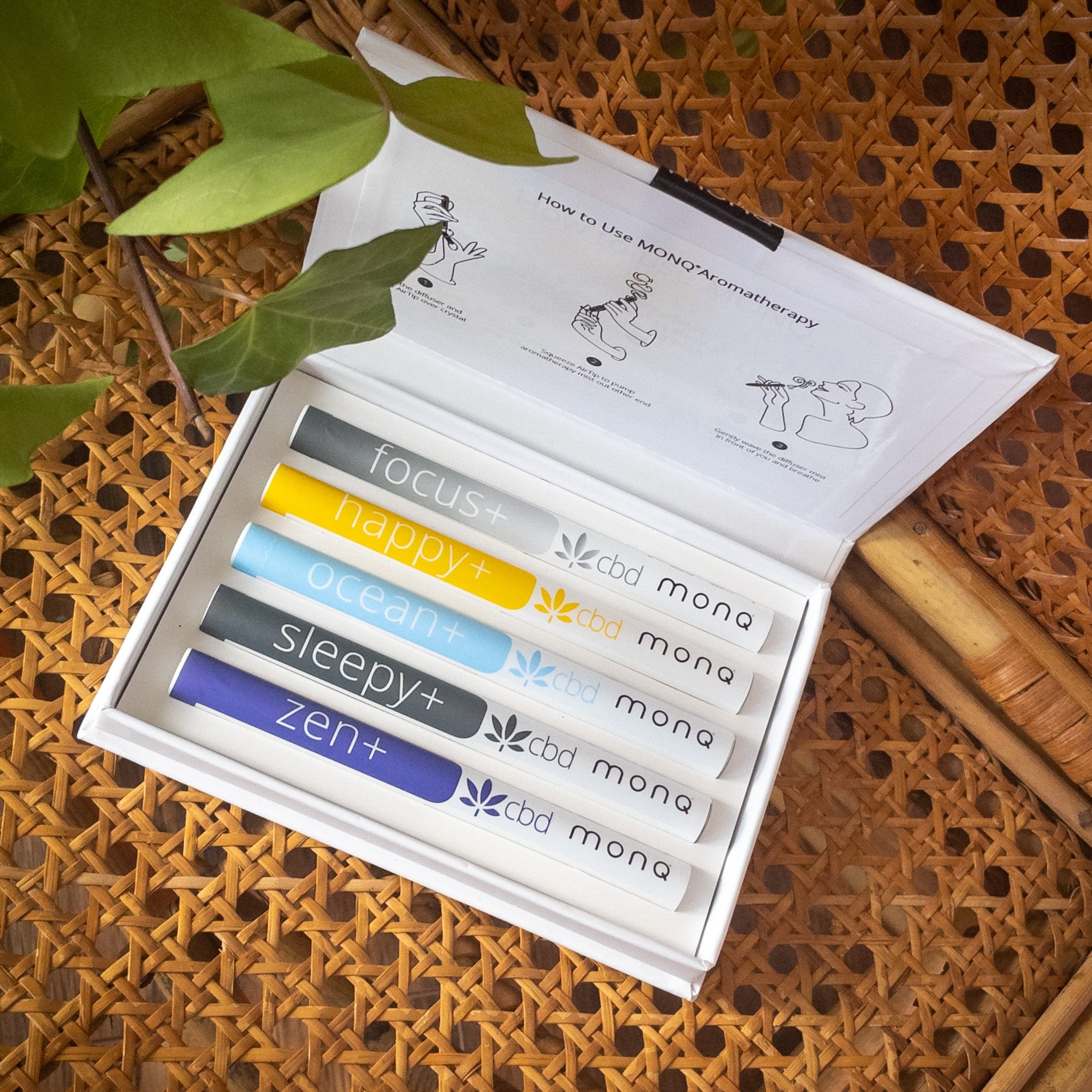
MONQ incorporates chamomile as part of its curated library of botanically authentic essential oils. In MONQ's portable personal aromatherapy format, the chamomile aromatics are delivered through the MONQ breathing method - inhale through the mouth, exhale through the nose - which brings the aromatic mist gently across the olfactory system rather than directing it into the lungs. This method is particularly well-suited to the soft, nuanced character of chamomile: the apple sweetness registers on the mouth-breath, and the deeper herbal complexity reveals itself on the nasal exhale. It is a brief, intentional aromatic moment rather than prolonged exposure - which aligns well with chamomile's traditional role as a gentle daily companion rather than a strong aromatic intervention.
Explore More
Disclaimer: The above information is provided for general wellness and educational purposes only. Please note that while individual essential oil ingredients may have been shown to exhibit certain independent effects when used alone, the specific blends of ingredients contained in MONQ diffusers have not been tested. No specific claims are being made that use of any MONQ diffusers will lead to any of the effects discussed above. Additionally, please note that MONQ diffusers have not been reviewed or approved by the U.S. Food and Drug Administration. MONQ diffusers are not intended to be used in the diagnosis, cure, mitigation, prevention, or treatment of any disease or medical condition. If you have a health condition or concern, please consult a physician or your alternative health care provider prior to using MONQ diffusers. MONQ blends should not be inhaled into the lungs. Why? It works better that way. No Nicotine Ever. Inhale through the mouth, exhale through the nose. MONQ Diffusers are not intended for individuals under 18, or women who are pregnant or nursing.