Lavender Essential Oil Uses

Lavender essential oil, extracted from the flowers of the lavender plant, is renowned for its calming and soothing properties. It is widely used in aromatherapy to help reduce stress, and promote better sleep. Lavender oil can also be used to support skin health, as it may help soothe irritated skin, reduce redness, and improve the appearance of minor burns or cuts due to its natural healing and antiseptic properties.
In addition to its emotional and skin benefits, lavender essential oil is commonly used to alleviate headaches and promote relaxation. Always dilute properly and consult a healthcare provider before use, particularly for those with sensitive skin or underlying health conditions.
What Is Lavender Essential Oil?
Lavender essential oil is steam-distilled from the flowering tops of Lavandula angustifolia, the common or true lavender plant. Native to the Mediterranean region, lavender has been cultivated for over 2,500 years and holds a place in virtually every major aromatherapy tradition in the world. Its fresh, floral-herbaceous aroma is immediately recognizable - clean, light, and gently sweet with a subtle green undertone.
The oil's primary active compounds include linalool and linalyl acetate, two naturally occurring terpenes that are extensively studied for their calming effects on the nervous system. Linalool, in particular, is what gives lavender much of its characteristic scent and is present in high concentrations - typically comprising 25 to 45 percent of the oil by weight.
The Scent Profile
Lavender sits at the intersection of floral and herbal. It is classified as a top-to-middle note in perfumery, meaning it opens a fragrance quickly while providing lasting aromatic depth. The scent is:
- Floral - soft, delicate, feminine without being heavy
- Herbaceous - a clean, green quality that keeps the sweetness grounded
- Slightly camphorous - a mild medicinal edge that signals clarity
- Powdery at the dry-down - warm and settling as the top notes fade
This makes lavender one of the most versatile aromatic ingredients in the world - it bridges floral, herbal, citrus, and woody blends with ease.
Aromatherapy Uses of Lavender
Lavender has one of the longest histories in aromatherapy of any essential oil. Here are the primary ways it is used:
Relaxation and Stress Support
Lavender is among the most studied essential oils for its effects on the nervous system. The scent of lavender has been shown in multiple studies to reduce perceived stress, ease mental tension, and promote a sense of calm. Diffusing lavender in the evening or during periods of tension is one of the most common and well-documented applications in aromatherapy practice.
Sleep Preparation
Lavender's role as a pre-sleep aromatic is well established. Its calming compounds help ease the transition from alertness to rest, supporting the body's natural wind-down process. Using lavender as part of an evening ritual - whether diffused into the air, applied topically to pulse points, or inhaled directly - is a practice that spans cultures and centuries.
Headache and Tension Relief
Inhaling lavender essential oil has been studied as a potential aid for headache discomfort. Its relaxing properties may help reduce muscle tension associated with stress-related headaches. Many aromatherapy practitioners recommend applying diluted lavender oil to the temples and neck for this purpose.
Mood Balance
Beyond sleep and stress, lavender is used to support emotional regulation more broadly. Its scent has a centering quality - it neither sedates heavily nor lifts dramatically, but helps smooth emotional variability. This makes it a reliable everyday aromatic for general mood support, independent of time of day.
Focus Support at Low Doses
An often-overlooked aspect of lavender is its ability to support gentle focus at lower concentrations. While high doses lean toward sedation, lighter exposure can ease the mental noise that interferes with concentration. Lavender has traditionally been used in study environments for this reason.
Lavender in MONQ Blends
Lavender is a foundational ingredient in two of MONQ's most-loved blends.
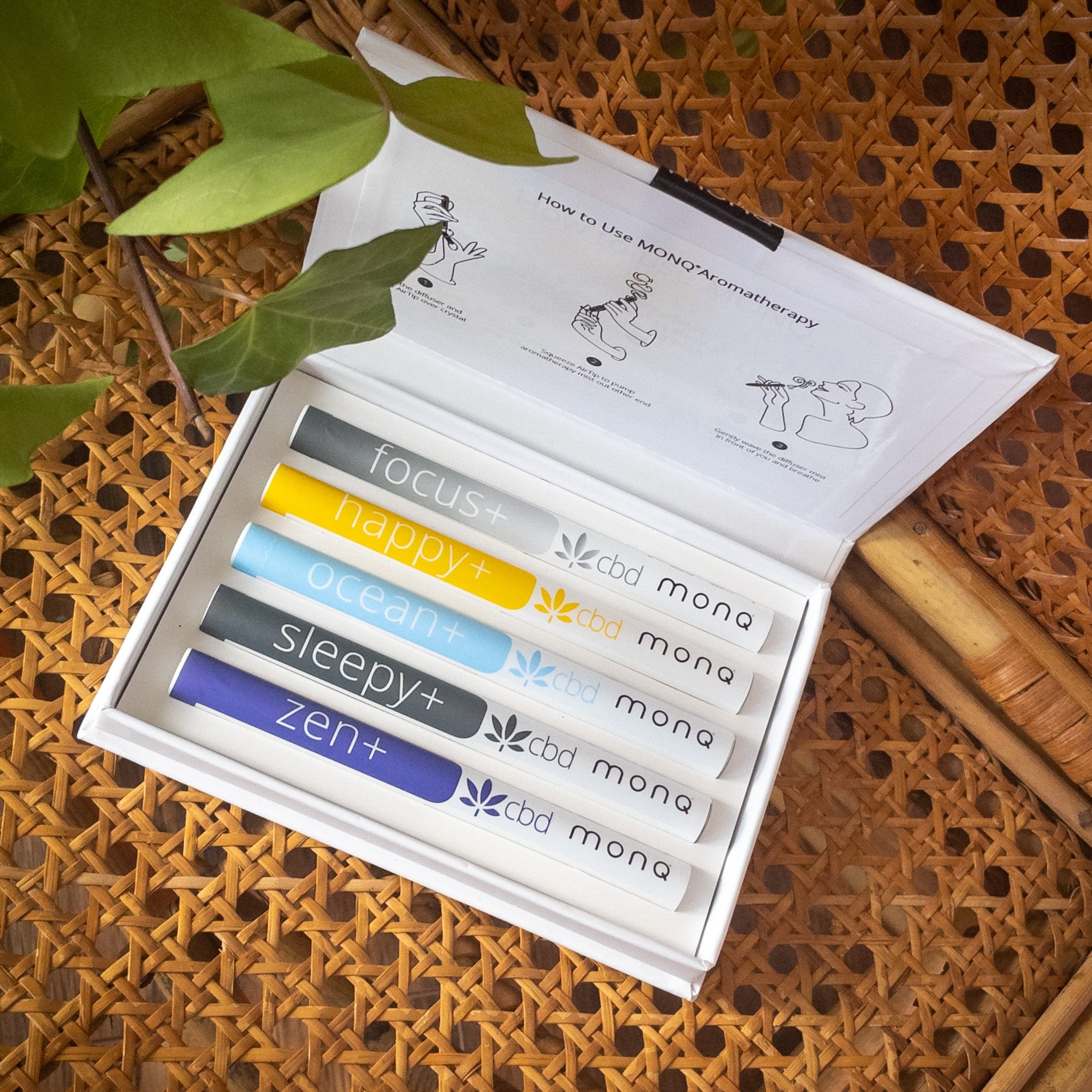
Sleepy MONQ features lavender alongside bergamot and chamomile - a trio designed specifically for evening wind-down. These three botanicals share calming, floral, and gently sedative aromatic profiles that work together to prepare the mind and body for rest. Sleepy MONQ is best used as part of a pre-sleep ritual, not during active hours.
Happy MONQ includes lavender as a supporting note alongside fennel, thyme, and vanilla. Here, lavender provides grounding warmth beneath the more uplifting top notes - it adds emotional stability without dampening the blend's brightness.
Both blends are also available in CBD versions: Sleepy MONQ+CBD and Happy MONQ+CBD, which pair the same essential oil formulas with American-grown CBD isolate (0.0% THC).
Botanical Source and Quality Notes
True lavender (Lavandula angustifolia) is distinct from lavandin (Lavandula x intermedia), a hybrid with a sharper, more camphorous scent and different chemical composition. When selecting lavender essential oil, knowing the species matters - lavandin is widely produced (and less expensive) but does not share all the same aromatic and therapeutic properties as true lavender.
High-quality lavender oil is typically sourced from high-altitude growing regions, particularly in Provence, France and Bulgaria, where the cooler climate produces oil with higher linalyl acetate content and a finer, more nuanced scent profile.
How to Use Lavender Essential Oil
- Diffuser: Add 3 to 5 drops to a water-based diffuser for ambient aromatherapy throughout a room
- Topical (diluted): Mix 2 to 3 drops per teaspoon of carrier oil for pulse points, temples, or neck - never apply undiluted essential oil directly to skin
- Personal aromatherapy: MONQ portable diffusers deliver lavender's calming scent on demand, without setup or dilution
- Pillow spray: A few drops diluted in water in a small spray bottle can be misted onto a pillow before sleep
- Bath: Diluted in a carrier before adding to bath water for a calming soak
Lavender pairs naturally with chamomile in calming aromatic blends - both herbs share deep roots in European herbalism and a gentle, accessible aromatic character. To explore chamomile's distinct varieties, key compounds, and traditional uses in depth, read our guide to chamomile essential oil.
Disclaimer: The above information is provided for general wellness and educational purposes only. Please note that while individual essential oil ingredients may have been shown to exhibit certain independent effects when used alone, the specific blends of ingredients contained in MONQ diffusers have not been tested. No specific claims are being made that use of any MONQ diffusers will lead to any of the effects discussed above. Additionally, please note that MONQ diffusers have not been reviewed or approved by the U.S. Food and Drug Administration. MONQ diffusers are not intended to be used in the diagnosis, cure, mitigation, prevention, or treatment of any disease or medical condition. If you have a health condition or concern, please consult a physician or your alternative health care provider prior to using MONQ diffusers. MONQ blends should not be inhaled into the lungs. Why? It works better that way. No Nicotine Ever. Inhale through the mouth, exhale through the nose. MONQ Diffusers are not intended for individuals under 18, or women who are pregnant or nursing.