Cardamom Essential Oil Uses

Cardamom Essential Oil: What It Is and What It Does
Cardamom essential oil is steam-distilled from the seed pods of Elettaria cardamomum, a perennial herb native to South India and Sri Lanka and one of the oldest known spices in human history. Cardamom has been documented in Sanskrit texts from 1000 BCE, in ancient Egyptian ceremonial use, in Greek and Roman trade records, and in traditional Ayurvedic and Chinese medicine systems. It is, by some accounts, the third most expensive spice in the world - and its essential oil is similarly prized for its complexity and versatility.
The essential oil is pale to colorless with a warm, sweet, spicy, and slightly camphorous scent that carries both a fresh green quality and an underlying warmth. Its primary aromatic compound is 1,8-cineole (also known as eucalyptol) - the same compound dominant in eucalyptus oil - which gives cardamom its characteristic cool-warm paradox and its association with mental clarity and fresh air. Alongside cineole, cardamom oil contains alpha-terpinyl acetate, linalool, and sabinene, creating a layered aromatic profile that is at once warming and clarifying.
The Aromatic Profile of Cardamom Essential Oil
Cardamom essential oil is famously difficult to categorize because it simultaneously reads as spicy, sweet, floral, and fresh - all at once. The dominant 1,8-cineole note creates a cool, penetrating quality that recalls eucalyptus and camphor. The alpha-terpinyl acetate contributes a sweet, slightly pine-like quality. The linalool softens everything with a floral-herbal background. The result is a scent that is warming yet fresh, grounding yet clarifying - a rare combination in the botanical world.
This complexity makes cardamom one of the most versatile aromatic ingredients in both perfumery and aromatherapy. It blends upward into citrus and floral accords, downward into spice and wood accords, and sideways into herbal and resinous territories. It is equally at home in morning clarity blends and evening comfort blends.
Wellness Research on Cardamom Essential Oil
Cardamom essential oil has attracted research interest primarily in two areas: its antimicrobial activity and its effects on the respiratory and nervous systems. Studies examining 1,8-cineole - cardamom's dominant compound - have documented its mucolytic (mucus-clearing) and bronchodilatory effects, consistent with its traditional use in respiratory support formulations across multiple botanical medicine traditions.
Research on cardamom aromatherapy and mood has found associations with reduced stress and improved alertness. A study published in the Journal of Complementary and Integrative Medicine found that cardamom inhalation was associated with improved outcomes attributed primarily to the 1,8-cineole content. Additional studies have examined cardamom's effect on cortisol levels and found preliminary associations between cardamom scent exposure and reduced stress biomarkers.
Traditional Ayurvedic applications of cardamom include its use as an energizing, digestive-supporting, and mood-elevating botanical. Modern research has begun to characterize the mechanisms behind these traditional applications, finding that cardamom's aromatic compounds interact with both the olfactory system and respiratory pathways in ways that support the traditional usage pattern.
Cardamom Essential Oil in Aromatherapy
In aromatherapy practice, cardamom is used as a clarifying, warming, and uplifting note - particularly valued in blends designed to support mental focus, digestive comfort, and emotional warmth. Its cineole content gives it a naturally energizing, clear-air quality that pairs well with more grounding or earthy botanicals.
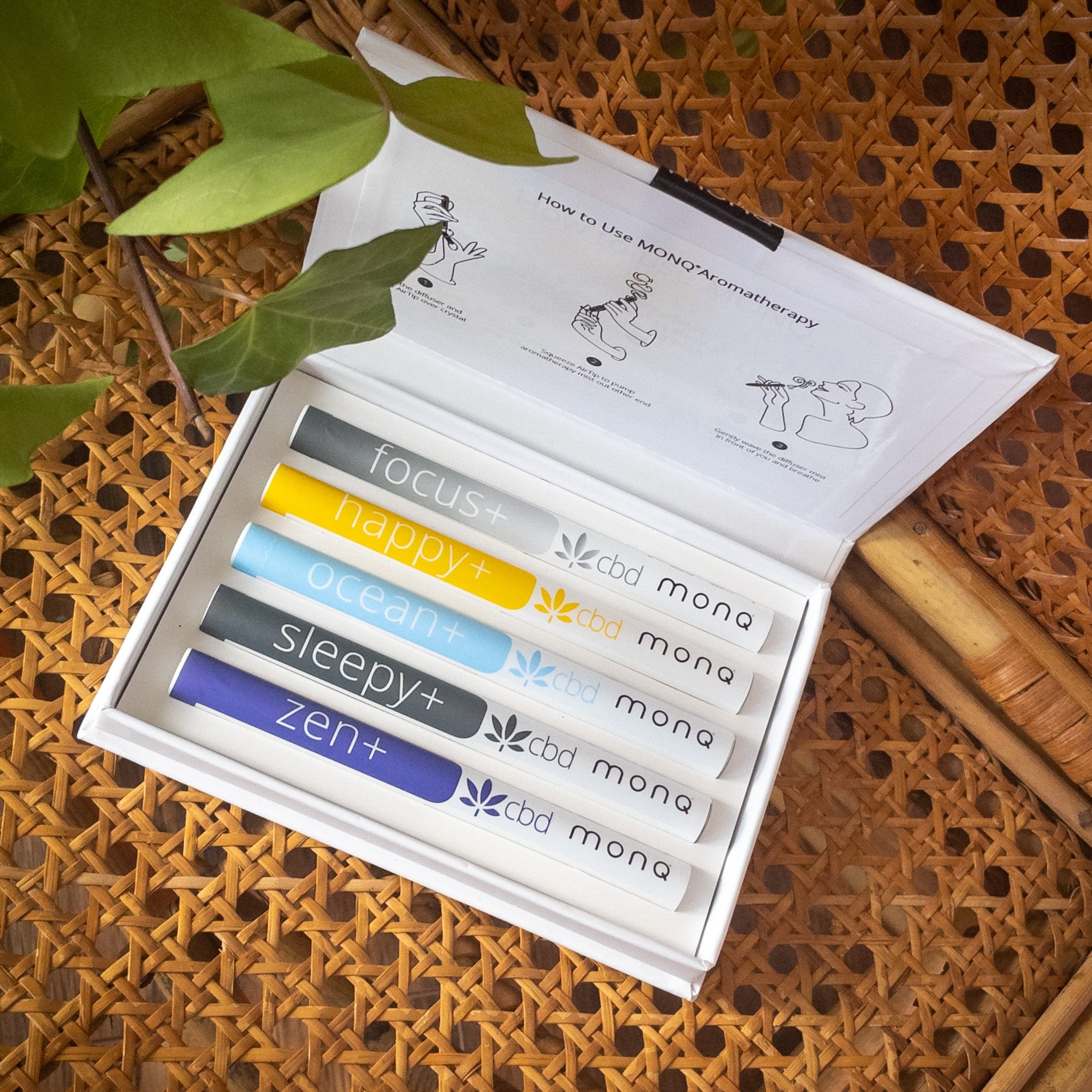
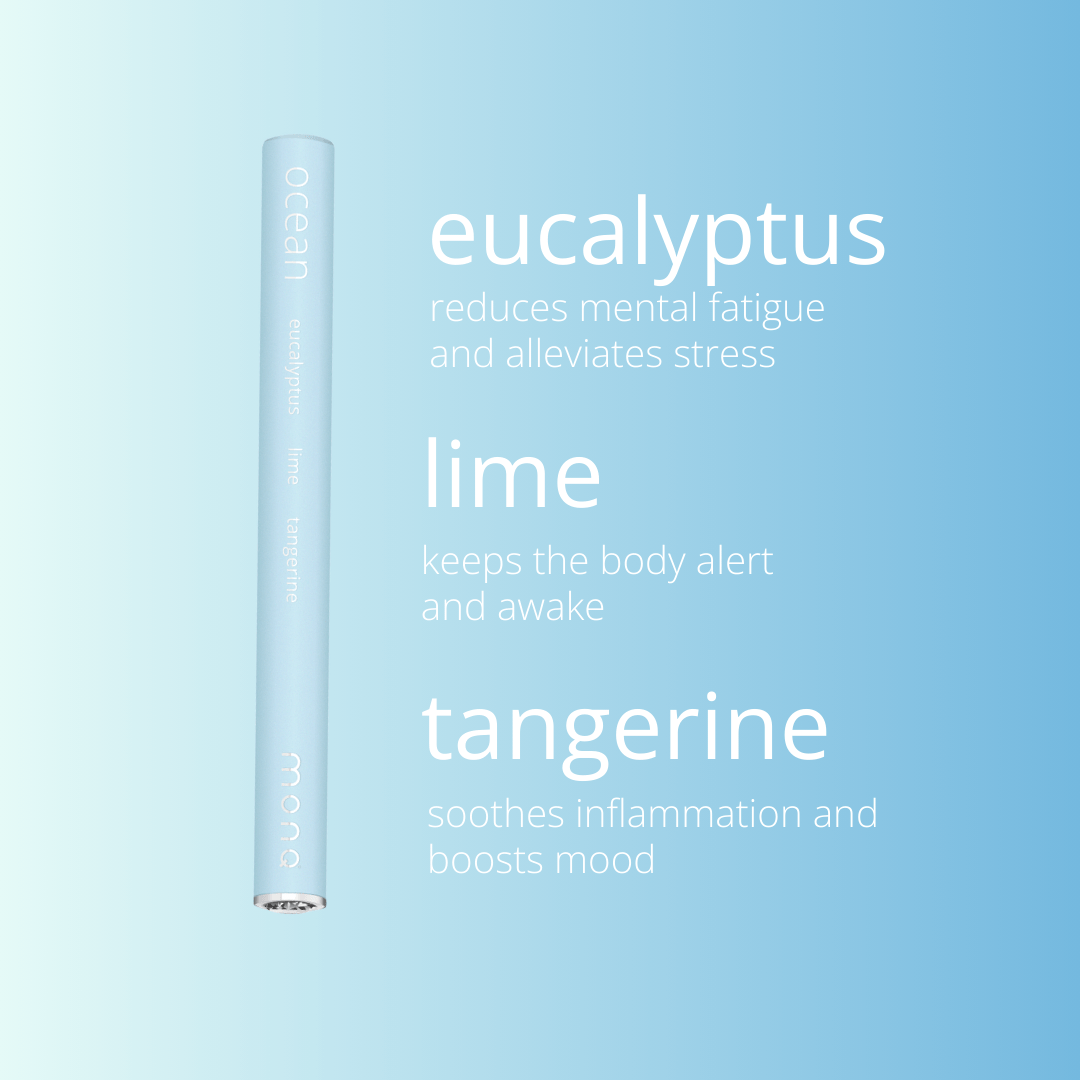
While cardamom is not a confirmed ingredient in MONQ's standard diffuser line, its aromatic profile shares qualities with botanicals featured in several MONQ blends. The clarifying cineole note that dominates cardamom is also central to Ocean MONQ, where Eucalyptus provides that same cool, penetrating clarity. Focus MONQ, with Coffee, Ginger, and Rosemary, captures a similar warm-yet-clarifying aromatic territory. Browse the full MONQ collection for blends that align with cardamom's warming, clarifying aromatic character. If you are using aromatherapy for stress support, the aromatherapy for stress guide offers broader context for how scent interacts with the nervous system.
Terpene Connections
Cardamom's primary aromatic compound, 1,8-cineole, places it in the same terpene family as eucalyptus and rosemary - making it an unexpected aromatic cousin to the conifer-and-herb botanicals that dominate clarity-focused blends. Cardamom also contains linalool as a secondary component, which is where its soft floral quality originates - the same terpene that gives lavender its characteristic calming-floral character.
The combination of cineole (clarifying, penetrating) and linalool (calming, floral) in a single botanical is part of what gives cardamom its dual-character aromatic experience. This makes it a useful bridge ingredient between energizing and calming aromatic traditions - a quality that experienced aromatherapy practitioners have exploited for centuries. For more on linalool, see the linalool terpene profile.
Frequently Asked Questions
- What does cardamom essential oil smell like?
- Cardamom essential oil has a warm, sweet, spicy, and slightly camphorous scent with a fresh green quality and a floral-herbal undertone. It is simultaneously warming and clarifying - one of the few botanical oils that reads as both a spice and a fresh-air scent.
- What is 1,8-cineole and why does it matter in cardamom?
- 1,8-cineole (also called eucalyptol) is the dominant aromatic compound in cardamom essential oil - the same compound that makes eucalyptus oil recognizable. In cardamom, it creates that characteristic cool, penetrating freshness that gives the spice its clarity-associated reputation.
- How does cardamom essential oil differ from the spice?
- The essential oil captures the volatile aromatic compounds of cardamom seeds through steam distillation - giving you the pure scent profile without the culinary texture. The oil is more concentrated and more complexly aromatic than dried cardamom pods, with the cineole notes more prominent.
- What aromatherapy blends work well with cardamom?
- Cardamom blends naturally with citrus oils (bergamot, orange, lime), resins (frankincense, myrrh), woods (sandalwood, cedarwood), and herbs (rosemary, eucalyptus). It works well in both morning-clarity and evening-comfort blend contexts.
Learn how to use MONQ for the best aromatic experience →
Disclaimer: The above information is provided for general wellness and educational purposes only. Please note that while individual essential oil ingredients may have been shown to exhibit certain independent effects when used alone, the specific blends of ingredients contained in MONQ diffusers have not been tested. No specific claims are being made that use of any MONQ diffusers will lead to any of the effects discussed above. Additionally, please note that MONQ diffusers have not been reviewed or approved by the U.S. Food and Drug Administration. MONQ diffusers are not intended to be used in the diagnosis, cure, mitigation, prevention, or treatment of any disease or medical condition. If you have a health condition or concern, please consult a physician or your alternative health care provider prior to using MONQ diffusers. MONQ blends should not be inhaled into the lungs. Why? It works better that way. No Nicotine Ever. Inhale through the mouth, exhale through the nose. MONQ Diffusers are not intended for individuals under 18, or women who are pregnant or nursing.