Linalool Terpene Benefits

Linalool is a naturally occurring terpene found in various essential oils, such as lavender and coriander. Known for its floral and slightly spicy aroma, it is widely used in aromatherapy to promote relaxation and reduce stress. Linalool has calming properties that make it a popular choice for improving sleep quality and enhancing overall emotional well-being.
In addition to its soothing effects, linalool is recognized for its potential antimicrobial and antioxidant benefits. It may help support skin health by soothing irritation and promoting a healthy complexion. As with all essential oils, it should be properly diluted, and a healthcare provider should be consulted before use.
Where Linalool Is Found
Most people associate linalool with lavender - and for good reason. Lavender essential oil is one of the richest known sources, and linalool is responsible for much of what people recognize as lavender's characteristic calm. But lavender is just the beginning. Linalool has been identified in over 200 plant species across wildly different botanical families.
Coriander seed, ho wood, sweet basil, bergamot, and many conifer species all produce meaningful concentrations of linalool. It shows up in rosewood, petitgrain, and certain varieties of sage. This wide distribution is not coincidental - linalool appears to serve important signaling functions across plant families, attracting beneficial insects and communicating with the surrounding ecosystem.
For humans, linalool's ubiquity means it is one of the most commonly encountered terpenes in everyday life. Much of what people describe as a "calming" quality in botanical aromatherapy traces back to linalool's presence - whether the source is lavender, a forest walk through conifers, or a fresh herb garden. The molecule is familiar to human olfactory systems in a way that few other terpenes are.
The Stress-Scent Connection: How Linalool Reaches the Brain
Linalool is one of the most studied terpenes in the context of aromatic stress relief. When inhaled, linalool molecules follow the same direct pathway that all olfactory compounds use: they bind to receptors in the nasal epithelium, which triggers a signal that travels along the olfactory nerve directly to the limbic system.
The amygdala - the brain's primary alarm center, responsible for processing threat and generating the stress response - sits at the center of this pathway. Research on linalool-rich botanical sources has consistently shown reductions in stress markers in human subjects when the compound is inhaled in controlled settings. Cortisol levels, self-reported stress scores, and physiological measures of nervous system activation have all been tracked in these studies.
One of linalool's notable characteristics is the speed of its effect. The olfactory-to-limbic pathway is among the fastest sensory routes in the nervous system. Calming effects from linalool inhalation are typically observable within one to two minutes - faster than most ingested compounds could reach systemic circulation. This speed is part of what makes aromatherapy with linalool-rich botanicals practically useful rather than merely theoretical.
Linalool pairs naturally with limonene (which contributes uplifting, energizing character) and with beta-caryophyllene (which acts through a separate receptor pathway). The combination creates a broader-spectrum effect than any single terpene could produce on its own. It also pairs well with the calming botanicals found in chamomile, another aromatic source with overlapping calming properties.
Linalool and Sleep
Linalool's calming properties extend naturally into sleep support. When the nervous system is given aromatic cues that signal safety and reduced urgency - which linalool-rich botanicals provide - the transition into sleep onset becomes more accessible for many people.
Pre-sleep aromatherapy rituals using lavender and related linalool-rich botanicals have a long history across cultures, and modern research has begun to provide mechanistic grounding for what people have observed empirically for generations. The practice of diffusing or inhaling calming botanicals in the 20-30 minutes before sleep has measurable effects on sleep latency (the time it takes to fall asleep) in study populations.
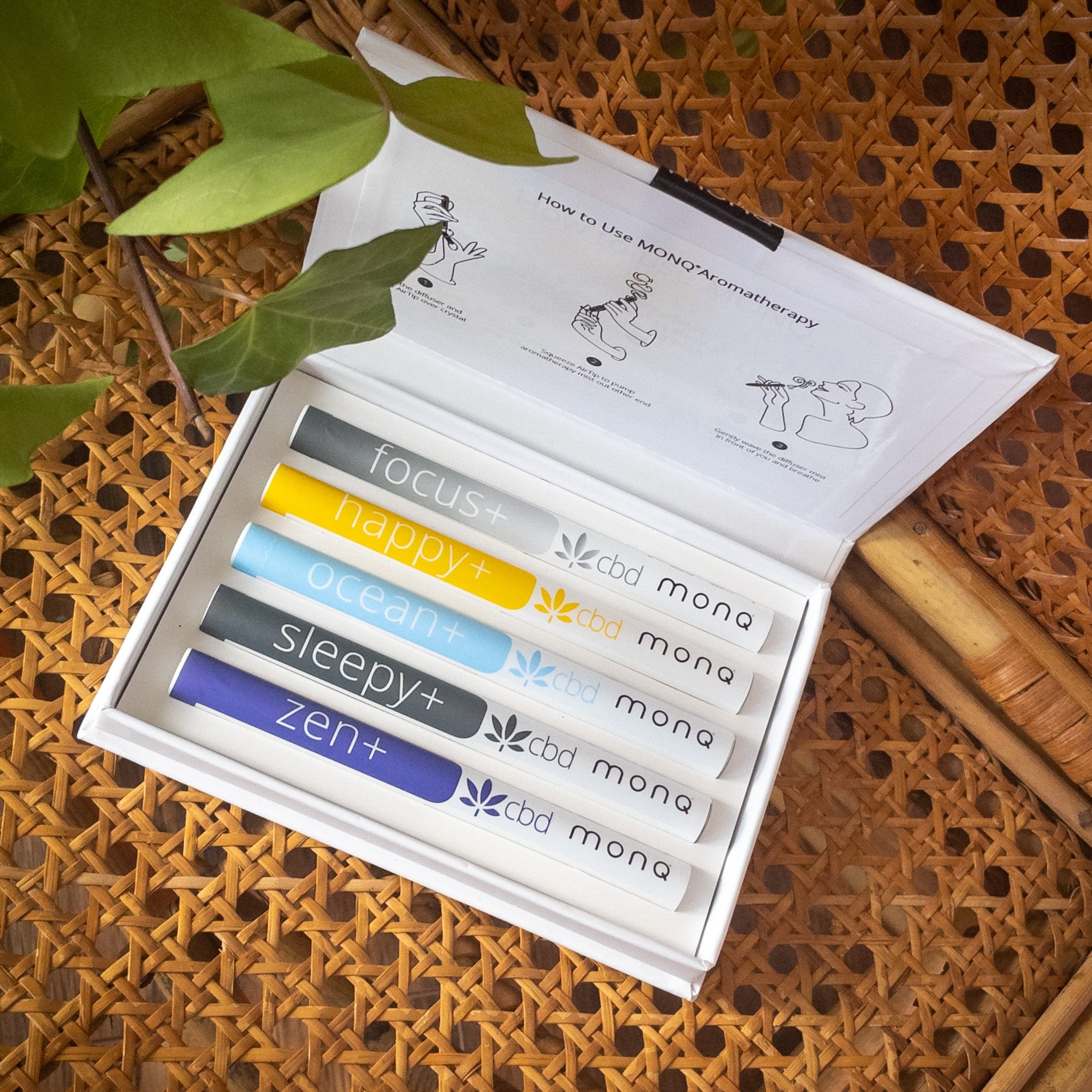
MONQ's Sleepy blend is formulated around lavender and other botanicals that contribute linalool to the aromatic profile. If evening wind-down is a priority, Sleepy MONQ is a starting point worth exploring.
Linalool in MONQ
Linalool is present across several MONQ blends that feature lavender and related botanicals. Because MONQ's inhalation method - mouth in, nose out - directs aromatic molecules through the nasal passage and directly toward olfactory receptors, linalool-containing blends engage the calming pathway efficiently.
For those using aromatherapy as part of a broader approach to daily stress management, the aromatherapy for stress guide covers the full science behind scent-to-brain pathways. Browse stress-focused MONQ blends to find formulations built around linalool and complementary terpenes.
Terpene literacy - understanding what linalool is, where it comes from, and how it interacts with the nervous system - changes how aromatherapy feels to use. It moves from pleasant ambient scent into intentional tool. Linalool is one of the most well-documented pathways between the plant world and the human stress response, and it has been working quietly in botanical traditions long before researchers gave it a name.
Disclaimer: The above information is provided for general wellness and educational purposes only. Please note that while individual essential oil ingredients may have been shown to exhibit certain independent effects when used alone, the specific blends of ingredients contained in MONQ diffusers have not been tested. No specific claims are being made that use of any MONQ diffusers will lead to any of the effects discussed above. Additionally, please note that MONQ diffusers have not been reviewed or approved by the U.S. Food and Drug Administration. MONQ diffusers are not intended to be used in the diagnosis, cure, mitigation, prevention, or treatment of any disease or medical condition. If you have a health condition or concern, please consult a physician or your alternative health care provider prior to using MONQ diffusers. MONQ blends should not be inhaled into the lungs. Why? It works better that way. No Nicotine Ever. Inhale through the mouth, exhale through the nose. MONQ Diffusers are not intended for individuals under 18, or women who are pregnant or nursing.