Borneol Terpene

Borneol: What It Is and What It Does
Borneol is a naturally occurring bicyclic organic compound - a terpene alcohol found in camphor wood, rosemary, ginger, lavender, clove, and frankincense, among many other botanical sources. It has one of the longest documented histories of use in traditional medicine of any aromatic compound, appearing in ancient Chinese pharmacopoeia, Ayurvedic texts, and traditional Southeast Asian botanical practices that date back thousands of years.
Structurally, borneol is derived from the oxidation of the terpene camphor, and the two compounds are closely related in their aromatic profiles. It exists in two mirror-image forms - (+)-borneol and (-)-borneol - which occur in different plant species and produce subtly different aromatic qualities. Natural borneol from plant sources is typically a racemic mix, though specific species tend to favor one isomer.
The Aromatic Profile of Borneol
Borneol has a sharp, camphor-like, woody-herbal scent with cooling qualities and a dry, slightly medicinal undertone. It is not a frontline fragrance note - you rarely smell borneol in isolation - but its presence in a botanical blend adds a distinctive cool sharpness and complexity that gives blends like frankincense and clove their characteristic depth and edge.
In frankincense resin, borneol is one of the terpene compounds that contributes to the sacred, meditative quality that has made frankincense central to ritual and contemplative practice across multiple cultures. In clove, borneol complements the dominant eugenol compound, adding a woody coolness to clove's characteristic spicy warmth.
Wellness Research on Borneol
Borneol has attracted sustained research interest, particularly in two areas: its potential as a neurological permeability agent and its anti-inflammatory and antimicrobial properties. Research in pharmacokinetics has examined borneol's ability to temporarily influence the blood-brain barrier permeability - a property that has made it a subject of study in traditional Chinese medicine preparations where it is used to enhance the delivery of other botanical compounds.
In-vitro and animal studies have documented borneol's anti-inflammatory properties, showing its ability to modulate certain cytokine pathways associated with inflammatory response. Researchers have also investigated borneol's interaction with TRPM8 cold receptors, which may help explain its cooling sensation when applied or inhaled.
Research on borneol's effects on the central nervous system is ongoing. Some studies suggest it may have a mild sedative effect at higher concentrations, while at lower aromatic doses - as in aromatherapy use - the same cooling, clarifying quality may support focus and mental clarity. This dual character is consistent with many terpene compounds that show dose-dependent effects.
Borneol in Aromatherapy
In aromatherapy practice, borneol is valued for its grounding, clarifying quality - particularly when blended with resinous or spicy botanicals. It rarely appears as a standalone aromatic ingredient; instead, it functions as a structural element within complex botanical blends, adding depth and a distinctive cooling-warmth contrast.
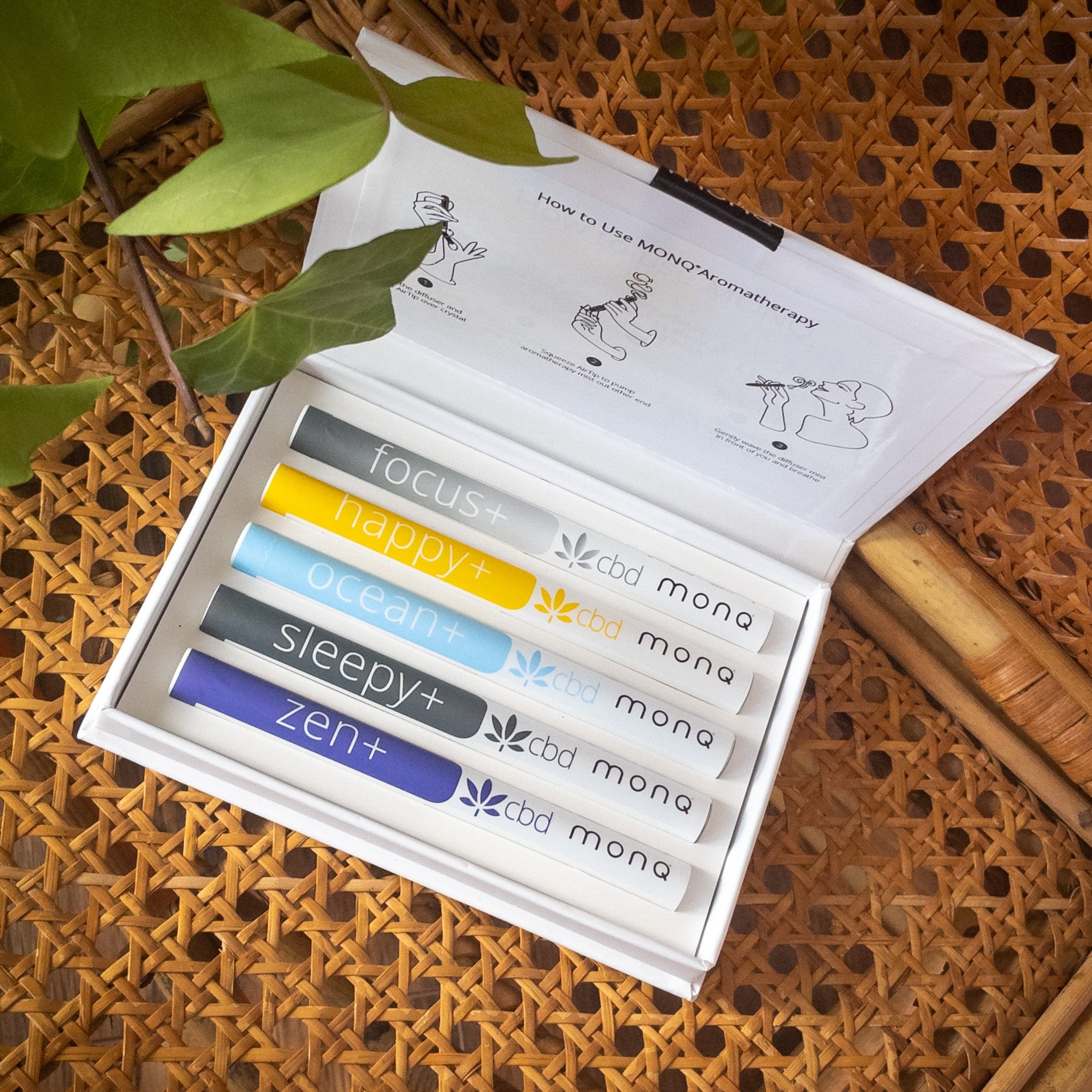
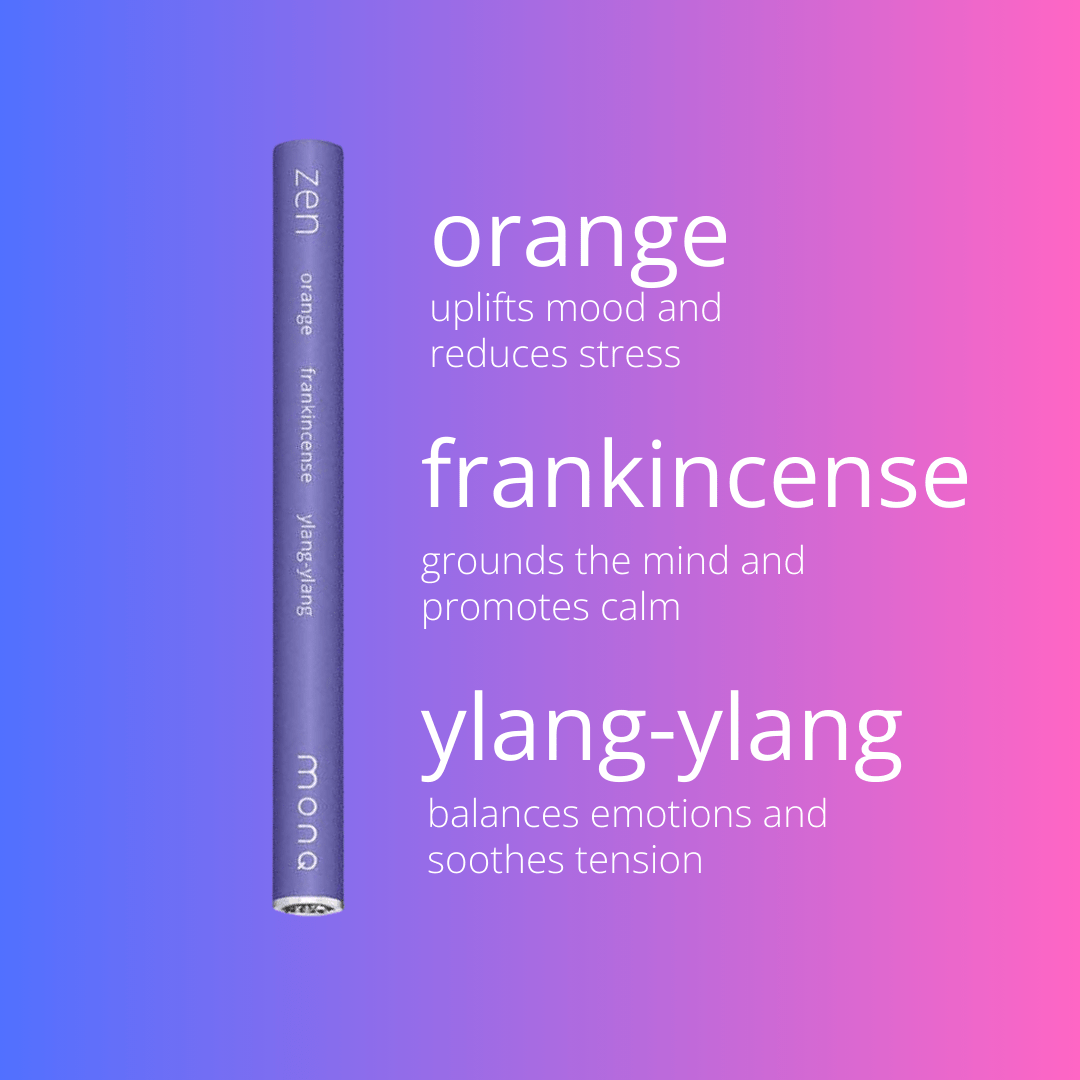
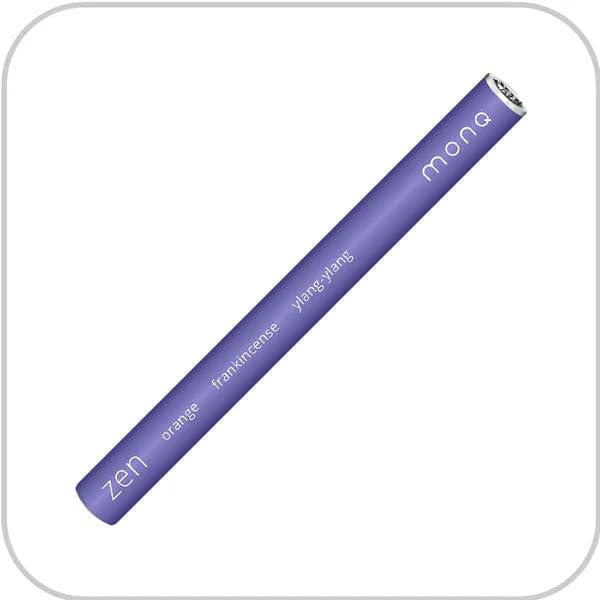
Zen MONQ, built around Frankincense, Orange, and Ylang Ylang, draws on frankincense as a natural source of borneol traces within its rich resinous terpene profile. Relieve MONQ, featuring Copaiba, Ginger, and Clove, captures borneol's contribution through the clove component - a botanical with a long history of use in warming, grounding aromatherapy traditions. Explore the full MONQ collection to find blends that feature these grounding resinous botanicals.
Terpene Connections
Borneol is closely related to camphor in its chemical structure - the two compounds are biosynthetically linked and often appear together in the same plant species. In the broader terpene network, borneol frequently co-occurs with alpha-pinene in frankincense and rosemary, where the combination creates that distinctive sharp-resinous character associated with contemplative and focus-oriented aromatic traditions.
Borneol also shares botanical territory with beta-caryophyllene in clove, where the two terpenes combine to create clove's complex spicy-warm-cool aromatic signature. Understanding this terpene layering helps explain why whole botanical extracts carry such dimensionality compared to single synthetic fragrance compounds.
Frequently Asked Questions
- What does borneol smell like?
- Borneol has a sharp, camphor-like, woody-herbal scent with a cooling quality. It is rarely perceived in isolation but contributes a distinctive cool depth to the botanicals that contain it, including frankincense, clove, and rosemary.
- Where does borneol come from?
- Borneol occurs naturally in camphor wood, frankincense, clove, rosemary, ginger, lavender, and several other botanical species. It has been harvested commercially from Borneo camphor trees for centuries - which is where its common name originates.
- Is borneol found in MONQ diffusers?
- Zen MONQ (Frankincense, Orange, Ylang Ylang) features frankincense, which contains borneol as one of its terpene components. Relieve MONQ (Copaiba, Ginger, Clove) features clove, another borneol-containing botanical.
- What is the difference between borneol and camphor?
- Borneol and camphor are chemically related - borneol is the alcohol form, camphor is the ketone form of the same molecular structure. Both have cooling, sharp, camphor-like aromatic qualities, but borneol tends to be slightly softer and less intense than pure camphor.
Learn how to use MONQ for the best aromatic experience →
Disclaimer: The above information is provided for general wellness and educational purposes only. Please note that while individual essential oil ingredients may have been shown to exhibit certain independent effects when used alone, the specific blends of ingredients contained in MONQ diffusers have not been tested. No specific claims are being made that use of any MONQ diffusers will lead to any of the effects discussed above. Additionally, please note that MONQ diffusers have not been reviewed or approved by the U.S. Food and Drug Administration. MONQ diffusers are not intended to be used in the diagnosis, cure, mitigation, prevention, or treatment of any disease or medical condition. If you have a health condition or concern, please consult a physician or your alternative health care provider prior to using MONQ diffusers. MONQ blends should not be inhaled into the lungs. Why? It works better that way. No Nicotine Ever. Inhale through the mouth, exhale through the nose. MONQ Diffusers are not intended for individuals under 18, or women who are pregnant or nursing.