

5 Aromatherapy Habits for a Less Stressful Week
Why Habits Beat Heroics for Managing Stress
Most stress-relief advice focuses on crisis management - what to do when you are already at the breaking point. That is useful, but it is reactive. The more durable approach is to build small, consistent habits that reduce the accumulation of stress before it reaches critical levels. A handful of well-placed aromatherapy rituals - anchored to moments that already exist in your day - can make a meaningful difference in your baseline pressure level over the course of a week.
These five habits take under five minutes each. They require no special equipment beyond a portable personal diffuser. And they work by using your oldest sense - smell - to send deliberate signals to your nervous system at exactly the moments it needs them most.
Habit 1: The Morning Grounding Breath
Most people start their day by immediately checking their phone, email, or news - which means the first input their nervous system receives is a list of demands, concerns, and things to worry about. This sets a reactive tone that can persist for hours.
An alternative: spend the first two minutes of your day anchored in the present before you open anything. Three to five slow breaths with a grounding aromatic blend - something like frankincense or a balanced calming blend - before you reach for the phone. Inhale through the mouth, exhale slowly through the nose, and let the scent fully register before you do anything else.
This is not meditation (though it pairs beautifully with a brief sitting practice). It is simply a two-minute pattern interrupt that gives your nervous system a moment of settled presence before the day's demands arrive. Done consistently, it establishes a calmer baseline from which everything else unfolds with a little more ease.
What to use: A grounding blend with frankincense or cedar. The Zen family of oils - deep, meditative, slightly woody - works well here.
When to do it: Before you pick up your phone in the morning. Lay the diffuser on your nightstand so it is the first thing you reach for.
Habit 2: The Midday Reset
Energy and focus follow a natural curve through the day, with a predictable dip in the early-to-mid afternoon. This is when many people reach for caffeine, mindlessly scroll social media, or push through with diminishing returns. But what the nervous system actually needs at this point is a genuine reset - a two-minute pause that lets the mental battery partially recharge.
Research from the American Psychological Association on recovery from work stress consistently shows that brief, deliberate breaks - not distraction, but actual mental disengagement - improve sustained performance and reduce end-of-day fatigue. Aromatherapy can anchor and deepen these breaks by providing a sensory signal that marks a real shift in mental state rather than just a change in activity.
For a midday reset, a brighter, more uplifting blend works better than a deep calming one - you want to lift and refresh, not sedate. Citrus notes (orange, bergamot, lime) paired with something slightly herbal give you that combination of clarity and calm that makes the second half of the day feel more manageable.
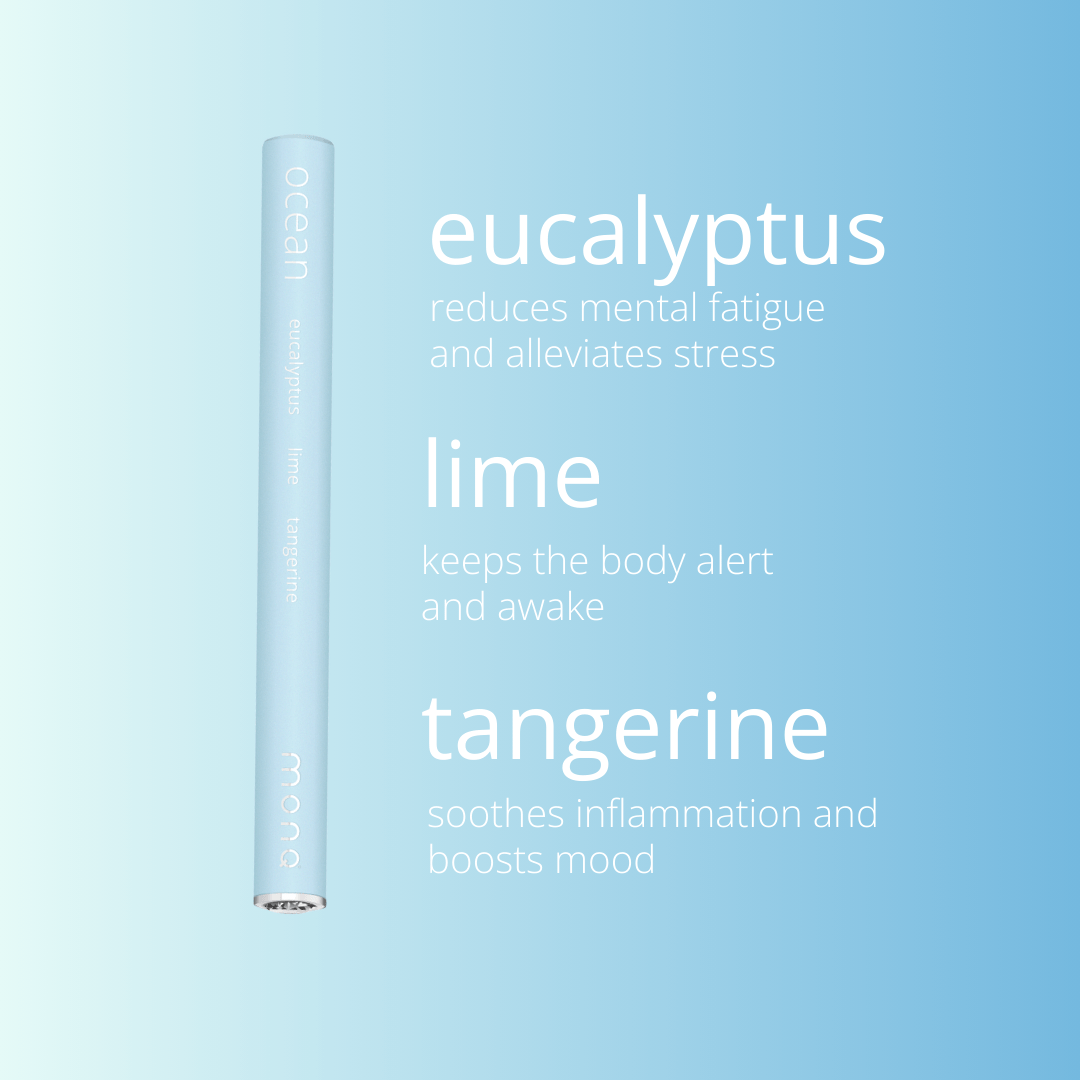
What to use: Ocean MONQ (eucalyptus, lime, tangerine) for a fresh, clarifying midday reset. The eucalyptus opens the airways and sharpens focus; the citrus lifts mood without overstimulating.
When to do it: Set a recurring reminder at 1:30 or 2 PM. Step away from your screen, take three deliberate breaths, and do nothing productive for 90 seconds. That combination - real pause plus aromatic anchor - is more effective than either alone.
Habit 3: The Commute Decompression
The commute is one of the most stress-accumulating parts of the average day, yet it is also one of the least intentionally managed. Traffic, transit delays, and the mental residue of the workday all pile on during this transition window. By the time most people arrive home, they are carrying more stress than they left work with.
MONQ's pocket-sized format was designed for exactly this context. You cannot burn incense in your car or on the subway. You can take two deliberate breaths from a personal diffuser at a red light or between stops. The MONQ technique - inhale through the mouth, exhale through the nose - takes about ten seconds and works in any environment.
Using a consistent calming blend during your commute trains your nervous system to begin downshifting before you arrive home. Over time, the scent alone starts to trigger the transition - you get the benefit of the habit even before you complete the full breathing cycle.
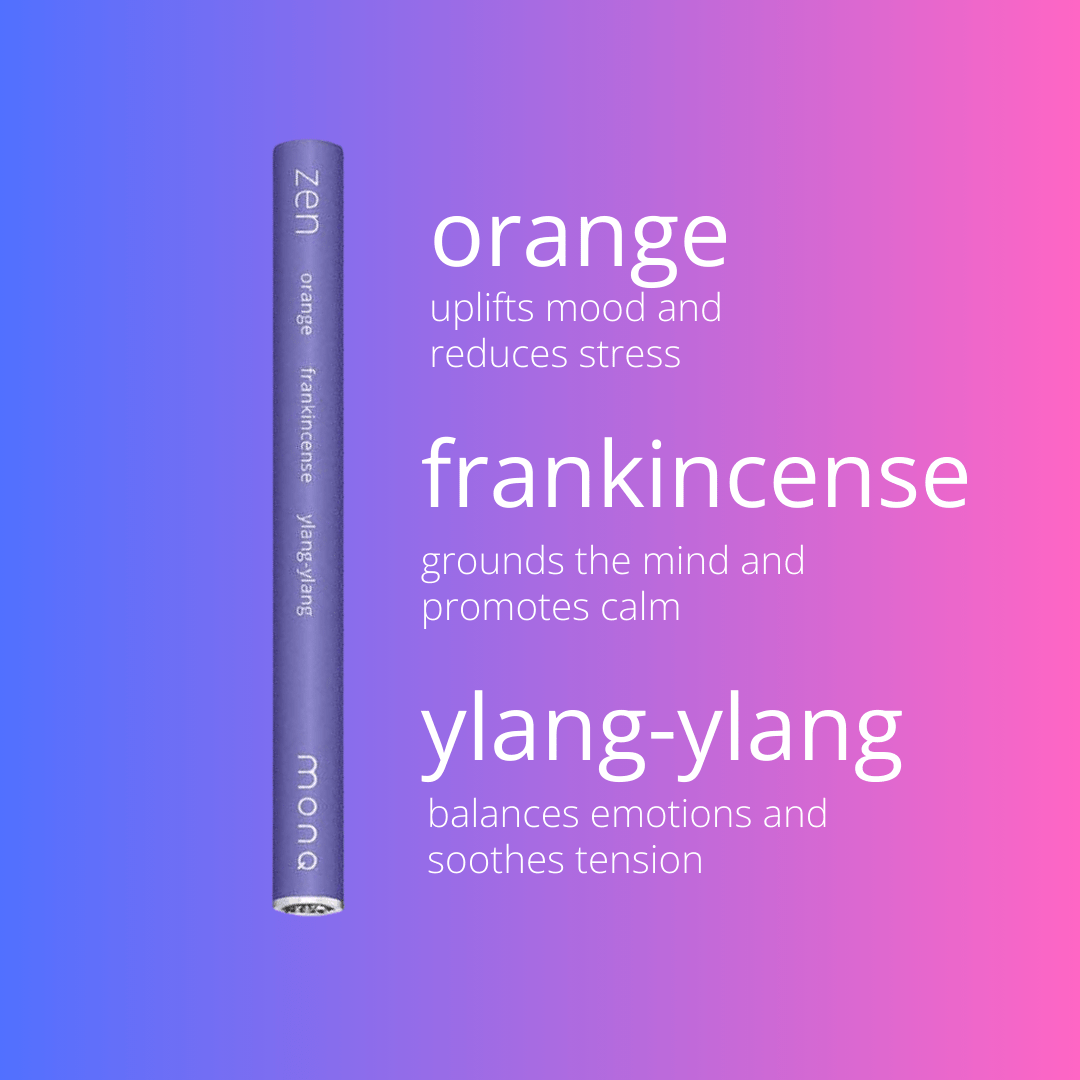
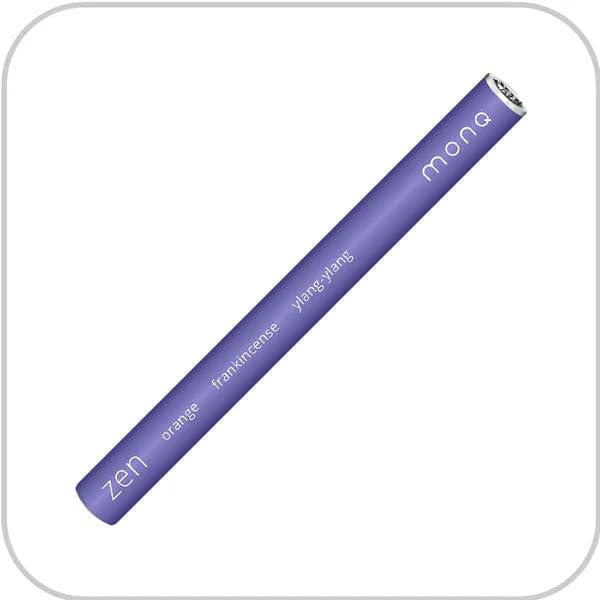
What to use: Zen MONQ (frankincense, orange, ylang ylang) for its grounding and calming character. Keep it in your bag, car cupholder, or jacket pocket.
When to do it: Within the first five minutes of your commute home. Starting the downshift early gives it more time to work before you arrive.
Habit 4: The Pre-Meeting Calm
High-stakes meetings - performance reviews, difficult conversations, presentations, negotiations - generate anticipatory pressure that often begins hours before the event itself. By the time you walk into the room, your nervous system may already be running in elevated-alert mode, which makes it harder to think clearly, listen well, and respond rather than react.
A brief pre-meeting grounding practice - two to three minutes, ideally in a private space - can shift you from that reactive mode into a more centered and present state. Slow breathing alone helps; pairing it with a grounding aromatic anchor deepens the effect by giving the nervous system a consistent sensory cue it associates with calm and capability.
The key is to do this consistently before meetings that matter, so that the scent itself becomes a conditioned trigger for the centered state you are cultivating. After a few weeks of consistent use, a single breath of the blend becomes a fast-track signal to your nervous system: this is the state I want to be in right now.
What to use: A grounding blend - frankincense-forward works well here for its meditative and centering quality. Alternatively, a balanced blend like Zen MONQ that combines grounding depth with gentle mood support.
When to do it: Two to three minutes before you enter the meeting room or join the call. For a fuller sequence, see how to reset between meetings before the next agenda takes over. Find a quiet moment - the bathroom, your car, a corner of the hallway - and take three deliberate breaths.
Habit 5: The Evening Wind-Down Signal
Sleep quality is one of the most direct measures of how well you are managing your stress load. A wound-up mind at bedtime is not just unpleasant - it compounds into the next day's pressure through the mechanism of fatigue. One of the most effective investments you can make in your stress management is a consistent evening wind-down ritual that helps your nervous system genuinely transition from active to rest mode.
The key word is consistent. The same sequence, at roughly the same time, involving the same sensory inputs. Over time, the ritual itself becomes the signal - your nervous system learns that when these specific inputs arrive, sleep is coming and it can begin to down-regulate.
Aromatherapy plays an anchor role in the most effective wind-down rituals because scent is processed by the limbic system, which regulates both emotional state and circadian rhythm. A calming, familiar scent used consistently at bedtime may support faster transition to sleep and more settled rest.
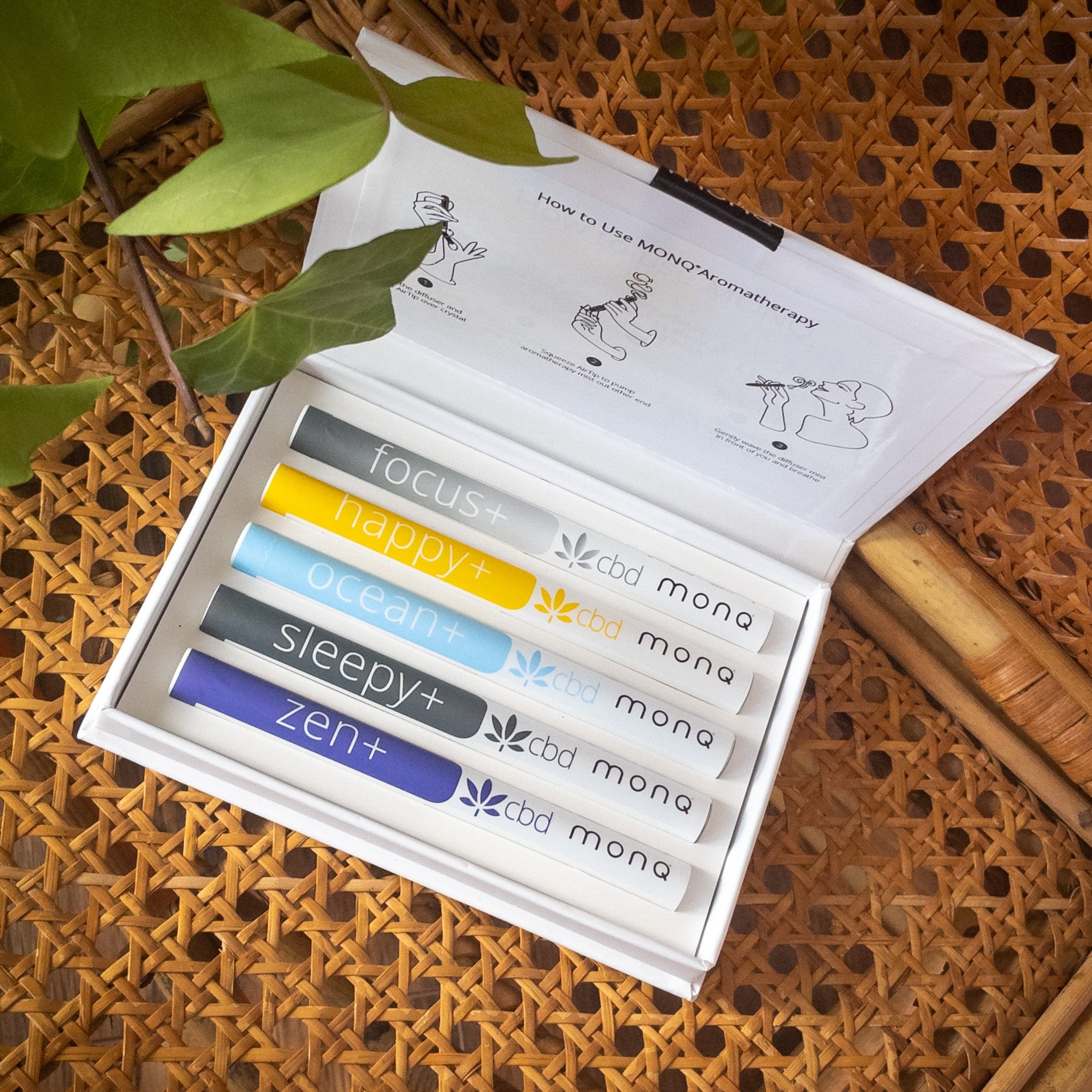
What to use: Happy MONQ (fennel, thyme, vanilla) for its warm, sweet, deeply comforting character - the olfactory equivalent of a weighted blanket. Or lavender-forward blends for their classical sleep-association properties.
When to do it: As part of a fixed pre-sleep sequence: dim lights, put the phone away, take three deliberate breaths with your chosen blend, and let the exhale be slow and complete. Do this for fourteen consecutive nights and notice what changes.
The MONQ Advantage: Portability as a Habit Enabler
The single biggest predictor of whether a stress-relief habit sticks is accessibility. If the tool is not immediately available in the moment you need it, the habit does not form. You will not set up a room diffuser at your desk before a meeting, or carry a bottle of essential oil and a cotton ball in your pocket for commute use.
The pen-sized personal diffuser format removes this barrier entirely. One diffuser per bag, one on the nightstand, one in the car console. When the moment arrives - commute, pre-meeting, evening wind-down - the tool is already there. That friction reduction is not trivial; it is the difference between a habit that forms and an intention that doesn't.
Each MONQ diffuser contains a pre-blended, calibrated combination of essential oils in a portable format that requires no setup, no mixing, and no cleanup. Inhale through the mouth, exhale through the nose, put it back in your pocket. That is it. The simplicity is the point.
Building Your Week
You do not need to adopt all five habits at once. Start with one - the moment in your day where stress accumulation is highest and the habit slot is clearest. Anchor it to something that already happens consistently. Use the same blend every time in that context. Give it two to three weeks to establish.
Once one habit is solid, add a second. Within a month, you will have built a stress-management infrastructure that runs mostly on autopilot - small, consistent signals to your nervous system that compound into a genuinely less stressful week.
The goal is not to eliminate pressure from your life - that is not possible. The goal is to manage how it accumulates and how quickly you recover from it. Five two-minute habits, distributed across your day, can change both of those things.
Disclaimer: The above information is provided for general wellness and educational purposes only. Please note that while individual essential oil ingredients may have been shown to exhibit certain independent effects when used alone, the specific blends of ingredients contained in MONQ diffusers have not been tested. No specific claims are being made that use of any MONQ diffusers will lead to any of the effects discussed above. Additionally, please note that MONQ diffusers have not been reviewed or approved by the U.S. Food and Drug Administration. MONQ diffusers are not intended to be used in the diagnosis, cure, mitigation, prevention, or treatment of any disease or medical condition. If you have a health condition or concern, please consult a physician or your alternative health care provider prior to using MONQ diffusers. MONQ blends should not be inhaled into the lungs. Why? It works better that way. No Nicotine Ever. Inhale through the mouth, exhale through the nose. MONQ Diffusers are not intended for individuals under 18, or women who are pregnant or nursing.










Leave a comment