

How to Make Yourself Fall Asleep: 5 Behavioral Shifts for Evening Calm
When your mind is racing and the clock is ticking, figuring out how to make yourself fall asleep can feel like an impossible task. The harder you try to force it, the further away rest seems to drift. While many people immediately reach for external aids, the human body’s natural rest state is actually triggered by a series of specific environmental and behavioral cues. By taking control of those cues, you can naturally guide your nervous system into a state of deep relaxation.

Here are five fundamental behavioral shifts to help you build an effective, calming evening routine.
1. Optimize Your Bedroom Environment
Your physical environment dictates your biological response. Two of the most critical factors for sleep are temperature and light. According to the Sleep Foundation's guide on bedroom temperature, keeping your room cool—ideally around 65 degrees Fahrenheit—supports the body's natural drop in core temperature that initiates sleep.
Equally important is light exposure. The widespread use of screens before bed exposes the eyes to blue light, which suppresses the production of rest-inducing hormones. As detailed in the report "Blue light has a dark side" by Harvard Health, creating a dark, screen-free environment at least an hour before bed is one of the most effective ways to signal to your brain that the day has ended.
2. Implement Cognitive Deceleration
You cannot sprint all day and expect to stop on a dime. Cognitive deceleration is the practice of actively slowing down your mental processes. Headspace’s science-backed tips on how to sleep better emphasize the importance of creating a buffer zone between the stress of the day and your intended sleep time. This might involve reading a physical book, journaling, or doing light stretching—activities that require focus but do not trigger a stress response.
3. The Power of Slow-Paced Nasal Exhalation
Breath is the remote control for the nervous system. When you want to know how to make yourself fall asleep, changing the pace of your exhalation is one of the fastest physiological levers you can pull. A comprehensive systematic review published on PubMed, "How Breath-Control Can Change Your Life," demonstrates that slow-paced breathing directly correlates with increased parasympathetic activity (the "rest and digest" state) and decreased physiological arousal.
Focusing on a prolonged nasal exhalation actively down-regulates a hyperactive nervous system. For a deeper understanding of how the mechanics of breath impact your energy, explore our guide on Diaphragmatic Breathing and Calm Energy.
4. Activate the Olfactory Pathway to Calm

Scent is uniquely wired into the human brain. Unlike other senses that must be routed through the brain's cognitive processing centers, olfactory signals travel directly to the limbic system—the emotional and memory center of the brain. A peer-reviewed study, "Effects of odor on emotion, with implications," highlights how specific aromatic compounds can instantly modulate emotional states without requiring conscious thought.
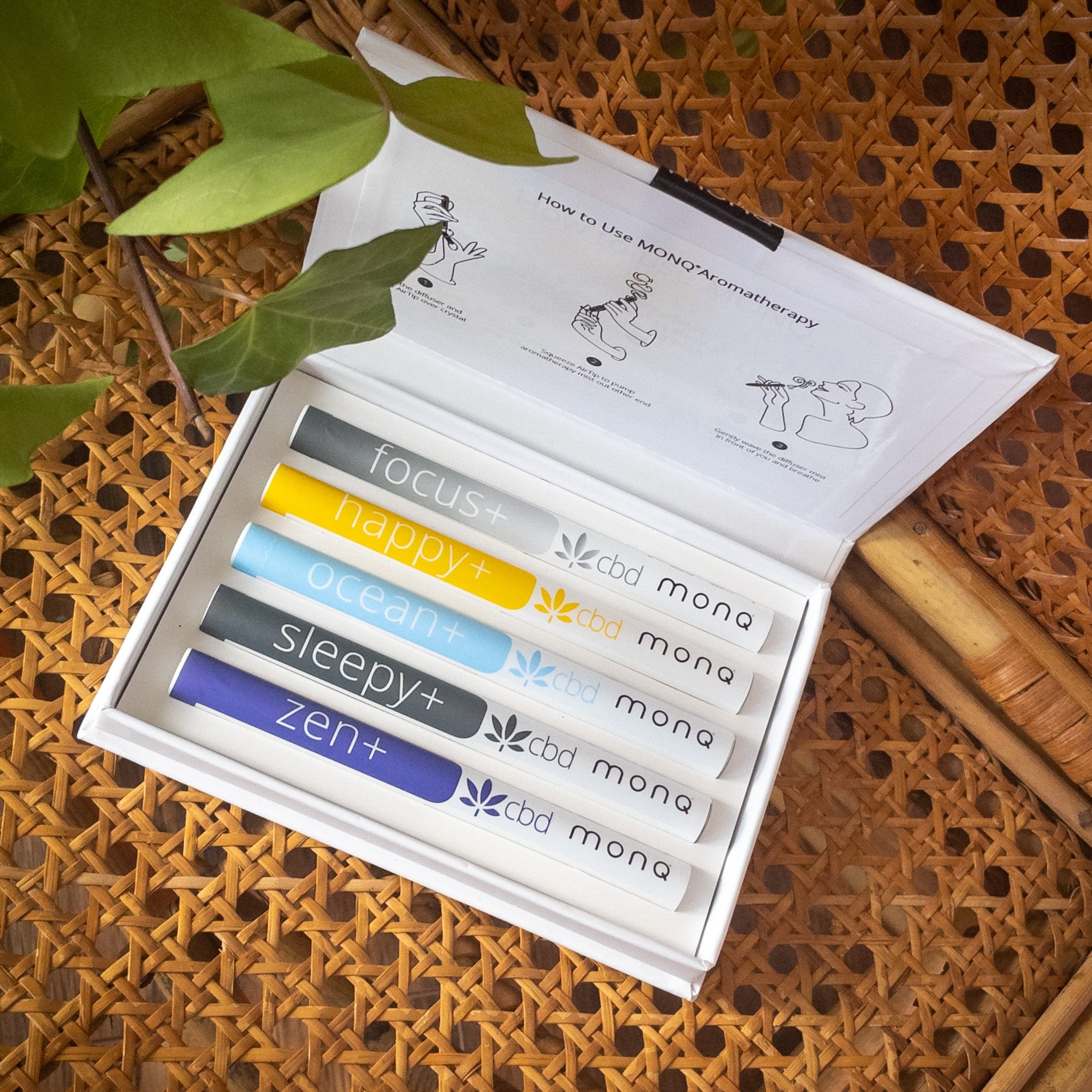
This biological shortcut is the foundation of aromatherapy for sleep. By pairing a calming botanical scent with the slow-paced exhalation technique mentioned above, you create a powerful, multi-sensory cue for rest. Using a personal diffuser like the Sleepy Original Diffuser—which features a targeted blend of chamomile, lavender, and bergamot—allows you to interface directly with this ancient neurological pathway. Incorporating this practice into your nightly routine can also be highly effective for managing daily tension, as explored in our overview of aromatherapy for stress.
5. Consistency Over Intensity
Finally, the secret to mastering your evening routine is consistency. As highlighted by CNET's guide on sleep hygiene, going to bed and waking up at the exact same time every day reinforces your circadian rhythm. It is not about executing a perfect two-hour ritual every single night; it is about sending the same, reliable signals to your body so that it learns exactly when it is time to shut down.
Disclaimer: The above information is provided for general wellness and educational purposes only. Please note that while individual essential oil ingredients may have been shown to exhibit certain independent effects when used alone, the specific blends of ingredients contained in MONQ diffusers have not been tested. No specific claims are being made that use of any MONQ diffusers will lead to any of the effects discussed above. Additionally, please note that MONQ diffusers have not been reviewed or approved by the U.S. Food and Drug Administration. MONQ diffusers are not intended to be used in the diagnosis, cure, mitigation, prevention, or treatment of any disease or medical condition. If you have a health condition or concern, please consult a physician or your alternative health care provider prior to using MONQ diffusers. MONQ blends should not be inhaled into the lungs. Why? It works better that way. No Nicotine Ever. Inhale through the mouth, exhale through the nose. MONQ Diffusers are not intended for individuals under 18, or women who are pregnant or nursing.










Leave a comment