

Diaphragmatic Breathing: How to Breathe for Calm and Energy

Most adults are shallow breathers. Watch someone at their desk or stuck in traffic and you will likely see only the upper chest moving with each breath. The belly stays still. The shoulders may even creep upward. This pattern - common, habitual, and largely unconscious - is the opposite of optimal breathing mechanics.
Diaphragmatic breathing, often called belly breathing or deep breathing, is the body's natural default. Babies do it instinctively. Many adults have to relearn it. The rewards are significant: a calmer nervous system, better oxygen exchange, and a more energized physical state - all from changing how the breath moves through the body.
What Is the Diaphragm, and Why Does It Matter?
The diaphragm is a large, dome-shaped muscle that sits just below the lungs, separating the chest cavity from the abdominal cavity. It is the primary muscle of respiration. When it contracts, it flattens and descends, creating negative pressure in the chest that draws air into the lungs. The belly expands outward to accommodate the downward shift of the organs.
When people breathe shallowly, the diaphragm is underutilized. Instead, the accessory breathing muscles - scalenes, sternocleidomastoid, pectorals - do the work. These muscles are designed for high-demand situations, not for resting breath. Relying on them chronically keeps the body in a subtly elevated state of physiological effort.
Research highlighted by Harvard Health Publishing has described diaphragmatic breathing as one of the most accessible self-regulation tools available, noting its role in supporting respiratory efficiency and a calmer physiological baseline.
The Problem with Chest Breathing
Shallow chest breathing has cascading effects. Because less air reaches the lower lobes of the lungs - which have a higher density of blood vessels - oxygen exchange is less efficient. The body compensates by increasing breathing rate, which can keep the nervous system in a low-level heightened state. This contributes to a background feeling of being wound up, scattered, or drained that many people attribute to other causes, when the breath pattern is also a factor.
The Benefits of Diaphragmatic Breathing
- Improved oxygen efficiency. Lower lobes engage, improving gas exchange per breath.
- Vagal activation. Slow, deep breathing stimulates the vagus nerve, engaging parasympathetic tone.
- Reduced muscle tension. The neck, shoulder, and jaw muscles are no longer overworked as accessory breathers.
- Greater mental clarity. Deeper oxygen delivery may support cognitive function and sustained focus.
- Energized but calm. Many people describe diaphragmatic breathing as producing an alert, present state without urgency or tension.
How to Practice Diaphragmatic Breathing
Start lying down, which makes it easier to feel the movement before taking the practice upright:
- Lie on your back with knees bent, feet flat on the floor.
- Place one hand on your chest and one on your belly, just below the navel.
- Exhale fully through the nose, allowing the belly to fall.
- Inhale slowly through the nose for 4 counts. The belly should rise first. The chest should stay relatively still.
- Exhale slowly for 6 counts, allowing the belly to fall naturally.
- Repeat for 5-10 cycles.
If the chest rises first, you are still in upper chest mode. Gently guide attention to the belly. It may take several sessions before the pattern shifts naturally - that is completely normal for someone retraining a habitual pattern. Once familiar lying down, practice sitting. Then standing. The goal is for diaphragmatic breathing to become your default at rest.
Diaphragmatic Breathing for Morning Energy
Diaphragmatic breathing is particularly effective as a morning practice. After hours of slowed breathing during sleep, a few minutes of deliberate belly breathing can signal the body to wake, oxygenate, and prepare for the day. Try 10 cycles of slow belly breathing immediately after waking, before getting out of bed. Many people find a noticeable shift in mental clarity and physical readiness within those three minutes.
Pairing with Fresh MONQ or Ocean MONQ
Sensory anchors accelerate habit formation. Pairing a consistent scent with a morning breathing practice creates a conditioned cue - over time, the scent itself begins to prime the body for the state you have practiced.
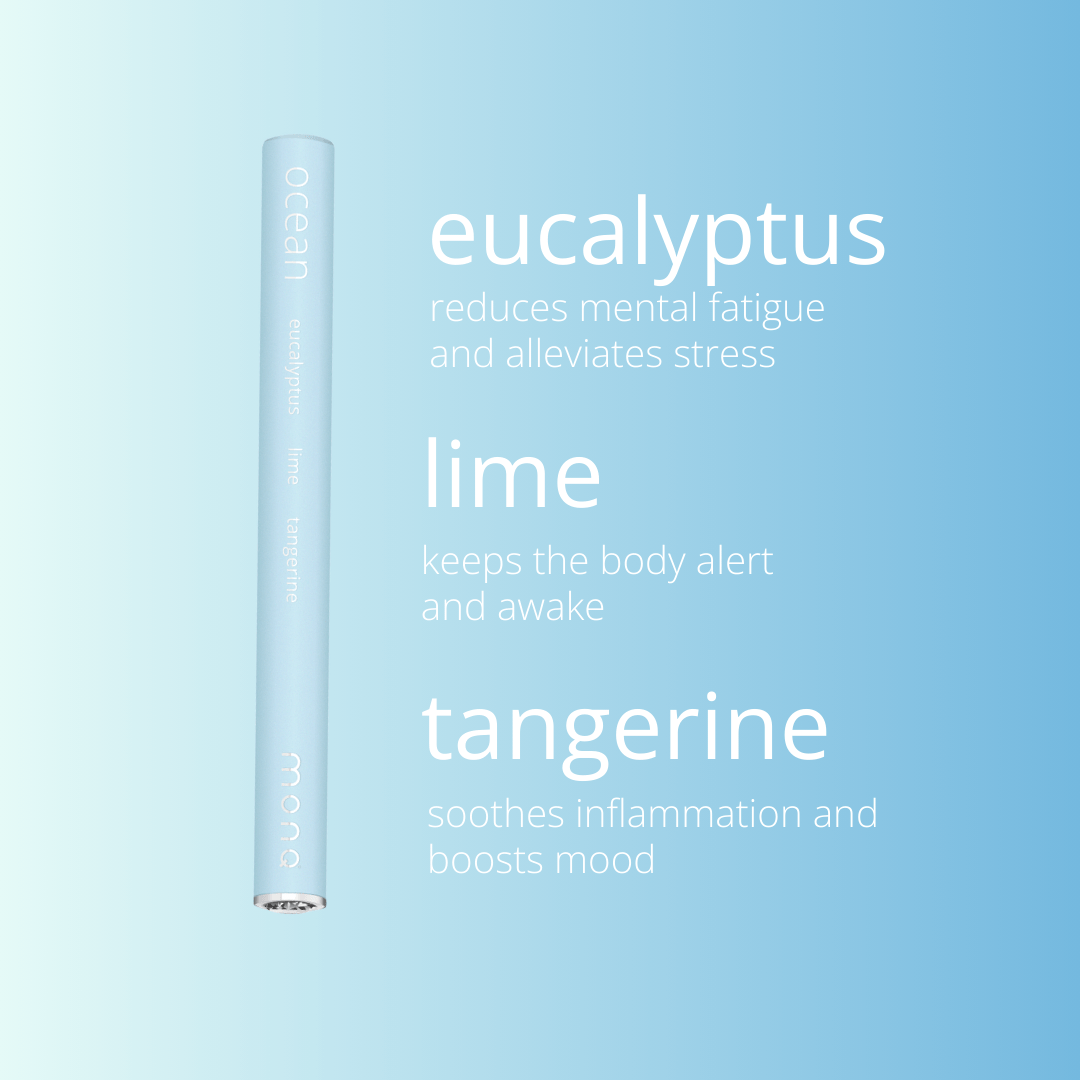
Fresh MONQ - a blend of ginger, lemon, and peppermint essential oils - is an energizing, bright combination suited for morning breathwork sessions. Ocean MONQ blends eucalyptus, lime, and tangerine for a clean, expansive feeling that mirrors the openness of a deep diaphragmatic breath.
Using MONQ's signature method - inhale gently through the mouth, exhale through the nose - works naturally alongside diaphragmatic practice. As the belly rises on the inhale, you take in MONQ's botanical mist; as the belly falls on the exhale, the aromatic compounds pass through the olfactory system via the retronasal pathway. The breath and the scent reinforce each other.
A Simple Daily Protocol
- 3 deep belly breaths before opening the laptop in the morning
- 5 cycles during a midday reset
- 10 slow belly breaths before sleep
The breath is always with you. Using it intentionally is one of the simplest leverage points available for daily well-being.
Go Deeper
Diaphragmatic breathing engages the same slow, controlled breath mechanics that MONQ is designed around — a gentle inhale through the mouth, a deliberate exhale through the nose. The full technique, and why the retro-nasal pathway matters, is laid out in our guide.
How to Use MONQ: The Complete Technique Guide →Disclaimer: The above information is provided for general wellness and educational purposes only. Please note that while individual essential oil ingredients may have been shown to exhibit certain independent effects when used alone, the specific blends of ingredients contained in MONQ diffusers have not been tested. No specific claims are being made that use of any MONQ diffusers will lead to any of the effects discussed above. Additionally, please note that MONQ diffusers have not been reviewed or approved by the U.S. Food and Drug Administration. MONQ diffusers are not intended to be used in the diagnosis, cure, mitigation, prevention, or treatment of any disease or medical condition. If you have a health condition or concern, please consult a physician or your alternative health care provider prior to using MONQ diffusers. MONQ blends should not be inhaled into the lungs. Why? It works better that way. No Nicotine Ever. Inhale through the mouth, exhale through the nose. MONQ Diffusers are not intended for individuals under 18, or women who are pregnant or nursing.










Leave a comment