

Aromatherapy vs. Traditional Sleep Aids: Why Natural Works
When sleep feels out of reach, the first instinct is often to reach for something. The market is crowded with options - pills, gummies, supplements, devices - each promising a faster path to rest. But many of these approaches work against the body's natural sleep architecture rather than with it. Aromatherapy takes a different route: working with the olfactory system to signal the nervous system directly, without metabolic burden or next-morning grogginess.
Why Natural Sleep Support Makes Sense
Your body's sleep cycle is regulated by circadian rhythm - a biological clock that responds to light, temperature, and behavioral cues. When this system is working well, the transition to sleep happens naturally. When it's disrupted - by stress, screen exposure, irregular schedules, or overstimulation - the goal isn't to override the system but to support it.
Aromatherapy works with this system. Scent molecules inhaled through the nose reach the limbic system - the brain region governing emotional regulation, stress response, and sleep - faster than almost any other input. The right botanical blend used consistently as a pre-sleep cue can reinforce the body's own wind-down signal.
What Aromatherapy Offers That Other Approaches Don't
- No next-morning grogginess - essential oils don't leave a metabolic residue that affects morning alertness
- Non-habit-forming - your body doesn't develop tolerance to scent the way it can to supplements
- Pairs with any routine - works alongside breathing practices, reading, or any wind-down habit you already have
- Immediate sensory signal - the olfactory pathway reaches the brain in seconds, not the 20-45 minutes required for digestion-based supplements
The Best Botanicals for Sleep Support
Linalool (lavender, coriander) - one of the most studied calming terpenes. Associated with nervous system quieting and stress reduction. The primary active compound in lavender essential oil.
Bisabolol (chamomile) - gentle, warm, and grounding. Well suited to those whose minds run fast at night. Softer than lavender and less likely to feel overwhelming.
Limonene (bergamot) - uniquely useful for pre-sleep because it reduces the mental weight of the day without sedating. Bergamot is both calming and mood-lifting.
Alpha-santalol (sandalwood) - deep, quieting, and long-lasting. Used for centuries in meditative and pre-sleep practices.
How to Use Aromatherapy Before Bed
The most effective approach is a consistent one - used at the same point in your evening routine, night after night. The brain learns the scent as a sleep cue over time.
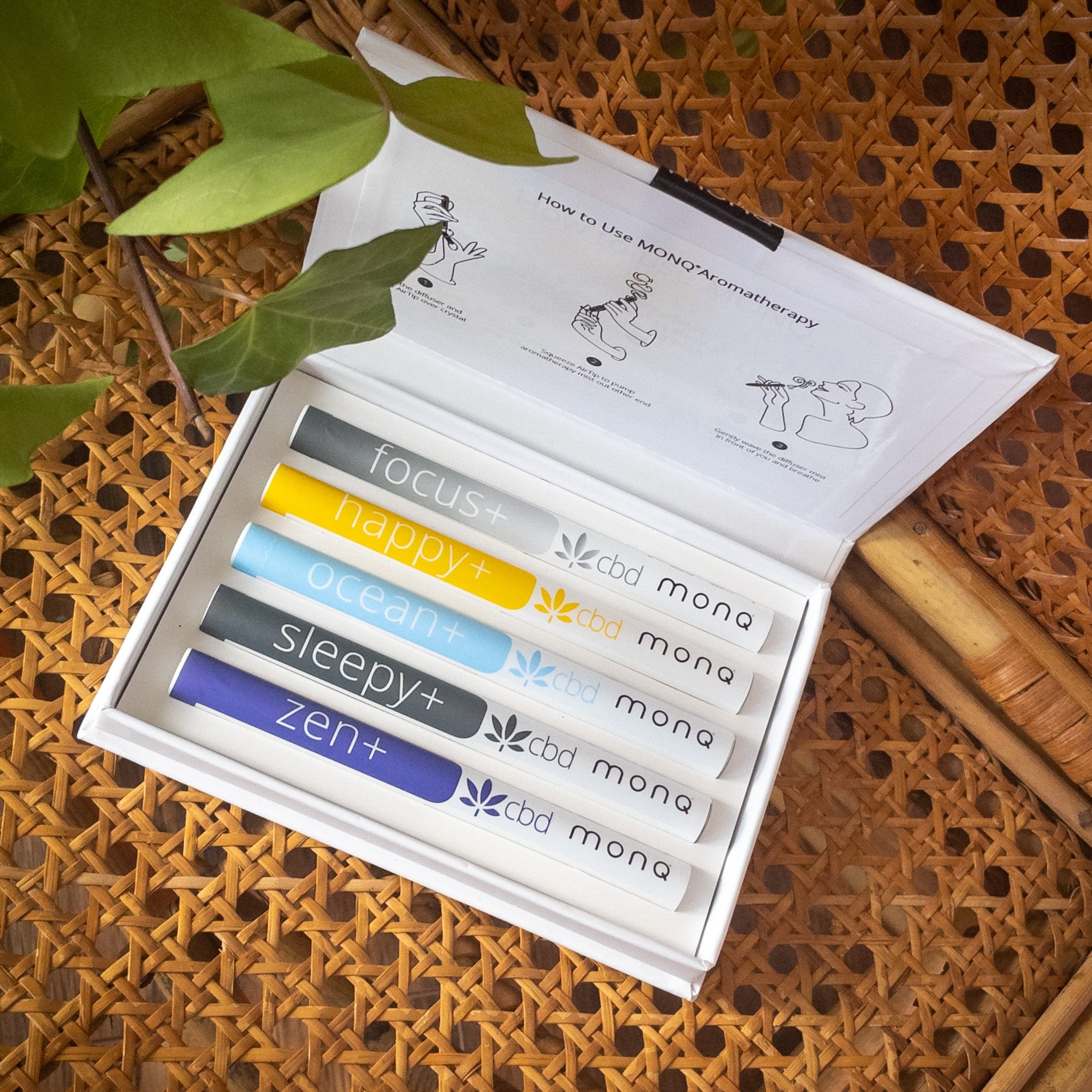
- Personal diffuser: Sleepy MONQ combines lavender, chamomile, and bergamot. Two to three gentle breaths - inhale through the mouth, exhale through the nose - as part of your screen-off transition.
- Room diffuser: Cold-air diffusion of lavender or chamomile oil 20-30 minutes before sleep creates an ambient scent environment that reinforces the wind-down signal.
- Pillow mist: Diluted lavender on your pillowcase extends the aromatic cue through the night.
Go Deeper
The olfactory pathway is one of the fastest routes to the brain's sleep-regulation centers - which is why aromatherapy can shift your nervous system state in minutes, not hours.
Aromatherapy for Sleep: A Wellness Guide →Disclaimer: The above information is provided for general wellness and educational purposes only. Please note that while individual essential oil ingredients may have been shown to exhibit certain independent effects when used alone, the specific blends of ingredients contained in MONQ diffusers have not been tested. No specific claims are being made that use of any MONQ diffusers will lead to any of the effects discussed above. Additionally, please note that MONQ diffusers have not been reviewed or approved by the U.S. Food and Drug Administration. MONQ diffusers are not intended to be used in the diagnosis, cure, mitigation, prevention, or treatment of any disease or medical condition. If you have a health condition or concern, please consult a physician or your alternative health care provider prior to using MONQ diffusers. MONQ blends should not be inhaled into the lungs. Why? It works better that way. No Nicotine Ever. Inhale through the mouth, exhale through the nose. MONQ Diffusers are not intended for individuals under 18, or women who are pregnant or nursing.










Leave a comment