Limonene Benefits Infographic

Limonene is a naturally occurring terpene commonly found in the peels of citrus fruits, such as oranges and lemons. Known for its fresh, citrusy aroma, limonene is often used in aromatherapy to uplift mood, reduce stress, and enhance focus. Its invigorating scent can promote feelings of energy and mental clarity, making it a popular choice for combating fatigue.
In addition to its emotional benefits, limonene is also valued for its potential antioxidant and anti-inflammatory properties. It may support overall wellness and healthy skin by helping to protect against oxidative stress and reducing inflammation. As with all essential oils, proper dilution is important, and consulting a healthcare provider before use is recommended.
Where Limonene Comes From
Limonene gets its name from the lemon, but its presence in the plant kingdom extends far beyond a single fruit. The terpene is concentrated in the peel oils of citrus fruits - lemon, orange, grapefruit, lime, and bergamot are among the most abundant natural sources. When you peel an orange and that bright, sharp fragrance fills the air immediately, that is almost entirely limonene.
It is one of the most widely produced terpenes in nature. Plants synthesize limonene as a defense compound - the sharp, penetrating scent deters insects, bacteria, and other threats while simultaneously attracting the pollinators the plant needs. This dual role as protector and communicator has made limonene one of the most evolutionarily successful aromatic molecules on earth. It shows up not just in citrus but in conifers, herbs, and flowering plants across every climate zone.
In commercial applications, limonene is one of the most extracted and studied terpenes globally. It appears in food flavoring, cleaning products, and cosmetics - a reflection of both its abundance and its safety profile. In aromatherapy, its citrus character makes it one of the most recognizable and immediately accessible scent compounds.
How Limonene Works in the Olfactory System
When you inhale limonene, the molecules travel through the nasal passage and bind to specialized olfactory receptors - proteins on the surface of olfactory neurons that are tuned to detect specific molecular shapes. Limonene's molecular structure fits these receptors in a way that generates a strong, distinctive signal.
That signal does not take the scenic route to the brain. The olfactory nerve connects directly to the limbic system, specifically to the amygdala and hippocampus - the structures most involved in emotional processing, memory, and stress response. This is one of the shortest and most direct sensory pathways in the human nervous system. Unlike sight or touch, which route through the thalamus before reaching emotional centers, smell bypasses that relay station entirely.
This direct pathway explains something most people notice without being able to name it: citrus scent produces a near-instant mood shift. There is no delay for cognitive processing. The scent reaches emotional circuitry before rational thought engages. Research on citrus aromatic compounds has associated this mechanism with uplifting, energizing, and stress-modulating effects - particularly when inhaled in controlled settings.
Limonene is often paired with grounding terpenes like lavender-derived compounds, which adds balance to its bright energy. It also works synergistically alongside beta-caryophyllene and linalool, two terpenes with complementary calming and grounding profiles. This kind of terpene pairing is central to how well-formulated botanical blends achieve broader effects than any single compound could produce alone.
Limonene in MONQ Blends
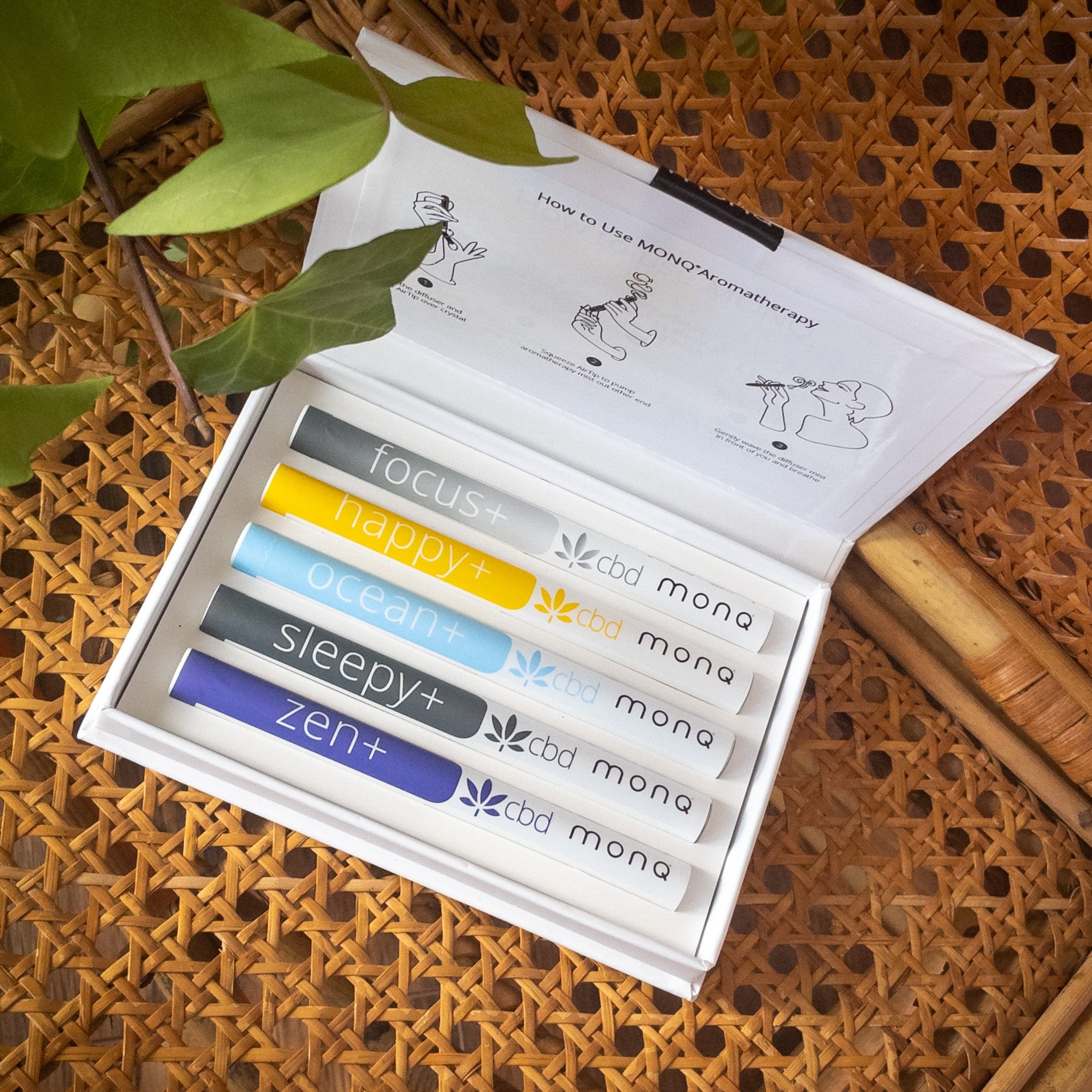
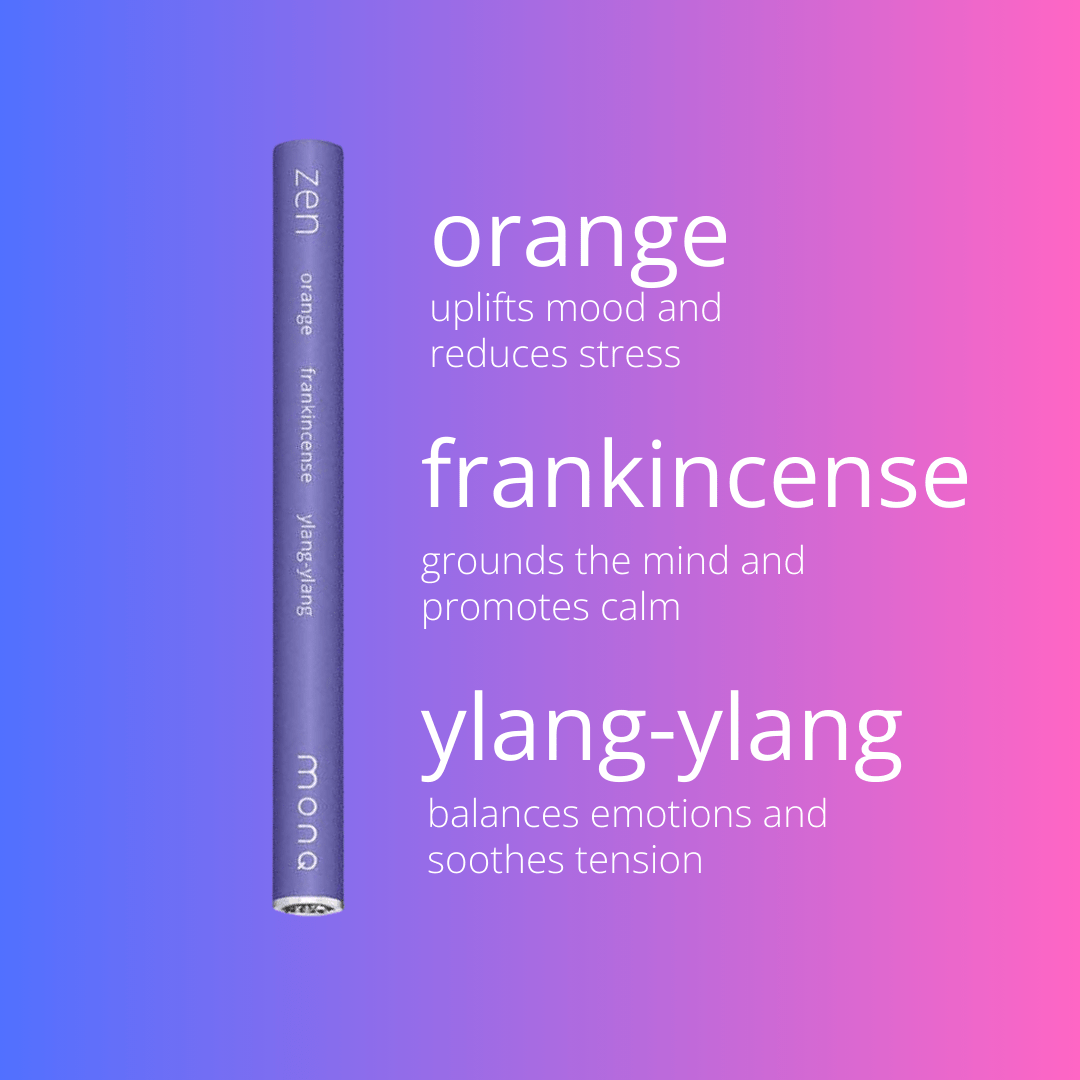
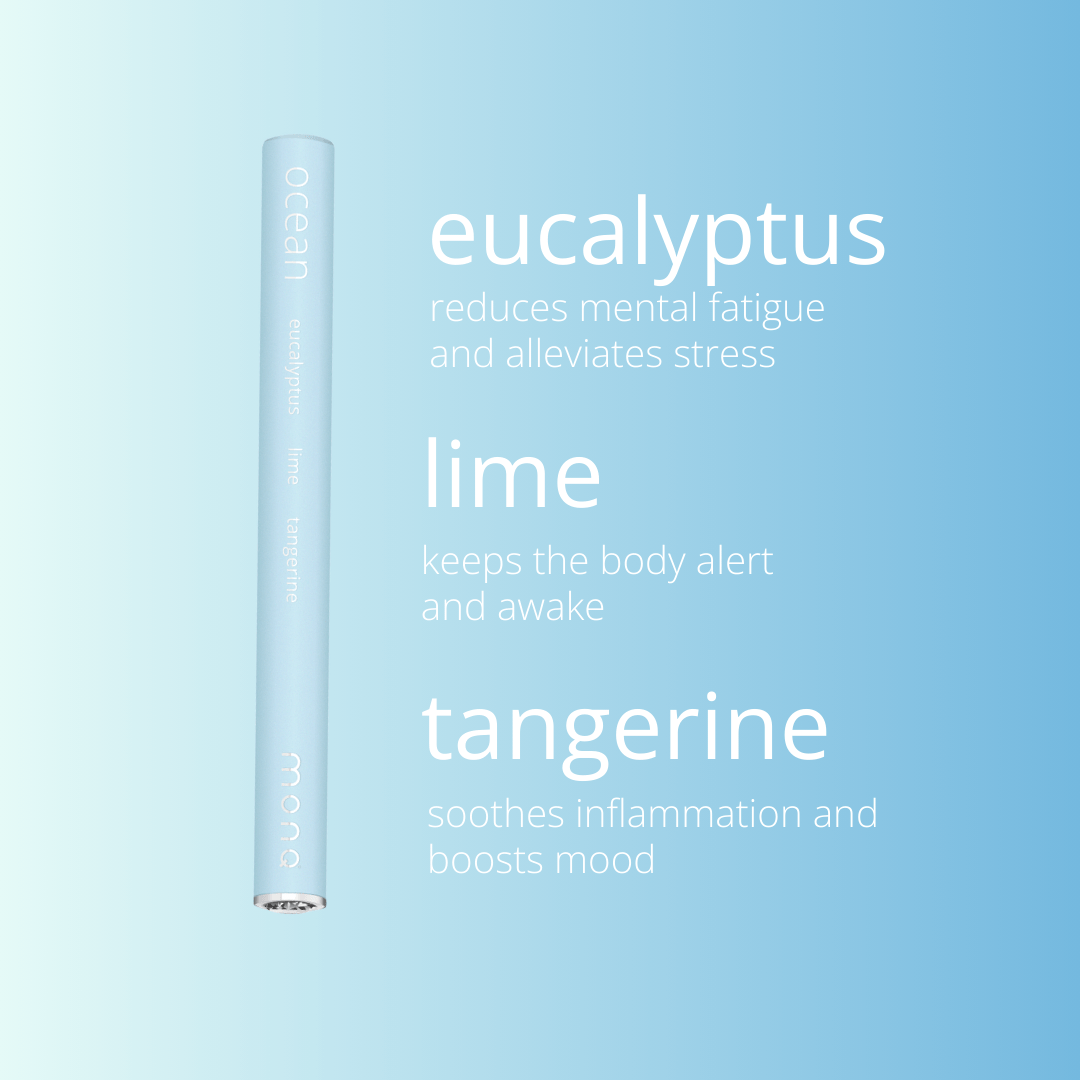
Limonene appears naturally in citrus-forward MONQ blends, contributing both its characteristic aroma and its olfactory properties. Because MONQ diffusers deliver botanicals through inhalation with the mouth-in, nose-out technique, limonene-rich blends engage the olfactory pathway efficiently - the molecules reach receptors quickly, and the limbic signal follows.
For those exploring aromatherapy as part of a stress management approach, citrus-dominant blends that feature limonene are a natural starting point. Browse MONQ's stress-related blend collection to find options built around uplifting and grounding botanicals. For a deeper look at the science connecting scent to the stress response, the aromatherapy for stress resource covers the mechanism in full detail.
Understanding terpenes like limonene - where they come from, how they interact with the nervous system, and how they behave in blended formulations - is part of what makes intentional aromatherapy different from simply enjoying a pleasant scent. The olfactory system is a direct line to the brain's emotional centers, and limonene is one of the most studied molecules for engaging that pathway in an uplifting direction.
Disclaimer: The above information is provided for general wellness and educational purposes only. Please note that while individual essential oil ingredients may have been shown to exhibit certain independent effects when used alone, the specific blends of ingredients contained in MONQ diffusers have not been tested. No specific claims are being made that use of any MONQ diffusers will lead to any of the effects discussed above. Additionally, please note that MONQ diffusers have not been reviewed or approved by the U.S. Food and Drug Administration. MONQ diffusers are not intended to be used in the diagnosis, cure, mitigation, prevention, or treatment of any disease or medical condition. If you have a health condition or concern, please consult a physician or your alternative health care provider prior to using MONQ diffusers. MONQ blends should not be inhaled into the lungs. Why? It works better that way. No Nicotine Ever. Inhale through the mouth, exhale through the nose. MONQ Diffusers are not intended for individuals under 18, or women who are pregnant or nursing.