

Your Brain Has Been Waiting for This: The Science of Secondary Metabolites
You've spent 90% of your life indoors.
Your nervous system noticed.
And it isn't happy about it.
The Baseline We Forgot
For the entire span of human evolution — hundreds of thousands of years — the air entering your lungs was alive with chemistry.
Forests, grasslands, and open landscapes continuously emit hundreds of volatile botanical compounds. These are known as secondary metabolites: the chemical signals plants produce not for their own core metabolism, but for interaction with the surrounding world. Terpenes. Essential oils. Natural aromatics.
They travel through air. They enter lungs. And for most of human existence, they did this constantly.
This wasn't incidental. It was the baseline. Your nervous system didn't evolve with clean, filtered indoor air as the norm. It evolved immersed in that organic chemistry — breathing it, processing it, responding to it, every waking hour. The compounds weren't an occasional luxury. They were the continuous chemical background of being human.
Scientists studying forest air in Japan's Yakushima forests, in the old-growth stands of the Pacific Northwest, in the pine-dense highlands of Scandinavia, have found the same pattern everywhere: the air in these environments contains measurable concentrations of bioactive terpenes and volatile organics at every sample. Not sometimes. Always. This is what "natural air" has meant for nearly all of human history.
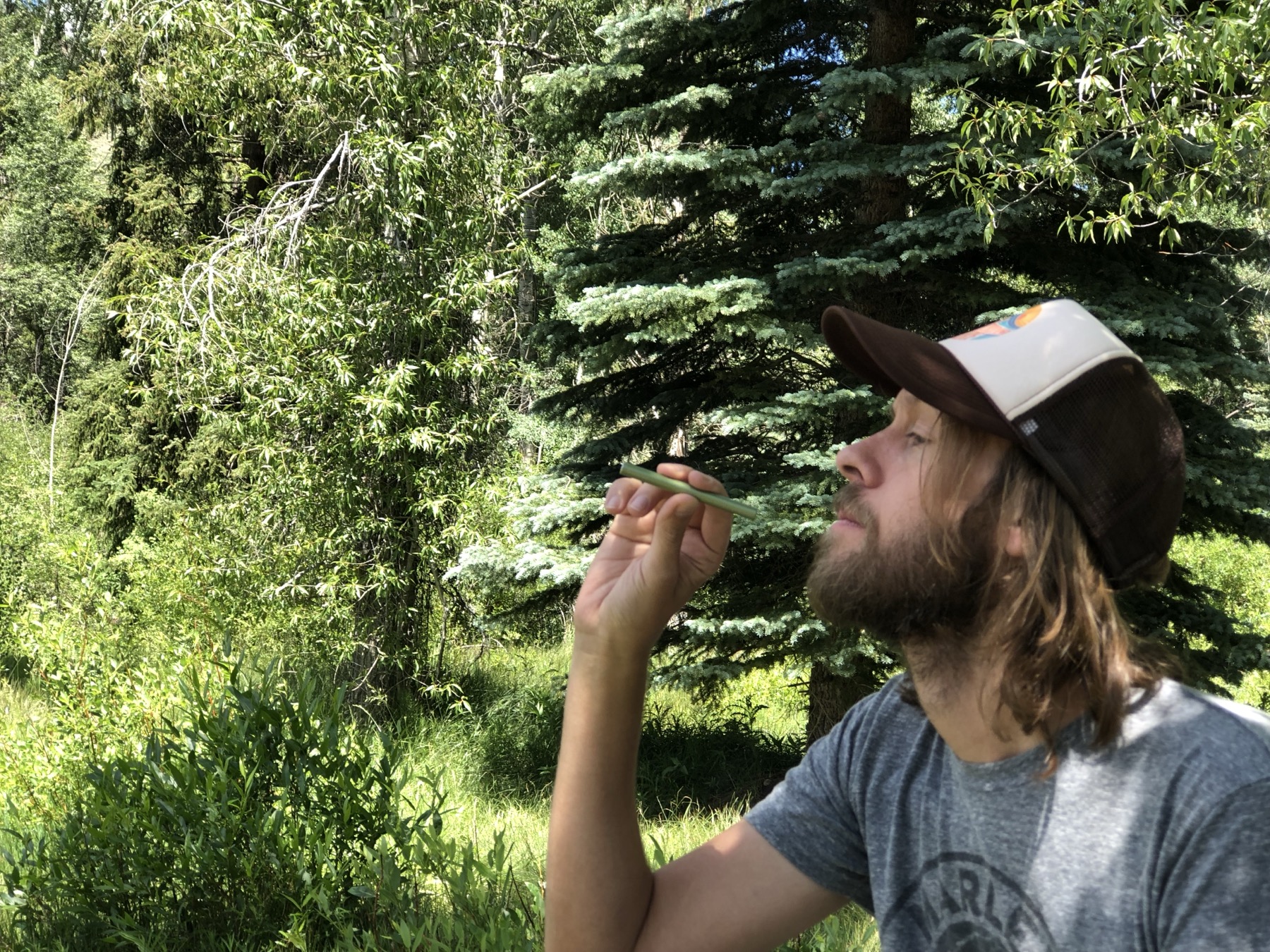
What Changed — And What Didn't
Modern humans spend 90% or more of their time indoors. Indoor air contains almost none of the volatile botanical compounds the human nervous system spent hundreds of thousands of years expecting.
The input disappeared. The wiring didn't.
Your olfactory receptors are still there, still waiting. The limbic system — the brain's emotional and stress-regulation center — is still primed to respond to these signals. But in most modern environments, those signals simply aren't arriving.
Think of it like a key without a lock. The receptor exists. The response pathway exists. But the molecule that triggers it is absent from the air you breathe most of your day.
This is sometimes called the "paleo air" gap: the difference between the chemical environment our nervous systems were calibrated for and the environment we actually inhabit. It's not a metaphor or a wellness concept — it's a measurable discrepancy between receptor presence and receptor activation. We built sensory hardware for a world we no longer live in.
Research on forest bathing — the Japanese practice of shinrin-yoku, or meditative time spent among trees — has begun to quantify what this gap costs us. Studies show measurable reductions in cortisol, improvements in parasympathetic activity, and shifts in NK (natural killer) cell counts after just two hours of forest exposure. The researchers initially attributed these effects to reduced stress from nature. Increasingly, the evidence points to something more specific: the terpenes themselves.
The Olfactory Shortcut
Scent is the only sense with direct access to the brain's emotional center — no relay station, no processing delay. Every other sense routes through the thalamus first. Scent bypasses it entirely.
The olfactory bulb connects directly to the amygdala and hippocampus — the structures responsible for emotional response, fear regulation, and memory consolidation. A single aromatic molecule, inhaled through the nose, can reach these structures within milliseconds and initiate a cascade of neurological response before conscious awareness even registers what you've smelled.
That's why a single breath can shift your mental state in seconds. It's not suggestion. It's anatomy. And it's the reason that restoring botanical input to the olfactory system isn't a wellness trend — it's a return to biological baseline.
The compounds most studied in this context — alpha-pinene, beta-pinene, limonene, linalool, camphor, cedrol — are all secondary metabolites produced by plants humans co-evolved alongside. They're not exotic or unfamiliar to the nervous system. They're the molecular vocabulary our brains learned to listen to over hundreds of thousands of years. What's exotic is their absence.
What MONQ Restores
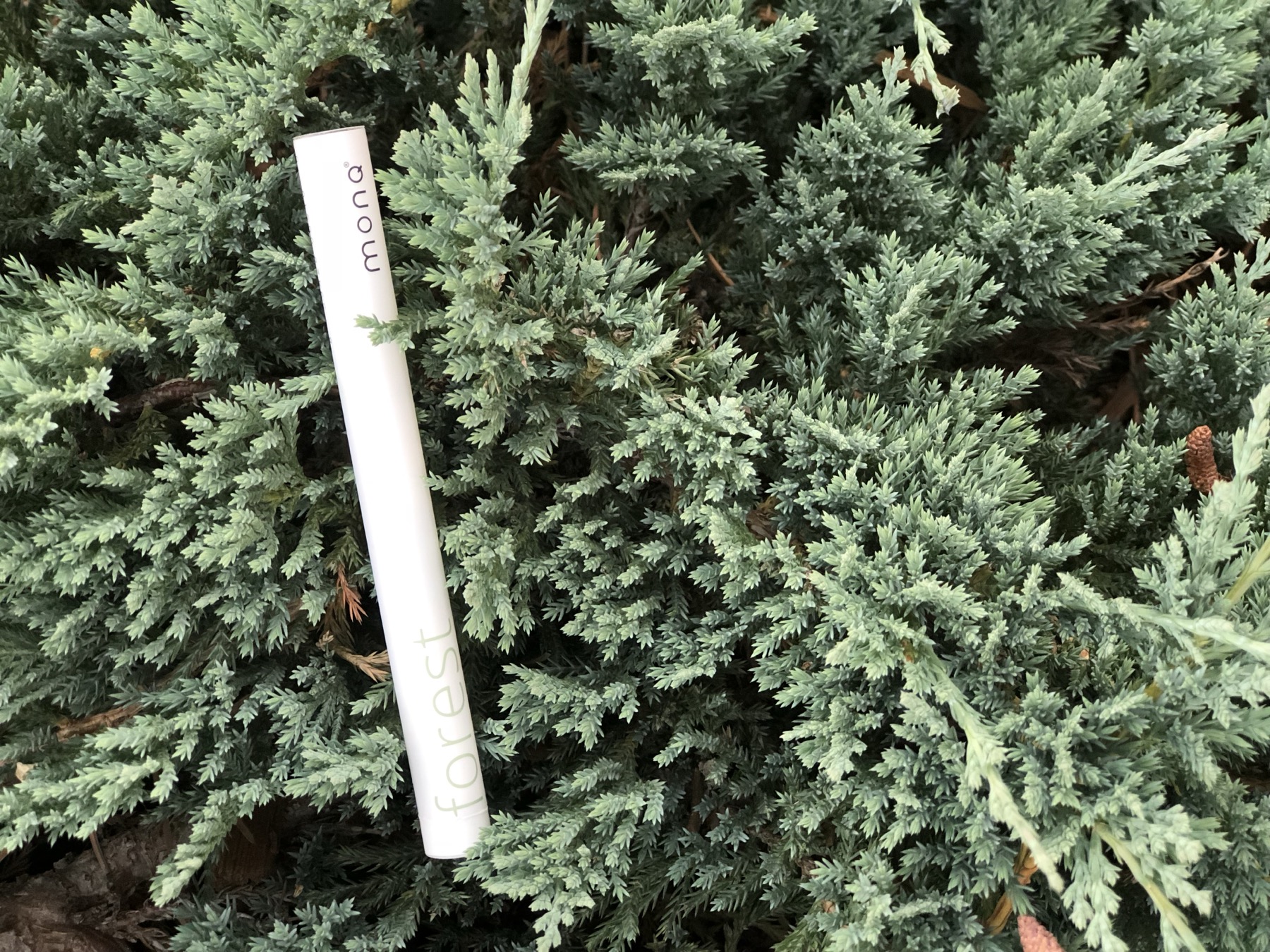
Every MONQ diffuser delivers concentrated botanical aromatics — the same fragrant volatile compounds that drifted through the air of open forests and fields for the entirety of human evolution. Now portable and intentional.
conifer terpenes for daily breathing practice brings alpha-pinene, beta-pinene, and the terpene profile of coniferous forests — the same compounds Japanese forest bathing researchers measured in the air of Yakushima. One breath and your olfactory system receives a signal it has been waiting millennia to process.
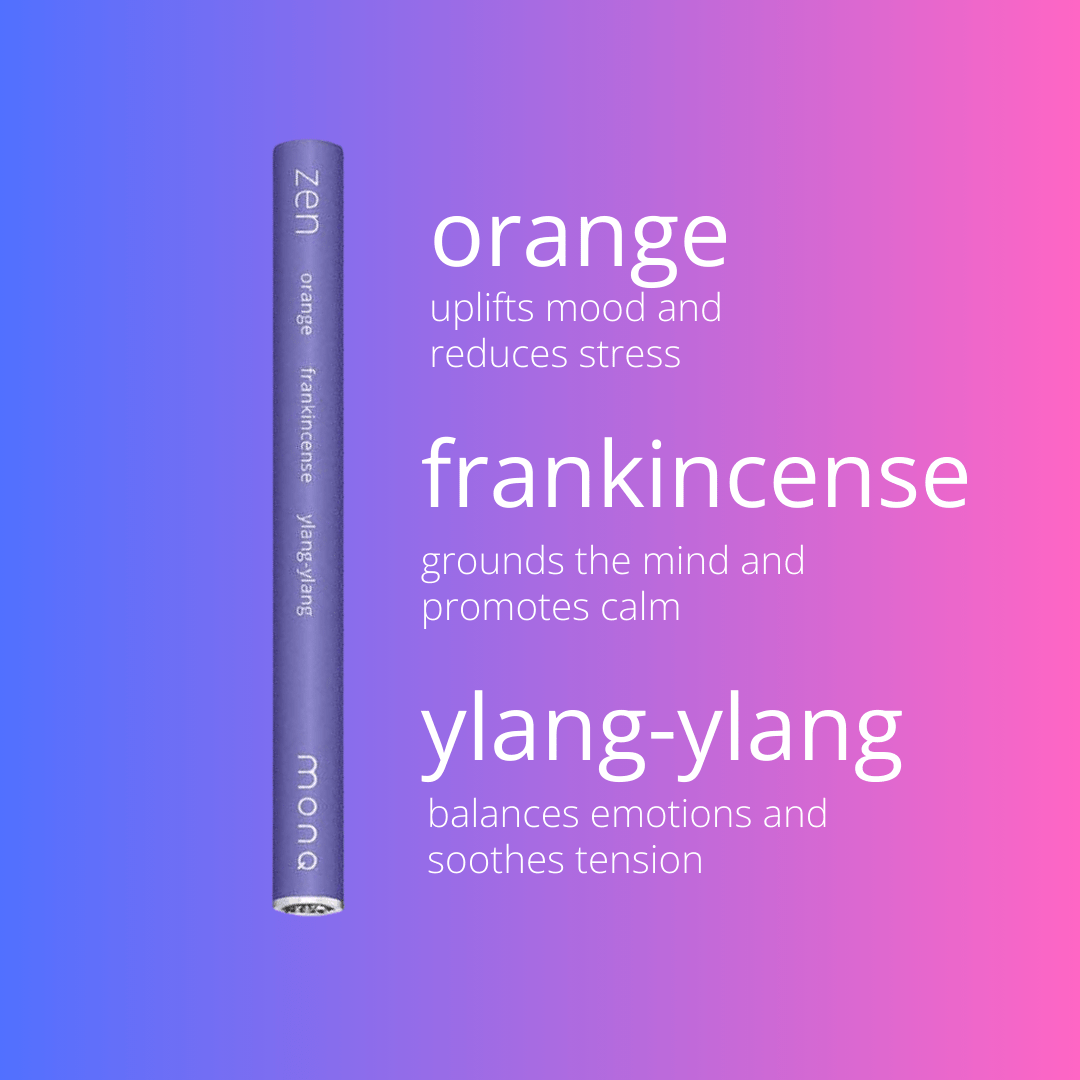
grounding botanical aromatics brings frankincense, ylang-ylang, and grounding botanicals that speak to a different register of the same system — slowing the breath, settling the nervous system, offering the olfactory equivalent of stillness.
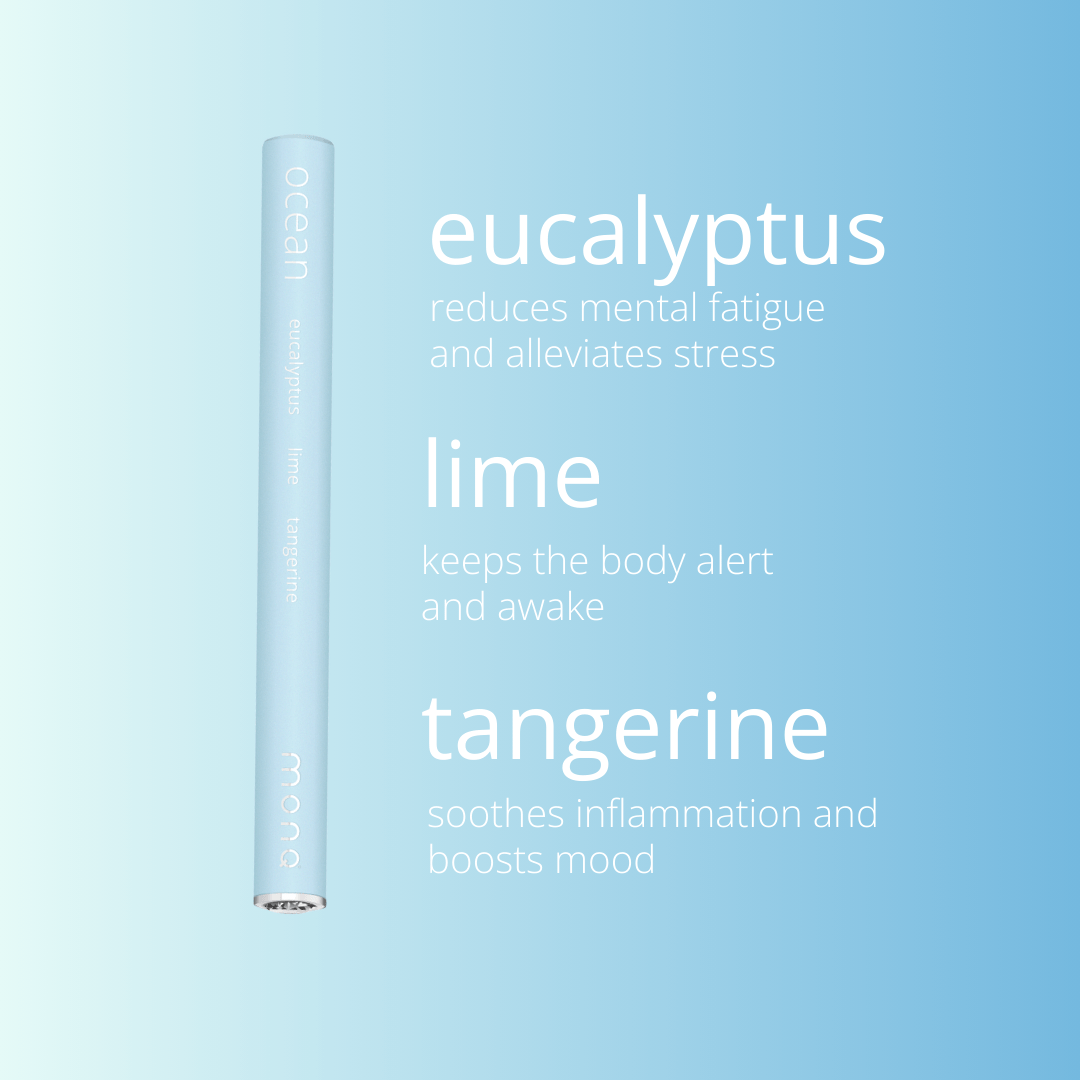
Each blend is a different input for a nervous system that has been running on fumes most of the day. Not a simulation of nature — a direct botanical signal delivered through the most evolutionarily ancient of our senses.
You can't undo the structure of modern life. You can't move your office to a forest or reroute your commute through a stand of old-growth cedar. But you can give your olfactory system something to do. You can restore, for a few deliberate minutes at a time, the chemical baseline your nervous system was built for.
portable essential oil diffusers and find the botanical signature that speaks to your system.
The compounds are real. The receptors are real. The pathway is real.
The only thing that changed is that modern life took them out of the air.
Research cited:
Plant-Derived Terpenoids: Bioactive Compounds with Health Functions and Industrial Applications — Molecules, 2024
α-Pinene enhances Non-REM sleep through GABA-A/benzodiazepine receptors — Molecular Pharmacology, 2016
Terpene deficiency and Paleo Air — why your indoor environment is missing something ancient — MONQ
The Japanese forest bathing research that changed how we think about air — MONQ Forest Bathing Series
Douglas fir — the primary terpene source in forest aromatherapy blends — MONQ Ingredient Library
These statements have not been evaluated by the Food and Drug Administration. This product is not intended to diagnose, treat, cure, or prevent any disease. No Nicotine. Ever.












Leave a comment