

Essential Oils and Focus Rituals: Aroma, Attention, and Context
People often use aroma to mark the beginning of an activity: opening a notebook, clearing a desk, starting a timer, or preparing for focused work. If you want a practical sequence, begin with this simple focus ritual and adapt it to the work in front of you. That makes scent potentially useful as part of a personal ritual, but it does not establish that an essential oil directly improves memory, treats brain fog, changes neurotransmitters, or produces a guaranteed cognitive result.
Aroma, Attention, and Association
The sense of smell is closely connected with memory and emotion. Through repetition, a familiar aroma can become associated with a particular setting or activity. This is best understood as a contextual cue: the scent can help make a routine recognizable, while the actual work still depends on sleep, environment, planning, practice, and individual circumstances.
Botanical Aromas Commonly Chosen for Workspaces
Rosemary has a fresh, herbaceous aroma. Peppermint is cool and bright. Lemon is crisp and citrus-forward. Frankincense is resinous and grounding. People may prefer these aromas in work or study environments because of their sensory character, not because they have been proven to treat ADHD, neurological impairment, cognitive decline, fatigue, or another condition.
Keep Research Claims in Context
Studies involving isolated compounds, controlled exposures, small participant groups, or laboratory models cannot automatically establish the effect of a commercial blend. Statements about crossing the blood-brain barrier, regulating dopamine or serotonin, or producing rapid biochemical enhancement require product-specific evidence and should not be assumed from general aromatherapy research.
Building a Simple Focus Ritual
- Choose one clearly defined task.
- Remove avoidable distractions.
- Set a realistic work interval.
- If desired, add a familiar aroma as a sensory cue.
- Pause and reassess before beginning another interval.
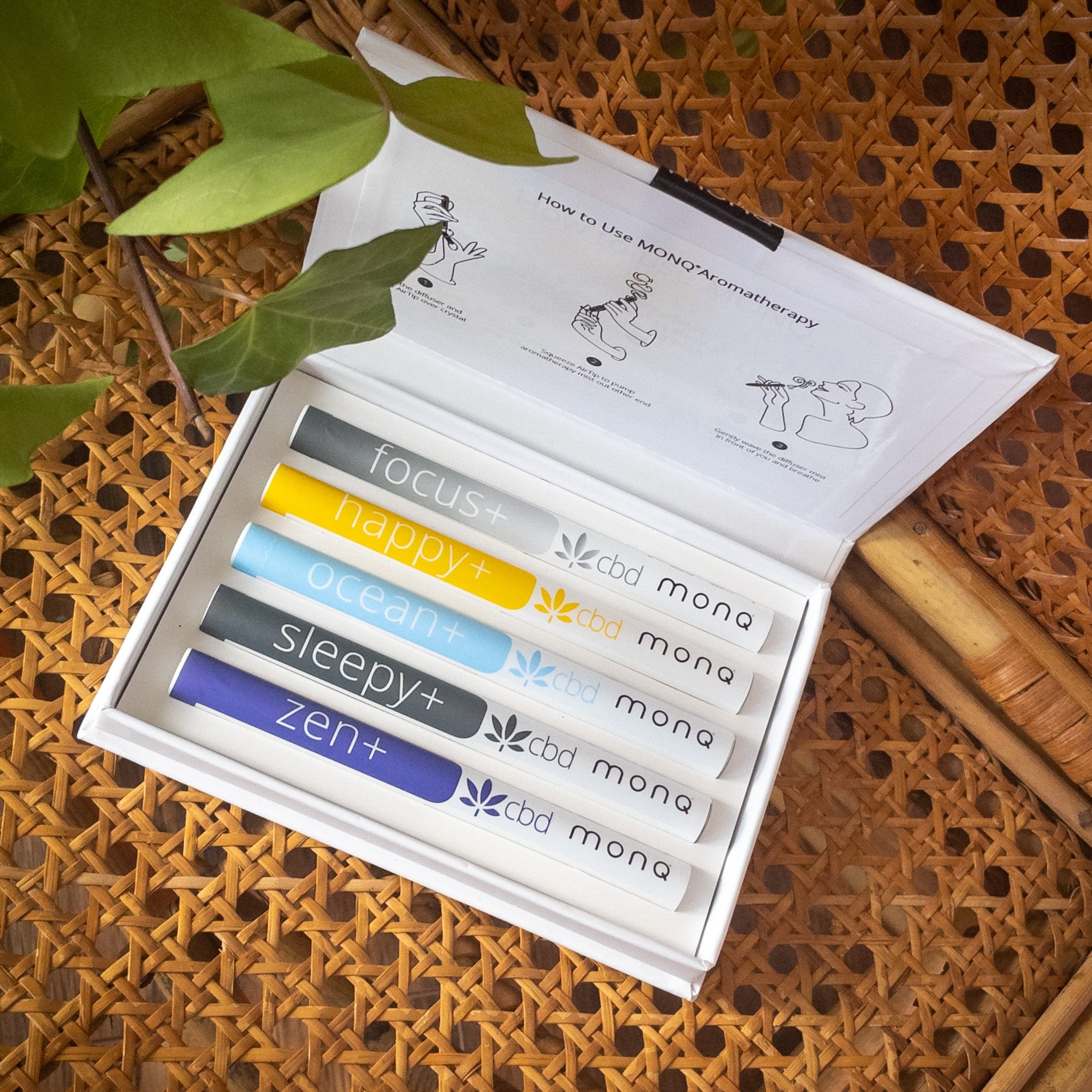
Focus MONQ contains coffee, ginger, and rosemary as its primary aromatic ingredients. It is a personal aromatherapy product, not a stimulant, cognitive enhancer, or treatment for attention-related conditions. Review MONQ safety and usage guidance before use.
Disclaimer: The above information is provided for general wellness and educational purposes only. Please note that while individual essential oil ingredients may have been shown to exhibit certain independent effects when used alone, the specific blends of ingredients contained in MONQ diffusers have not been tested. No specific claims are being made that use of any MONQ diffusers will lead to any of the effects discussed above. Additionally, please note that MONQ diffusers have not been reviewed or approved by the U.S. Food and Drug Administration. MONQ diffusers are not intended to be used in the diagnosis, cure, mitigation, prevention, or treatment of any disease or medical condition. If you have a health condition or concern, please consult a physician or your alternative health care provider prior to using MONQ diffusers. MONQ blends should not be inhaled into the lungs. Why? It works better that way. No Nicotine Ever. Inhale through the mouth, exhale through the nose. MONQ Diffusers are not intended for individuals under 18, or women who are pregnant or nursing.










Leave a comment