Sleep and Essential Oils

Sleep is an essential part of overall health and well-being, allowing the body and mind to rest, repair, and rejuvenate. During sleep, various processes occur that help support immune function, cognitive performance, and emotional regulation. A consistent sleep routine, along with a calm and relaxing sleep environment, can contribute to improved sleep quality. For individuals seeking natural ways to promote relaxation before bed, some turn to essential oils as a complementary practice. Although essential oils are not a substitute for medical treatment, they are commonly used to support relaxation and help create a soothing atmosphere conducive to restful sleep.
Essential oils, derived from plants, are often used in aromatherapy to enhance well-being. Lavender, chamomile, and sandalwood are among the most commonly used essential oils for promoting relaxation. Some people find that diffusing these oils in the evening or applying them topically (when diluted with a carrier oil) may help create a calming environment, which could support a restful bedtime routine. However, it is important to note that individual experiences with essential oils may vary, and consulting with a healthcare professional is recommended, especially for those with underlying health conditions or sensitivities.
Why Scent Works for Sleep: The Olfactory-Limbic Pathway
Scent has a unique and direct relationship with the emotional and memory centers of the brain, and this is exactly why aromatherapy can influence how we feel before bed. Unlike other senses, smell bypasses the thalamus, the brain's primary relay station, and travels directly to the limbic system. The olfactory bulb projects immediately to the amygdala, which governs emotional response, and to the hippocampus, which is involved in memory and contextual associations. This direct pathway means that scent can shift emotional and physiological state faster than almost any other sensory input. A calming aroma inhaled in the evening does not just create a pleasant atmosphere; it can actively modulate the nervous system's readiness for rest.
Five Key Botanicals for Sleep Aromatherapy
1. Lavender
Lavender is the most studied essential oil in the sleep aromatherapy literature. Its primary active compound, linalool, has been studied for its potential interaction with GABA receptors, the same receptors targeted by many prescription sleep medications. Research suggests that lavender inhalation may reduce sleep disturbance and improve overall sleep quality in healthy adults. Its floral, clean scent is widely recognized as calming, and many people find it one of the easiest botanicals to incorporate into an evening routine.
2. Chamomile
Chamomile essential oil, particularly Roman chamomile, carries apigenin, a flavonoid compound that researchers have studied for its interaction with benzodiazepine receptors in the brain. Users report a quality of warmth and physical ease associated with chamomile, as though the body is being gently invited to release the tension it has been holding through the day. Chamomile pairs beautifully with lavender in evening blends, adding a soft, apple-like sweetness to a floral base.
3. Bergamot
Bergamot essential oil is pressed from the rind of the bergamot orange, a citrus fruit grown primarily in southern Italy. Unlike most citrus oils, which tend to be energizing, bergamot has a distinctly calming quality. Research suggests that bergamot inhalation may be associated with reduced cortisol levels and lower pre-bed arousal, making it useful specifically for the wind-down phase of the evening. Its bright, slightly floral citrus scent provides a gentle lift that does not overstimulate, acting as a bridge between the active day and the quieter preparation for sleep.
4. Cedarwood
Cedarwood essential oil, particularly the Himalayan variety distilled from Cedrus deodara, contains cedrol, a sesquiterpene alcohol that research suggests may support calm through parasympathetic nervous system activation. A Japanese study examining cedrol found associations with decreased heart rate and blood pressure during inhalation. For sleep, this translates to a botanical that may help the body physically downshift, potentially supporting not just the process of falling asleep but also the maintenance of deeper sleep through the night.
5. Vetiver
Vetiver is sometimes called the "oil of tranquility" in Ayurvedic tradition, a name that reflects its reputation as one of the most deeply grounding aromatics in the botanical world. Distilled from the roots of a grass native to India, vetiver has a rich, smoky, earthy scent that is quite unlike anything else in the aromatherapy palette. It is valued for its ability to anchor a scattered or overactive mind, creating a sense of heaviness and settledness that can be especially helpful for people who lie awake with racing thoughts. Used in small amounts, it anchors and deepens any sleep blend it is added to.
How to Use Aromatherapy for Sleep
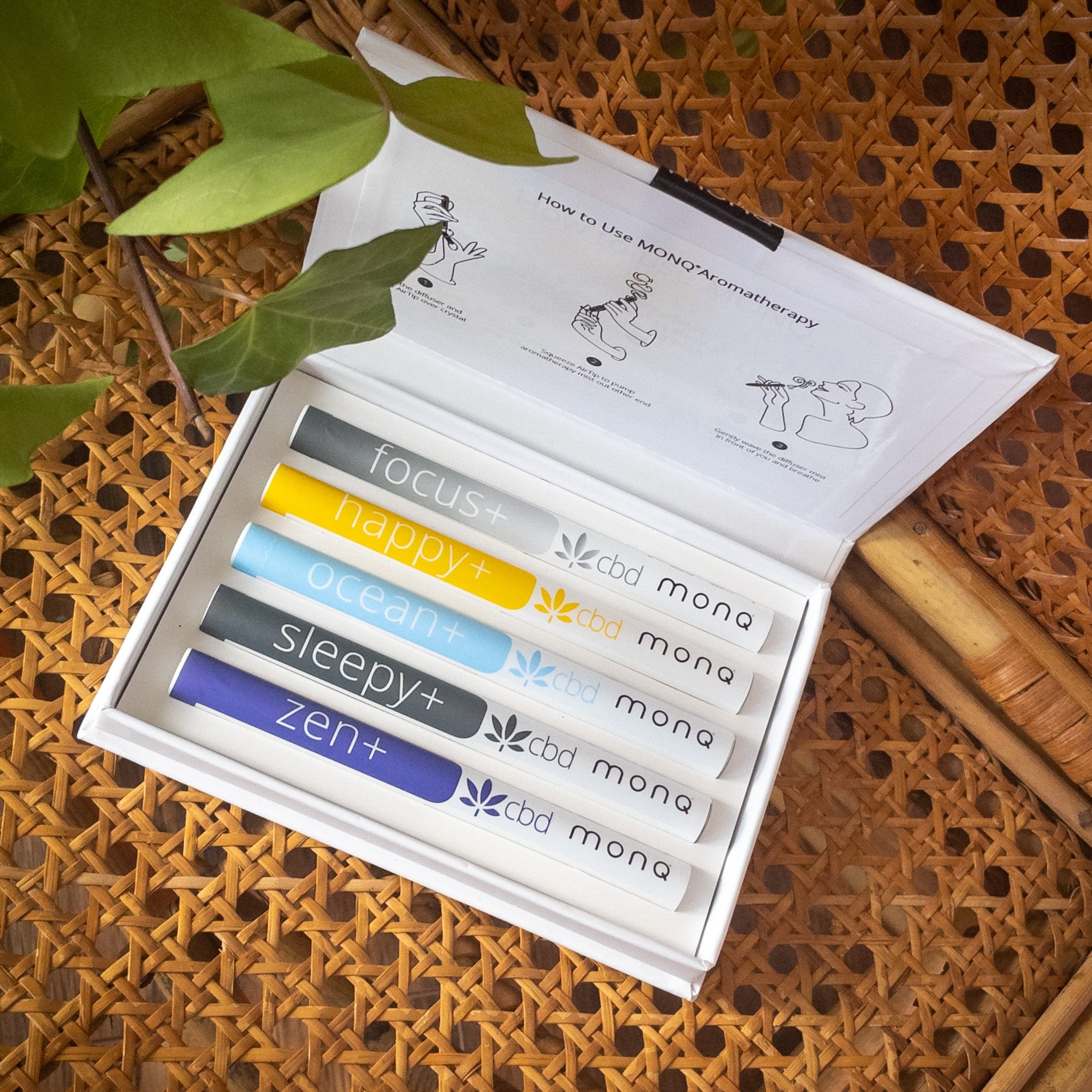
There are several practical approaches to incorporating essential oils into a pre-sleep routine, and each has its own character. A room diffuser disperses scent into the air continuously, creating an ambient aromatic environment in the bedroom that begins to signal rest as soon as you enter the space. Direct inhalation from a personal diffuser delivers a more concentrated sensory experience and allows precise control over which blend and how much you are inhaling. A MONQ personal diffuser combines portability with a pre-formulated botanical blend, making it easy to use the same scent consistently each evening as part of a ritual, whether you are at home, traveling, or winding down before sleep in any environment.
The Ritual Effect
One of the most powerful mechanisms behind aromatherapy for sleep is not the chemistry of any single compound but the conditioning effect of consistent ritual. When you use the same scent at the same time each evening as part of a deliberate wind-down sequence, the nervous system begins to associate that aroma with the transition to rest. Over time, the scent itself becomes a cue. Smelling it initiates a relaxation response that grows stronger and more reliable with repetition. This is the same principle behind any effective sleep hygiene practice: consistency trains the body to know what is coming next.
MONQ's Sleepy blend combines bergamot, chamomile, and lavender in a portable personal diffuser, making it easy to bring this ritual wherever you go. Shop Sleepy MONQ.
For the complete guide to aromatherapy for sleep, including research, botanicals, and technique, visit Aromatherapy for Sleep: A Wellness Guide.
Disclaimer: The above information is provided for general wellness and educational purposes only. Please note that while individual essential oil ingredients may have been shown to exhibit certain independent effects when used alone, the specific blends of ingredients contained in MONQ diffusers have not been tested. No specific claims are being made that use of any MONQ diffusers will lead to any of the effects discussed above. Additionally, please note that MONQ diffusers have not been reviewed or approved by the U.S. Food and Drug Administration. MONQ diffusers are not intended to be used in the diagnosis, cure, mitigation, prevention, or treatment of any disease or medical condition. If you have a health condition or concern, please consult a physician or your alternative health care provider prior to using MONQ diffusers. MONQ blends should not be inhaled into the lungs. Why? It works better that way. No Nicotine Ever. Inhale through the mouth, exhale through the nose. MONQ Diffusers are not intended for individuals under 18, or women who are pregnant or nursing.