Myrcene Terpene

Myrcene: What It Is and What It Does
Myrcene is one of the most prevalent terpenes in the plant world. It appears in mangoes, hops, lemongrass, thyme, chamomile, lavender, and dozens of other botanical sources. As a monoterpene, myrcene has a relatively simple molecular structure, yet its aromatic and physiological effects have attracted significant scientific interest. Its scent is earthy, musky, and slightly fruity - with a warm, settled quality that feels fundamentally different from the crisp brightness of pinene or the sharp lift of limonene.
Plants produce myrcene as part of their volatile oil profile, and it often serves as a kind of aromatic anchor - providing the base note that gives many blends their grounding, rounded quality. In the broader terpene ecosystem, myrcene is frequently described as a synergist: a compound that can amplify or modulate the effects of other terpenes present in the same botanical environment.
The Aromatic Profile of Myrcene
Myrcene has a complex scent that is difficult to describe in isolation because it is rarely experienced that way. Its primary notes are earthy and musky, with a herbal undercurrent and a soft, ripe fruitiness - sometimes compared to cloves or ripe mango. In lavender, where myrcene is a significant component, it contributes to the herb's characteristic warm-floral depth beneath the floral top notes. In chamomile, it is part of what gives the flower its soothing, apple-adjacent warmth.
Myrcene is typically extracted through steam distillation from plant material. Because it is a relatively unstable compound, it is often studied in combination with the full essential oil rather than in isolated form, which aligns with how it is actually experienced in aromatherapy practice.
Wellness Research on Myrcene
Myrcene has been the subject of considerable research interest, particularly in relation to its potential sedative and relaxing properties. Animal studies have suggested that myrcene may influence GABA receptors - the same neurological pathway targeted by many relaxation-support compounds - though direct human clinical trials remain limited. Researchers note that myrcene's effects appear to be dose-dependent and context-dependent, reinforcing the importance of whole botanical preparations over isolated compounds.
Studies examining myrcene's anti-inflammatory potential have shown promising results in cellular models. Research published in pharmacology journals has documented myrcene's ability to modulate certain inflammatory markers at a molecular level. Additionally, myrcene has been studied in combination with other terpenes as part of the "entourage effect" hypothesis - the idea that terpenes may work synergistically with each other and with other plant compounds to produce effects that exceed what any single compound achieves alone.
The traditional use of lavender and chamomile - both myrcene-rich botanicals - as relaxation and sleep support plants across dozens of cultures is consistent with the direction of modern research, even if the mechanism is still being characterized.
Myrcene in Aromatherapy
In aromatherapy, myrcene-containing botanicals are most commonly associated with relaxation, sleep support, and emotional grounding. Lavender and chamomile, both significant myrcene sources, are among the most well-documented botanicals for supporting a calm nervous state.
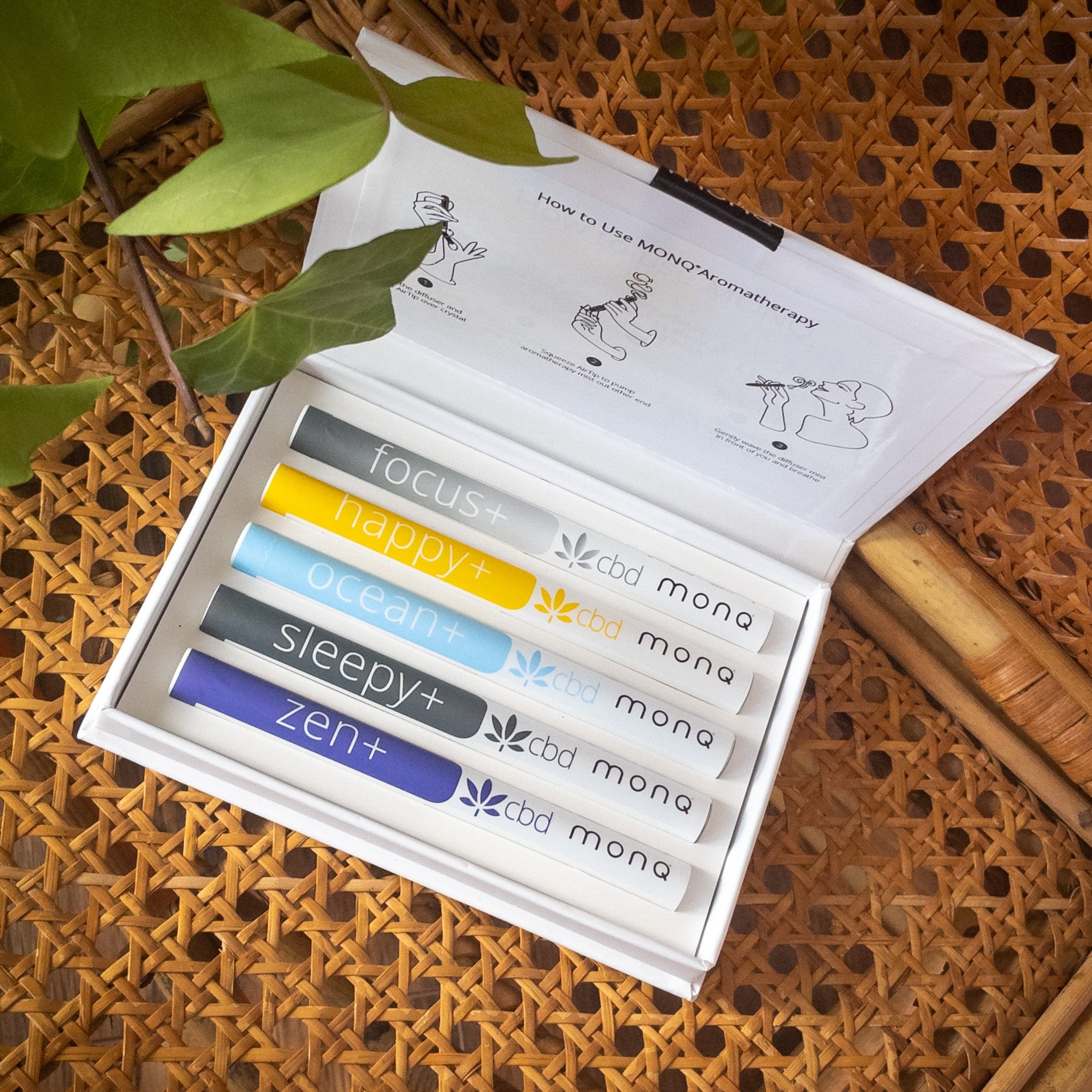
Sleepy MONQ features Chamomile, Lavender, and Bergamot - three botanicals with established myrcene content. The blend is designed specifically around the aromatherapy tradition of scent-supported relaxation and sleep preparation. Happy MONQ, which includes Lavender alongside Fennel and Vanilla, draws on lavender's myrcene content as part of a warmer, more uplifting aromatic profile. For more on how aromatherapy supports sleep, see the aromatherapy for sleep guide.
Terpene Connections
Myrcene frequently appears alongside linalool in lavender and chamomile - a pairing that researchers have studied precisely because the combination appears in so many traditional relaxation botanicals. Linalool contributes a more floral, clean quality that lifts myrcene's earthiness into something more nuanced and elegant.
Myrcene also shares botanical space with beta-caryophyllene in several plants. Beta-caryophyllene, with its spicy, woody character and its unique ability to interact with CB2 receptors, can amplify the overall calming profile of a myrcene-rich blend. Understanding how these terpenes interact is part of what makes botanical aromatherapy a richer practice than single-note fragrance.
Frequently Asked Questions
- What does myrcene smell like?
- Myrcene has an earthy, musky, herbal scent with a warm fruitiness - often compared to cloves or ripe mango. It is a base-note terpene that provides depth and grounding to botanical blends.
- Which plants are richest in myrcene?
- Lavender, chamomile, lemongrass, hops, thyme, and mango are among the most abundant botanical sources of myrcene. It is one of the most common terpenes in the plant kingdom.
- Is myrcene found in MONQ diffusers?
- Yes. Sleepy MONQ (Chamomile, Lavender, Bergamot) and Happy MONQ (Fennel, Thyme, Vanilla) both feature lavender as a key ingredient - a significant natural source of myrcene.
- Does myrcene have sedative properties?
- Preliminary research suggests myrcene may interact with GABA receptors associated with relaxation. These findings are based primarily on animal studies; human clinical research is ongoing. Myrcene-rich botanicals like lavender have a long traditional history of use in relaxation and sleep support contexts.
Learn how to use MONQ for the best aromatic experience →
Disclaimer: The above information is provided for general wellness and educational purposes only. Please note that while individual essential oil ingredients may have been shown to exhibit certain independent effects when used alone, the specific blends of ingredients contained in MONQ diffusers have not been tested. No specific claims are being made that use of any MONQ diffusers will lead to any of the effects discussed above. Additionally, please note that MONQ diffusers have not been reviewed or approved by the U.S. Food and Drug Administration. MONQ diffusers are not intended to be used in the diagnosis, cure, mitigation, prevention, or treatment of any disease or medical condition. If you have a health condition or concern, please consult a physician or your alternative health care provider prior to using MONQ diffusers. MONQ blends should not be inhaled into the lungs. Why? It works better that way. No Nicotine Ever. Inhale through the mouth, exhale through the nose. MONQ Diffusers are not intended for individuals under 18, or women who are pregnant or nursing.