Manuka Oil Benefits

What Is Manuka Oil?
Manuka essential oil is steam-distilled from the leaves and small branches of Leptospermum scoparium, a hardy flowering shrub native to New Zealand and southeastern Australia. Known to the Maori as "kahikatoa" and to early European settlers as the "tea tree" - a name it shares with its Australian botanical cousin - manuka has been central to indigenous wellness practices in New Zealand for generations. Maori healers used preparations of manuka bark, leaves, and seeds across a range of traditional applications, making it one of the country's most historically significant medicinal plants.
The Maori relationship with manuka is deeply woven into both practical and cultural life. The tree's bark was used in steam baths, its leaves in soothing poultices, and its flexible branches in construction and craftwork. When early European naturalists arrived in New Zealand, they found a plant already integrated into a sophisticated indigenous healing tradition and quickly recognized its aromatic and botanical value. The oil extracted from manuka leaves is distinctly different from Australian tea tree oil despite the botanical kinship - it has a softer, earthier, slightly honey-like character that reflects New Zealand's unique growing conditions.
Today, manuka oil occupies a respected position in professional aromatherapy and natural wellness, prized for its distinctive scent character and the remarkable diversity of naturally occurring constituents it contains. New Zealand remains the primary source of authentic manuka essential oil, where specific regional chemotypes produce oils of exceptional quality.
The Science Behind Manuka Oil
Manuka essential oil is chemically distinct from most other tea tree-family oils, largely because of its unusually high content of beta-triketones - particularly leptospermone, flavesone, and iso-leptospermone. These are rare compounds seldom found in significant quantities in other essential oils, and they contribute to manuka oil's characteristic warm, slightly resinous, herbaceous scent. The triketone content varies significantly by geographic origin within New Zealand, with East Cape manuka producing some of the highest-triketone oils available.
When the aromatic molecules of manuka oil engage the olfactory system, they travel to the limbic brain along the same direct pathway used by all aromatic botanicals. The warm, grounding character of manuka's scent profile tends to be associated with a sense of calm resilience - a quality that aligns with the plant's own rugged nature as a survivor species that thrives in exposed, windswept coastal environments. The oil also contains sesquiterpenes including calamenene and delta-cadinene, which contribute depth and longevity to the scent experience.
How MONQ Uses Manuka Oil
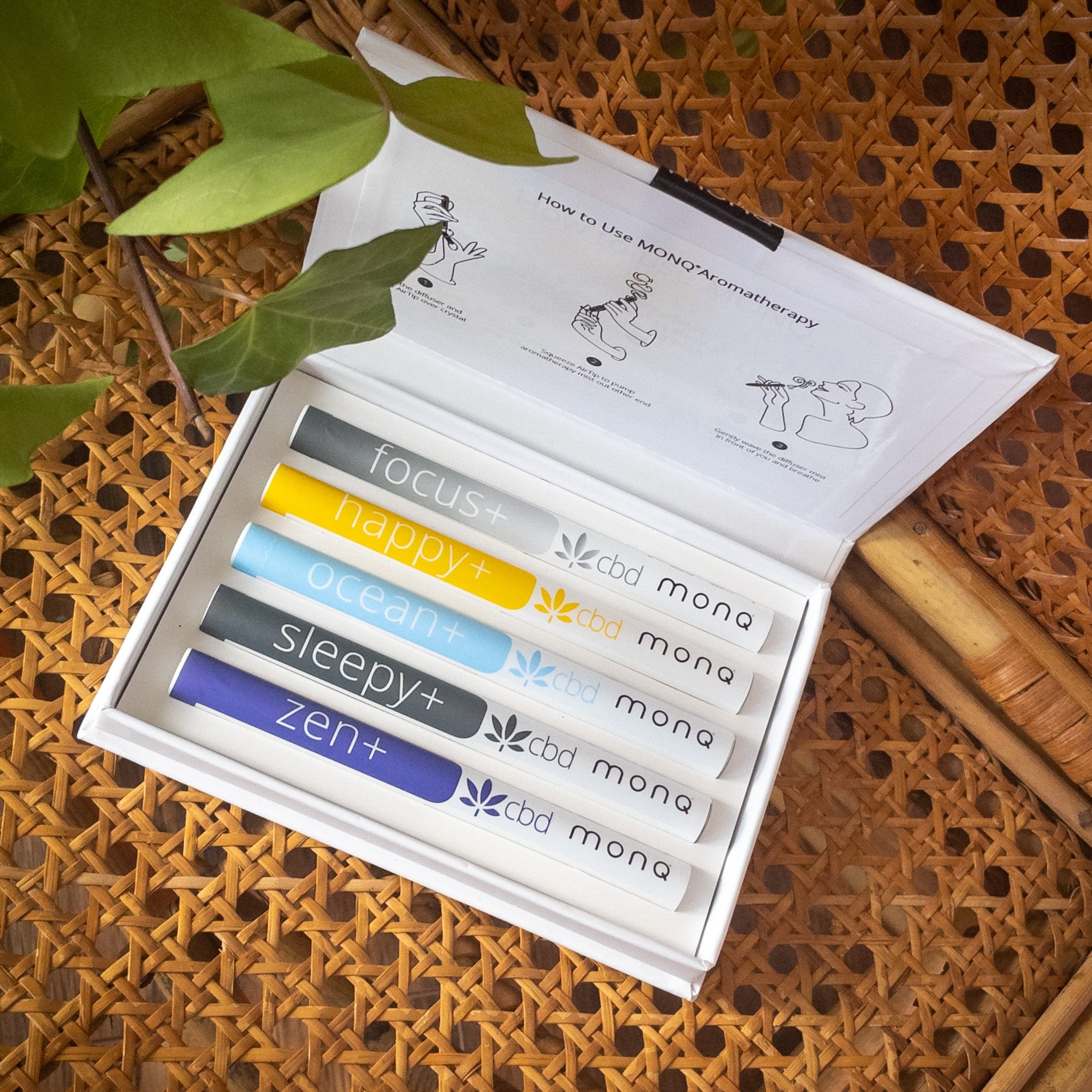
MONQ includes manuka essential oil in blends where grounding, earthy warmth, and botanical depth are called for. Its distinctive triketone-rich profile adds a dimension of complexity that few other essential oils can replicate - a quality that makes it valuable not just aromatically but as a signal of genuine botanical sourcing. When you breathe in MONQ's aromatic mist through your mouth and exhale through your nose, manuka's unique molecular profile engages your olfactory receptors and travels the direct pathway to your brain's emotional processing centers.
The result is an aromatic experience grounded in one of the world's most distinctive indigenous plant traditions - a breath that connects modern wellness practice to the rich botanical heritage of Aotearoa New Zealand. For moments when you want to feel settled, present, and quietly resilient, manuka oil's character is a natural ally.
Explore More
Disclaimer: The above information is provided for general wellness and educational purposes only. Please note that while individual essential oil ingredients may have been shown to exhibit certain independent effects when used alone, the specific blends of ingredients contained in MONQ diffusers have not been tested. No specific claims are being made that use of any MONQ diffusers will lead to any of the effects discussed above. Additionally, please note that MONQ diffusers have not been reviewed or approved by the U.S. Food and Drug Administration. MONQ diffusers are not intended to be used in the diagnosis, cure, mitigation, prevention, or treatment of any disease or medical condition. If you have a health condition or concern, please consult a physician or your alternative health care provider prior to using MONQ diffusers. MONQ blends should not be inhaled into the lungs. Why? It works better that way. No Nicotine Ever. Inhale through the mouth, exhale through the nose. MONQ Diffusers are not intended for individuals under 18, or women who are pregnant or nursing.