Copaiba Essential Oil Uses

What Is Copaiba?
Copaiba (Copaifera spp.) is a group of tropical trees native to South America, particularly the Amazon basin and the cerrado of Brazil. These tall, resin-producing trees yield an oleoresin from their trunks that has been a cornerstone of Amazonian botanical tradition for as long as human communities have inhabited the rainforest. The essential oil is steam-distilled from this oleoresin and carries a warm, woody, slightly sweet and earthy scent - deep and grounding in a way that immediately evokes the forest floor and ancient, undisturbed places.
Indigenous Amazonian peoples, including the Kayapo, Tikuna, and dozens of other communities, have used copaiba oleoresin for centuries in a wide range of wellness and ceremonial contexts. Spanish and Portuguese missionaries documented its use throughout the colonial period, and by the 17th century copaiba oleoresin was being exported to Europe as a valued botanical substance. It appeared in European pharmacopeias for over 200 years, prized for its versatility and rich aromatic profile.
The scent of copaiba essential oil is distinctive: warm and woody, with a sweetness that is more earthy than floral, and a depth that grows more complex as it warms in the air. It is one of the more grounding aromatics in the tropical botanical world - an anchor rather than a stimulant, a settling presence rather than a clarifying one.
The Science Behind Copaiba
Copaiba essential oil is exceptionally rich in sesquiterpene hydrocarbons, with beta-caryophyllene typically comprising 40-60% of the total composition, alongside alpha-copaene, trans-alpha-bergamotene, and delta-cadinene. Beta-caryophyllene is among the most studied sesquiterpene compounds in modern botanical research and is notable for being one of the few aromatic compounds that directly engages with CB2 receptors - part of the endocannabinoid system - in addition to its olfactory pathway interactions. This gives copaiba a somewhat unique profile among essential oils: its aromatic compounds engage multiple biological signaling pathways simultaneously.
The high sesquiterpene content of copaiba oil means its molecules are relatively large and heavy, which affects how they behave in the olfactory system. These larger molecules tend to produce deeper, more sustained aromatic experiences compared to the lighter terpenes found in citrus or conifer oils. When copaiba's compounds reach the olfactory epithelium, they engage scent receptors connected to the limbic system's emotion-regulation centers, where their warm, deeply grounding character signals safety and stability. The result is an aromatic experience that many describe as deeply centering and calming.
How MONQ Uses Copaiba
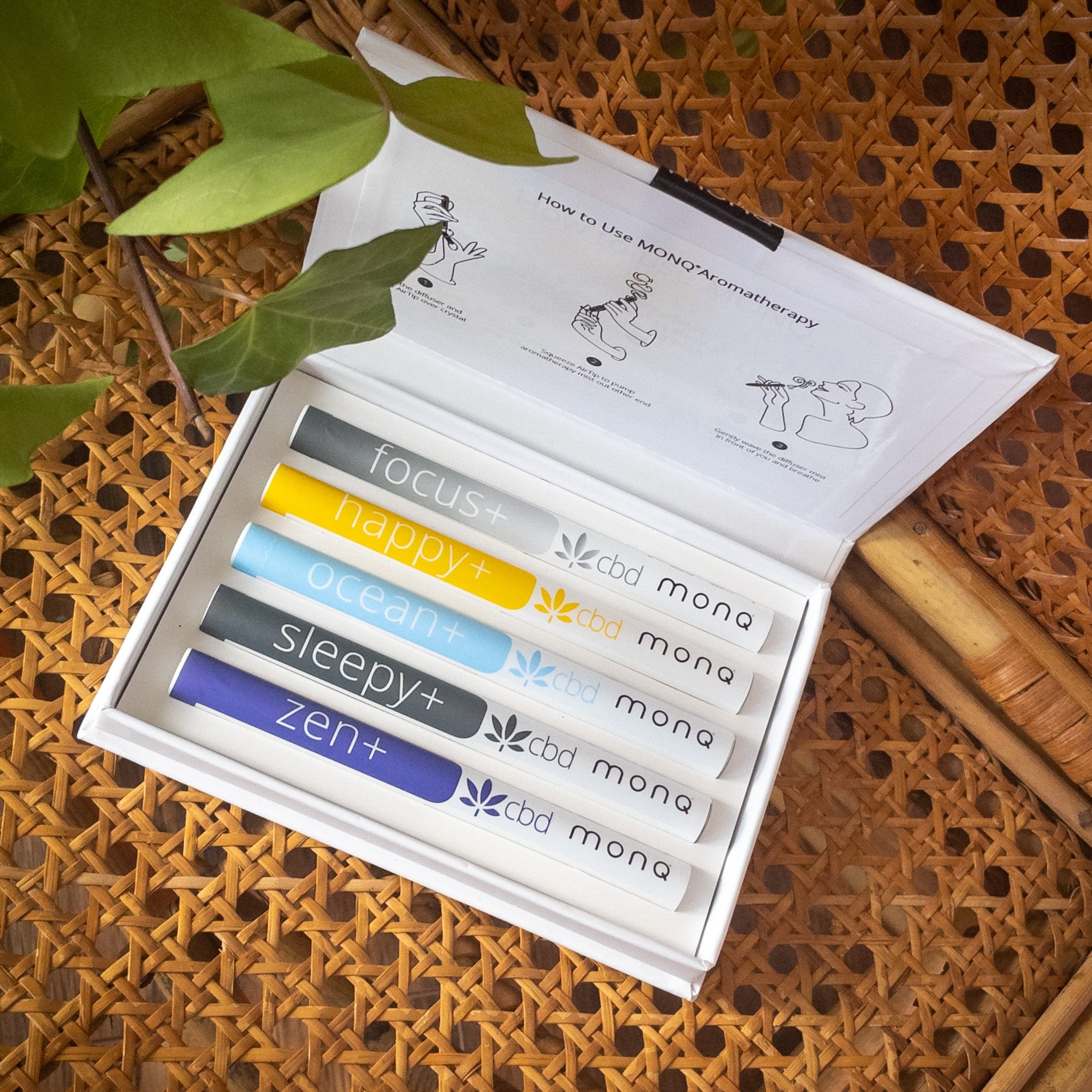
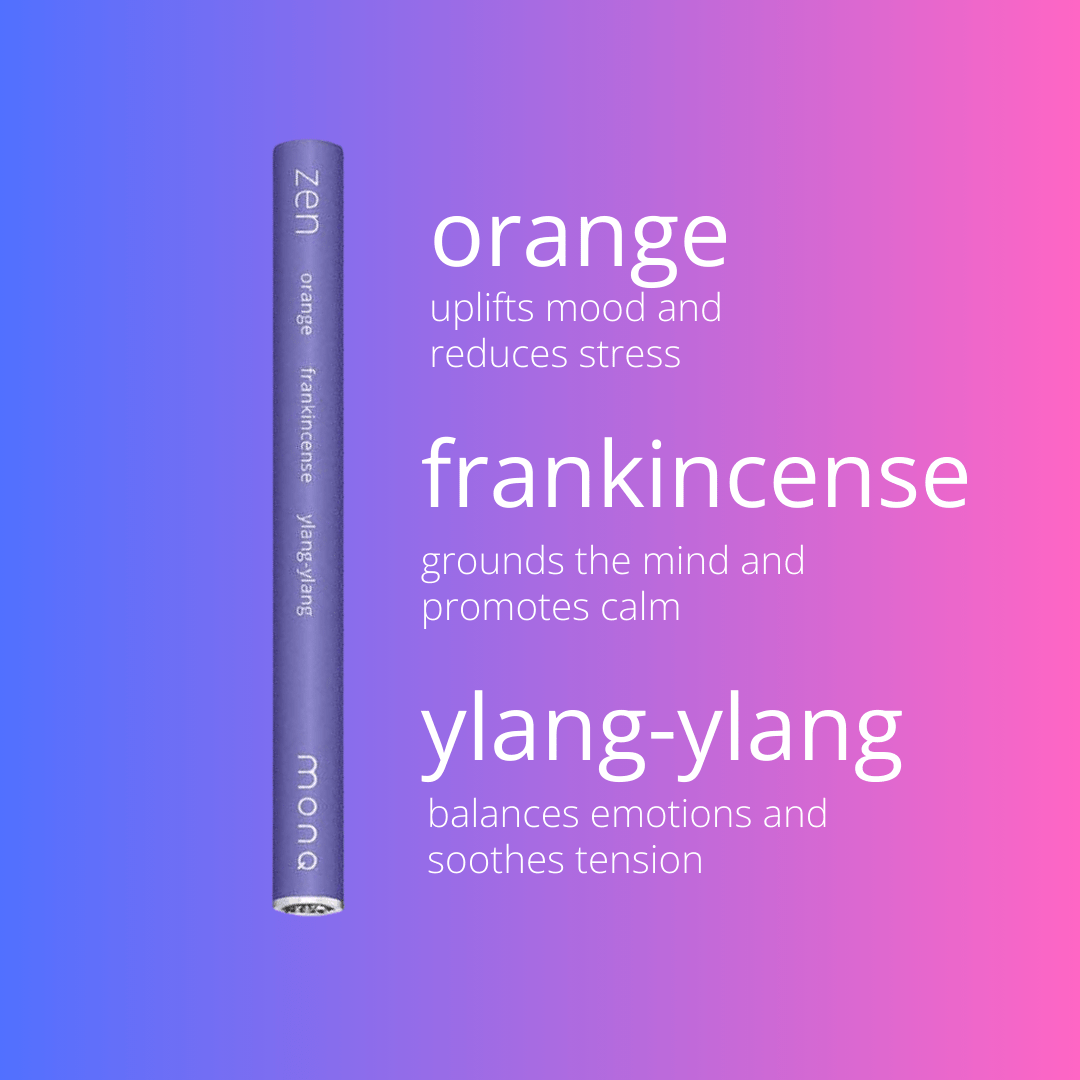
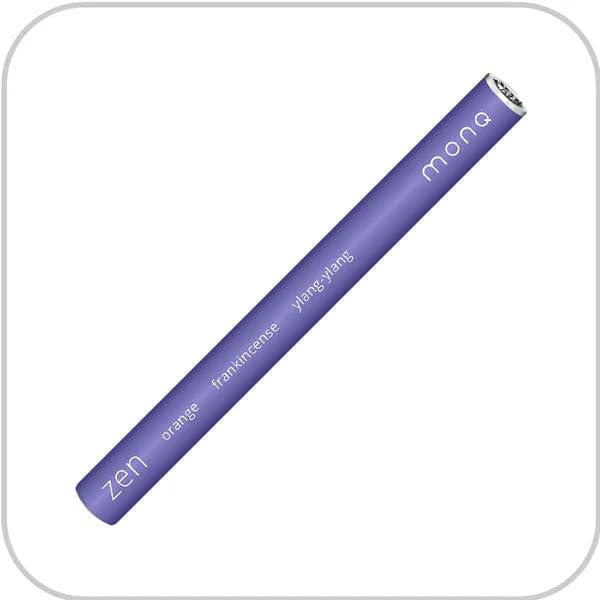
Copaiba is featured in Zen MONQ and Relieve+CBD MONQ, where its deep, grounding aromatic character contributes to blends designed to support balance, release, and embodied presence. In Zen MONQ, copaiba adds an Amazonian forest depth that pairs beautifully with the blend's other centering botanicals. In Relieve+CBD MONQ, its warm earthiness complements the CBD isolate and supports the blend's intention of deep physical and emotional ease.
Because copaiba's sesquiterpene molecules are heavy and dense, they particularly benefit from MONQ's retronasal delivery method. Inhaling through the mouth and exhaling through the nose allows these larger aromatic molecules to warm slightly before traveling the retronasal pathway, releasing their full aromatic complexity as they pass through the olfactory epithelium. The deep, woody exhale that copaiba produces through this method is one of the more distinctly grounding aromatic experiences MONQ offers - a breath that feels like it reaches all the way down.
Explore More
Disclaimer: The above information is provided for general wellness and educational purposes only. Please note that while individual essential oil ingredients may have been shown to exhibit certain independent effects when used alone, the specific blends of ingredients contained in MONQ diffusers have not been tested. No specific claims are being made that use of any MONQ diffusers will lead to any of the effects discussed above. Additionally, please note that MONQ diffusers have not been reviewed or approved by the U.S. Food and Drug Administration. MONQ diffusers are not intended to be used in the diagnosis, cure, mitigation, prevention, or treatment of any disease or medical condition. If you have a health condition or concern, please consult a physician or your alternative health care provider prior to using MONQ diffusers. MONQ blends should not be inhaled into the lungs. Why? It works better that way. No Nicotine Ever. Inhale through the mouth, exhale through the nose. MONQ Diffusers are not intended for individuals under 18, or women who are pregnant or nursing.