Bergamot Essential Oil Uses

Bergamot essential oil is extracted from the peel of the bergamot orange, known for its bright, citrusy, and slightly floral fragrance. It is highly valued in aromatherapy for its mood-lifting and calming properties, helping to ease everyday stress and low mood. Often used in blends, bergamot oil is believed to promote emotional balance and improve overall mental well-being.
Beyond its uplifting effects, bergamot oil may also be beneficial for skin care. It is sometimes included in products aimed at promoting clear, healthy skin due to its potential antibacterial and antiseptic qualities. However, as bergamot can increase sensitivity to sunlight, it’s important to avoid direct sun exposure after use. Always dilute appropriately and consult with a healthcare provider before use, particularly for individuals with sensitive skin or specific health conditions.
Botanical Origin and Key Compounds
Bergamot (Citrus bergamia) is a small citrus tree cultivated almost exclusively in the Calabria region of southern Italy - the narrow coastal strip at the very toe of the Italian boot, where a unique combination of soil, climate, and sea air produces fruit unlike that grown anywhere else. The bergamot orange is likely a hybrid of lemon and bitter orange, though its exact origins remain debated by botanists. The essential oil is cold-pressed from the peel of the fruit - the same process used for lemon and orange peel oils - rather than steam-distilled, which helps preserve the fresh, complex character of the ripe fruit's aromatics.
Key Aromatic Compounds
Bergamot's distinctive aromatic character - simultaneously uplifting and calming, citrusy yet smooth and rounded - arises from an unusually well-balanced chemical profile. The dominant ester is linalyl acetate, typically comprising 25-40% of the oil. Linalyl acetate is the same compound that gives lavender much of its calming, rounded quality - and this shared chemistry is exactly why bergamot and lavender pair so naturally and so effectively. Alongside linalyl acetate, linalool (a soft, floral monoterpene alcohol) contributes additional smoothness and gentleness. Limonene provides the bright, initial citrus lift. And bergapten - a furanocoumarin unique to bergamot - is responsible for the oil's phototoxicity: bergapten causes significant UV sensitivity in skin, which is why FCF (furanocoumarin-free) bergamot is used in products applied before sun exposure.
Aromatherapy for Mood and Emotional Wellness
Bergamot has one of the most studied and broadly applicable aromatic profiles for emotional wellbeing in the aromatherapist's palette. Its unusual combination of citrus brightness (from limonene) with the calming, rounded depth of linalyl acetate and linalool means it is simultaneously uplifting AND calming - a combination few other single oils achieve. This makes it effective in the morning (for brightening and motivating) and in the afternoon (for resetting without sedating). It is genuinely versatile across a wider emotional range than most aromatics.
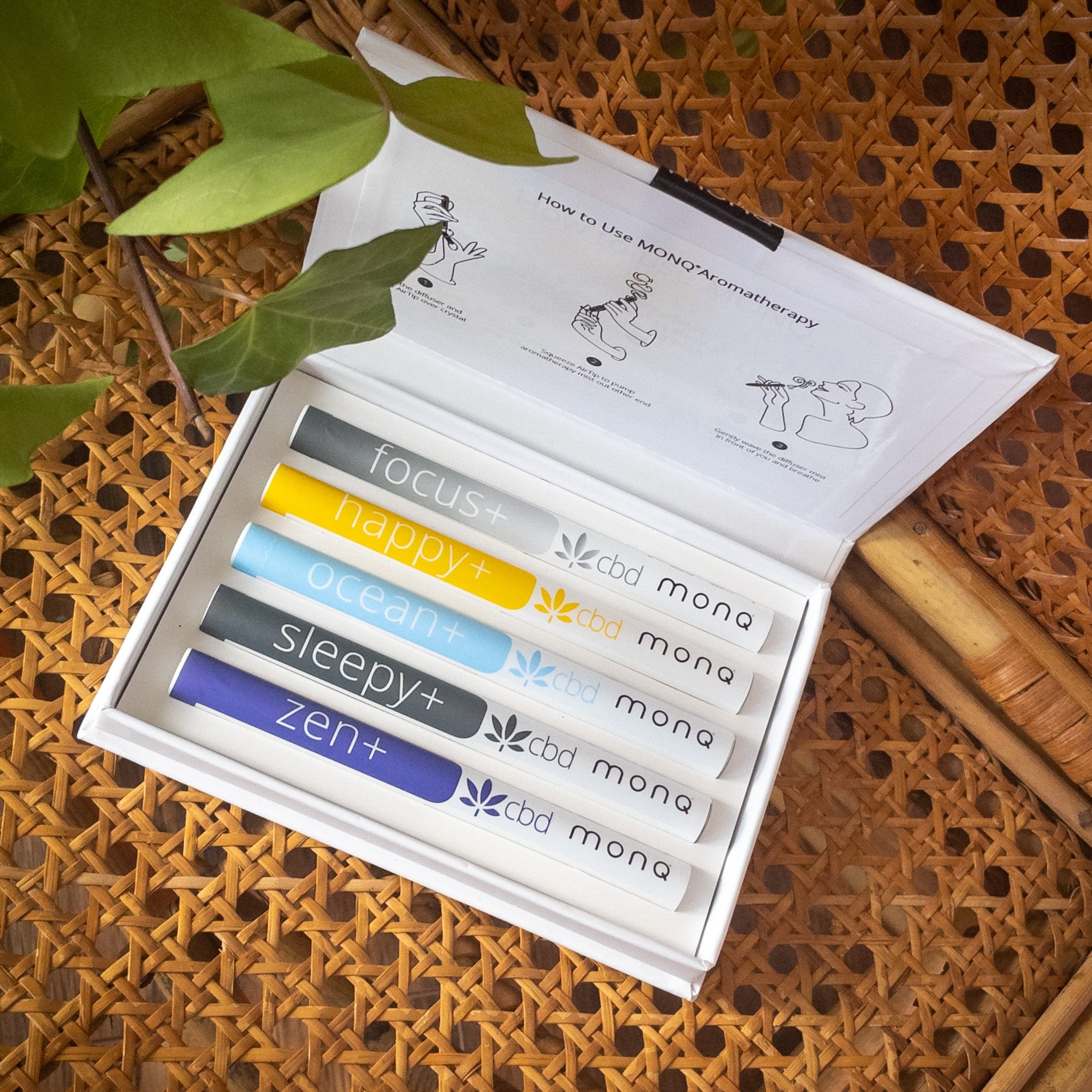
Bergamot pairs beautifully with lavender (their shared linalool-linalyl acetate chemistry creates a seamless, balanced accord), ylang-ylang (which deepens bergamot's floral quality), neroli, sandalwood, and vetiver. In MONQ blends, bergamot's citrusy brightness appears in Happy MONQ and Sexy MONQ, contributing the fresh, vibrant lift that makes both blends feel alive and present. Explore the full MONQ Bergamot Collection and the Bergamot plant profile for more.
Explore More
Disclaimer: The above information is provided for general wellness and educational purposes only. Please note that while individual essential oil ingredients may have been shown to exhibit certain independent effects when used alone, the specific blends of ingredients contained in MONQ diffusers have not been tested. No specific claims are being made that use of any MONQ diffusers will lead to any of the effects discussed above. Additionally, please note that MONQ diffusers have not been reviewed or approved by the U.S. Food and Drug Administration. MONQ diffusers are not intended to be used in the diagnosis, cure, mitigation, prevention, or treatment of any disease or medical condition. If you have a health condition or concern, please consult a physician or your alternative health care provider prior to using MONQ diffusers. MONQ blends should not be inhaled into the lungs. Why? It works better that way. No Nicotine Ever. Inhale through the mouth, exhale through the nose. MONQ Diffusers are not intended for individuals under 18, or women who are pregnant or nursing.