

Exploring the Link Between Air Quality and Stress
In the quest for wellness, balance might seem like the ultimate goal. Eating nutritious food, exercising regularly, and getting adequate sleep are essential components. But in our fast-paced lives, chronic stress often derails us from this ideal. Causes of stress can range from lingering illness to financial woes, and from family issues to societal pressures. Could the air you breathe be another contributing factor?
Managing Stress Naturally
Today's Air vs. Ancestral Air
Modern air is not just polluted; it's often devoid of these natural compounds. Terpenes like limonene, pinene, beta-caryophyllene, and linalool were abundant in the ancestral environment and have been researched for their potential wellness properties, including their ability to promote relaxation.
What Terpene-Depleted Air Actually Means
Indoor air in most modern homes and offices is clean in the conventional sense: filtered and climate-controlled. But it is also stripped of something our biology expects. Terpenes are the organic compounds that give forests, meadows, and coastlines their distinctive scent. For millions of years, human lungs processed this terpene-rich air as a normal baseline. Today, most people spend over 90 percent of their time indoors, breathing air that contains almost none of it.
The difference matters because terpenes are not just fragrant compounds. Limonene, found naturally in citrus groves and sun-warmed conifer forests, has been studied for its uplifting properties. Linalool, common in lavender fields and certain flowering trees, appears in research related to calming physiological effects. Beta-caryophyllene, abundant in forest undergrowth, interacts with receptors throughout the body. Alpha-pinene, the terpene most responsible for the smell of pine forests, is one of the most studied botanical compounds in wellness research. These were not occasional encounters for your ancestors. They were present in every breath, all day, for the entirety of human evolution.
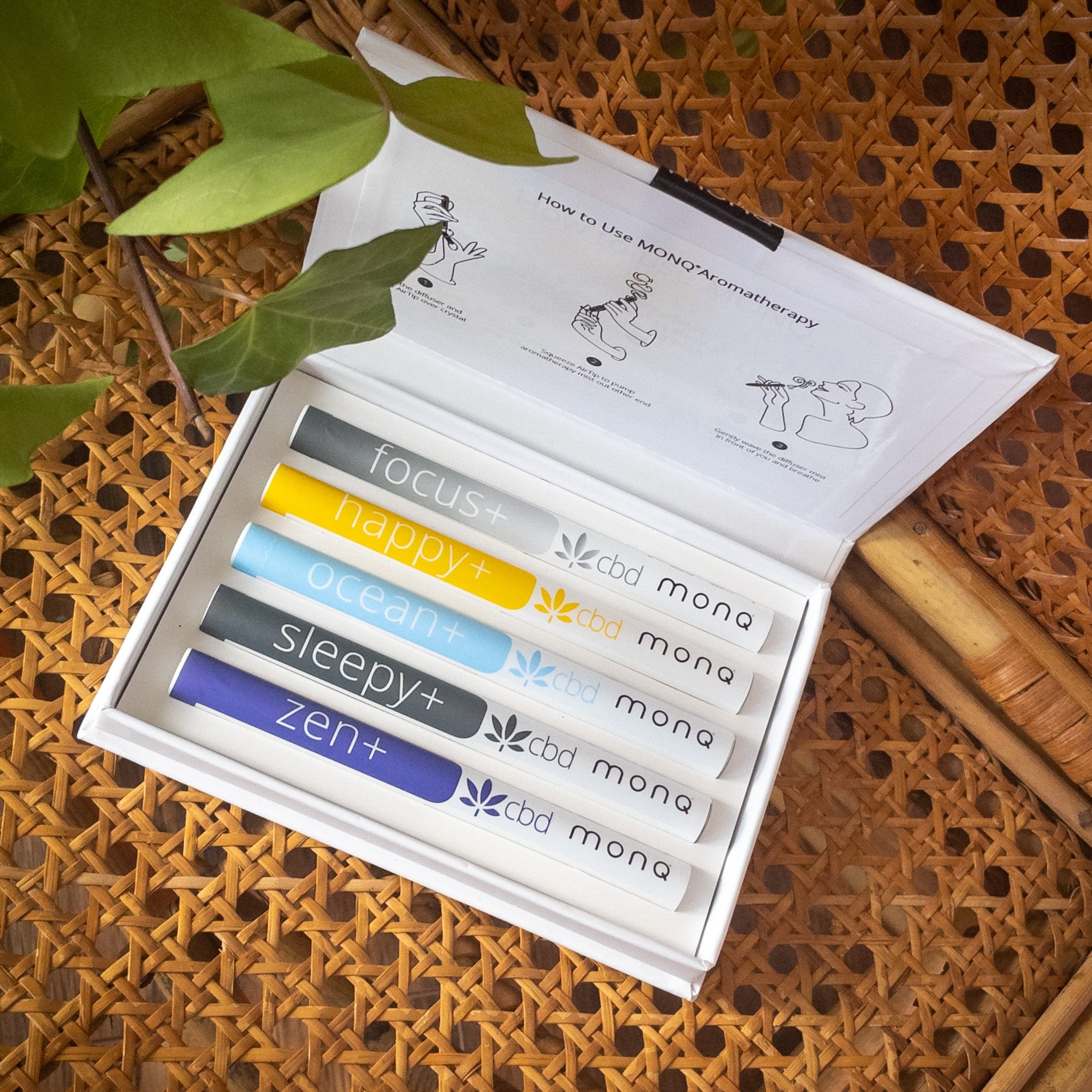
MONQ portable botanical blends are designed to reintroduce these compounds intentionally. Each blend contains a hand-formulated combination of essential oils carrying the terpene profiles that your olfactory system has recognized for millennia. A practical approach: take two or three breaths with your MONQ diffuser in the morning before you start your day, and again in the early afternoon when indoor fatigue tends to peak. It is a targeted way to give your biology what the modern built environment has removed.
Go Deeper
Terpene-rich air was the baseline for human biology across millions of years of evolution. Understanding how those compounds supported the stress response is at the heart of our aromatherapy and stress guide.
Aromatherapy for Stress: How Scent Calms the Body's Stress Response →Disclaimer: The above information is provided for general wellness and educational purposes only. Please note that while individual essential oil ingredients may have been shown to exhibit certain independent effects when used alone, the specific blends of ingredients contained in MONQ diffusers have not been tested. No specific claims are being made that use of any MONQ diffusers will lead to any of the effects discussed above. Additionally, please note that MONQ diffusers have not been reviewed or approved by the U.S. Food and Drug Administration. MONQ diffusers are not intended to be used in the diagnosis, cure, mitigation, prevention, or treatment of any disease or medical condition. If you have a health condition or concern, please consult a physician or your alternative health care provider prior to using MONQ diffusers. MONQ blends should not be inhaled into the lungs. Why? It works better that way. No Nicotine Ever. Inhale through the mouth, exhale through the nose. MONQ Diffusers are not intended for individuals under 18, or women who are pregnant or nursing.











Leave a comment