

Essential Oils for Stress Relief: Nature's Calming Toolkit
Why Scent Is One of the Most Powerful Calming Tools You Have
When the workday runs long and the mental load piles up, most people reach for caffeine, their phone, or the couch. But there is a quieter, older tool sitting right under your nose - literally. Essential oils have been used for thousands of years to help people unwind, collect themselves, and move from a state of pressure to one of ease. Modern research is beginning to confirm what many traditions already knew: specific aromatic compounds interact with the brain's limbic system in ways that may support a calmer, more settled mental state.
This guide walks through five of the most-studied essential oils for everyday stress relief, how each one works, and how you can bring them into your daily routine simply and conveniently.
Lavender: The Classic Calm
Lavender (Lavandula angustifolia) is arguably the most researched essential oil in the world. Its primary active constituents - linalool and linalyl acetate - have been studied for their potential effects on the nervous system. Many people find that inhaling lavender after a high-pressure day helps them feel less wound up and more ready to settle in for the evening.
A review published via PubMed (NCBI) noted that lavender aromatherapy may support relaxation and a greater sense of calm. Whether used in a diffuser, diluted in a bath, or carried in a portable personal diffuser, lavender is a reliable go-to for end-of-day tension.
Best used: In the evening, before bed, or any time you feel like your thoughts are running faster than you want them to.
Bergamot: Sunshine in a Bottle
Bergamot (Citrus bergamia) is best known as the distinctive floral-citrus note in Earl Grey tea. As an essential oil, it carries a bright, uplifting quality that makes it useful when stress is tipping into fatigue or low energy. The aroma is fresh and slightly fruity - a welcome contrast to heavier, woodsier oils.
Research suggests bergamot may be associated with reduced feelings of tension and improved mood. Its main constituent, linalool (shared with lavender), plus the terpene limonene give it a dual character: grounding and brightening at the same time.
Best used: Mid-morning when mental fatigue is creeping in, or during a midday reset when you need to shift gears without reaching for more caffeine.
Frankincense: Deep Calm with Ancient Roots
Frankincense (Boswellia sacra or Boswellia serrata) has been burned in temples, meditation spaces, and healing rituals for millennia. There is a reason it keeps showing up across cultures and centuries: the scent has a grounding, meditative quality that is hard to replicate with any other oil.
Its primary aroma compounds include alpha-pinene and incensole acetate. Traditional use consistently places frankincense in ceremonial and contemplative settings - environments where stillness is the goal. Many people find that a few breaths of frankincense help slow their mental pace, particularly after overstimulating days.
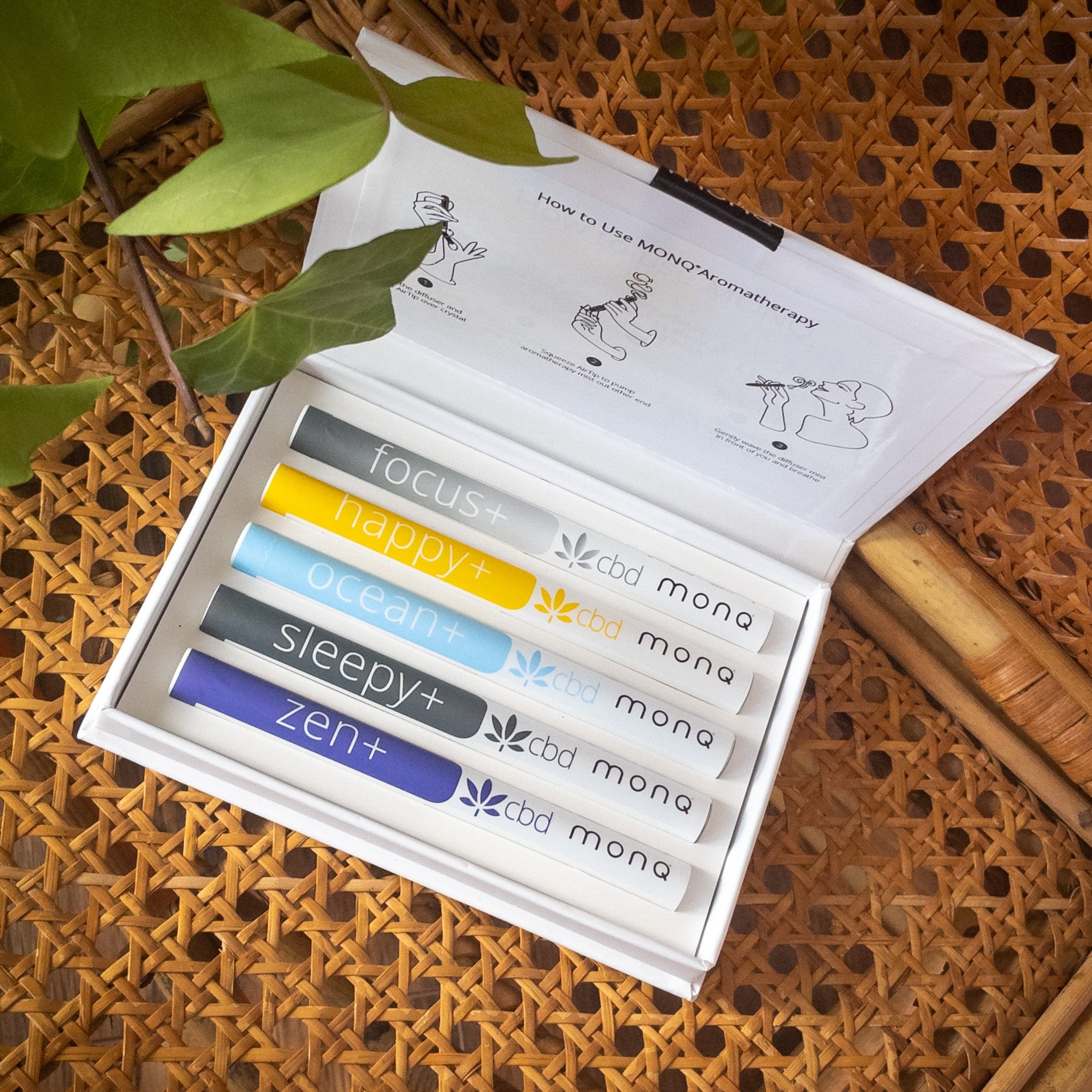
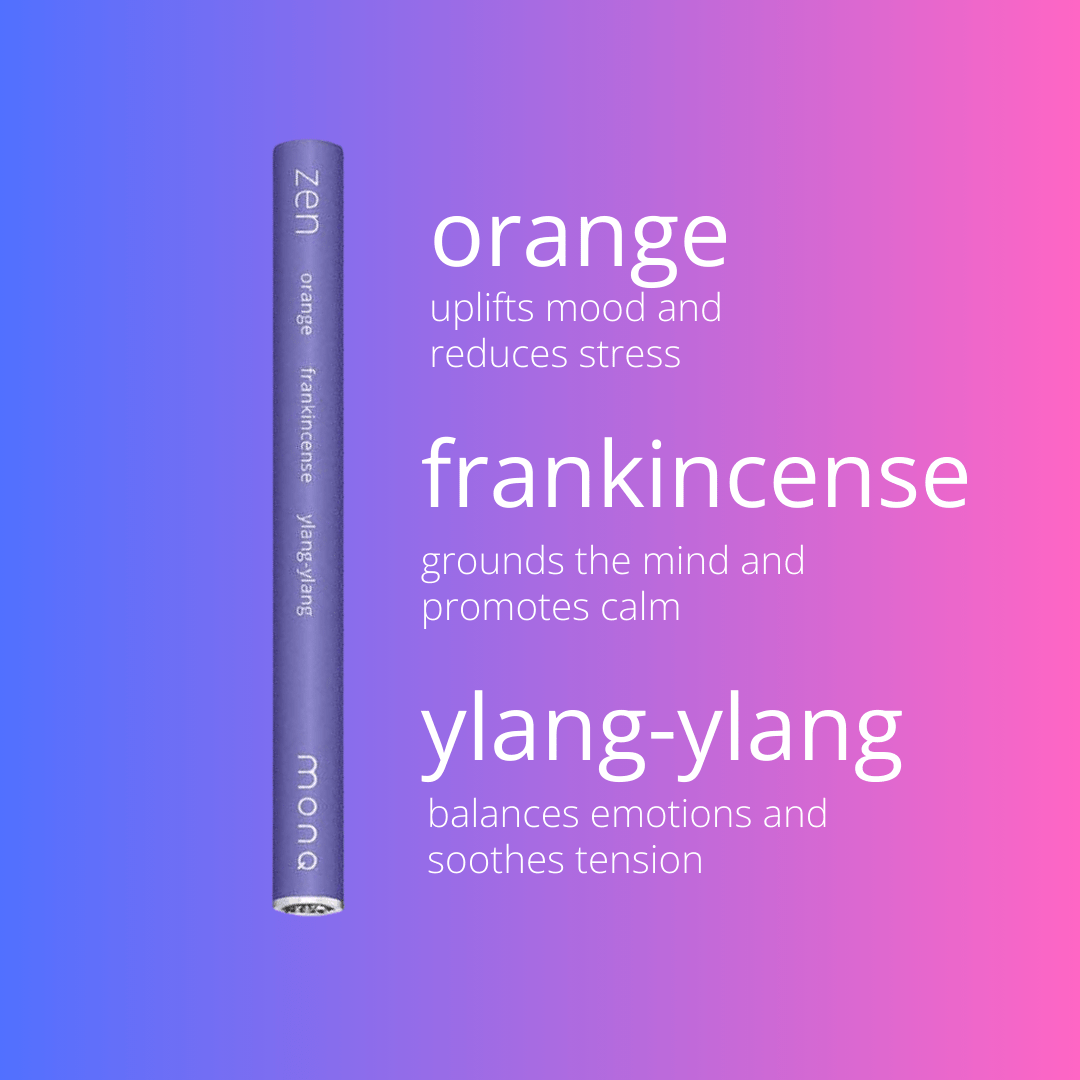
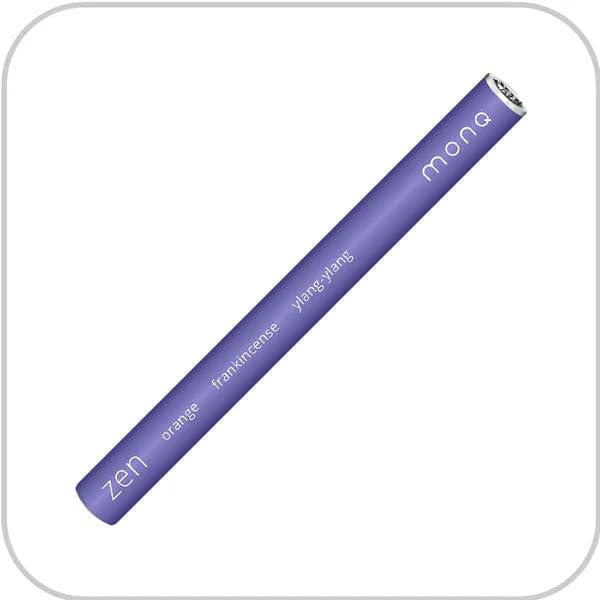
Frankincense is one of the key ingredients in Zen MONQ, blended with orange and ylang ylang to create a complete stress-relief experience in a pocket-sized personal diffuser. The MONQ technique - inhale through the mouth, exhale through the nose - allows the aromatic mist to engage your senses fully before it exits.
Best used: Before or during meditation, journaling, quiet reading, or any intentional moment you are carving out of a busy schedule.
Ylang Ylang: Floral Grounding for Racing Thoughts
Ylang ylang (Cananga odorata) is a richly floral oil with a creamy, almost narcotic sweetness. It originates from the flowers of a tropical tree native to the Philippines and has a long history of traditional use in Southeast Asian wellness practices. The scent is bold - a little goes a long way - but its effect tends toward grounding and slowing rather than stimulating.
The main constituents include linalool, germacrene, and caryophyllene. Traditional use associated ylang ylang with reducing feelings of pressure and promoting a more relaxed, present mental state. When blended with complementary oils, its intensity is softened into something deeply pleasant.
Ylang ylang also appears in Zen MONQ, where it pairs with frankincense and orange to create a balanced, full-bodied calming blend. The combination works well for those moments when you feel overwhelmed and need a sensory anchor to come back to yourself.
Best used: During transitions - the commute home, the gap between finishing work and starting dinner, or any moment you want to consciously change your internal state.
Clary Sage: The Underrated Relaxer
Clary sage (Salvia sclarea) often sits in the shadow of its cousin common sage, but it deserves a spot in any serious stress-relief toolkit. Its aroma is earthy, slightly herbal, and warm - less sharp than common sage, with a rounded quality that many people find deeply calming.
The key constituent is linalyl acetate (also found in lavender), which may support a sense of ease and reduced tension. Several small studies have explored clary sage's effects in high-pressure environments, with results suggesting it may be associated with lower perceived stress levels. Traditional herbalism has long classified it as a nervine - an herb with affinity for the nervous system.
Best used: After a demanding week, on weekends when you are trying to fully decompress, or blended with lavender or bergamot for a layered calming experience.
Fennel and Vanilla: The Warmth of Happy MONQ
Stress does not always feel like tension. Sometimes it shows up as low mood, restlessness, or a vague sense of being out of sorts. That is where a blend oriented toward warmth and brightness can serve a different but equally important role.
Happy MONQ blends fennel, thyme, and vanilla into a sweet, uplifting combination that many people find shifts their mood during sluggish or heavy moments. Fennel brings a light anise note, thyme adds herbal depth, and vanilla rounds it all with warmth. It is the scent equivalent of a hug on a hard afternoon.
How to Build a Simple Essential Oil Ritual
The oils themselves are only as useful as your consistency in using them. A few approaches that work well for everyday stress relief:
- Anchor it to an existing habit. Use your calming oil at the same time each day - after you sit down at your desk, during your afternoon break, or while you make your evening tea. Pairing a new habit with an existing one makes it stick.
- Keep the tool accessible. A portable personal diffuser like MONQ goes in your pocket or bag. When the stressful moment arrives, the tool is already there. You don't have to set up a diffuser or mix anything.
- Use it intentionally, not just automatically. Take three slow, deliberate breaths. Inhale through the mouth, exhale through the nose. Let the exhale be longer than the inhale. The breathing pattern itself is calming - the oil amplifies the effect.
- Match the oil to the moment. Bright and uplifting (bergamot, vanilla) for morning fatigue. Grounding and deep (frankincense, ylang ylang) for evening wind-down. Calm and familiar (lavender) for sleep preparation.
The Bottom Line
Essential oils will not eliminate the sources of stress in your life. But they can change how you move through it. The olfactory system is uniquely wired to the brain's emotional centers, which means a single deep breath of the right scent can shift your internal state faster than almost any other sensory input.
Whether you explore lavender, bergamot, frankincense, ylang ylang, or clary sage, the key is to start simple, stay consistent, and pay attention to what actually works for you. Nature's calming toolkit is wide - and it fits in your pocket.
Disclaimer: The above information is provided for general wellness and educational purposes only. Please note that while individual essential oil ingredients may have been shown to exhibit certain independent effects when used alone, the specific blends of ingredients contained in MONQ diffusers have not been tested. No specific claims are being made that use of any MONQ diffusers will lead to any of the effects discussed above. Additionally, please note that MONQ diffusers have not been reviewed or approved by the U.S. Food and Drug Administration. MONQ diffusers are not intended to be used in the diagnosis, cure, mitigation, prevention, or treatment of any disease or medical condition. If you have a health condition or concern, please consult a physician or your alternative health care provider prior to using MONQ diffusers. MONQ blends should not be inhaled into the lungs. Why? It works better that way. No Nicotine Ever. Inhale through the mouth, exhale through the nose. MONQ Diffusers are not intended for individuals under 18, or women who are pregnant or nursing.










Leave a comment