

The Marvel of Sleep: How Much Do You Really Need?

Sleep - that mysterious realm of dreams, cellular restoration, memory consolidation, and escape from the demands of waking life. We spend roughly a third of our lives in this altered state, yet most of us have never thought carefully about what is actually happening during those hours, or how much of it we truly need. The answers may surprise you.
Is 8 Hours Really the Golden Standard?
The age-old belief that eight hours of sleep is the universal ideal has been both helpful and misleading. It gave the world a baseline - a cultural shorthand for "enough sleep" - but it also created a one-size-fits-all standard that does not account for the extraordinary biological diversity among human sleepers.
While eight hours may be ideal for many adults, others genuinely thrive on seven or feel best with nine. A small percentage of people - researchers call them "short sleepers" - carry a genetic mutation that allows them to feel fully rested on six hours or even less without any measurable negative effects. These true short sleepers are rare, however, and should not be confused with the far more common pattern of chronically sleep-deprived people who have simply adapted to feeling tired.
The key question is not "how many hours did I sleep?" but "do I wake feeling restored, think clearly through the day, and feel sleepy only at appropriate times?" If the answers are yes, you are probably getting enough sleep. If you need an alarm to wake, feel foggy in the afternoon, or fall asleep almost instantly in quiet environments, your body is telling you something important.
How Age Shapes Sleep Needs
Our age is perhaps the most powerful determinant of how much sleep we need. Sleep architecture - the cycling pattern of light sleep, deep sleep, and REM (rapid eye movement) sleep that repeats throughout the night - changes significantly across the lifespan, and so do the total hours required for optimal function.
According to guidelines developed by the Sleep Foundation, endorsed by the scientific community and referenced by the CDC, optimal sleep ranges by life stage include:
- Newborns (0-3 months): 14-17 hours
- Infants (4-11 months): 12-15 hours
- Toddlers (1-2 years): 11+ hours
- School-age children: Up to 12 hours
- Teenagers: Around 10 hours
- Young Adults (18-25 years): 7-9 hours
- Adults (26-64 years): 7-9 hours
- Older Adults (65+ years): 7-8 hours
The dramatic difference between a newborn's 16-hour requirement and an older adult's seven hours reflects profound changes in brain development, hormonal patterns, and the body's regenerative needs. Newborns need extraordinary amounts of sleep because their brains are developing at an extraordinary rate - sleep is not passive during these early months but actively essential for the architecture of the developing nervous system.
What Happens While You Sleep
Sleep is not simply the absence of wakefulness. It is an active, highly organized biological process with distinct stages, each serving specific functions:
Light Sleep (N1 and N2)
As you transition into sleep, brain activity begins to slow and you enter the lighter stages. N2 sleep is characterized by sleep spindles - bursts of neural activity that play a role in memory consolidation. Body temperature drops, heart rate slows, and muscles relax. You can still be relatively easily awakened during light sleep, which is why environmental noise or light can disrupt rest.
Deep Sleep (N3 - Slow Wave Sleep)
Deep sleep is the most physically restorative stage. Growth hormone is primarily secreted during slow wave sleep, supporting tissue repair and immune function. The glymphatic system - the brain's waste-clearance mechanism - is most active during deep sleep, flushing out metabolic byproducts that accumulate during waking hours. Emerging research suggests that impaired deep sleep may be associated with the accumulation of certain proteins implicated in cognitive decline.
REM Sleep
REM sleep is when most vivid dreaming occurs and when the brain is highly active - nearly as active as during wakefulness. REM sleep is critical for emotional processing, creative thinking, procedural memory, and the integration of new information with existing knowledge. People deprived of REM sleep often report emotional dysregulation, difficulty with complex problem-solving, and a sense that their thinking lacks the usual fluidity and creativity.
Prioritize Quality Over Quantity
It is not just about the number of hours - it is about the quality of the sleep you are getting. Eight hours of fragmented, shallow sleep can leave you feeling worse than six hours of deep, consolidated rest. Sleep quality is influenced by numerous factors, many of which are within your control:
- Consistency: Going to bed and waking at the same time every day - including weekends - anchors the circadian rhythm and dramatically improves sleep quality over time.
- Light exposure: Bright light in the morning strengthens the circadian signal. Blue light from screens in the evening suppresses melatonin and delays sleep onset. Making intentional choices about light exposure is one of the highest-leverage changes you can make for sleep.
- Temperature: The body needs to drop its core temperature by about one to two degrees Fahrenheit to initiate and maintain sleep. A cool bedroom - typically around 65-68 degrees Fahrenheit - supports this physiological requirement.
- Alcohol: While alcohol may help some people fall asleep faster, it significantly disrupts sleep architecture - particularly suppressing REM sleep and causing fragmentation in the second half of the night. What feels like a sleep aid is often a sleep disruptor.
- A wind-down ritual: The nervous system cannot switch instantly from high-activity wakefulness to restorative sleep. Building a 30-60 minute wind-down routine signals the body that sleep is coming.
Aromatherapy and the Sleep Ritual
Aromatherapy has been used for centuries to support relaxation and the transition into sleep. The olfactory system's direct connection to the limbic system - the brain's emotional processing center - means that certain scents can produce rapid, measurable shifts in physiological state. Lavender, in particular, has been extensively studied for its calming properties.
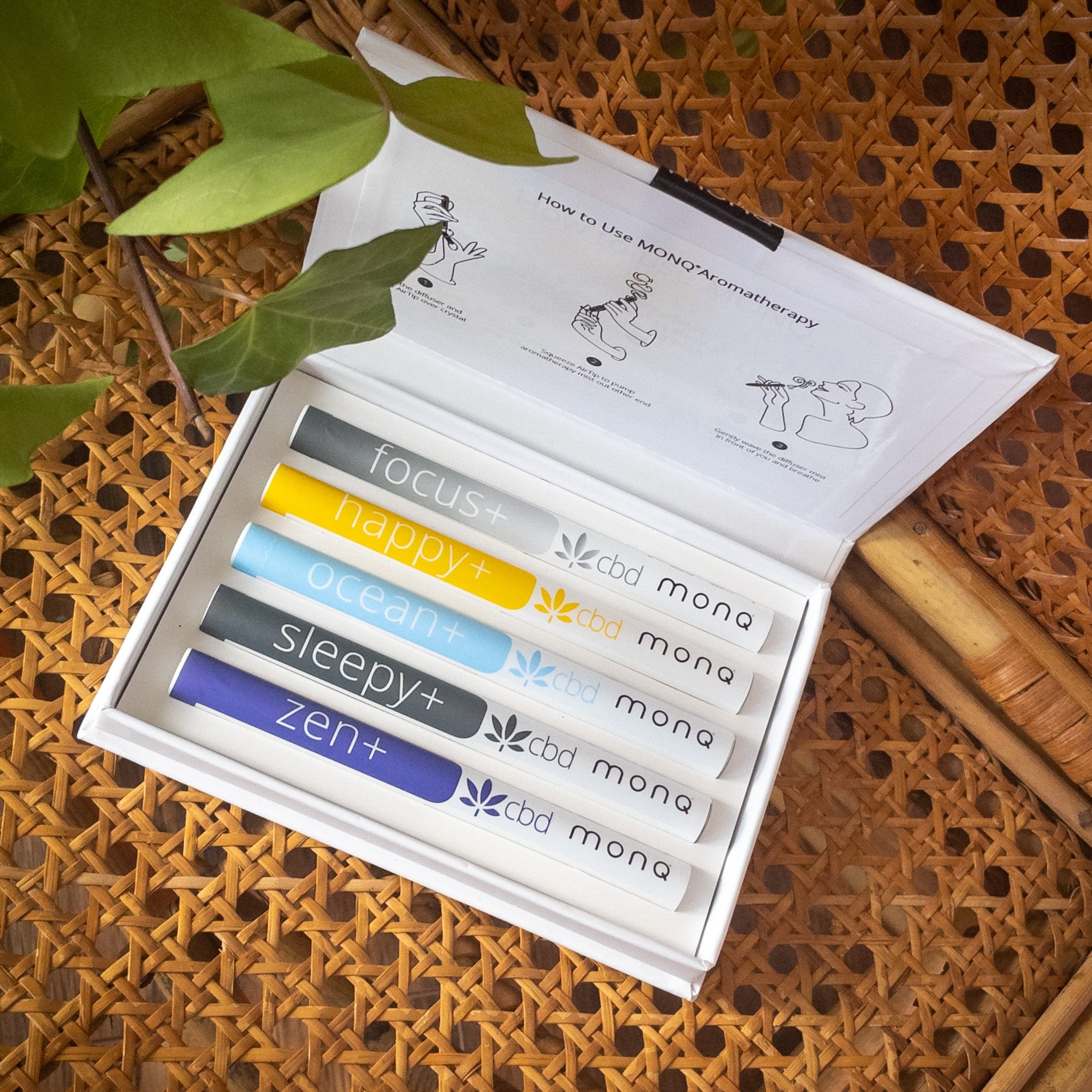
Sleepy MONQ, with its thoughtfully formulated blend of lavender, chamomile, and bergamot, provides a multi-layered aromatic invitation to rest. Used as part of a consistent bedtime ritual - perhaps after dimming the lights, setting aside screens, and changing into comfortable clothing - it can become a powerful contextual cue that helps the nervous system shift into sleep mode.
The ritualistic quality of aromatherapy is itself therapeutic. When the same scent is used reliably at the same time each evening, it becomes associated through conditioning with the relaxed state of pre-sleep. Over time, encountering that scent begins to elicit the relaxation response automatically - a beautiful example of how sensory experience and behavior can shape our physiology.
For a deeper look at how stress disrupts sleep cycles and how aromatherapy rituals can help create the conditions for better rest, explore our article on why stress affects sleep.
When Sleep Becomes a Persistent Challenge
If sleep difficulties are persistent - taking more than 30 minutes to fall asleep most nights, waking frequently and being unable to return to sleep, or consistently not feeling rested despite adequate time in bed - it may be worth consulting a healthcare provider. Conditions like sleep apnea, restless legs syndrome, and chronic insomnia are treatable, and addressing them can dramatically improve quality of life. The CDC's sleep health resources provide useful context on how widespread sleep challenges are and why taking them seriously matters.
Sleep is not a luxury or a sign of laziness. It is one of the foundational pillars of health, as essential as nutrition and movement. Celebrate it, protect it, and prioritize it with the same seriousness you give every other aspect of your well-being.*
Want to go deeper?
Explore the full science behind aromatherapy and sleep in our comprehensive guide: Aromatherapy for Sleep: A Wellness Guide →
Disclaimer: The above information is provided for general wellness and educational purposes only. Please note that while individual essential oil ingredients may have been shown to exhibit certain independent effects when used alone, the specific blends of ingredients contained in MONQ diffusers have not been tested. No specific claims are being made that use of any MONQ diffusers will lead to any of the effects discussed above. Additionally, please note that MONQ diffusers have not been reviewed or approved by the U.S. Food and Drug Administration. MONQ diffusers are not intended to be used in the diagnosis, cure, mitigation, prevention, or treatment of any disease or medical condition. If you have a health condition or concern, please consult a physician or your alternative health care provider prior to using MONQ diffusers. MONQ blends should not be inhaled into the lungs. Why? It works better that way. No Nicotine Ever. Inhale through the mouth, exhale through the nose. MONQ Diffusers are not intended for individuals under 18, or women who are pregnant or nursing.










Leave a comment