

A Natural Alternative for Better Sleep: How Aromatherapy Supports Rest
Quality sleep is one of the most powerful factors in overall wellbeing - and one of the most elusive. If you're looking for a natural, non-habit-forming way to support better rest, aromatherapy is worth understanding properly. Not as a trend, but as a mechanism: the olfactory system has a direct pathway to the limbic brain, where sleep, stress, and emotional regulation are governed.
Why the Olfactory Pathway Matters for Sleep
Most sleep aids work through digestion - a slow route that takes 20-45 minutes to reach the brain and leaves metabolic residue that can affect morning alertness. The olfactory route is different. When you inhale an aromatic compound, molecules reach the olfactory epithelium in seconds and signal the amygdala and hippocampus directly - no digestion, no delay, no residue.
This is why a consistent pre-sleep scent ritual can become a powerful behavioral cue. The brain learns to associate that specific aroma with the transition to rest. Over time, two breaths of the right blend can reliably initiate wind-down - not because of sedation, but because of learned association and direct nervous system signaling.
What Makes a Good Sleep Aromatherapy Blend
Not all essential oils support sleep equally. The most effective botanicals for pre-sleep use share a common trait: they reduce nervous system arousal without suppressing alertness the following morning.
Lavender - the most studied. Its primary compound, linalool, is associated with calming and stress reduction. Works well as a foundational sleep botanical.
Chamomile - warm and gently grounding. Particularly effective for racing thoughts at bedtime. Softer in profile than lavender.
Bergamot - uniquely positioned as both calming and mood-lifting. Reduces the mental weight of the day without sedating - ideal for the wakefulness-to-sleep transition.
Sandalwood - deep, quieting, and long-lasting in its aromatic presence. Used across multiple cultures as a pre-sleep and meditative botanical for centuries.
Building an Aromatherapy Sleep Ritual
Consistency matters more than intensity. A two-breath ritual used at the same point in your evening routine - night after night - builds a conditioned response over time. The brain learns the cue.
- Choose a fixed point in your routine - after brushing teeth, when lights go low, or when you close your book. The trigger should be automatic.
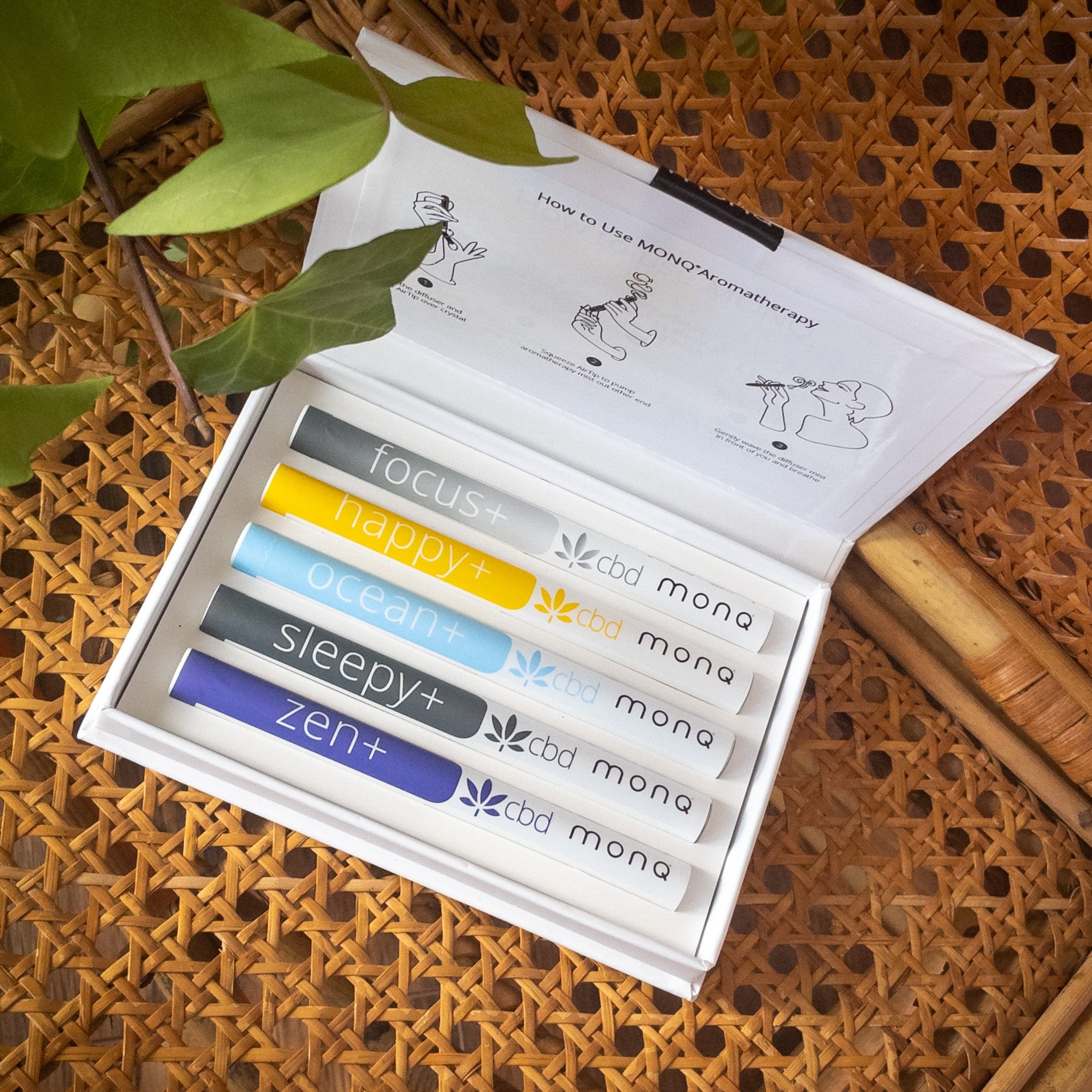
- Use Sleepy MONQ - a portable diffuser blending lavender, chamomile, and bergamot. Two to three gentle breaths: inhale through the mouth, exhale through the nose. Ten seconds. No setup required.
- Keep it simple - the ritual works because it's repeatable. One blend, one moment, same cue every night.
What to Expect
Aromatherapy for sleep is not sedation. It does not force sleep. It supports the conditions that allow sleep to happen naturally - reduced nervous system arousal, lowered cortisol signaling, and a clear behavioral cue that the transition to rest has begun. Most consistent users notice meaningful improvement in wind-down ease within one to two weeks of nightly practice.
Nicotine-free. Non-habit-forming. No morning grogginess. No residue. Just botanicals, doing what they have always done.
Go Deeper
Scent is the only sensory input with a direct neural pathway to the brain's sleep-regulation centers - which is why a two-breath aromatherapy ritual before bed can shift your nervous system state faster than most supplements.
Aromatherapy for Sleep: A Wellness Guide →Disclaimer: The above information is provided for general wellness and educational purposes only. Please note that while individual essential oil ingredients may have been shown to exhibit certain independent effects when used alone, the specific blends of ingredients contained in MONQ diffusers have not been tested. No specific claims are being made that use of any MONQ diffusers will lead to any of the effects discussed above. Additionally, please note that MONQ diffusers have not been reviewed or approved by the U.S. Food and Drug Administration. MONQ diffusers are not intended to be used in the diagnosis, cure, mitigation, prevention, or treatment of any disease or medical condition. If you have a health condition or concern, please consult a physician or your alternative health care provider prior to using MONQ diffusers. MONQ blends should not be inhaled into the lungs. Why? It works better that way. No Nicotine Ever. Inhale through the mouth, exhale through the nose. MONQ Diffusers are not intended for individuals under 18, or women who are pregnant or nursing.










Leave a comment