The Enigmatic Journey of Cannabis Through Time

How did the bond between humans and cannabis blossom? Dive deep into the intriguing relationship we share with this fascinating plant - and where that relationship has arrived in the modern wellness era.
The Origins of Cannabis and Early Human Interaction
Journey back to the end of the last Ice Age, roughly 12,000 years ago, where nomadic tribes traversed the vast expanses of Siberia and Central Asia. Amidst their travels, remnants of cannabis plants were left behind. These resilient plants found solace in the nutrient-rich terrains of these regions.
It's conceivable that as early humans gathered various plants for sustenance and fuel, they stumbled upon cannabis. Its seeds, brimming with nutrients, offered a dietary source that could be conserved for lengthy periods. Moreover, the unique aromatic scent emitted when burned caught the attention of these early settlers.
Fast forward to 8,000 BCE, there's evidence to suggest that humans in areas like central to east Asia began to appreciate cannabis, not only for its dietary value but also for its robust fibers, as seen in Taiwan.
Intriguingly, traces of cannabis have been unearthed in the graves of some notable individuals from these ancient times. This discovery hints that our ancestors might have recognized the plant for more than just its practical benefits.
The Chronicles of Cannabis in Ancient China
Between 4,000 and 2,700 BCE, the resilient cannabis plant firmly embedded itself into the fabric of Chinese society. Besides being cultivated as a food source, it became an integral component in the production of hemp-based textiles.
The pioneering mention of cannabis in written history is credited to Emperor Shen Neng around 2,737 BCE. Revered for his innovations, including the plow, this eminent leader's work played a pivotal role in enhancing the prominence of cannabis in the ancient world.
Cannabis: A Global Tapestry
Post its entrenched status in China, the allure of cannabis began to ripple across neighboring regions. Its appearance in Ayurvedic traditions as one of Earth's esteemed plants showcases its significant influence. The Zoroastrian Zendavesta, an ancient Persian text from around 700 to 800 BCE, makes notable references to cannabis concoctions.
By the time Greek historian Herodotus penned his insights in 430 BCE, the cannabis narrative was interwoven with various practices of the era. As centuries rolled on, cannabis meandered its way through Europe, Egypt, and Ethiopia, only leaving the Americas untouched until the 1400s.
A Timeless Affair
Cannabis has intertwined with human culture for millennia. Though the origins of this symbiotic relationship remain cloaked in mystery, it's undeniable that the journey of cannabis has sculpted myriad facets of our shared history. But the most recent chapter in that story - the one being written today in wellness clinics, research institutions, and daily life - may be the most nuanced yet.
The Emergence of CBD: Separating the Plant's Compounds
For most of cannabis history, the plant was understood as a whole - its many compounds working together, its effects inseparable. The modern scientific era changed this fundamentally. As chemistry and pharmacology advanced through the 20th century, researchers began identifying the individual molecules within the cannabis plant and studying them separately.
Cannabidiol, now universally known as CBD, was first isolated in the 1940s by researcher Roger Adams at the University of Illinois. Its molecular structure was fully characterized in the 1960s by Israeli chemist Raphael Mechoulam, who also identified THC (tetrahydrocannabinol) as the primary compound responsible for the plant's psychoactive effects.
This distinction is fundamental: CBD and THC are chemically distinct molecules with profoundly different effects on the human body and brain. THC binds to CB1 receptors in the central nervous system and produces intoxication. CBD does not bind to these receptors in the same way and does not produce any intoxicating effect. This pharmacological difference is the scientific basis for the growing interest in CBD as a non-intoxicating wellness compound.
Hemp, CBD, and Modern Wellness
The 2018 U.S. Farm Bill marked a significant regulatory moment, federally legalizing hemp - defined as cannabis containing no more than 0.3% THC - and by extension, hemp-derived CBD. This created the legal and commercial framework for the CBD wellness industry that has grown substantially since then.
CBD isolate - the purest form, in which CBD is extracted and refined until it is separated entirely from all other plant compounds including THC - became a central ingredient in a wide range of wellness products. CBD isolate contains 0.0% THC. It is non-intoxicating and non-psychoactive. It does not impair cognition, alter judgment, or produce any of the effects associated with cannabis intoxication. These properties made it a viable ingredient for wellness-focused brands seeking to incorporate hemp-derived compounds into their product lines without any psychoactive dimension.
MONQ's Approach to CBD
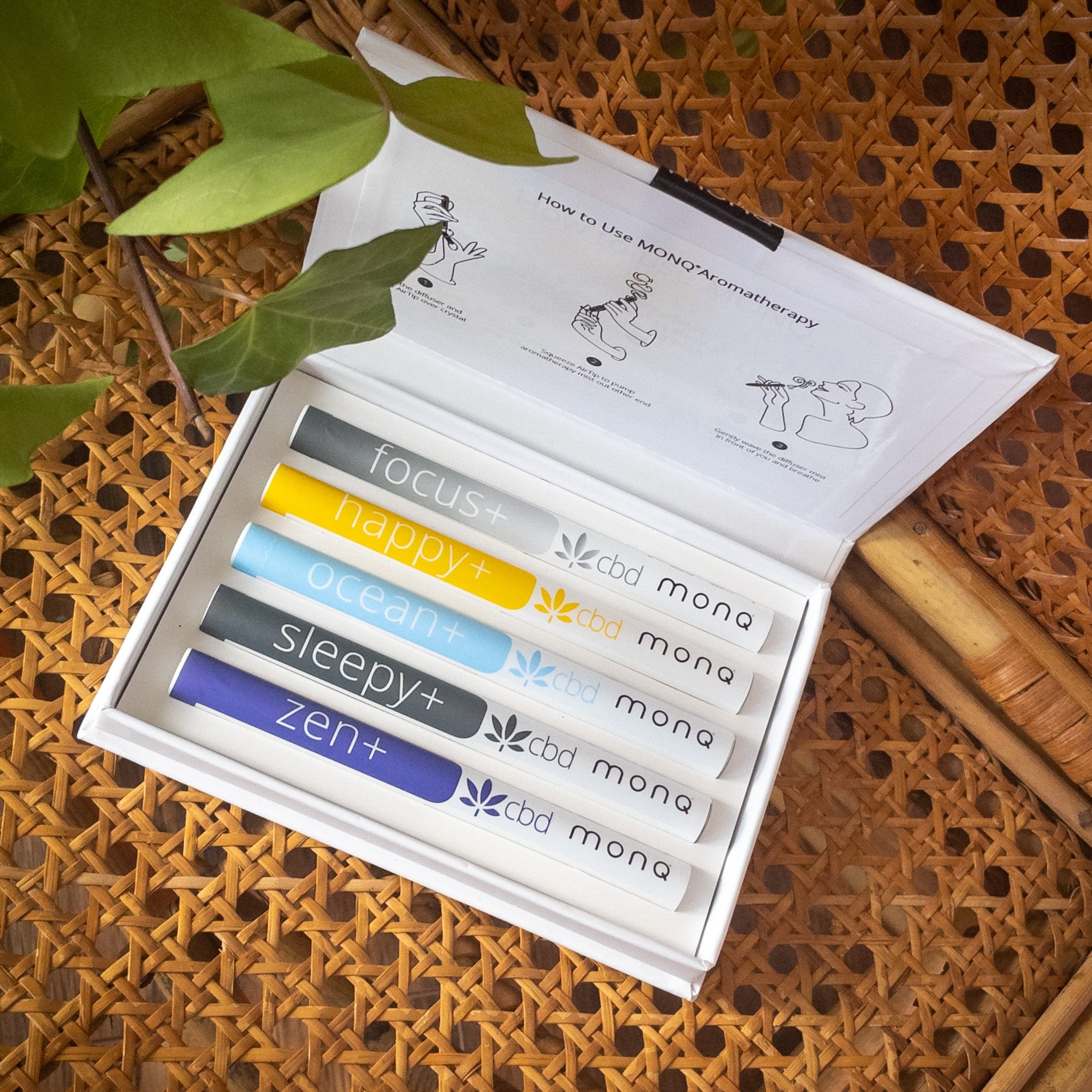
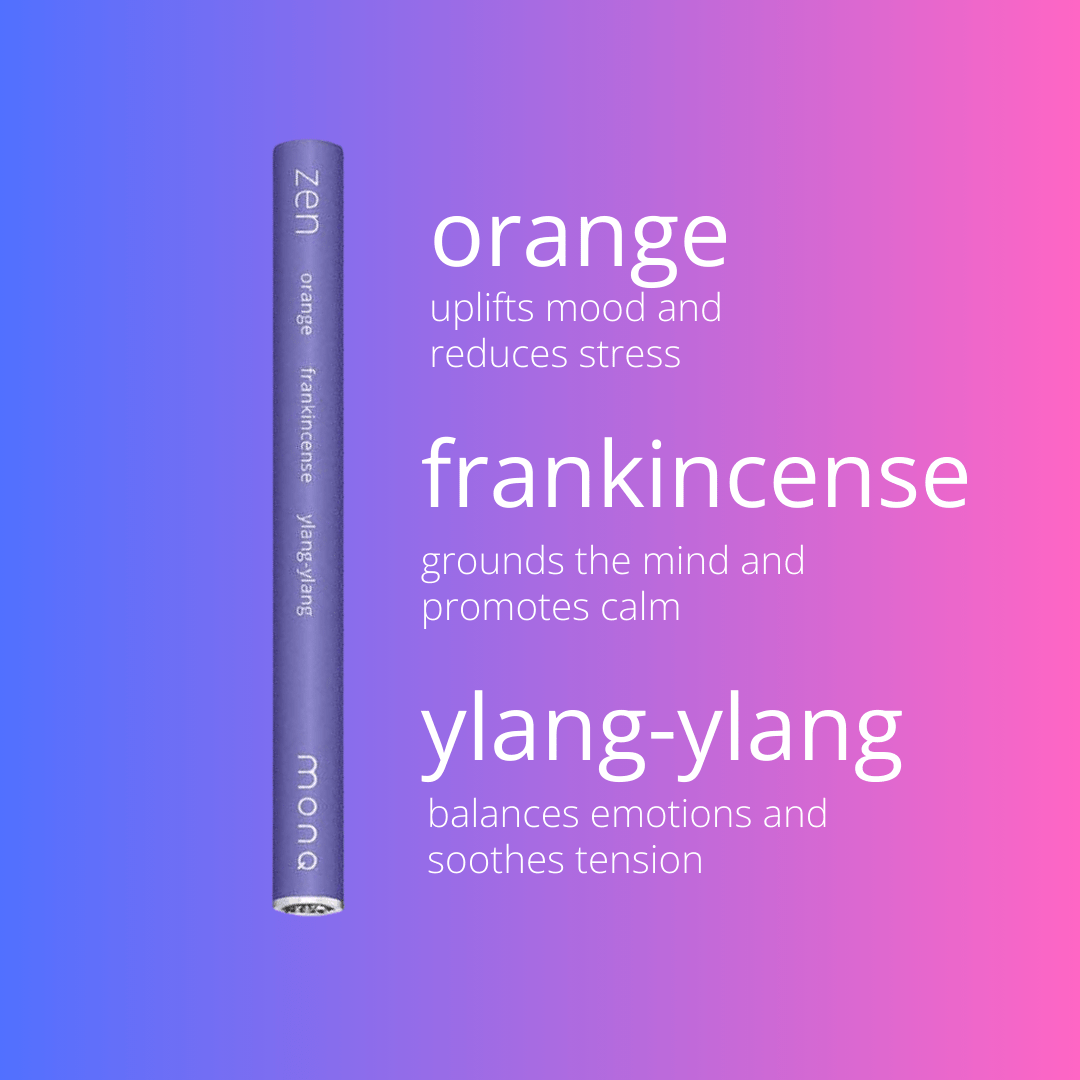
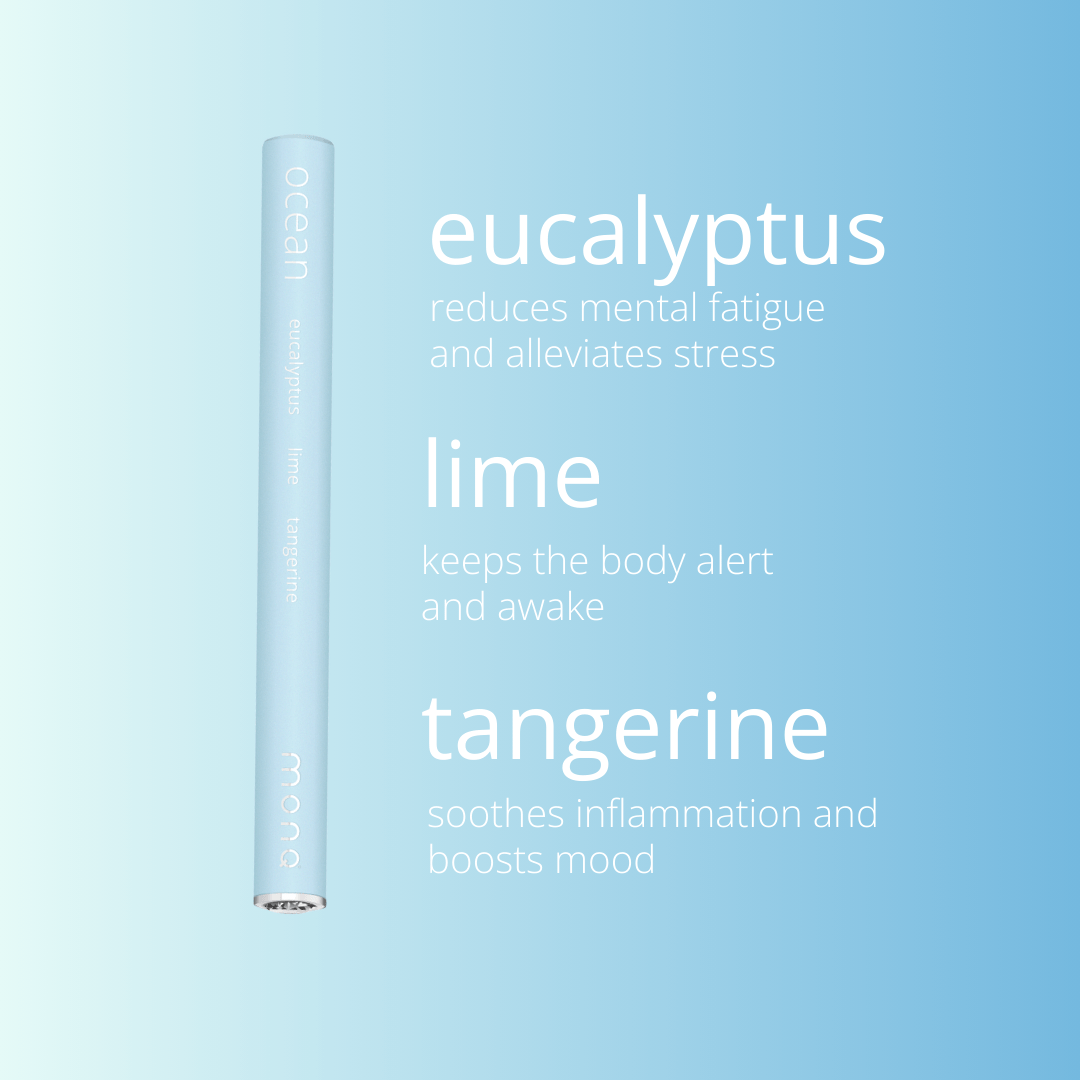
MONQ has incorporated CBD isolate into a line of personal aromatherapy diffusers designed to extend the sensory and wellness experience of botanical aromatherapy with a non-intoxicating hemp-derived ingredient. MONQ's CBD products use CBD isolate - the form with 0.0% THC - meaning there is no psychoactive component whatsoever in any MONQ CBD product.
MONQ's approach to CBD is consistent with its broader philosophy: botanical ingredients, carefully selected, blended with intention, and delivered through a breath-based ritual that engages the senses without intoxication. The MONQ method remains the same across all product lines - inhale through the mouth, exhale through the nose, and let the aromatic mist work through the olfactory pathway.
Explore the full MONQ CBD diffuser range at monq.com/collections/all-blends-with-cbd. For those new to MONQ aromatherapy, browsing the FAQ page is a good starting point for understanding how MONQ works, what to expect, and how the products fit into a daily wellness practice.
Contains CBD isolate. 0.0% THC. Non-intoxicating.
Disclaimer: The above information is provided for general wellness and educational purposes only. Please note that while individual essential oil ingredients may have been shown to exhibit certain independent effects when used alone, the specific blends of ingredients contained in MONQ diffusers have not been tested. No specific claims are being made that use of any MONQ diffusers will lead to any of the effects discussed above. Additionally, please note that MONQ diffusers have not been reviewed or approved by the U.S. Food and Drug Administration. MONQ diffusers are not intended to be used in the diagnosis, cure, mitigation, prevention, or treatment of any disease or medical condition. If you have a health condition or concern, please consult a physician or your alternative health care provider prior to using MONQ diffusers. MONQ blends should not be inhaled into the lungs. Why? It works better that way. No Nicotine Ever in MONQ Pens. Inhale through the mouth, exhale through the nose. MONQ Diffusers are not intended for individuals under 18, or women who are pregnant or nursing.