

The 3 PM Wall: What Your Afternoon Energy Crash Is Actually Telling You
You know the feeling. It’s 3 PM, you’ve been productive all morning, and then — without warning — the focus dissolves. You’re staring at your screen but not really seeing it. The email you need to write has been open for twenty minutes. You reach for coffee that won’t really help.
This is the 3 PM wall. And most people assume it’s just tiredness.
It isn’t.
What Circadian Science Actually Shows
There’s a well-documented dip in human alertness and cognitive performance in the mid-to-late afternoon — around 2–4 PM. This isn’t because you’re lazy or didn’t sleep well enough. It’s a feature of the circadian rhythm, the body’s internal clock.
The post-lunch dip (also called the “postprandial dip”) has been observed across cultures and climates, including in populations that don’t eat lunch. It shows up in accident data, in reaction-time studies, in surgical error rates. It is real, it is biological, and it is not your fault.
But here’s what most productivity advice misses: the afternoon dip isn’t just about sleep pressure or caffeine curves. It’s also about what your nervous system has been running on all day.
The Invisible Deficit
You know that spending most of your life indoors isn’t ideal. You know artificial light affects sleep and that vitamin D deficiency is real. There’s been enough cultural conversation about these things that most people have at least a working awareness of them.
But there’s another, invisible deficit caused by modern indoor living — one that directly impacts your daily stress levels and cognitive clarity, and almost nobody talks about it.
Call it terpene deficiency.
For millions of years, the human nervous system evolved outdoors. The air our ancestors breathed wasn’t just “fresh” — it was chemically dense. Ancient forests emitted massive amounts of terpenes: the naturally occurring volatile compounds that give plants their scent and serve as the atmosphere of any living woodland. Alpha-pinene from pine trees. Limonene from citrus. Beta-caryophyllene from black pepper and cloves. Myrcene from hops and mangoes. Linalool from lavender and hundreds of flowering plants.
Your brain evolved to expect these compounds. When you breathe in terpenes like alpha-pinene, they travel through your olfactory system and interact directly with the stress-regulation centers of the brain — not as a metaphor, but as a measurable neurological event. Japanese researchers studying the practice of shinrin-yoku (forest bathing) found that forest air, specifically the volatile terpene compounds it carries, measurably reduced cortisol levels and improved parasympathetic nervous system activity in subjects after just two hours of exposure.
They don’t just smell like a forest. They signal the nervous system to regulate itself.
Today, our indoor air is almost completely void of these botanicals. Modern HVAC systems filter out particulates — including the very compounds your olfactory system was built to process. By 3 PM, you’ve been breathing filtered, recycled, terpene-absent air for eight or more hours. Your nervous system is, in a very literal sense, running on empty.
The Specific Blend That Addresses It
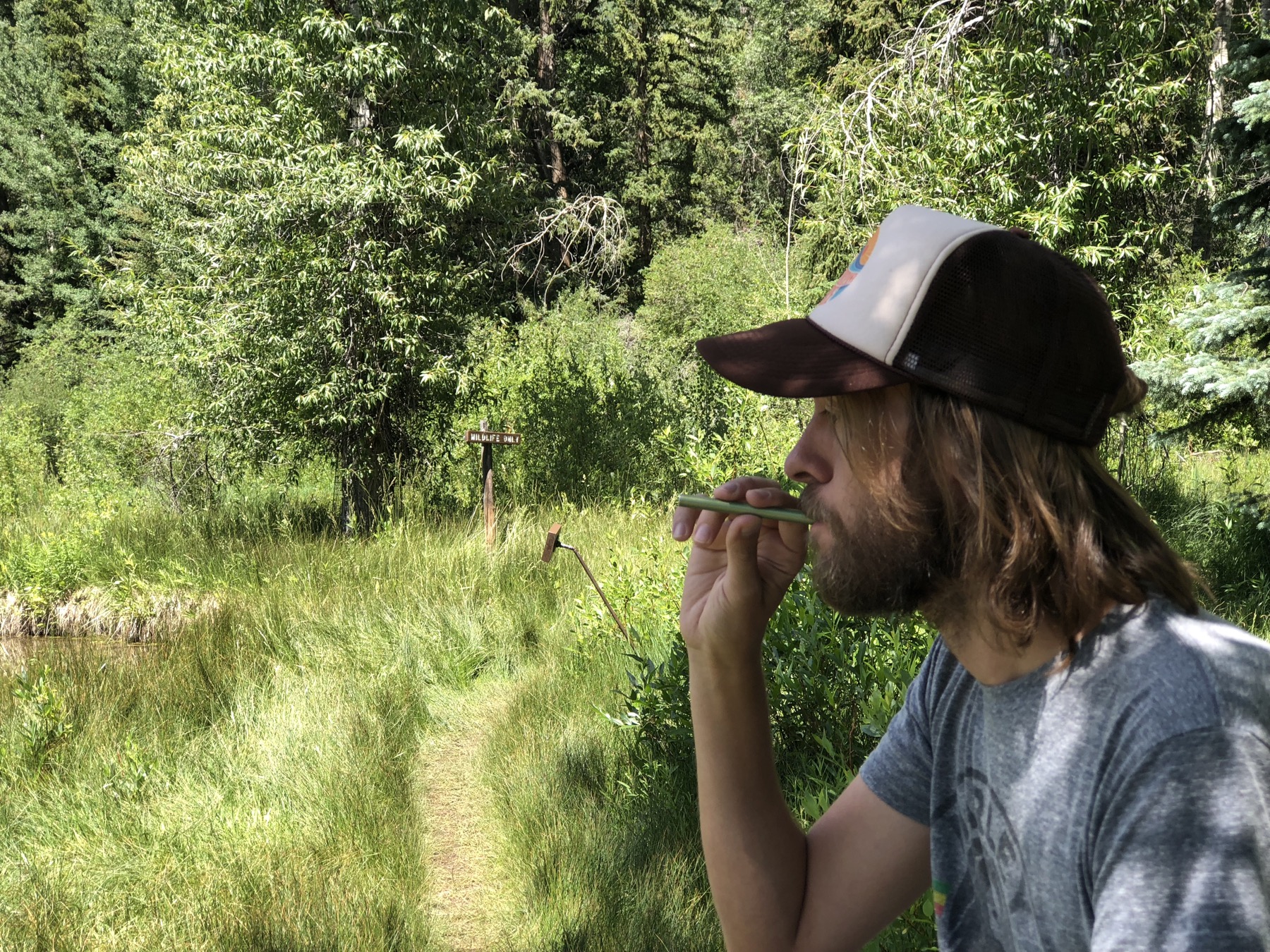
Forest MONQ was formulated precisely for this. It’s a blend of Siberian Fir, Frankincense, Pinyon Pine, and Douglas Fir — chosen not just for their aromatic quality but for their terpene profiles and the specific signal they send to the nervous system.
Siberian fir and Douglas fir contribute the crisp conifer character associated with forest air. Frankincense adds resinous depth, while pinyon pine reinforces the blend's dry, pine-forward aromatic profile.
Together, these three botanicals create the aromatic signature of a deep, ancient woodland — what researchers sometimes call “paleo air,” the chemical atmosphere your nervous system spent millennia calibrating to. When you breathe it in mid-afternoon, you aren’t just smelling something pleasant. You’re giving your olfactory system the molecular input it’s been missing since you sat down at your desk that morning.
If afternoon slump interests you for exactly this reason, that’s the neurological mechanism it’s designed around.
One Breath, Not a Habit Overhaul
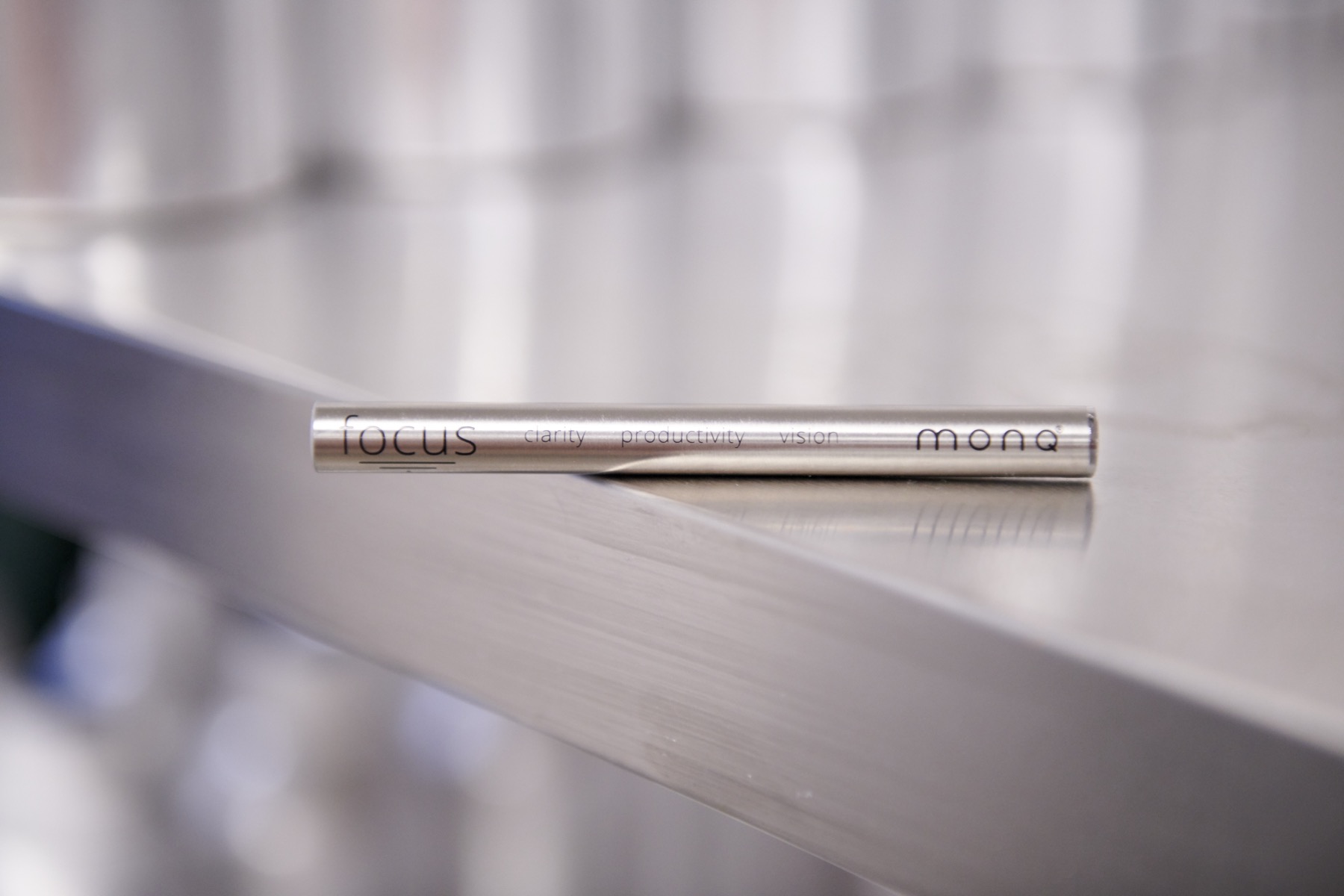
The practical appeal of this isn’t theoretical. It’s that it works in a single breath, at your desk, without disrupting anything you’re doing.
You don’t need to go outside (though you should, when you can). You don’t need a diffuser running in a room that may or may not reach you at effective concentration. You don’t need to change your schedule, your diet, or your routine. You take one intentional breath — drawing the vapor slowly through your nose, holding briefly, releasing — and return to your screen with your olfactory system briefly, meaningfully resupplied.
That’s the point of a portable personal diffuser: not to replicate the outdoors in full, but to give you on-demand access to the botanical input your nervous system was built to receive. On your schedule. At your desk. At 3 PM, when you actually need it.
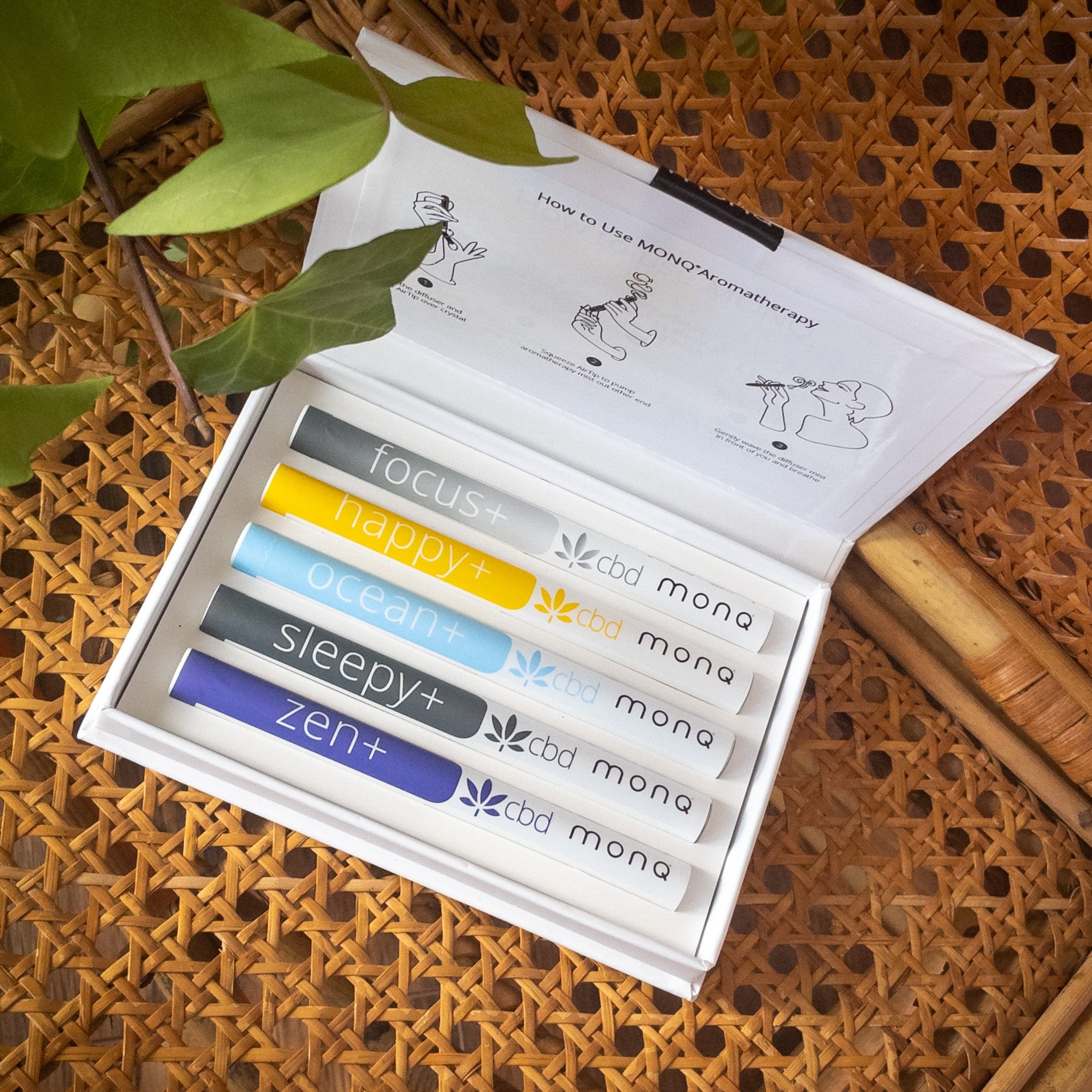
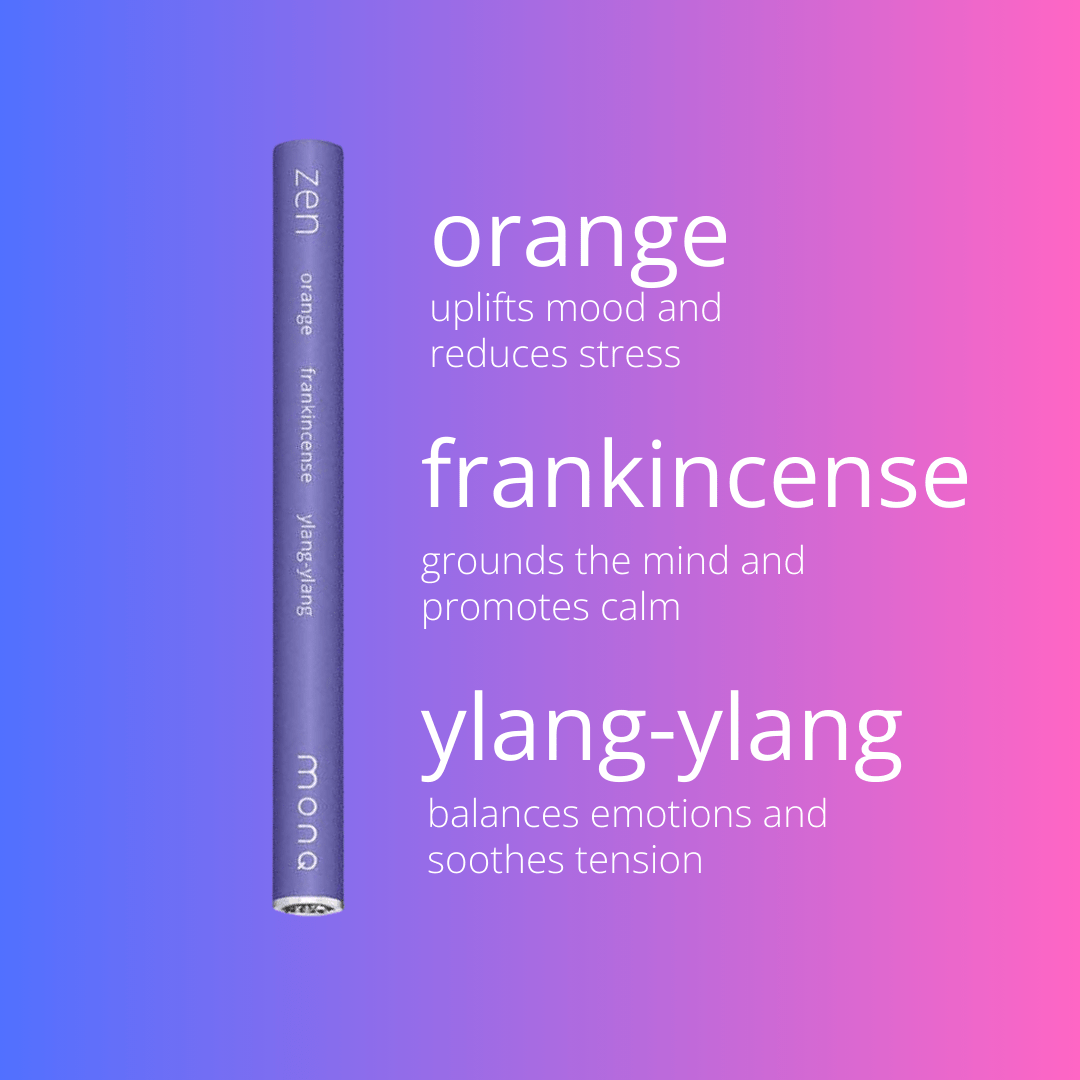
For those who want something formulated specifically for sustained mental energy alongside the botanical profile, brain fog is a complementary option worth exploring. And if you’re curious about the broader range, you can explore all botanical blends to find what resonates with your specific patterns.
The Practical Protocol
If you want to test this yourself, here’s a simple approach: for one week, take one intentional breath of a forest terpene blend at the first sign of the 3 PM dip — before reaching for caffeine, before standing up to pace, before checking your phone. Note whether the quality of the next twenty minutes changes.
This isn’t a controlled study. But it is the kind of low-stakes, high-signal experiment that’s worth running on yourself before deciding whether the mechanism is real for you.
The 3 PM wall isn’t a personal failing. It’s a biological response to an environment your nervous system wasn’t designed for. The circadian dip is real. The terpene deficit is real. And the gap between what your brain evolved to receive and what modern air actually delivers is larger than most people realize.
Give it one breath of what it’s been missing.
Further reading:
α-Pinene, a Major Constituent of Pine Tree Oils, Enhances Non-Rapid Eye Movement Sleep — Molecular Pharmacology, 2016
The full science of terpene deficiency and Paleo Air — MONQ
Terpene deficiency: what your olfactory system has been missing all day — MONQ Forest Bathing Series
Douglas fir essential oil — the alpha-pinene source in Forest MONQ — MONQ Ingredient Library
These statements have not been evaluated by the Food and Drug Administration. This product is not intended to diagnose, treat, cure, or prevent any disease. No Nicotine. Ever.










Leave a comment