

Ylang Ylang Essential Oil: Floral, Grounding, Calming
The Flower That Slows Things Down
Ylang ylang is not a subtle oil. Its aroma is intensely floral - rich, creamy, almost narcotic in concentration - with a sweetness that sits somewhere between jasmine and custard. Used sparingly, it is one of the most complex and captivating scents in the essential oil world. Used well, it is one of the most effective tools for shifting a wound-up mind toward stillness.
But to understand why ylang ylang works the way it does, it helps to know where it comes from, what it contains, and what four centuries of traditional use have consistently found it to be good for.
Origin: The Philippines and the Perfumer's Flower
Ylang ylang (Cananga odorata) is a tropical tree native to the Philippines, Indonesia, and other parts of Southeast Asia. It grows quickly - up to five meters per year - and produces drooping clusters of star-shaped yellow flowers that bloom year-round in tropical climates. The flowers are harvested by hand at dawn, when their aromatic intensity is highest, and taken immediately to distillation to preserve the volatile compounds.
The name "ylang ylang" comes from the Tagalog word meaning "flower of flowers" - a testament to the plant's status in Filipino and Indonesian culture. Traditionally, the flowers were strewn on the beds of newlyweds, woven into garlands for ceremonial occasions, and used in hair oils (known in the Philippines as macassar oil) for their deeply conditioning and aromatic properties.
The oil was introduced to European perfumery in the early 19th century and quickly became a prized ingredient in high-end fragrances. Today it remains one of the top ten most-used fragrance materials in the world, appearing in classics like Chanel No. 5 and countless contemporary formulations.
The Chemistry: What Creates Its Effect
Ylang ylang oil is chemically complex, with over 100 identified constituents. The primary aroma-active compounds include:
- Linalool - Also found in lavender and bergamot, linalool is one of the most-studied aromatic compounds for its potential calming effects. It may interact with the GABA system in the brain in ways that support a sense of ease and reduced tension. Research indexed at PubMed (NCBI) has explored linalool-rich oils in the context of stress and relaxation, with findings generally consistent with traditional use.
- Germacrene D - A sesquiterpene that contributes to the oil's woody, earthy base note and may play a role in its grounding character.
- Beta-caryophyllene - Found in many calming botanicals, this sesquiterpene interacts with the endocannabinoid system's CB2 receptors and may support a sense of physical ease alongside the psychological effects.
- Benzyl acetate and benzyl benzoate - Esters that contribute to the oil's rich floral sweetness and smooth the overall aromatic profile.
- P-cresyl methyl ether and methyl benzoate - Volatile aromatic compounds that give ylang ylang its distinctive deep, warm, slightly animalic character - the notes that make it instantly recognizable and that distinguish it from lighter florals.
The distillation of ylang ylang is unusual in that it is typically done in stages. The first distillate (called "extra" grade) captures the lightest, most delicate top notes. Later fractions (grades I, II, III, and "complete") include progressively deeper, heavier compounds. For therapeutic use, "complete" grade oil - which contains the full aromatic spectrum - is generally preferred for its richness and complexity.
Traditional Use for Tension and Mood
Across the traditional systems in which ylang ylang appears, a consistent theme emerges: it is used to calm what is over-activated. In Filipino traditional medicine, it was applied to ease feelings of pressure and restlessness. In Indonesian wellness practices, it was used in massage blends for physical and emotional tension. In Malagasy tradition (Madagascar is now a major producer), it was considered a grounding and cooling influence - the antidote to a hot, agitated state.
European aromatherapy, which formalized in the early 20th century, placed ylang ylang firmly in the "calming and euphoric" category - oils used when the nervous system is running too fast and needs to be slowed. Modern aromatherapy practice continues in this tradition, using ylang ylang for situations involving feeling wound up, overwhelmed, or emotionally reactive.
The Harvard Health Publishing resources on stress and the mind-body connection provide useful context here: the nervous system's threat-response mode was designed for short bursts of danger, not sustained modern pressure. Anything that sends a "safe, calm, settle" signal to the nervous system supports the return to a more sustainable baseline. Ylang ylang's scent appears to function as exactly that kind of signal for many people.
Using Ylang Ylang Without Overloading
One practical note: ylang ylang is potent. Too much can tip from pleasant to overwhelming - a common complaint from people who use too high a concentration in a room diffuser. The key is to use small amounts and let the oil speak quietly rather than shout.
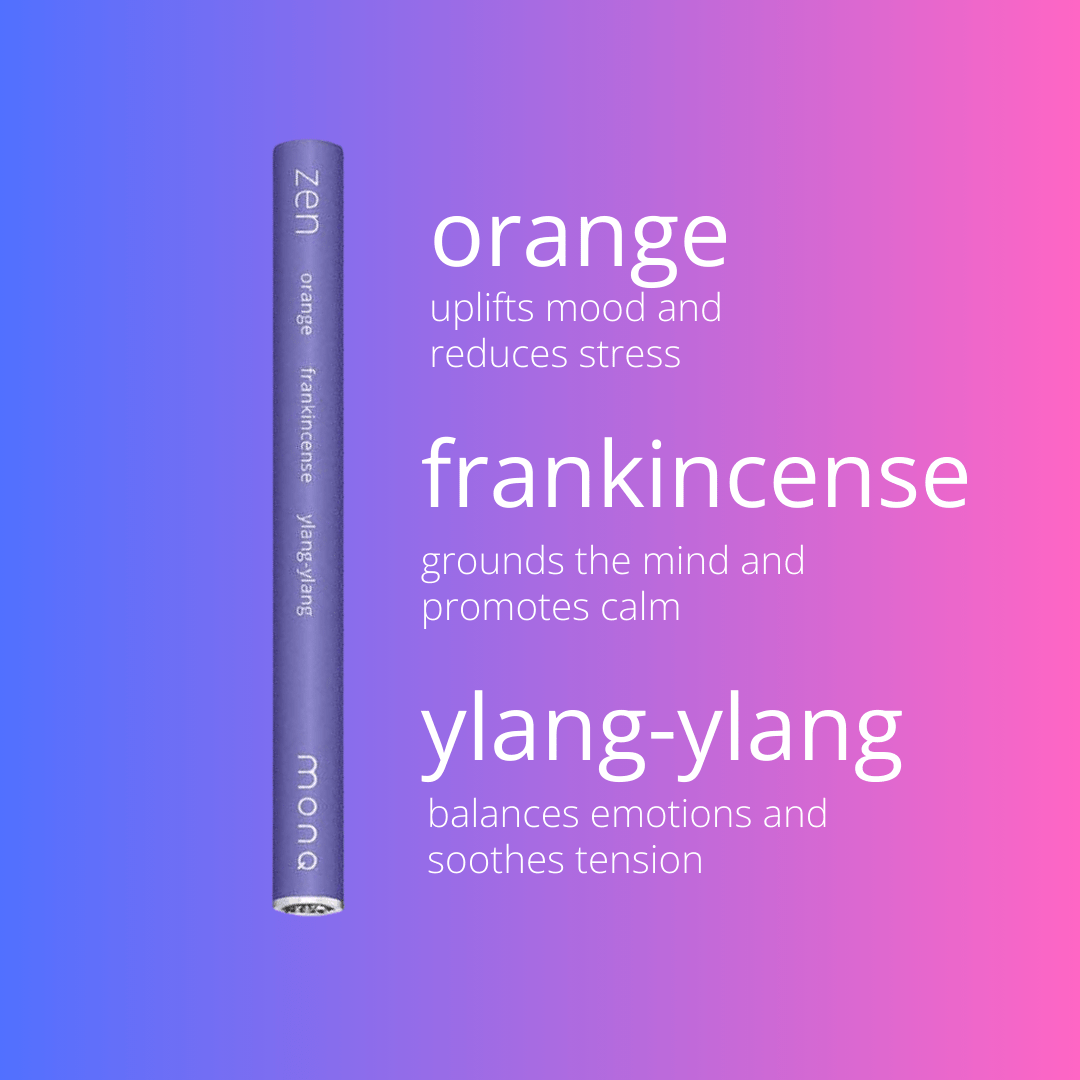
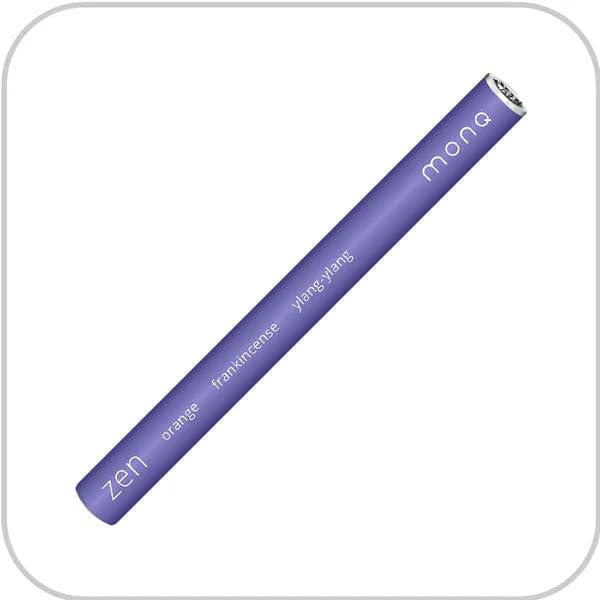
In a personal portable diffuser, this is naturally managed. You take a deliberate breath or two, rather than sitting in an oil-saturated room for an hour. This makes formats like Zen MONQ particularly well-suited to ylang ylang - the blend delivers a calibrated amount of the oil in each use, paired with frankincense and orange to balance and round the intensity.
In Zen MONQ, ylang ylang plays the role of emotional anchor - the note that grounds the blend and gives it its distinctively settling quality. Frankincense provides meditative depth, orange provides citrus lift, and ylang ylang ties it together with floral warmth. The result is a blend that is simultaneously complex and immediately calming.
Practical Applications for Everyday Stress
Ylang ylang is most useful when you are in an over-activated state - the feeling of being wound up, reactive, or unable to settle. Some specific situations where it tends to be most effective:
- After a high-conflict interaction: Whether a difficult meeting, a tense phone call, or a frustrating commute, a few breaths of ylang ylang (in a blend like Zen) can help the nervous system down-regulate from reactive mode.
- When mental chatter won't stop: The characteristic over-thinking loop that makes it hard to relax, meditate, or fall asleep - ylang ylang's grounding quality may help interrupt the pattern.
- Pre-meditation preparation: The floral depth and calming character of ylang ylang make it a natural fit for preparing to sit quietly - it signals the shift from doing to being.
- Physical tension that stems from stress: Traditionally used in massage blends precisely because tension held in the body and tension held in the mind tend to co-arise and co-resolve.
How to Use It Correctly
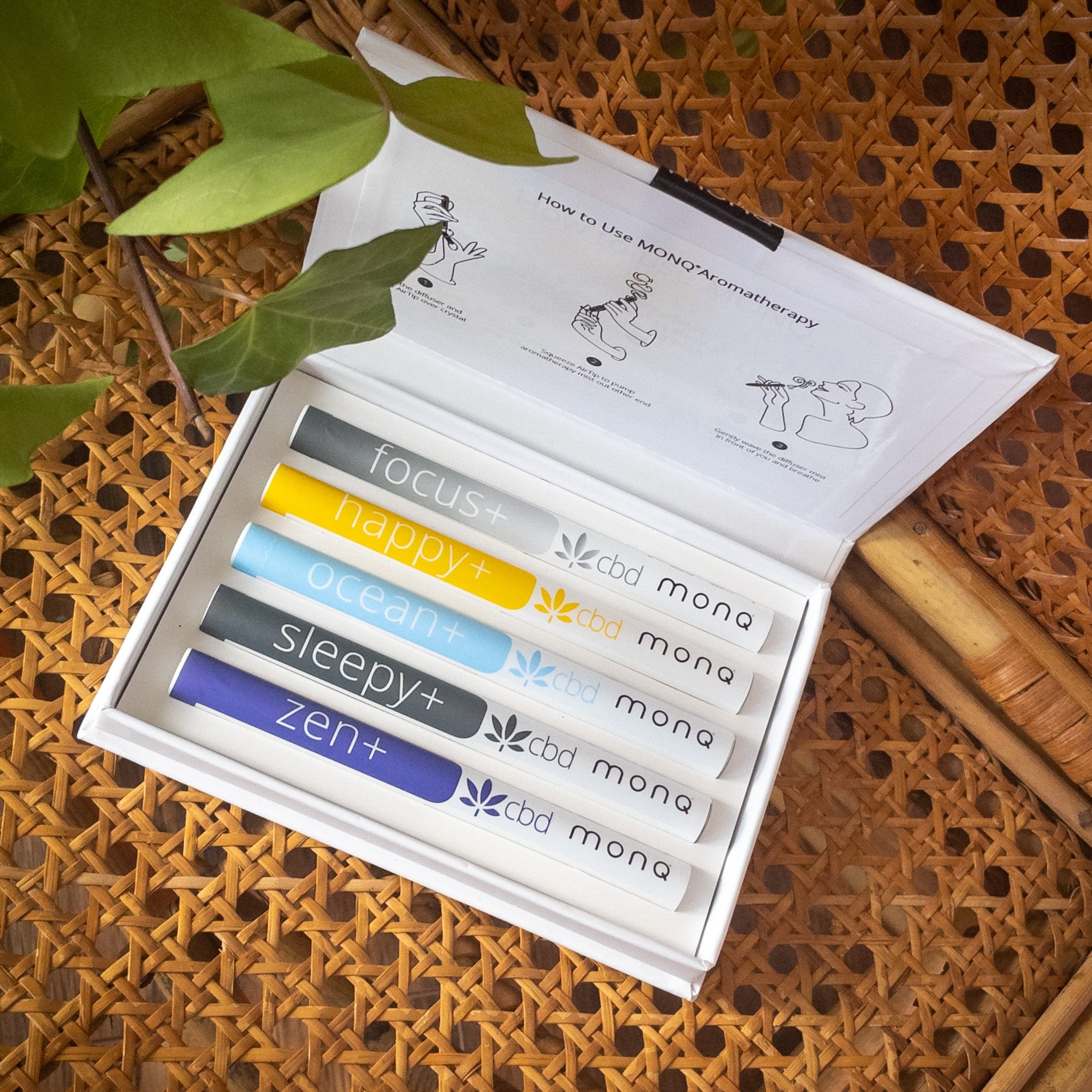
MONQ recommends the Air Tip technique for all its blends, if you wish to have an alternative experience.
Fit the soft silicone AirTip over the crystal end of a MONQ Original diffuser. Hold the device in your hand and gently squeeze the AirTip to push air through the device and release a brief puff of aromatic mist from the mouthpiece near you. Breathe normally through your nose to enjoy the scent.
Take two or three deliberate breaths. Notice the scent fully. Let the exhale be slow and complete. That combination - intentional breathing plus an aromatic signal - creates a more effective stress-relief response than either element alone.
The Flower That Has Been Here All Along
Ylang ylang has been calming people down for centuries before modern neuroscience could explain why. Its chemistry suggests mechanisms - linalool, beta-caryophyllene, the complex interplay of esters and sesquiterpenes - but the experience precedes the explanation by hundreds of years. It is one of the rare tools that traditional wisdom and emerging research point toward with equal confidence.
If you have not worked with ylang ylang before, start with a blended format rather than the pure oil. Let the balanced, calibrated use of Zen MONQ introduce you to what this flower can do. Then, once you recognize the effect, you will understand why it has shown up in so many different calming rituals across so many different cultures for so many centuries.
Disclaimer: The above information is provided for general wellness and educational purposes only. Please note that while individual essential oil ingredients may have been shown to exhibit certain independent effects when used alone, the specific blends of ingredients contained in MONQ diffusers have not been tested. No specific claims are being made that use of any MONQ diffusers will lead to any of the effects discussed above. Additionally, please note that MONQ diffusers have not been reviewed or approved by the U.S. Food and Drug Administration. MONQ diffusers are not intended to be used in the diagnosis, cure, mitigation, prevention, or treatment of any disease or medical condition. If you have a health condition or concern, please consult a physician or your alternative health care provider prior to using MONQ diffusers. MONQ blends should not be inhaled into the lungs. Why? It works better that way. No Nicotine Ever. Inhale through the mouth, exhale through the nose. MONQ Diffusers are not intended for individuals under 18, or women who are pregnant or nursing.










Leave a comment