

Lavender Essential Oil and Sleep: What the Research Says
Among all the essential oils used in aromatherapy, lavender has generated the most scientific attention. Its association with relaxation, calm, and sleep is ancient - but in recent decades, researchers have begun to explore the mechanisms behind these traditional uses with more precision. What does the evidence actually say about lavender and sleep?
Lavender: A Brief History
Lavender (Lavandula angustifolia, Lavandula officinalis) has been used therapeutically for thousands of years. Ancient Egyptians used it in mummification and cosmetics. Romans added it to bath water - the word lavender is thought to derive from the Latin "lavare," meaning to wash. Medieval European herbalists prescribed it for nervousness, headaches, and sleep difficulties.
The essential oil is steam-distilled from the flowers and flowering tops of the lavender plant. It's one of the most versatile and widely produced essential oils in the world, cultivated primarily in France, Bulgaria, and England.
The Chemistry: Linalool and Linalyl Acetate
Lavender essential oil is a complex mixture of dozens of chemical compounds, but its primary active constituents are:
- Linalool (25-38%): A terpene alcohol found in many aromatic plants. Associated with calming, relaxing properties in aromatherapy research.
- Linalyl acetate (25-45%): An ester derived from linalool. Contributes to lavender's characteristic floral, slightly fruity scent and may work synergistically with linalool.
- Beta-ocimene, 1,8-cineole, terpinen-4-ol: Minor constituents that contribute to lavender's full aromatic profile.
The quality and composition of lavender oil varies significantly depending on the cultivar, growing region, harvest timing, and distillation method. True Lavandula angustifolia (sometimes called fine lavender) tends to have higher linalool content and is most commonly used in therapeutic aromatherapy.
What Research Suggests
A number of published studies have examined the relationship between lavender aromatherapy and sleep outcomes. While the research is still developing and most studies are relatively small, several consistent themes have emerged:
- Participants exposed to lavender aromatherapy before sleep have reported improved sleep quality in multiple controlled settings
- Some research has found associations between lavender inhalation and reduced nighttime waking, particularly in elderly populations
- Studies in ICU and hospital settings have explored lavender as a complementary approach to support rest in high-stress environments
- Research with college students has found associations between lavender aromatherapy and deeper, more refreshing sleep
Published research is available through databases such as PubMed/NCBI, where searches for "lavender aromatherapy sleep" return a substantial body of peer-reviewed work.
It's worth noting that aromatherapy research presents methodological challenges - it's difficult to blind participants to scent, and individual variation in olfactory response is high. Most researchers in this space call for larger, more rigorous trials. That said, the existing evidence is sufficiently consistent to support lavender's traditional reputation as a sleep-supportive botanical.
How Olfaction Connects to Sleep Biology
The mechanism by which lavender aromatherapy may support sleep is thought to involve the olfactory-limbic pathway. When you inhale aromatic molecules, they bind to receptors in the olfactory epithelium, which sends signals directly to the limbic system - including the amygdala and hippocampus, structures associated with emotion, memory, and stress response regulation.
Unlike most sensory inputs, olfactory signals reach the limbic system before passing through the thalamus (the brain's sensory relay station). This direct pathway may explain why scent can have such rapid and powerful effects on emotional state.
For sleep specifically, the hypothesis is that lavender aromatics may help shift the nervous system toward a parasympathetic (rest and digest) state, reducing the physiological activation that interferes with sleep onset.
Retronasal vs. Orthonasal Olfaction
There are actually two pathways for aromatic molecules to reach the olfactory receptors. Orthonasal olfaction is what happens when you sniff through the nose. Retronasal olfaction occurs when aromatic molecules travel from the mouth and throat up through the nasopharynx to the olfactory receptors - this is how flavor perception works when you eat.
MONQ's portable diffusers are designed specifically to utilize retronasal olfaction. You inhale through the mouth, hold briefly, then exhale through the nose - allowing the aromatics to pass through the olfactory receptors via the retronasal route. This is the same pathway engaged when you taste wine or savor food, and some aromatherapists believe it may offer a particularly direct route to limbic engagement.
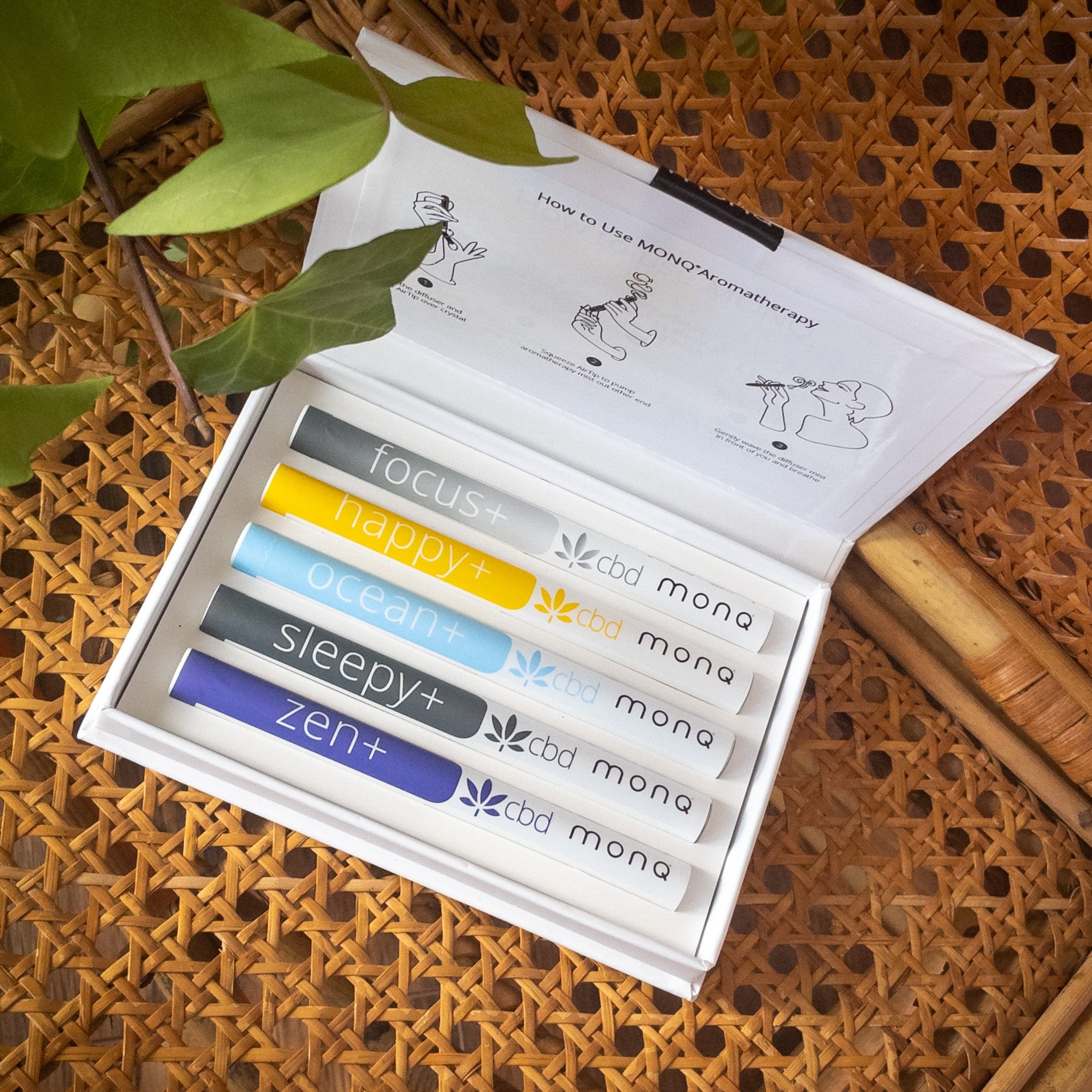
Sleepy MONQ contains lavender as a primary ingredient, combined with chamomile and bergamot, in a pocket-sized personal diffuser designed for use as part of a sleep ritual.
Using Lavender Aromatherapy for Sleep
Practical guidance for incorporating lavender into your sleep routine:
- Begin your lavender aromatherapy 30-60 minutes before your target bedtime, not right at the moment you're trying to fall asleep
- Use it consistently - the same oil, same context, same timing - to build a conditioned response
- Pair with other sleep-supportive behaviors (dim lighting, no screens, cool room temperature)
- Less is more: a few drops in a diffuser or 2-3 breaths from a personal diffuser is sufficient
Lavender is generally well-tolerated for aromatic use. As with any essential oil, avoid direct skin application without appropriate carrier oil dilution, and consult a healthcare provider if you have respiratory sensitivities.
For additional reading on lavender and its aromatic applications, the National Center for Biotechnology Information maintains an extensive searchable research database.
Disclaimer: The above information is provided for general wellness and educational purposes only. Please note that while individual essential oil ingredients may have been shown to exhibit certain independent effects when used alone, the specific blends of ingredients contained in MONQ diffusers have not been tested. No specific claims are being made that use of any MONQ diffusers will lead to any of the effects discussed above. Additionally, please note that MONQ diffusers have not been reviewed or approved by the U.S. Food and Drug Administration. MONQ diffusers are not intended to be used in the diagnosis, cure, mitigation, prevention, or treatment of any disease or medical condition. If you have a health condition or concern, please consult a physician or your alternative health care provider prior to using MONQ diffusers. MONQ blends should not be inhaled into the lungs. Why? It works better that way. No Nicotine Ever. Inhale through the mouth, exhale through the nose. MONQ Diffusers are not intended for individuals under 18, or women who are pregnant or nursing.










Leave a comment