

Frankincense Essential Oil: The Ancient Remedy for Modern Stress
An Oil That Outlasted Empires
Frankincense has a longer documented history than almost any other aromatic substance on earth. It has been traded across the Arabian Peninsula and East Africa for at least four thousand years, used in Egyptian ceremonial practices, burned in Greek and Roman temples, carried along the Silk Road, and referenced in nearly every major religious tradition of the ancient world. When something shows up that consistently across that many cultures and that many centuries, it is worth paying attention to.
Today, frankincense is experiencing a modern revival - not as a ceremonial relic but as a practical tool for everyday stress relief. Understanding why requires a brief look at where it comes from, what is in it, and what the research and traditional use patterns suggest it can do.
Where Frankincense Comes From
Frankincense is the dried resin of trees in the Boswellia genus - primarily Boswellia sacra (from Oman and Yemen), Boswellia serrata (from India), and Boswellia carterii (from Somalia and Ethiopia). When the bark is cut, the tree weeps a milky sap that hardens into the small, amber-toned tears that have been collected and traded for millennia.
The essential oil is produced by steam distillation of these resin tears. The resulting oil has a complex aromatic profile: dry and woody at the base, with citrus and spice notes in the top, and a slightly incense-like depth that is immediately recognizable. No synthetic fragrance quite captures it - the complexity is part of what makes the natural oil valuable.
The Chemistry: What Makes It Work
The primary aroma-active compounds in frankincense essential oil include:
- Alpha-pinene - A bicyclic monoterpene that constitutes a major portion of the oil in many Boswellia species. Alpha-pinene is also found in pine, rosemary, and eucalyptus, and has been studied for its potential effects on the nervous system and respiratory support. Some research suggests it may support alertness and ease feelings of mental fatigue at lower concentrations, while at higher concentrations it contributes to frankincense's distinctively calming character.
- Incensole acetate - A diterpene compound unique to Boswellia resin. Early preclinical research published via PubMed (NCBI) has explored incensole acetate's potential interaction with brain chemistry, with findings suggesting it may be associated with psychoactive effects that support a calm, relaxed mental state. This compound is one of the reasons frankincense has been so consistently associated with contemplative and meditative practice - there may be a neurochemical basis for the tradition.
- Limonene - A citrus-derived terpene that adds brightness and uplift, contributing to the oil's complex aromatic profile and its mood-supportive character.
- Beta-caryophyllene - A sesquiterpene found in many stress-supporting botanicals, including black pepper and clove. It interacts with CB2 receptors in the endocannabinoid system and may support a sense of physical ease alongside the mental effects of the other compounds.
Traditional Use: Stillness as the Goal
Looking across the traditional uses of frankincense - from Egyptian kyphi incense blends to Catholic Mass to Buddhist temple practice to Ayurvedic ritual - a consistent theme emerges: frankincense is the scent of intentional stillness. It is burned when people are trying to move from the noise of daily life into a quieter, more centered internal state.
This is not incidental. Ceremonial and contemplative spaces are defined by their contrast with the busy, high-stimulation outside world. The incense marks the transition. The scent signals: this space is different. You can slow down here.
Modern stress relief is, at its core, the same project. We are trying to create internal transitions - moving from the high-demand, reactive mode that work and daily pressure require into a more settled, present, and sustainable state. Frankincense has been doing exactly that work for four thousand years.
Frankincense for Meditation and Mindful Breathing
The most effective application of frankincense for stress relief combines the oil with intentional breathing practice. The two reinforce each other: deep, slow breathing activates the parasympathetic nervous system (the rest-and-digest counterpart to fight-or-flight), while the aromatic compounds of frankincense engage the olfactory-limbic connection to signal calm at the neural level.
A simple practice: take three to five slow, deep breaths with frankincense present - whether from a portable personal diffuser, a room diffuser, or a drop on the palm. On each inhale, let the scent fully register. On each exhale, deliberately lengthen the breath. Five minutes of this, done consistently before meditation or at the end of a demanding day, can produce a measurable shift in mental state.
Frankincense in Zen MONQ
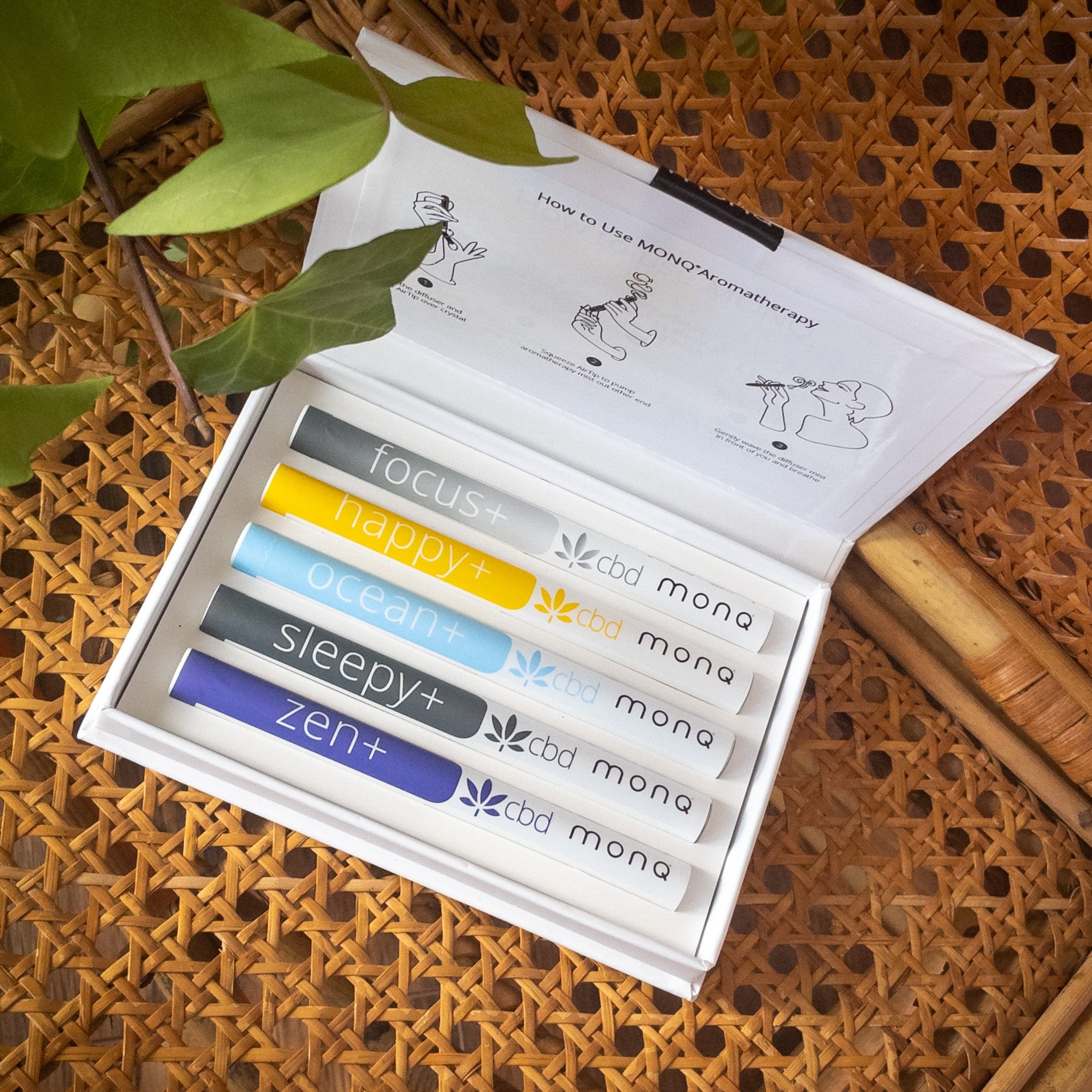
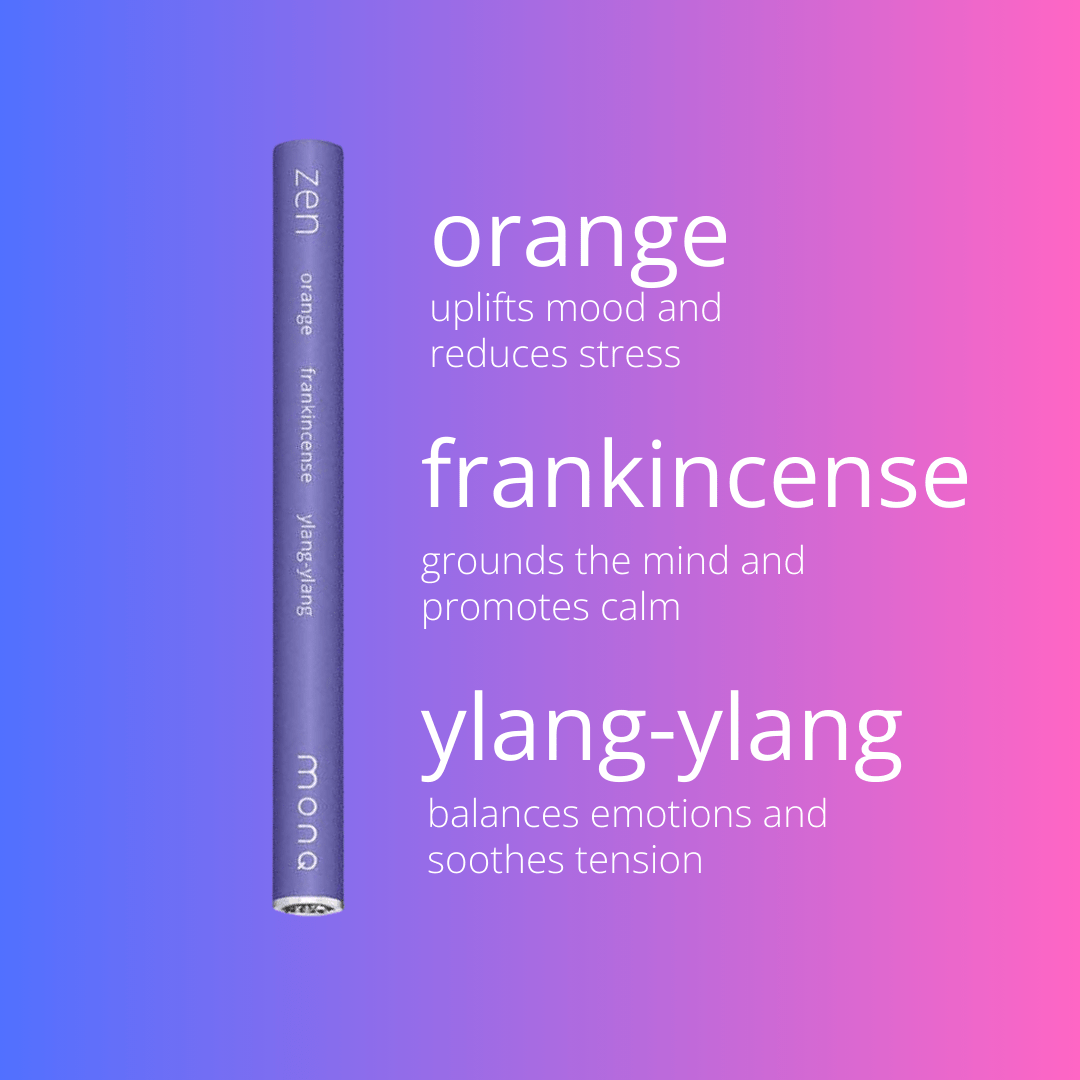
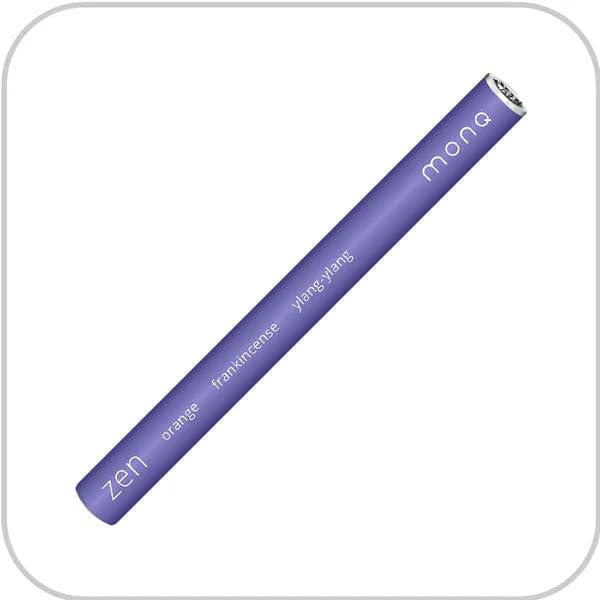
Frankincense is the anchor ingredient in Zen MONQ, paired with orange and ylang ylang to create a complete stress-relief blend in a portable personal diffuser. The combination is intentional: frankincense provides the meditative depth and grounding quality, orange adds a gentle mood-brightening lift, and ylang ylang contributes floral warmth and additional calming character.
The MONQ format - a pen-sized personal diffuser you carry with you - makes frankincense practical in a way that traditional incense cannot be. You cannot burn resin at your desk, in the car, or on the subway platform. You can take three deliberate breaths from a pocket-sized diffuser anywhere, anytime the moment calls for it. Inhale through the mouth, exhale through the nose, and let the mist engage your olfactory system fully on the exhale.
Sourcing and Sustainability
It is worth noting that Boswellia trees are under increasing pressure from overharvesting. Wild frankincense populations in Somalia, Ethiopia, and Oman have declined significantly over recent decades, partly due to increased global demand driven by the essential oil market. When choosing frankincense products, it is worth looking for brands that source responsibly and can speak to their supply chain practices. Sustainability matters for an ingredient this ancient and this valuable.
How to Incorporate Frankincense into Your Daily Routine
Practical entry points for everyday use:
- Morning grounding: A few breaths of frankincense before you open your email or check the news can set a calmer baseline for the day. It is a centering signal before the day's demands arrive.
- Pre-meeting reset: Thirty seconds of deliberate frankincense-anchored breathing before a high-pressure conversation or presentation can help shift from reactive to present.
- Evening transition: As an end-of-day ritual signal, frankincense works well to mark the boundary between work mode and rest mode - especially paired with a consistent physical routine like changing clothes or making tea.
- Meditation anchor: Used consistently before sitting practice, frankincense becomes a conditioned cue that accelerates the transition into meditative states over time.
The Ancient Remedy for a Modern Problem
Modern stress is new in its specific forms - the inbox, the notification, the always-on work culture - but the underlying experience of feeling wound up, overwhelmed, and disconnected from stillness is as old as human civilization. Frankincense has been one of humanity's most consistent tools for addressing that experience across four millennia.
It does not eliminate stress. Nothing does. But as a sensory anchor for intentional transitions - from pressure to calm, from noise to quiet, from reactive to present - it is remarkably effective. And the science is beginning to explain why the ancients already knew.
Disclaimer: The above information is provided for general wellness and educational purposes only. Please note that while individual essential oil ingredients may have been shown to exhibit certain independent effects when used alone, the specific blends of ingredients contained in MONQ diffusers have not been tested. No specific claims are being made that use of any MONQ diffusers will lead to any of the effects discussed above. Additionally, please note that MONQ diffusers have not been reviewed or approved by the U.S. Food and Drug Administration. MONQ diffusers are not intended to be used in the diagnosis, cure, mitigation, prevention, or treatment of any disease or medical condition. If you have a health condition or concern, please consult a physician or your alternative health care provider prior to using MONQ diffusers. MONQ blends should not be inhaled into the lungs. Why? It works better that way. No Nicotine Ever. Inhale through the mouth, exhale through the nose. MONQ Diffusers are not intended for individuals under 18, or women who are pregnant or nursing.










Leave a comment