

Chamomile Essential Oil: The Ancient Sleep Herb
Chamomile is one of the oldest and most beloved medicinal plants in human history. From ancient Egyptian offerings to Greek physicians to European herbalists, chamomile has crossed every cultural boundary and survived every era of medicine. Its reputation for calming, soothing, and supporting rest is ancient - and the depth of that tradition is worth understanding before we ever open a bottle of essential oil.
In this post, we'll explore chamomile essential oil specifically - its botanical origins, key chemical constituents, traditional uses, and how it fits into a modern sleep aromatherapy practice.
Two Different Plants, Two Different Oils
When we talk about chamomile in aromatherapy, it's important to distinguish between two different species:
- Roman chamomile (Chamaemelum nobile, also called Anthemis nobilis): A low-growing perennial with a sweet, apple-like fragrance. The essential oil is derived from the flowers and is pale yellow with a warm, fruity-herbaceous scent. Roman chamomile is particularly favored for emotional calming and nervous tension in aromatherapy practice.
- German chamomile (Matricaria chamomilla, also called Matricaria recutita): An annual plant with a deeper, more potent oil. German chamomile essential oil is deep blue or inky blue-green due to chamazulene, a compound formed during steam distillation. Its scent is more herbaceous and medicinal.
Both have calming properties in aromatherapy tradition, but they have different chemical profiles and are often used for different purposes. Roman chamomile is more commonly recommended for emotional and sleep support in aromatherapy practice.
Key Chemical Compounds in Chamomile
Roman chamomile contains:
- Isobutyl angelate and isoamyl angelate: Esters that contribute to the characteristic sweet, fruity aroma and are associated with calming properties
- Alpha-bisabolol: A sesquiterpene alcohol with soothing associations found in both Roman and German chamomile
- Pinene and farnesol: Minor constituents contributing to the full aromatic profile
German chamomile contains:
- Chamazulene: The distinctive blue compound responsible for the oil's unusual color, formed during distillation from matricine
- Alpha-bisabolol: Present in both species; associated with calming, soothing properties in traditional use
- Bisabolol oxides A and B: Additional calming constituents unique to German chamomile
A History Written in Flowers
Chamomile's traditional use for nervous tension, restlessness, and sleep difficulties spans millennia. Ancient Egyptians dedicated it to the sun god Ra and used it to treat fevers. Greek physician Dioscorides described it for its calming properties. In European folk medicine, chamomile tea was the standard bedtime remedy for children and adults alike - the floral equivalent of a lullaby.
The name "chamomile" comes from the Greek "khamaimelon" meaning ground apple - a reference to the plant's characteristic apple-like fragrance when walked upon. This ancient name captures something important: chamomile has been intimate with human experience for a very long time.
In traditional herbal practice, chamomile is classified as a nervine - a plant that works specifically on the nervous system to support calm and rest. It's used for what herbalists call excitability - the agitated, wound-up state that makes it hard to transition from activity to rest.
Chamomile and the Racing Mind
One of the most common sleep challenges isn't the inability to feel physically tired - it's the inability to quiet the mind despite physical fatigue. This state of mental restlessness, lying awake with thoughts cycling, is one of the signature experiences chamomile aromatherapy is traditionally used to address.
Many people report that chamomile's sweet, gentle scent has an almost immediate settling effect on their mental state. It doesn't create sedation or mental fog - it's more accurately described as supporting the transition from mental busyness to a quieter, more receptive state. The fragrance itself seems to carry a quality of gentleness that invites the mind to slow down.
This is particularly valuable for people who describe their sleep challenge as an inability to "turn off" - whose bodies are tired but whose minds remain active and engaged well past the point when they'd like to sleep.
The Traditional Sleep Connection
In both European and Asian traditional medicine, chamomile has been used specifically for sleep support for centuries. German chamomile was particularly prized in Central European folk traditions. Roman chamomile features prominently in British herbal traditions. Both species appear in traditional formulas intended to support rest, ease physical tension, and calm a restless disposition.
The fact that this plant has been independently identified across cultures and centuries as a sleep-supporting botanical is itself meaningful. Traditional medicine systems weren't scientifically rigorous by modern standards, but they were empirical - built on careful observation of what worked over long periods of time.
Chamomile in Blends
Chamomile blends particularly well with lavender, bergamot, cedarwood, vetiver, and sandalwood. These combinations are commonly found in commercial sleep blends because the components complement and reinforce each other's calming qualities. Lavender provides the familiar floral-herbal anchor; chamomile adds sweetness and depth; bergamot lifts and brightens without activating.
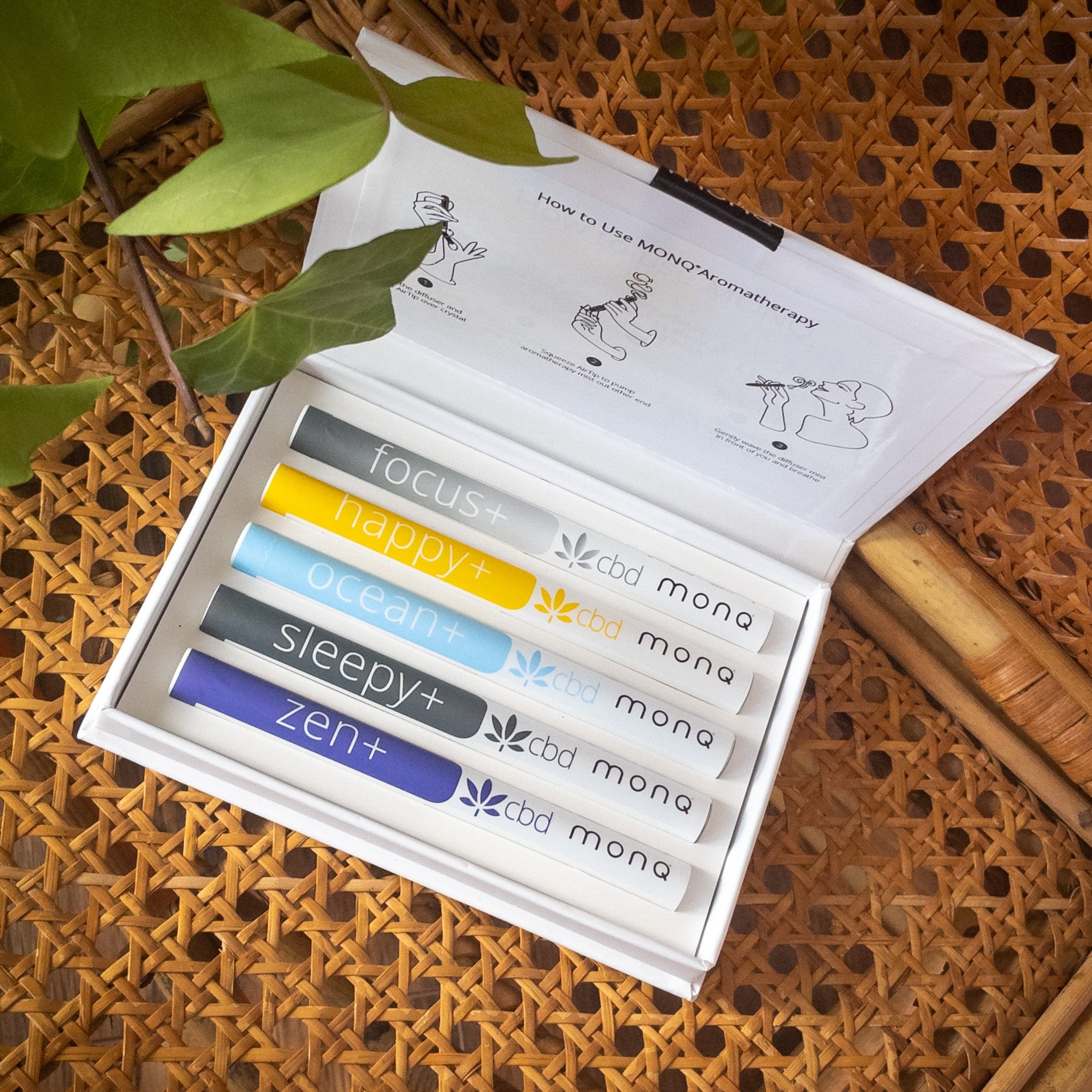
MONQ's Sleepy MONQ blend features chamomile alongside lavender and bergamot - three botanicals with longstanding traditions in relaxation aromatherapy, combined in a portable breath-activated personal diffuser. Inhale through the mouth, exhale through the nose to deliver the blend via retronasal olfaction.
How to Use Chamomile Essential Oil for Sleep
- Bedroom diffuser: Add 3-5 drops of Roman chamomile (alone or blended with lavender) to an ultrasonic diffuser 30-45 minutes before bed
- Pillow linen spray: A few drops diluted in water, lightly misted on pillowcase - the scent will be gentle and dissipate by morning
- Personal inhaler: A cotton wick inhaler with chamomile for on-demand use during pre-sleep wind-down
- Portable diffuser: A pre-blended personal aromatherapy diffuser for consistent, convenient use anywhere
Safety and Quality Considerations
Chamomile essential oils are generally considered safe for aromatic use. Individuals with known sensitivities to plants in the Asteraceae/Compositae family (ragweed, chrysanthemums, marigolds) should use caution and may want to consult a healthcare provider before use.
Quality varies significantly across chamomile essential oils. Genuine Roman chamomile can be expensive - very inexpensive chamomile oils may be adulterated or mislabeled. Look for oils that list the full Latin botanical name (Chamaemelum nobile for Roman; Matricaria chamomilla for German) and preferably include GC/MS testing documentation.
For more information on chamomile's traditional and modern uses, PubMed/NCBI maintains a searchable database of published research on this well-studied plant.
Disclaimer: The above information is provided for general wellness and educational purposes only. Please note that while individual essential oil ingredients may have been shown to exhibit certain independent effects when used alone, the specific blends of ingredients contained in MONQ diffusers have not been tested. No specific claims are being made that use of any MONQ diffusers will lead to any of the effects discussed above. Additionally, please note that MONQ diffusers have not been reviewed or approved by the U.S. Food and Drug Administration. MONQ diffusers are not intended to be used in the diagnosis, cure, mitigation, prevention, or treatment of any disease or medical condition. If you have a health condition or concern, please consult a physician or your alternative health care provider prior to using MONQ diffusers. MONQ blends should not be inhaled into the lungs. Why? It works better that way. No Nicotine Ever. Inhale through the mouth, exhale through the nose. MONQ Diffusers are not intended for individuals under 18, or women who are pregnant or nursing.










Leave a comment