

Best Essential Oils for Sleep: A Complete Guide
Getting a good night's rest is one of the most important things you can do for your health, well-being, and daily performance. Yet for millions of people, falling asleep and staying asleep remains a persistent challenge. One time-honored approach that many people find helpful is aromatherapy - the use of plant-derived essential oils to support mood, relaxation, and a calmer state of mind before bed.
In this guide, we'll walk through the most well-regarded essential oils for sleep support, explain what makes each one special, and explore how you can incorporate them into your nightly routine.
Why Essential Oils for Sleep?
Aromatherapy works through the olfactory system. When you inhale aromatic molecules, they travel through olfactory receptors and send signals to the limbic system - the part of the brain associated with emotion, memory, and physiological regulation. This is why certain scents can instantly shift your mood or evoke vivid memories.
For sleep support specifically, the goal is simple: help your nervous system shift from the activated, alert state of daytime into the quieter, more receptive state that allows rest to come naturally. Certain essential oil compounds are traditionally associated with exactly this kind of gentle transition.
1. Lavender - The Classic Sleep Companion
Lavender is perhaps the most studied and widely used essential oil for sleep and relaxation. Its primary active compound, linalool, has been the subject of substantial research. Studies have found associations between lavender aromatherapy and improved sleep quality, reduced nighttime awakenings, and greater feelings of restfulness upon waking.
Lavender's scent is floral, herbaceous, and gently sweet - familiar and comforting. Many people find it particularly effective when used consistently as part of a bedtime ritual, as the brain begins to associate the scent with the act of winding down.
2. Chamomile - Gentle Calm from the Garden
Chamomile has been used for centuries as a traditional remedy for restlessness and tension. Roman chamomile (Anthemis nobilis) and German chamomile (Matricaria chamomilla) both offer calming aromatic profiles, though they differ slightly in composition. The compound bisabolol, found in German chamomile, is particularly noted for its soothing qualities.
In aromatherapy, chamomile essential oil is traditionally used to ease a racing mind and support a sense of ease in the hours before sleep. Its scent is soft, apple-like, and warmly herbal.
3. Bergamot - Mood Lift and Mental Quiet
Bergamot is a citrus fruit grown primarily in southern Italy, and its essential oil has an unusual profile: simultaneously uplifting and calming. This is due to the combination of linalool (also found in lavender) and limonene, which together may support mood regulation and mental quietude.
For sleep, bergamot is often used to address the mental chatter and tension that can make it difficult to settle down at the end of a busy day. It's a particularly good choice for people whose sleep challenges stem from a busy, restless mind rather than physical fatigue alone.
4. Vetiver - Grounding and Deep
Vetiver is derived from the roots of a tropical grass native to India, and its scent is unlike most other essential oils: deep, earthy, smoky, and richly complex. It's sometimes called the "oil of tranquility" in traditional Ayurvedic practice.
In aromatherapy, vetiver is associated with grounding and settling the nervous system. Many people find its thick, smoky aroma deeply calming, and it's especially valued by those who feel scattered or mentally agitated at bedtime. A little goes a long way - vetiver is potent and long-lasting.
5. Cedarwood - Woodsy Warmth
Cedarwood essential oil, steam-distilled from the wood of cedar trees, carries a warm, dry, woody scent that many find deeply comforting. The compound cedrol, found in Atlas and Virginian cedarwood varieties, has been studied for its potentially calming properties.
Cedarwood blends beautifully with lavender and chamomile, making it a popular addition to sleep-focused aromatherapy blends. Its warm, enveloping quality is particularly well-suited for colder months and cozy bedroom environments.
6. Sandalwood - Sacred Stillness
Sandalwood has a rich history across multiple traditional healing systems, from Ayurveda to traditional Chinese medicine. Its creamy, soft, woody aroma is associated with mental clarity, calm, and spiritual grounding. In modern aromatherapy, it's often used to quiet mental noise and support the transition to restful states.
Sandalwood is a particularly good choice for meditation before bed or for anyone who finds their mind returning repeatedly to unresolved thoughts as they try to sleep.
How to Use Essential Oils for Sleep
- Passive diffusion: An ultrasonic diffuser disperses essential oil mist throughout your bedroom in the hour before bed.
- Direct inhalation: Add a drop to your palms, rub together, and cup over your nose for a few breaths.
- Pillow or linen spray: A few drops diluted in water can be lightly spritzed on your pillow.
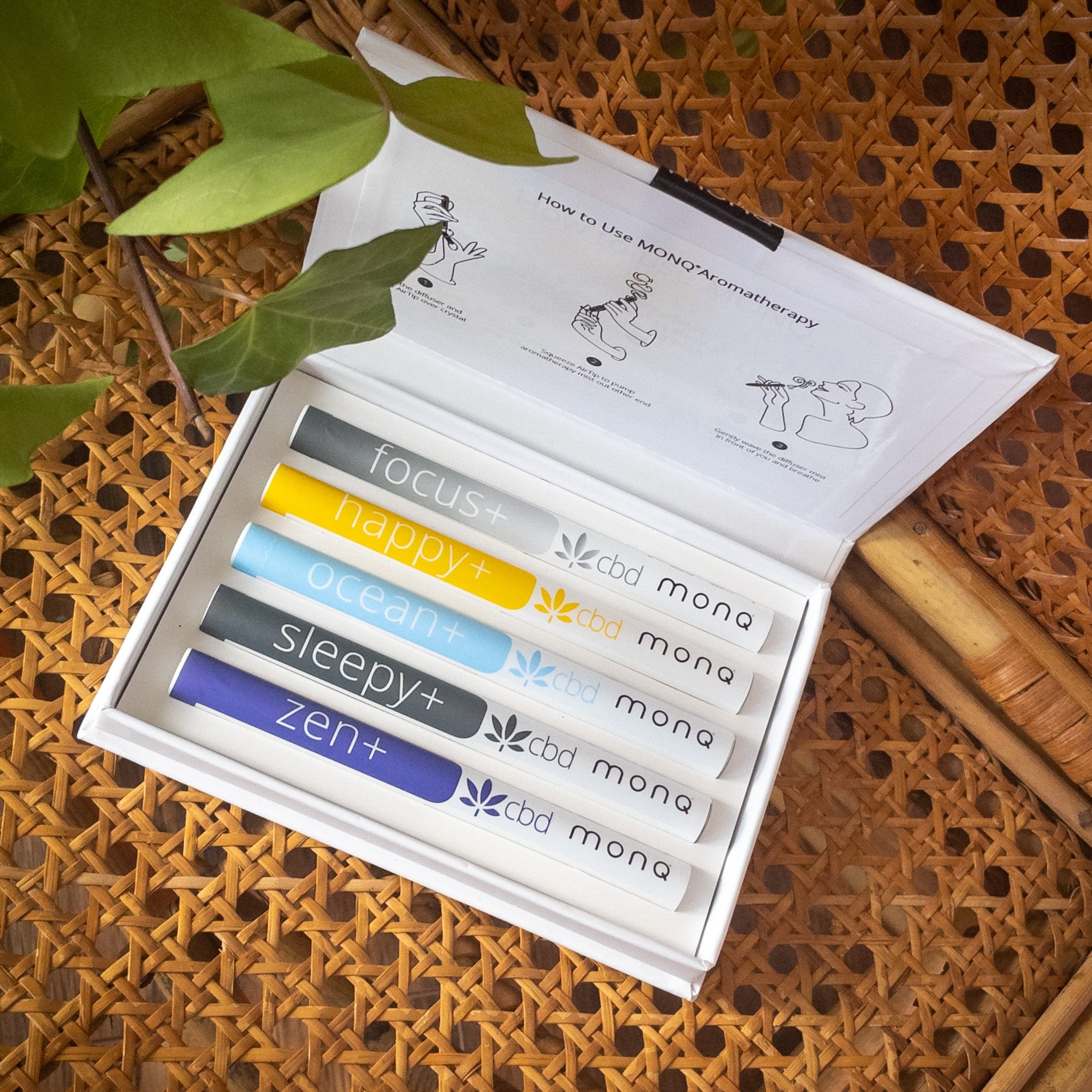
- Portable aromatherapy: For a convenient, on-the-go option, Sleepy MONQ combines lavender, chamomile, and bergamot in a portable breath-activated diffuser. Inhale through the mouth, exhale through the nose - delivering aromatics via retronasal olfaction directly to the olfactory system.
Building a Sleep-Supportive Aromatherapy Practice
The key to getting the most from sleep aromatherapy is consistency. When you use the same scents in the same context night after night, your brain begins to build an association between that scent and the act of preparing for rest. Over time, even the smell alone may help cue your nervous system toward a more relaxed, sleep-ready state.
Start with one or two oils rather than several at once. Give yourself a few weeks to notice how your sleep patterns respond. The goal isn't to force sleep, but to gently prepare the conditions for it to arrive naturally.
Disclaimer: The above information is provided for general wellness and educational purposes only. Please note that while individual essential oil ingredients may have been shown to exhibit certain independent effects when used alone, the specific blends of ingredients contained in MONQ diffusers have not been tested. No specific claims are being made that use of any MONQ diffusers will lead to any of the effects discussed above. Additionally, please note that MONQ diffusers have not been reviewed or approved by the U.S. Food and Drug Administration. MONQ diffusers are not intended to be used in the diagnosis, cure, mitigation, prevention, or treatment of any disease or medical condition. If you have a health condition or concern, please consult a physician or your alternative health care provider prior to using MONQ diffusers. MONQ blends should not be inhaled into the lungs. Why? It works better that way. No Nicotine Ever. Inhale through the mouth, exhale through the nose. MONQ Diffusers are not intended for individuals under 18, or women who are pregnant or nursing.










Leave a comment