

Bergamot: The Citrus Essential Oil for Uplifting Moods
Bergamot essential oil is derived from the peel of the bergamot orange (Citrus bergamia), a citrus fruit known for its bright, refreshing aroma. This essential oil is widely used in aromatherapy for its mood-brightening and uplifting qualities, and its distinctive scent underpins some of the world's most beloved fragrances, including the original formulation of Earl Grey tea.
Bergamot is grown primarily in the Calabria region of Southern Italy, where the unique combination of climate, soil, and humidity creates a fruit whose peel yields an oil of remarkable aromatic complexity. Cold pressing the fresh peel produces an oil rich in linalool, limonene, and linalyl acetate - the three compounds most responsible for bergamot's characteristic citrus-floral brightness.
The Aromatic Chemistry of Bergamot
Linalool contributes the soft, slightly floral quality that distinguishes bergamot from more straightforward citrus oils like lemon or grapefruit. Limonene provides the crisp, bright top note. Linalyl acetate - an ester found also in lavender - adds a light, smooth sweetness that gives bergamot its effortlessly sophisticated character. Together, these constituents make bergamot one of the most versatile bridge aromatics in perfumery, connecting citrus freshness with floral depth.
Bergamot blends naturally with lavender, jasmine, rose, ylang ylang, vetiver, sandalwood, and other citrus oils. It works beautifully as a top or heart note in complex blends, adding a lifting brightness that elevates whatever it accompanies.
Bergamot in MONQ Blends
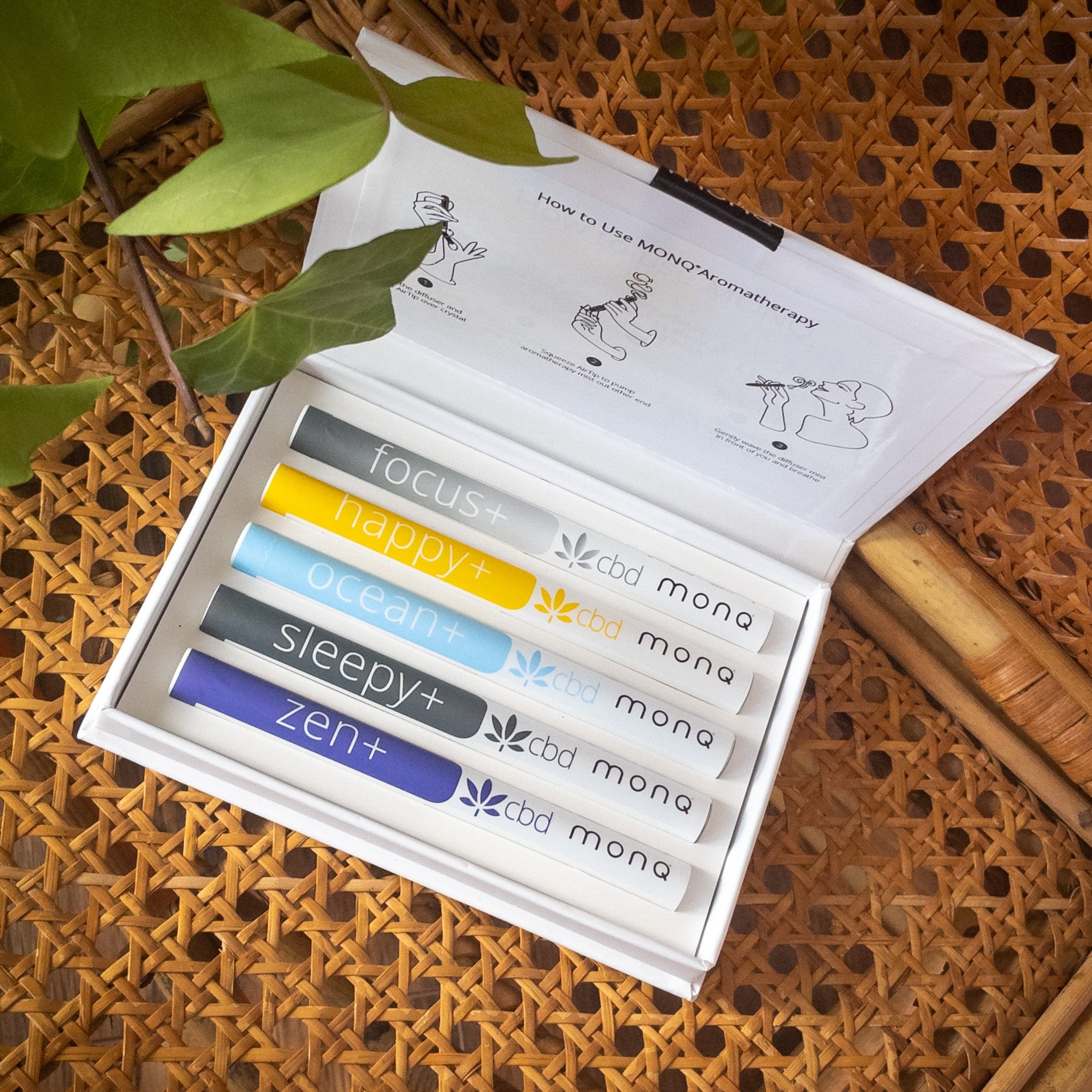
MONQ incorporates bergamot in blends designed for uplifting, brightening aromatic experiences, including Focus MONQ. The citrus-floral character of bergamot pairs with other botanicals to create an aroma that supports a sense of clarity and positive engagement.
To use Focus MONQ or any MONQ blend, hold the diffuser gently to your lips, inhale through your mouth, and exhale slowly through your nose. This sends the aromatic blend through your nasal passages on the exhale - the pathway where your olfactory receptors most fully engage with the scent.
For a deeper look at bergamot's primary aromatic compound, our profile of linalool explores how this versatile terpene appears across the botanical world and contributes to the character of some of aromatherapy's most beloved oils.
Disclaimer: The above information is provided for general wellness and educational purposes only. Please note that while individual essential oil ingredients may have been shown to exhibit certain independent effects when used alone, the specific blends of ingredients contained in MONQ diffusers have not been tested. No specific claims are being made that use of any MONQ diffusers will lead to any of the effects discussed above. Additionally, please note that MONQ diffusers have not been reviewed or approved by the U.S. Food and Drug Administration. MONQ diffusers are not intended to be used in the diagnosis, cure, mitigation, prevention, or treatment of any disease or medical condition. If you have a health condition or concern, please consult a physician or your alternative health care provider prior to using MONQ diffusers. MONQ blends should not be inhaled into the lungs. Why? It works better that way. No Nicotine Ever. Inhale through the mouth, exhale through the nose. MONQ Diffusers are not intended for individuals under 18, or women who are pregnant or nursing.










Leave a comment