

Bergamot Essential Oil: Calm Your Mind for Better Sleep
Bergamot is one of the most fascinating essential oils in the aromatherapy world - and one of the most underappreciated for sleep support. While lavender and chamomile get most of the attention when it comes to sleep-focused aromatherapy, bergamot brings a unique and complementary set of properties to the mix. Understanding what makes bergamot special may change how you think about preparing your mind for rest.
What Is Bergamot?
Bergamot (Citrus bergamia) is a citrus fruit roughly the size of an orange, with a pear-like shape and a greenish-yellow skin. It grows primarily in the Calabria region of southern Italy, along a narrow coastal strip where the particular combination of soil, climate, and sea air produces fruit with uniquely aromatic oil. The bergamot tree is believed to be a hybrid of bitter orange and lemon or citron.
The essential oil is cold-pressed from the rind of the fruit. It's the distinctive flavoring in Earl Grey tea and a key ingredient in countless perfumes. In aromatherapy, it's prized for a quality that sets it apart from most other citrus oils: it is simultaneously uplifting and calming - energizing without activating, mood-brightening without being stimulating.
The Chemistry Behind Bergamot's Dual Nature
Bergamot essential oil's unusual balance of properties comes from its chemical profile:
- Linalool (10-20%): A terpene alcohol also found in lavender. Associated with calming, relaxing properties. This is the compound bergamot shares with lavender - explaining why they blend so well and why bergamot has sleep-supportive associations despite being a citrus oil.
- Linalyl acetate (20-40%): An ester that contributes to the characteristic floral-citrus scent and works synergistically with linalool for a calming effect.
- Limonene (20-30%): The signature citrus compound found in most citrus essential oils. Associated with mood uplift and an energetic quality.
- Gamma-terpinene and beta-pinene: Additional terpenes contributing to the bright, fresh aromatic profile.
The presence of both linalool (calming) and limonene (uplifting) is what gives bergamot its unique character. It's not a sedating oil - it won't make you drowsy. What it may do is support a shift from mental tension, low mood, or the ruminating state that makes sleep difficult, toward a lighter, more settled frame of mind that's receptive to rest.
Bergamot and Mood: The Sleep Connection
Many sleep difficulties don't originate in the body - they originate in the mind's emotional state at bedtime. When you go to bed carrying the weight of frustration, unresolved concerns, or a heavy mood, the emotional burden itself becomes an obstacle to sleep. The mind remains engaged with its own inner weather even after the body is ready to rest.
This is where bergamot makes its particular contribution to sleep aromatherapy. Its traditional use is for mood support and emotional regulation - helping to lift a heavy or burdened state without creating the alertness associated with stimulating oils. The linalool component brings calming, while the limonene brings brightness; the result is a scent that may help clear the emotional static that keeps the mind awake.
Research published through databases like PubMed/NCBI includes studies exploring bergamot aromatherapy's associations with mood state and relaxation. While the research base is still developing, the traditional use of bergamot for tension relief and mental quietude has substantial historical support.
Traditional Uses of Bergamot
In Italian folk medicine, bergamot was used to support mood, ease digestive complaints associated with nervous tension, and support a sense of overall ease and well-being. It was a component of original Eau de Cologne formulations in the 18th century - chosen specifically for its refreshing, calming quality.
In modern aromatherapy practice, bergamot is consistently classified as an oil for emotional tension, restlessness, and mood support. Many aromatherapists use it specifically for the kind of low-level emotional tension that makes it hard to settle - not acute distress, but the background hum of worry, irritation, or heaviness that persists into the evening hours.
Bergamot in Sleep Blends
Bergamot combines exceptionally well with lavender and chamomile - which is precisely why this trio appears together in sleep-oriented aromatherapy blends. Each contributes something distinct:
- Lavender: The familiar, grounding floral anchor - classic sleep association
- Chamomile: Sweet, gentle, particularly supportive for mental restlessness
- Bergamot: The mood-clearing element - lifts heavy emotional states without activating
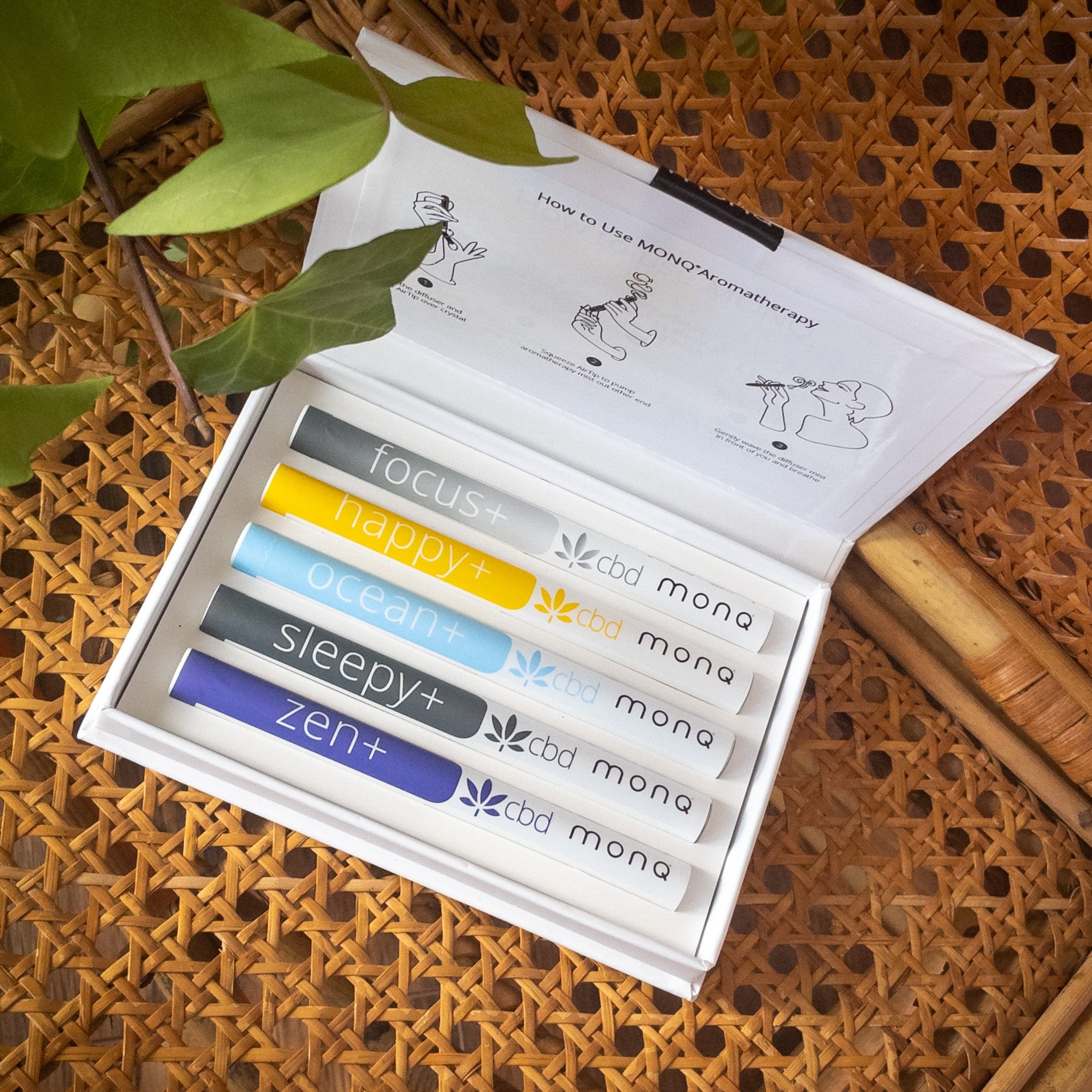
Together, they address the three most common components of pre-sleep difficulty: physical tension, mental restlessness, and emotional burden. This is the blend at the heart of Sleepy MONQ - a pocket-sized personal aromatherapy diffuser that delivers this blend via retronasal olfaction (inhale through the mouth, exhale through the nose). The compact design makes it easy to use as part of a consistent pre-sleep ritual wherever you are.
A Note on Bergapten (Furocoumarin)
Conventional bergamot essential oil contains bergapten, a furocoumarin compound that can cause photosensitization when applied to skin and exposed to UV light. This is primarily a concern for topical use - not for aromatic use. When using bergamot in a room diffuser or personal aromatherapy diffuser, this is not a relevant concern.
Many commercially available bergamot oils are sold as "FCF" (furocoumarin-free), with the bergapten removed. FCF bergamot is generally preferred for topical applications.
How to Use Bergamot for Sleep
- Add 2-3 drops of bergamot to your bedroom diffuser along with 2-3 drops of lavender approximately 45-60 minutes before bed
- Use as part of a consistent pre-sleep ritual: same scent, same time, same context, every night
- Pair with intentional mental wind-down practices: journaling, slow breathing, leaving tomorrow's concerns on paper
- A portable pre-blended option like Sleepy MONQ allows you to use this blend consistently even when traveling or away from home
Disclaimer: The above information is provided for general wellness and educational purposes only. Please note that while individual essential oil ingredients may have been shown to exhibit certain independent effects when used alone, the specific blends of ingredients contained in MONQ diffusers have not been tested. No specific claims are being made that use of any MONQ diffusers will lead to any of the effects discussed above. Additionally, please note that MONQ diffusers have not been reviewed or approved by the U.S. Food and Drug Administration. MONQ diffusers are not intended to be used in the diagnosis, cure, mitigation, prevention, or treatment of any disease or medical condition. If you have a health condition or concern, please consult a physician or your alternative health care provider prior to using MONQ diffusers. MONQ blends should not be inhaled into the lungs. Why? It works better that way. No Nicotine Ever. Inhale through the mouth, exhale through the nose. MONQ Diffusers are not intended for individuals under 18, or women who are pregnant or nursing.










Leave a comment