Nagarmotha Essential Oil

Nagarmotha Essential Oil: The Ancient Root of Calm and Clarity
Deep within Ayurvedic tradition, long before modern aromatherapy had a name, healers in South Asia were turning to the roots of a small aquatic sedge called Nagarmotha. Known botanically as Cyperus scariosus - and closely related to Cypriol (Cyperus rotundus) - this modest plant produces an essential oil with one of the most complex and grounding aromatic profiles in the natural world. Earthy, woody, smoky, and faintly sweet, Nagarmotha essential oil is the kind of scent that stops you in your tracks and asks you to slow down.
If you have never encountered Nagarmotha before, you are not alone. It remains one of the lesser-known botanical ingredients in aromatherapy, which is precisely what makes it so compelling. While lavender and eucalyptus enjoy household name status, Nagarmotha quietly delivers something rare: a depth of calm that feels ancient, rooted, and real.
What Is Nagarmotha?
Nagarmotha is a perennial sedge plant that grows across tropical and subtropical regions of Asia, Africa, and the Mediterranean. It thrives in wetlands, riverbanks, and marshy soil. The essential oil is extracted primarily from the plant roots and rhizomes through steam distillation, yielding a rich, dark oil with exceptional aromatic complexity.
In traditional Ayurvedic medicine, Nagarmotha has been used for centuries as a digestive aid, a skin tonic, and a grounding aromatic ingredient. It appears in ancient Sanskrit texts as Mustaka and has long been prized in Indian perfumery for its fixative qualities - its earthy base notes anchor lighter florals and citrus notes in blended formulations. This is why Nagarmotha and Cypriol appear as foundational ingredients in many luxury perfumes and therapeutic blends.
The primary aromatic compounds found in Nagarmotha oil include cyperene, isopatchoulenone, rotundene, and cyperol. These sesquiterpene compounds give the oil its characteristic woody, smoky depth - and they are part of the broader family of terpenes that research increasingly suggests play a meaningful role in supporting mood and well-being.
The Aromatic Profile of Nagarmotha
Nagarmotha essential oil is not a gentle, floral scent. It is something far more primal. Here is how most aromatherapists describe it:
- Top notes: A slightly sharp, green, herbaceous opening
- Heart notes: Deep woody and smoky undertones, reminiscent of aged cedar and vetiver
- Base notes: Rich, earthy, rooty depth that lingers and grounds
It is often compared to patchouli and frankincense, though Nagarmotha is smokier and more raw. In blended aromatherapy formulations, it acts as a natural anchor - a base note that gives a blend its staying power and earthy soul.
Traditional Uses in Ayurvedic Practice
Ayurveda classifies Nagarmotha as a plant that works on both body and mind simultaneously. Traditionally, it has been used to:
- Support emotional grounding: Practitioners have long recommended Nagarmotha for individuals who feel mentally scattered, overextended, or disconnected from their physical body. Its deeply rooting aroma is thought to bring awareness back to the present moment.
- Ease mental fatigue: The grounding and clarifying properties of Nagarmotha are traditionally associated with mental renewal, particularly after prolonged periods of cognitive strain.
- Balance the doshas: In Ayurvedic terms, Nagarmotha is considered particularly beneficial for balancing Kapha (the earth and water principle) and calming excess Vata (the air and space principle) - both associated with restlessness, lack of focus, and emotional imbalance.
- Skin and hair care: Traditional preparations using Nagarmotha root extract were used topically for skin conditions and as a scalp treatment to promote hair health.
Why Nagarmotha Works in Aromatherapy Blends
One of the most remarkable things about Nagarmotha is how it behaves in blended formulations. Unlike many single-note essential oils that can feel one-dimensional, Nagarmotha has the structural complexity to both stand alone and elevate everything around it.
In aromatherapy blending, Nagarmotha serves as a fixative base note, which means it:
- Slows the evaporation of lighter aromatic molecules, making blends longer-lasting
- Adds depth and dimension that pure floral or citrus oils lack
- Creates a sensory anchor that helps the mind settle and stay present
- Bridges earthy and refined aromatic profiles within a single blend
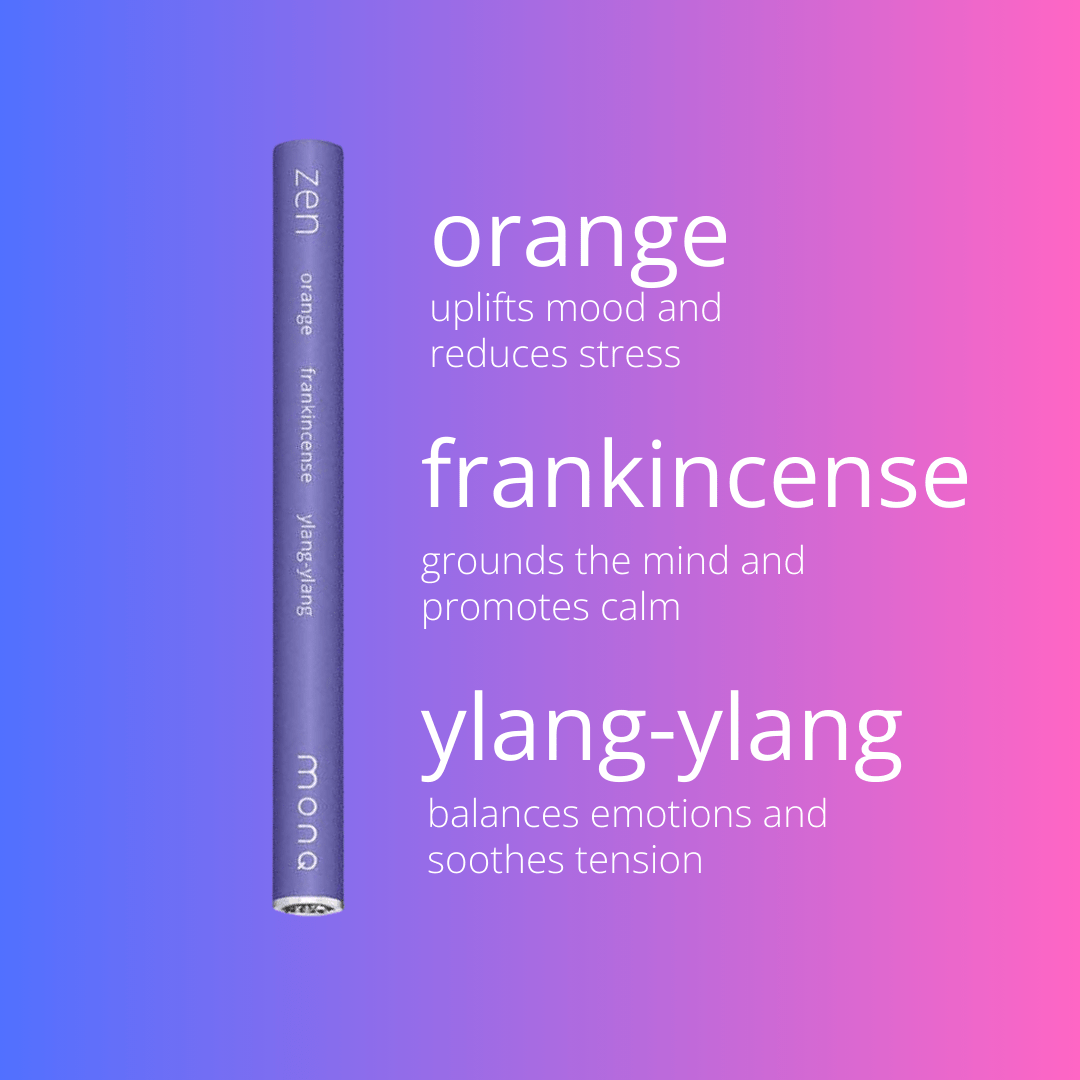
This is exactly why MONQ's science team has incorporated Nagarmotha and related Cypriol-family ingredients into specific personal aromatherapy diffuser blends. The goal is always synergy - not just layering individual oils, but creating something where the combined effect is meaningfully greater than the individual parts. If you are drawn to grounding, woody aromatics, the Zen MONQ and Forest MONQ blends reflect this same philosophy of earthy calm and presence.
Nagarmotha and Terpene Science
The aromatic compounds in Nagarmotha oil are primarily sesquiterpenes - a class of terpenes that have drawn increasing scientific interest for their potential role in mood and well-being. Sesquiterpenes are also found in frankincense and sandalwood, which are among the most revered calming botanicals in traditional medicine systems worldwide.
MONQ was founded on the premise that most modern humans are terpene-deficient - that our shift away from natural environments has left us chronically deprived of the aromatic compounds our bodies evolved alongside. Nagarmotha, with its deep rooty terpene profile, represents exactly the kind of botanical complexity that reintroduces that missing layer of sensory connection.
When you breathe in the mist from a MONQ personal aromatherapy diffuser, you are not just experiencing a pleasant scent - you are engaging your olfactory system in a way that can shift mood, attention, and presence. A review of sesquiterpene research in the International Journal of Molecular Sciences has explored how these compounds interact with biological systems, supporting the traditional understanding of their calming, grounding potential.
How to Experience Nagarmotha
If you are new to Nagarmotha, the best introduction is through a well-crafted blend. The oil on its own can be quite intense - earthy and smoky in a way that takes some getting used to. But woven into a broader aromatherapy blend, it contributes a grounded richness that most people find deeply settling.
You can explore Nagarmotha-influenced blends through MONQ personal aromatherapy diffusers. Each MONQ diffuser is designed to be inhaled gently - breathe in through the device, hold briefly, and exhale away from the device. The mist delivers a concentrated blend of pure essential oils directly to your olfactory receptors, offering one of the most direct routes to the mood-related benefits of aromatherapy.
For those who want to explore the full range of MONQ's grounding and calming formulations, the Peace MONQ and Sleepy MONQ blends offer earthy, grounding profiles that resonate with the Nagarmotha sensibility.
The Bottom Line
Nagarmotha essential oil is one of aromatherapy's best-kept secrets. Ancient, complex, and deeply grounding, it has earned its place in Ayurvedic tradition through thousands of years of use - and it is finding renewed relevance as modern people seek connection to the natural world in a fragmented, overstimulated age.
Whether you are discovering it for the first time or returning to a familiar botanical companion, Nagarmotha offers something rare: a scent that genuinely asks you to slow down, breathe deeply, and come home to yourself.
Disclaimer: The above information is provided for general wellness and educational purposes only. Please note that while individual essential oil ingredients may have been shown to exhibit certain independent effects when used alone, the specific blends of ingredients contained in MONQ diffusers have not been tested. No specific claims are being made that use of any MONQ diffusers will lead to any of the effects discussed above. Additionally, please note that MONQ diffusers have not been reviewed or approved by the U.S. Food and Drug Administration. MONQ diffusers are not intended to be used in the diagnosis, cure, mitigation, prevention, or treatment of any disease or medical condition. If you have a health condition or concern, please consult a physician or your alternative health care provider prior to using MONQ diffusers. MONQ blends should not be inhaled into the lungs. Why? It works better that way. No Nicotine Ever. Inhale through the mouth, exhale through the nose. MONQ Diffusers are not intended for individuals under 18, or women who are pregnant or nursing.