Clary Sage

Clary Sage: The Clarifying Herb That Calms the Mind and Lifts the Spirit
In the rolling hills of the Mediterranean, a tall, sprawling plant with soft, heart-shaped leaves and clusters of pale purple flowers grows wild among lavender fields and sun-warmed stone. This is Clary Sage - Salvia sclarea - a botanical with one of the most compelling aromatic identities in the entire world of essential oils. Herbal, slightly sweet, warm, and faintly nutty, clary sage is the oil you reach for when you need both clarity and calm at the same time.
While lavender tends to dominate aromatherapy conversations, clary sage occupies its own distinctive territory. It is not as softly floral as lavender, nor as sharp and stimulating as rosemary. Clary sage occupies a unique middle ground - grounding and clarifying simultaneously - which is precisely why it has been a cornerstone of European herbal tradition for over a thousand years.
Botanical Profile: What Is Clary Sage?
Clary Sage (Salvia sclarea) is a biennial or short-lived perennial herb in the mint family (Lamiaceae). Native to the northern Mediterranean basin, central Asia, and parts of North Africa, it now grows widely across Europe and North America, where it is cultivated both for its beauty and its medicinal properties. The plant grows to 3-4 feet tall, producing large, aromatic leaves covered in fine hairs and tall flowering spikes in shades of lilac, pink, and white.
The name "clary" is thought to derive from the Latin clarus, meaning clear - a reference to the traditional use of the plant's mucilaginous seeds to clear debris from the eyes. This is also reflected in its folk name "clear eye," and it speaks to the long association of this plant with clarity, both visual and mental.
Clary Sage essential oil is extracted from the flowering tops and leaves of Salvia sclarea through steam distillation. The process requires a substantial volume of plant material to yield even small quantities of oil, which contributes to its slightly higher cost compared to more common oils. The resulting oil is pale yellow or golden in color with a complex, layered aroma.
The Aromatic Profile of Clary Sage
Clary sage essential oil has a scent that is genuinely difficult to describe to someone who has never encountered it - and unforgettable once you have. Its aromatic layers include:
- Top notes: Fresh, slightly herbal, faintly citrus-like opening
- Heart notes: Warm, floral, and subtly sweet - reminiscent of lavender but earthier
- Base notes: Rich, musky, ambery warmth that gives the oil its lasting depth
The dominant chemical constituent in clary sage oil is linalyl acetate, a naturally occurring ester also found in lavender and bergamot. Linalyl acetate is associated with the relaxing, mood-lifting properties these oils share. Clary sage also contains linalool, germacrene D, and sclareol - a diterpene unique to the plant that contributes its distinctive musky, ambery base and has been the subject of considerable scientific interest.
Traditional Uses Through the Centuries
Clary sage has been used in European herbalism for well over a thousand years. The 12th-century abbess and naturalist Hildegard von Bingen wrote about its properties, and it appears in the medieval pharmacopoeias of Germany and England. Its traditional applications span a remarkable range:
- Emotional support: Herbalists have long used clary sage to ease feelings of overwhelm, low mood, and mental fatigue. Its reputation as an herb of clarity and uplift is consistent across traditions.
- Women's health: In European folk medicine, clary sage was traditionally used to support women's reproductive wellness, a use that continues to be studied by modern researchers.
- Digestive comfort: Traditional preparations included clary sage as a digestive tonic, used to ease bloating and discomfort.
- Aromatic bathing: Roman and medieval European traditions used clary sage in bathing preparations, recognizing its skin-softening and mood-lifting aromatic qualities.
Research published in Phytotherapy Research has explored the traditional uses of Salvia sclarea and the biological activity of its key constituents, finding support for the mood-related and calming effects that historical herbalists attributed to this plant. These statements are not intended to imply that any MONQ product diagnoses, treats, cures, or prevents any disease.
The Science Behind Clary Sage Aromatherapy
Modern research on clary sage essential oil has begun to illuminate why traditional healers valued it so highly. Key findings include:
Linalyl Acetate and Relaxation
The primary constituent of clary sage oil, linalyl acetate, has been studied for its interaction with the olfactory system and its downstream effects on mood. Research suggests that inhalation of linalyl acetate-rich essential oils may support feelings of relaxation and ease, consistent with the traditional use of clary sage as a calming herb.
Sclareol - A Unique Diterpene
Sclareol is a naturally occurring diterpene unique to Salvia sclarea. It has drawn interest from researchers for its distinctive properties, including potential antioxidant activity. While research is ongoing and these statements are not medical claims, sclareol is one of the compounds that makes clary sage chemically distinctive from related sage species.
Cortisol and Emotional Well-being
A study published in Phytotherapy Research examined the effects of clary sage oil inhalation on cortisol levels in women, finding that the oil appeared to support a calmer hormonal state. This represents meaningful preliminary evidence for the oil's traditional reputation as an herb of emotional support. As always, aromatherapy products are not intended to replace medical care.
How Clary Sage Fits Into MONQ's Philosophy
At MONQ, every ingredient is selected for a reason. Clary sage is not simply added to blends because it smells pleasant - it is chosen because of its unique ability to simultaneously calm and clarify. In the MONQ framework of terpene-based aromatherapy, clary sage contributes a complex cocktail of bioactive compounds that work synergistically with other essential oils to create a richer, more effective aromatic experience.
MONQ's founder, Dr. Eric Fishman, MD, built the brand on the principle that modern humans are chronically terpene-deficient - separated from the aromatic complexity of natural environments that our bodies evolved alongside. Clary sage, with its multi-layered terpene and ester profile, is exactly the kind of botanical that helps restore that missing sensory connection.
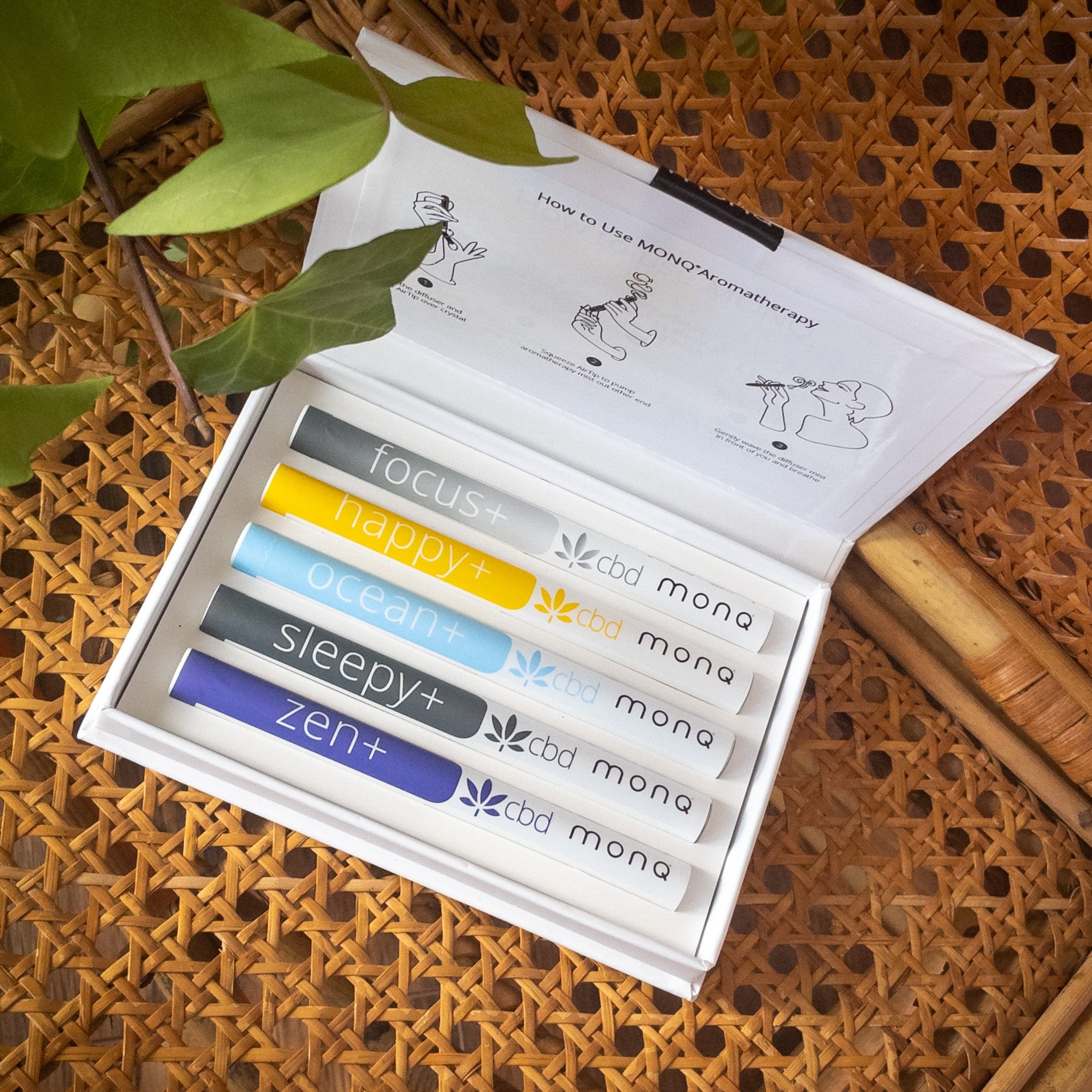
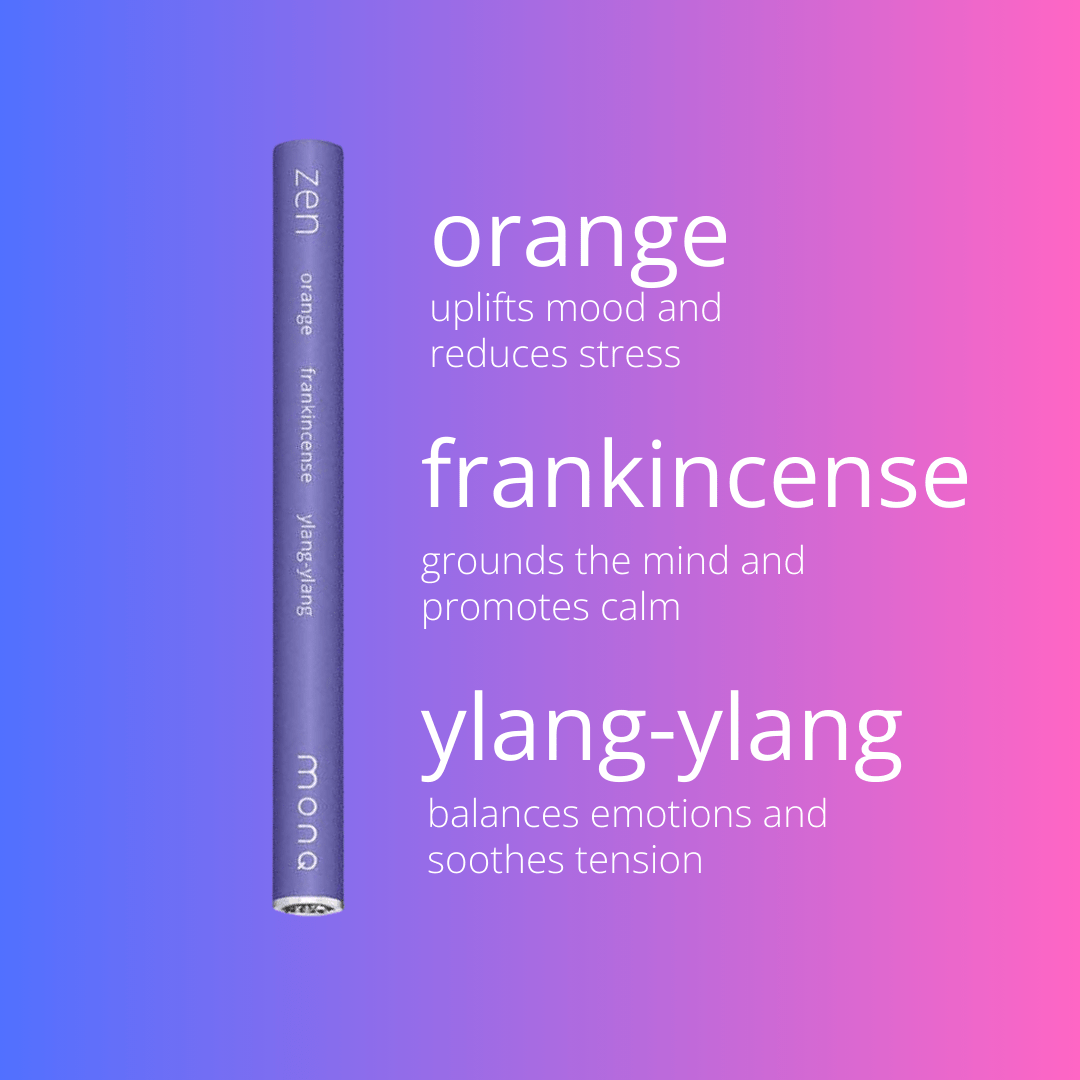
If you are drawn to the idea of a clearer mind and a calmer emotional baseline, the Zen MONQ and Happy MONQ blends may resonate with you. Both incorporate botanicals in the same aromatic family as clary sage - grounding, uplifting, and quietly clarifying. For those who find clary sage's calming depth particularly appealing in the evening, the Sleepy MONQ blend offers a beautifully restful aromatic experience.
Using Clary Sage Safely
Clary sage essential oil is generally considered safe for aromatherapy use by healthy adults when used as directed. A few practical notes:
- Potency: Clary sage is a potent aromatic. A little goes a long way, especially in blended formulations where it combines with complementary ingredients.
- Pregnancy: As with many essential oils, pregnant women should consult a healthcare provider before using clary sage oil in any form.
- Driving: Because of its relaxing properties, some aromatherapists advise against using clary sage in high concentrations before driving or operating machinery.
When experienced through a MONQ personal aromatherapy diffuser, clary sage is delivered in carefully calibrated proportions within a synergistic blend - a thoughtfully engineered aromatic experience, not a concentrated single-note dose.
Clary Sage: An Herb for Our Times
In an era defined by overstimulation, distraction, and an epidemic of mental fatigue, there is something deeply compelling about an herb that has been helping people find clarity and calm for over a thousand years. Clary sage does not shout. It does not demand attention. It simply - and persistently - asks you to breathe, slow down, and clear.
Whether you encounter it in a MONQ personal aromatherapy diffuser or in another form of quality aromatherapy practice, clary sage is worth knowing. It is one of those botanical companions that tends to become a consistent, quiet presence in a well-curated wellness life. And that is exactly what the best aromatherapy ingredients do - they work so naturally, so gently, and so effectively that you almost forget they are working at all.
Disclaimer: The above information is provided for general wellness and educational purposes only. Please note that while individual essential oil ingredients may have been shown to exhibit certain independent effects when used alone, the specific blends of ingredients contained in MONQ diffusers have not been tested. No specific claims are being made that use of any MONQ diffusers will lead to any of the effects discussed above. Additionally, please note that MONQ diffusers have not been reviewed or approved by the U.S. Food and Drug Administration. MONQ diffusers are not intended to be used in the diagnosis, cure, mitigation, prevention, or treatment of any disease or medical condition. If you have a health condition or concern, please consult a physician or your alternative health care provider prior to using MONQ diffusers. MONQ blends should not be inhaled into the lungs. Why? It works better that way. No Nicotine Ever. Inhale through the mouth, exhale through the nose. MONQ Diffusers are not intended for individuals under 18, or women who are pregnant or nursing.