

Are You Terpene Deficient? Probably

Are you terpene deficient? Probably. Most of us are, which is one of the reasons why Eric Fishman, MD founded MONQ. He recognized and defined Terpene Deficiency - a cluster of findings resulting from a lack of exposure to terpenes - and decided to do something about it.
Terpenes in History
Evolution and natural selection, over huge time spans, optimize humans and other organisms for living in their natural environments. In most cases, these environments don't change quickly or drastically, so animals become more fit to survive. However, tremendous change has occurred because of industrialization over the last few centuries. Now that so many individuals live in cities, the air we breathe lacks natural compounds humans need. Increased pollution further exacerbates this situation.
The first humans lived in the forest or the savanna, both of which were environments overflowing with natural aromatic (fragrant) compounds. These aromatic compounds are the secondary metabolites that plants release into the surrounding air. Terpenes are one type of secondary metabolites. And, when terpenes are missing, humans become terpene deficient.

Terpenes and Health
Terpenes have been found to have various positive effects on both mental and physical health, mainly revolving around mood and stress. Because animals evolved in the presence of these aromatic compounds, there is a theory that they require them for homeostasis.
Homeostasis, the delicate balance that living systems strive to maintain, can be easily thrown off when there is some change in the environment. For example, humans who did not grow up at altitude struggle to breathe well at high elevations because the level of oxygen differs from what they are accustomed to. Today, humans experience many changes every day that disturb homeostasis, which may consequently disrupt well-being. One of these is not breathing in enough terpenes.
Since we don't metabolize terpenes the way we do carbohydrates, fats, and proteins, we typically don't think about them as frequently. We don't seek them out, and we don't see them listed on food ingredient labels. But it's possible that they are critical for our health and well-being, just as other components of our diet are.
Thus, most humans exist in a chronic state of "terpene deficiency" which may be characterized by a cluster of findings, including more struggles with stress and mood, general unwellness, and others. Research published in Frontiers in Neuroscience has explored the neurological pathways through which terpenes interact with the olfactory system and downstream brain regions associated with mood and cognition - supporting the scientific basis for terpene-based aromatherapy as a meaningful wellness modality.

What Are Terpenes, Exactly?
Terpenes are organic compounds produced by a vast range of plants, fungi, and even some insects. They are the primary components of most plant essential oils, and they are responsible for the distinctive aromas of virtually every plant you have ever smelled - from the sharp resinous scent of pine to the sweet floral character of lavender to the warm spice of frankincense.
There are tens of thousands of known terpene compounds, and scientists continue to discover new ones. They are typically grouped by size:
- Monoterpenes (C10): The lightest and most volatile terpenes, including limonene (citrus), linalool (lavender, bergamot), and pinene (pine). These are often the first compounds you notice when you smell a plant.
- Sesquiterpenes (C15): Heavier and slower to evaporate, these include farnesene (apple, green notes), caryophyllene (black pepper, cloves), and patchoulol (patchouli). Sesquiterpenes form the deeper, longer-lasting notes in aromatic blends.
- Diterpenes (C20): Found in some essential oils and plant resins, these include compounds like sclareol from clary sage and cafestol from coffee.
The Forest Bathing Connection
One of the most compelling bodies of evidence for terpene-based wellness comes from research into Shinrin-yoku - the Japanese practice of "forest bathing" or mindful time spent in forested environments. Dozens of peer-reviewed studies have documented the physiological and psychological benefits of forest bathing, including reductions in cortisol levels, blood pressure, and markers of immune function. A foundational study published in Environmental Health and Preventive Medicine demonstrated these effects across multiple populations and environments.
While the mechanisms are complex and multiple, researchers point to the high concentration of plant-derived terpenes - particularly phytoncides like alpha-pinene and beta-pinene released by conifer trees - as a meaningful contributor to these effects. When you walk through a pine forest and feel that particular sense of calm clarity, you are not imagining it. You are inhaling a rich cocktail of monoterpenes that your olfactory system evolved to respond to.
If you live in a city or spend most of your time indoors, you are missing this terpene-rich atmosphere - not occasionally, but constantly, day after day. This is the core of what MONQ calls terpene deficiency. The Forest MONQ blend was specifically designed to address this gap, delivering the aromatic profile of a forest environment in a portable, convenient form.
Terpenes in Aromatherapy
Aromatherapy may help us replenish our terpenes. Remember, essential oils have synergistic effects. That is what happens when different oils are combined and instead of just adding benefits, they play off each other's positive effects. In forest bathing, you benefit from the terpenes and other secondary metabolites from hundreds of different plant species, so it would make sense that aromatherapeutic methods using combinations of oils have a synergistic effect.
Since there are tens of thousands of terpenes in nature, no single aromatherapy product provides you with all of them. However, with proper blending, you can be provided with a meaningful number. One researcher in France proposes that the synergistic effects of essential oils are so powerful that the combinations are more effective than the sum of the individual oils - a phenomenon known in aromatherapy as the "entourage effect" of essential oil blending.
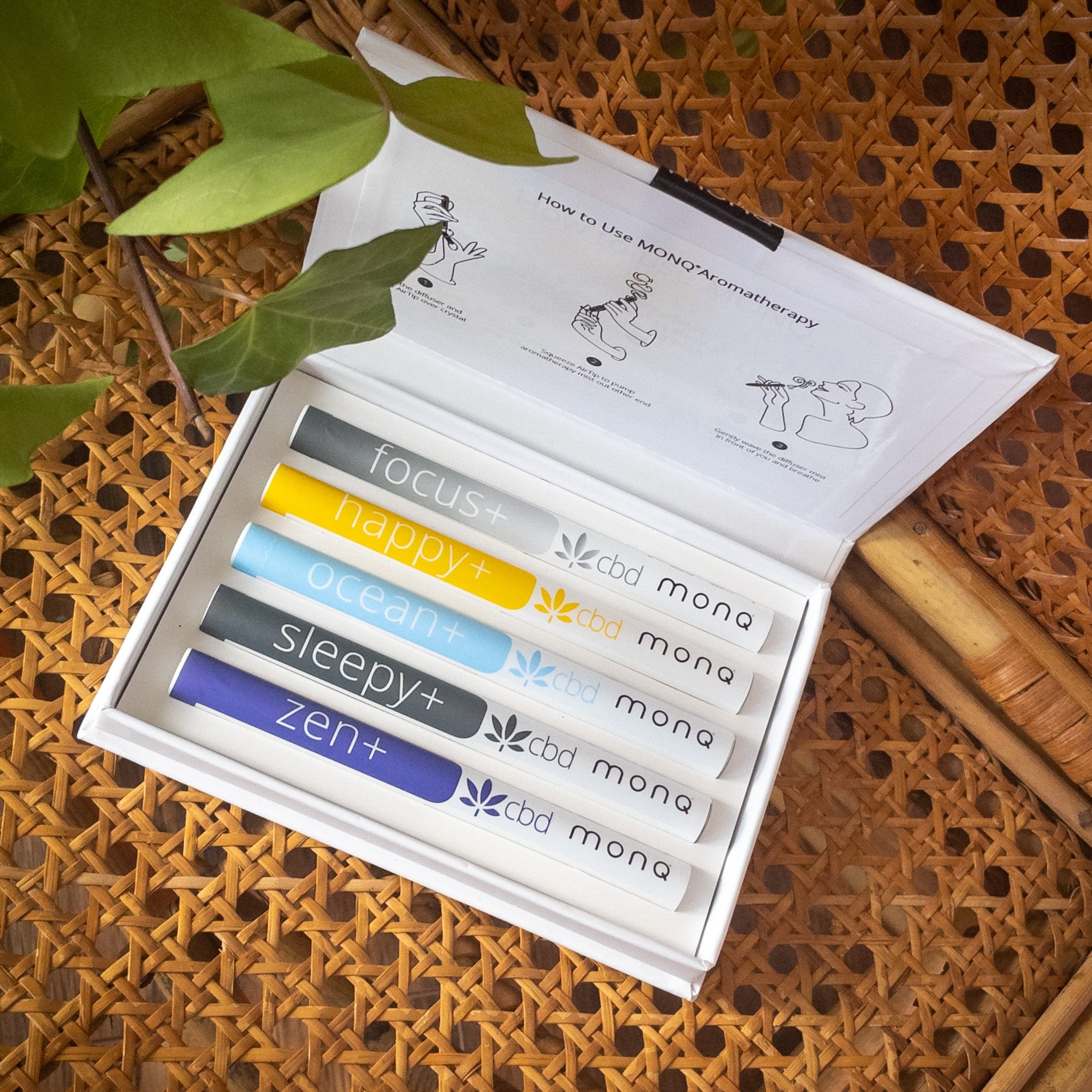
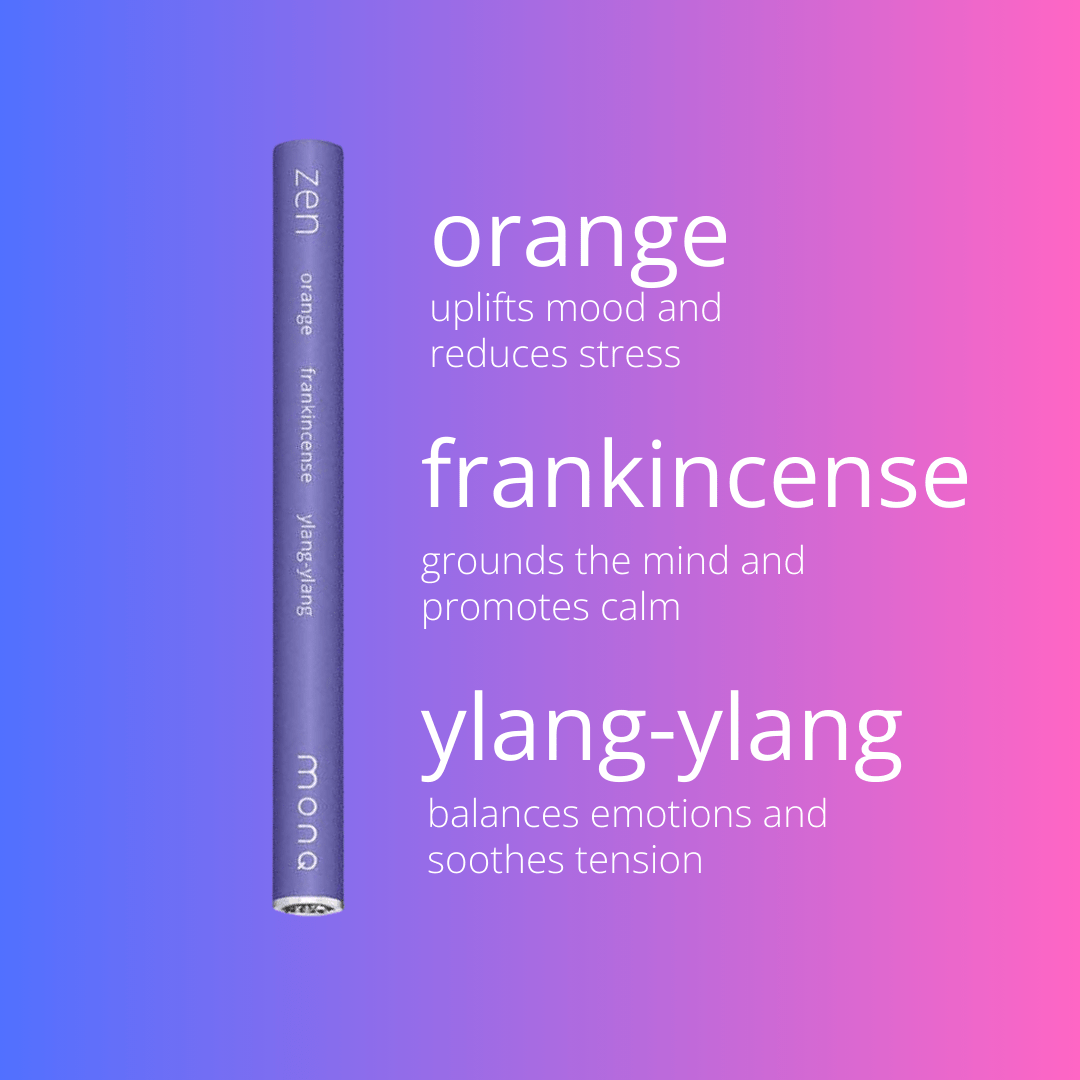
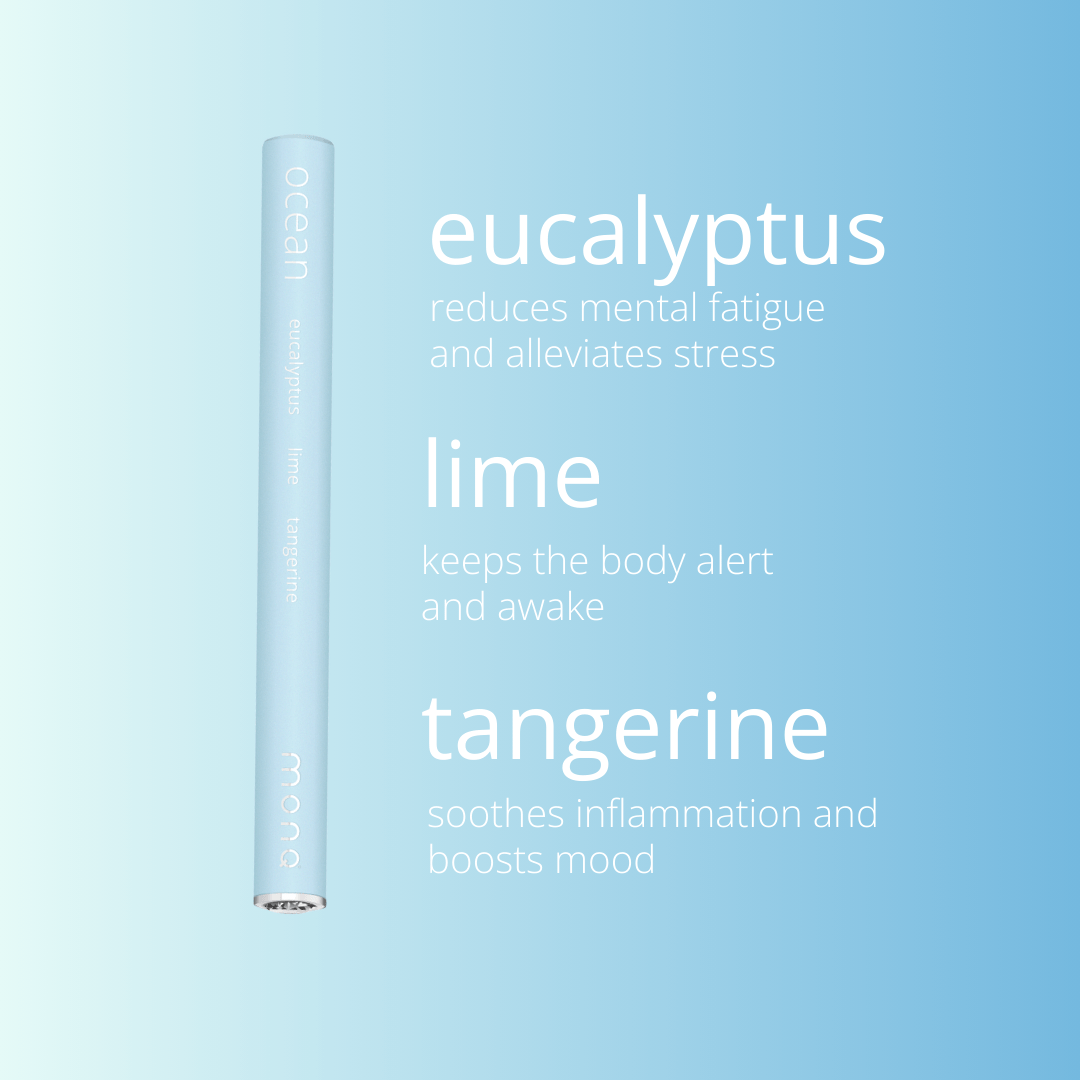
MONQ's science team designed the blends of oils in MONQ personal aromatherapy diffusers with synergy in mind. Each diffuser contains a mix of all-natural essential oils that can help you achieve various mood-based and wellness benefits. The Happy MONQ blend delivers a bright, uplifting terpene profile dominated by citrus monoterpenes and floral esters. The Zen MONQ blend provides a calming, centering aromatic experience built around earthy sesquiterpenes and grounding base notes. The Focus MONQ blend delivers the sharp, clarifying terpene profile - pine, eucalyptol, and similar compounds - traditionally associated with mental clarity and alertness.
How to Start Addressing Your Terpene Deficiency
Addressing terpene deficiency does not require dramatic lifestyle changes. The most impactful steps are also the most accessible:
- Spend time in natural environments: Even a 20-minute walk in a park significantly increases your terpene exposure compared to remaining indoors. Forested environments provide the highest concentrations, but any plant-rich outdoor space helps.
- Open windows when air quality allows: Natural outdoor air, even in urban environments, contains higher concentrations of terpenes than the indoor air typical of modern sealed buildings.
- Incorporate quality aromatherapy: MONQ personal aromatherapy diffusers deliver concentrated blends of pure essential oils - a targeted, direct way to engage your olfactory system with the terpene compounds it evolved to receive. Used regularly, they offer a meaningful complement to time spent outdoors.
- Cook with aromatic herbs and spices: Rosemary, thyme, basil, black pepper, and many other culinary plants are rich sources of dietary terpenes that contribute to your overall terpene intake.
These blends can help you breathe in the terpenes you need to support a happier, more balanced, and more vital daily life.
Disclaimer: The above information is provided for general wellness and educational purposes only. Please note that while individual essential oil ingredients may have been shown to exhibit certain independent effects when used alone, the specific blends of ingredients contained in MONQ diffusers have not been tested. No specific claims are being made that use of any MONQ diffusers will lead to any of the effects discussed above. Additionally, please note that MONQ diffusers have not been reviewed or approved by the U.S. Food and Drug Administration. MONQ diffusers are not intended to be used in the diagnosis, cure, mitigation, prevention, or treatment of any disease or medical condition. If you have a health condition or concern, please consult a physician or your alternative health care provider prior to using MONQ diffusers. MONQ blends should not be inhaled into the lungs. Why? It works better that way. No Nicotine Ever. Inhale through the mouth, exhale through the nose. MONQ Diffusers are not intended for individuals under 18, or women who are pregnant or nursing.










Leave a comment