

How Aromatherapy Supports a Calmer Mind After a Stressful Day
The Gap Between Work Mode and Rest Mode
Most people do not actually stop working when they leave the office - or close the laptop. The mental engine keeps running: replaying the afternoon meeting, rehearsing tomorrow's to-do list, processing lingering friction from a difficult conversation. The body is home but the mind is still at the desk.
This gap between work mode and rest mode is one of the most common forms of everyday stress. It is not a dramatic crisis - it is a low-grade hum of unfinished mental business that makes it hard to be present, sleep well, or genuinely recharge. And it is where aromatherapy can play a surprisingly useful role.
How Scent Interrupts the Loop
The olfactory system - your sense of smell - is the only sense with a direct anatomical connection to the limbic system, the part of the brain responsible for emotional processing and memory. Every other sense routes through a relay station first. Smell does not. This is why a single familiar scent can instantly transport you to a childhood memory, or why walking into a bakery shifts your mood before you even register what you are smelling.
This direct wiring is also why scent can be an effective pattern interrupt. When the mental loop of work stress is running, a deliberate, mindful breath of an intentional aromatic blend can serve as a circuit breaker - a signal to the nervous system that the context has changed. You are no longer at work. You are here, now, breathing something that belongs to rest.
The American Psychological Association has documented the value of transition rituals in managing daily stress - small, deliberate acts that mark the boundary between high-demand states and recovery states. Scent is one of the most portable and immediate tools for creating that boundary.
The End-of-Day Downshift: A Simple Framework
A transition ritual does not need to be elaborate. The goal is to create a repeatable sensory signal that tells your nervous system: this part of the day is done. Here is a simple framework that takes under five minutes:
- Step 1: Close the loop physically. Shut the laptop, clear your workspace, put your phone face-down. Physical closure supports mental closure. If the day keeps replaying after the laptop is closed, this guide to how to switch off after work offers a fuller closing sequence.
- Step 2: Change your environment or position. Move to a different room, step outside, or at minimum change your chair. Even small environmental shifts help interrupt the work-state pattern.
- Step 3: Use scent as a sensory anchor. Take three slow, deliberate breaths of your chosen blend. Inhale through the mouth, exhale slowly through the nose. Let the exhale be twice as long as the inhale.
- Step 4: Do nothing for 90 seconds. No phone, no planning, no productivity. Just let the transition happen.
Done consistently, this sequence becomes a conditioned signal. Over time, the scent alone begins to trigger the downshift - your nervous system learns what it means.
Why Zen MONQ Works for Evening Transitions
Not all essential oil blends serve the same purpose. For an end-of-day transition, you want something grounding and calming rather than energizing or bright. The blend matters.
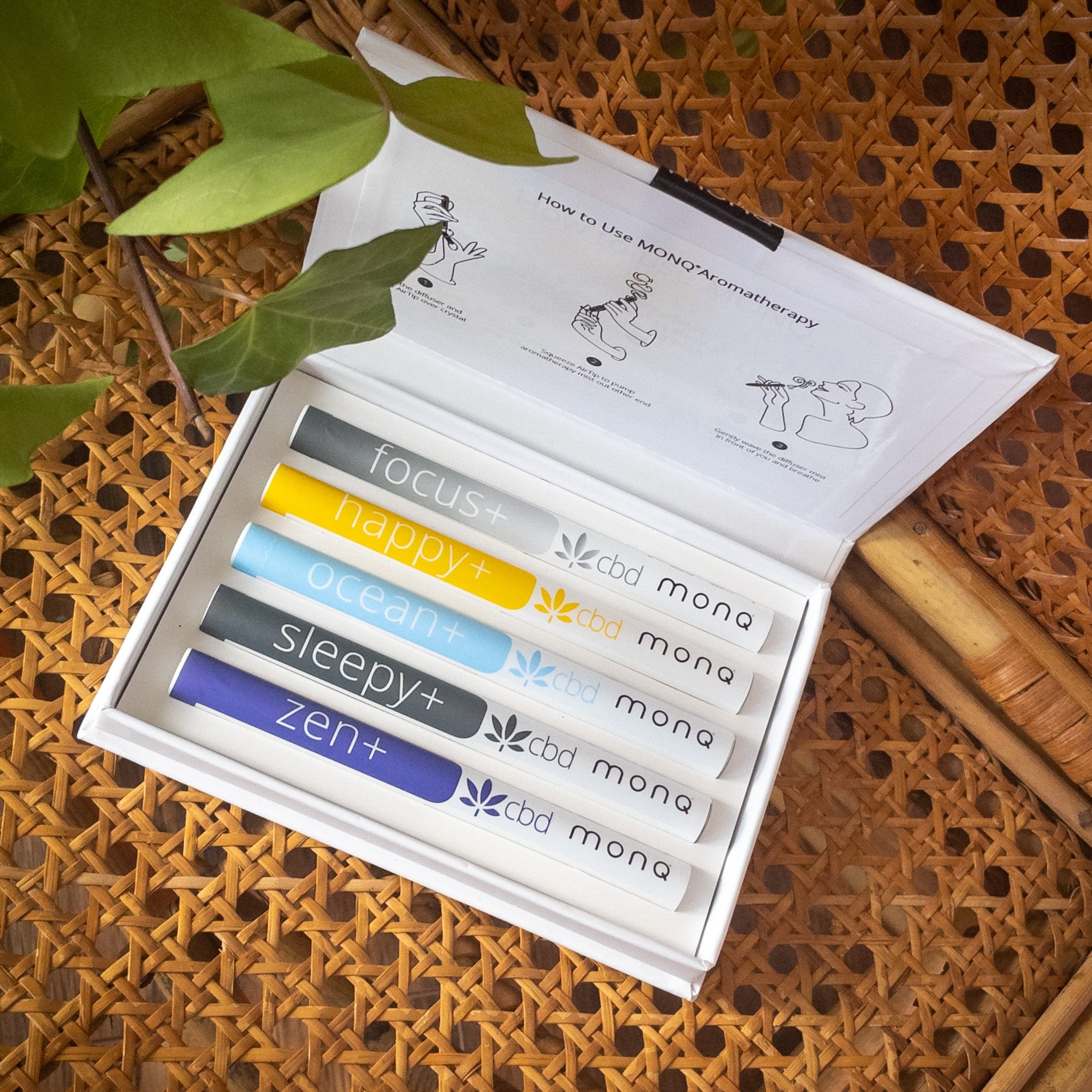
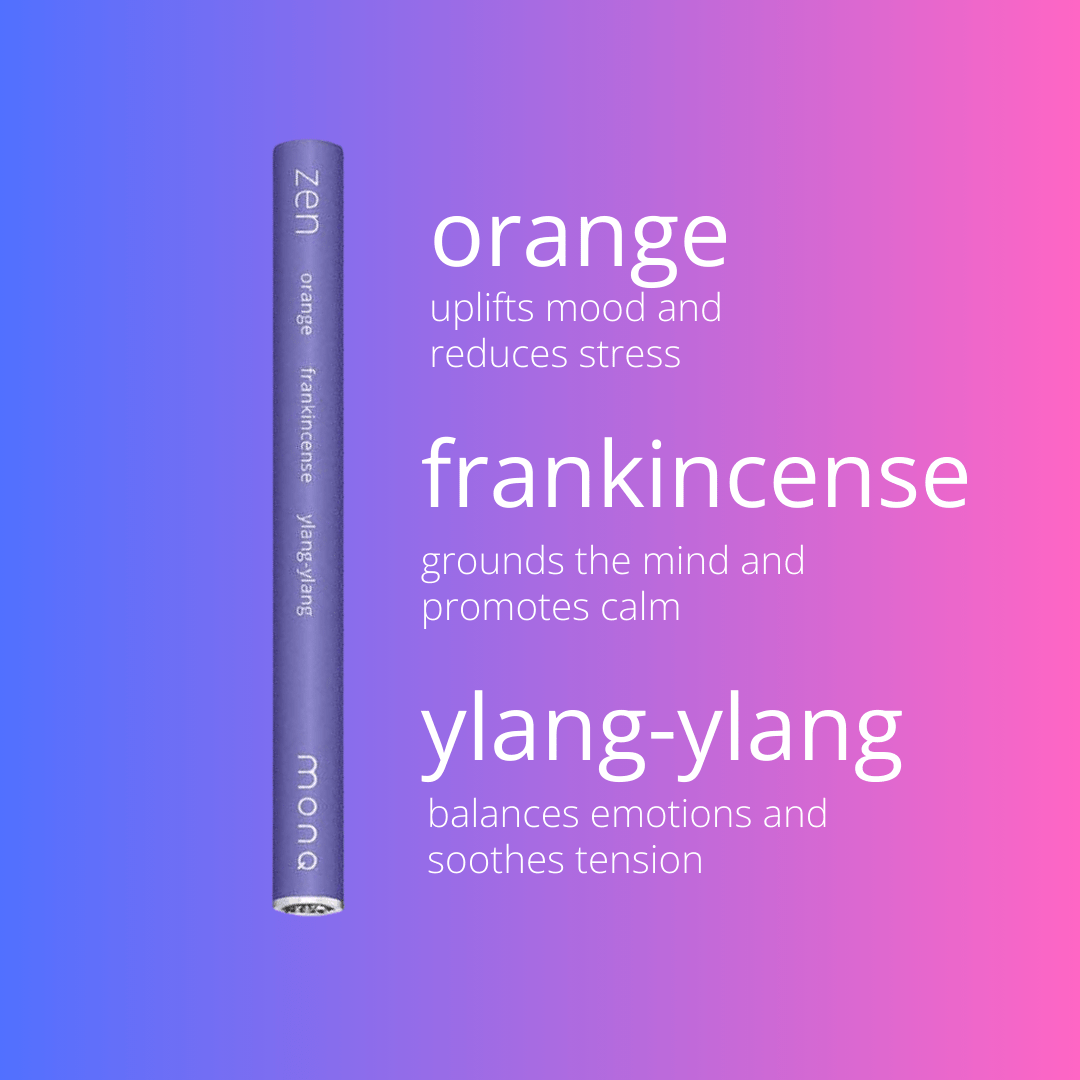
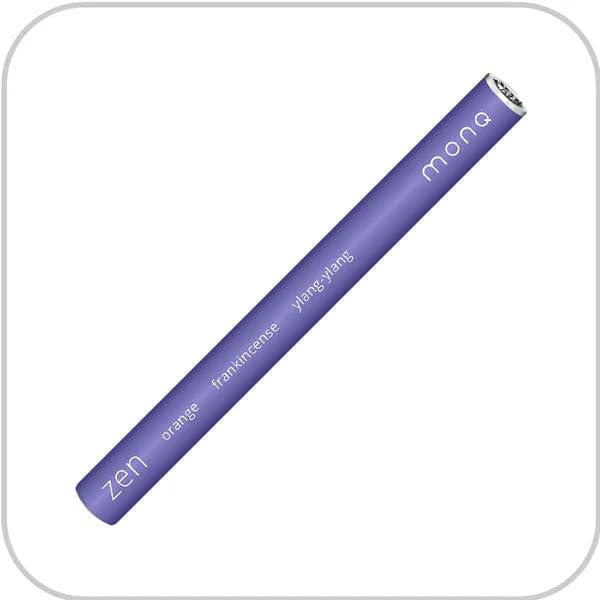
Zen MONQ combines frankincense, orange, and ylang ylang into a blend specifically oriented toward calm and groundedness. Each ingredient brings something distinct to the experience:
- Frankincense has a deep, resinous, meditative quality. It has been used in contemplative practices for thousands of years - its scent is culturally and neurologically associated with slowing down, going inward, and settling.
- Orange adds a gentle brightness that keeps the blend from feeling heavy. Sweet citrus notes are associated with mood support without overstimulation - they lift without wiring.
- Ylang ylang contributes a rich floral depth that anchors the blend. Traditionally used to reduce feelings of tension and pressure, ylang ylang has a slowing quality that complements the meditative character of frankincense.
The combination is designed to be used the way MONQ recommends for all its blends: inhale through the mouth, exhale through the nose. This technique - called the Air Tip method - delivers the aromatic mist to your olfactory receptors maximizing the sensory experience without the mist ever entering your lungs.
The Role of Consistency
The first time you use a calming scent blend, the effect is pleasant but relatively mild. The tenth time you use it, in the same context and with the same intention, it is noticeably more effective. This is not placebo - it is conditioning. The brain is associating a specific sensory input with a specific internal state, and with repetition, the cue becomes more powerful.
This is why the "anchor it to a habit" advice works so well for stress-relief aromatherapy. Pair your Zen MONQ or preferred calming oil with a specific time and context - the drive home, the moment you change out of work clothes, the first cup of tea after 6 PM. Within a few weeks, the association is established and the tool becomes more effective with every use.
Other Transition Moments Worth Anchoring
The end-of-day downshift is the most common transition people identify as stressful, but it is not the only one. Other high-value moments for a scent-anchored transition ritual:
- Before a difficult conversation - two minutes of deliberate breathing can shift you from reactive to grounded before you walk into a challenging meeting or personal discussion.
- After a commute - traffic and transit create their own stress accumulation. A brief reset before entering your home keeps that energy from contaminating your evening.
- Mid-afternoon energy slump - when focus drops and the urge to mindlessly scroll appears, a bright calming blend (bergamot, orange, or something from the Zen family) can serve as a reset rather than a surrender.
- Before sleep - the most important transition of the day. Lavender or a deeper, warmer blend used consistently as part of your pre-sleep routine may support faster wind-down.
A Word on the Breathing Technique
MONQ's recommended technique - inhale through the mouth, exhale through the nose - is not arbitrary. The mouth-in, nose-out pattern delivers the aromatic mist into the oral cavity on the inhale, where it does not reach your lungs. On the exhale through the nose, the scent engages your olfactory receptors fully. The result is a clean, effective aromatic experience that works precisely the way personal aromatherapy is intended to work.
Pair this with a slow, extended exhale - the physiological mechanism of the relaxation response - and you have a complete, two-part stress-relief tool: the breath slows the nervous system, and the scent signals the context shift.
Bottom Line
The mind does not automatically switch off when work ends. That switch requires intention - and a ritual that creates a real boundary between high-demand and recovery modes. Scent is one of the fastest and most accessible tools for building that ritual. Used consistently, with the right blend and a deliberate breathing technique, it can genuinely shift your internal state in under five minutes.
The calmer mind you want after a stressful day is not a distant destination. It is three deliberate breaths away.
Disclaimer: The above information is provided for general wellness and educational purposes only. Please note that while individual essential oil ingredients may have been shown to exhibit certain independent effects when used alone, the specific blends of ingredients contained in MONQ diffusers have not been tested. No specific claims are being made that use of any MONQ diffusers will lead to any of the effects discussed above. Additionally, please note that MONQ diffusers have not been reviewed or approved by the U.S. Food and Drug Administration. MONQ diffusers are not intended to be used in the diagnosis, cure, mitigation, prevention, or treatment of any disease or medical condition. If you have a health condition or concern, please consult a physician or your alternative health care provider prior to using MONQ diffusers. MONQ blends should not be inhaled into the lungs. Why? It works better that way. No Nicotine Ever. Inhale through the mouth, exhale through the nose. MONQ Diffusers are not intended for individuals under 18, or women who are pregnant or nursing.










Leave a comment