

Essential Oils for a Better Night's Rest
There's a reason certain scents make you feel like curling up under a warm blanket. The connection between our sense of smell and our internal state runs deep - deeper than most wellness tools we reach for at bedtime. Essential oils tap directly into this ancient pathway, offering a botanical shortcut to the kind of calm that makes getting a good night's rest feel natural again.
Whether you've been struggling with a racing mind at bedtime or simply want to build a more intentional wind-down routine, understanding the right essential oils can transform your evenings.
Lavender: The Classic Wind-Down Botanical
Lavender is the most researched essential oil in the context of relaxation. Its primary active compound, linalool, has been widely studied for its ability to support a calming state. Many people find that even a few moments with lavender in the air shifts the pace of their evening noticeably. It's one of the foundational ingredients in Sleepy MONQ, alongside chamomile and bergamot, because it anchors the blend in genuine relaxation rather than just pleasant fragrance.
Research published on PubMed has explored lavender's association with relaxation responses, and many people find it may support healthy sleep quality when used as part of a consistent bedtime ritual.
Chamomile: Ancient Calm in a Small Flower
Chamomile has been used for centuries in traditional herbal practice as a gentle ally for winding down. The essential oil carries a warm, apple-like sweetness with earthy undertones. It's traditionally used for relaxation and has long been associated with easing tension at the end of a demanding day. Where lavender is bright and fresh, chamomile is warmer, more enveloping. Together, they create a layered calming effect that may support your body's natural readiness for rest.
Bergamot: Citrus That Calms
Bergamot surprises most people. It's a citrus oil - the distinctive flavor in Earl Grey tea - but unlike other citruses that feel energizing, bergamot has a surprisingly grounding quality. Its linalool content (shared with lavender) may support relaxation, and its bright top notes make it feel uplifting rather than heavy. This is why bergamot appears alongside lavender and chamomile in MONQ's Sleepy blend: the three together create a progression from "still processing the day" to "ready for sleep."
Vetiver: Deep Root Calm
Vetiver is less well-known than lavender but deeply valued by aromatherapy practitioners who work specifically with restlessness and tension. Distilled from the roots of a tropical grass, vetiver has a rich, smoky, earthy scent that is intensely grounding. For those who find their mind continuing to race even after winding down, vetiver's deeply anchoring quality may be particularly useful. A single drop in a room diffuser alongside lavender can shift the atmosphere noticeably.
Cedarwood: The Forest at Bedtime
Cedarwood essential oil is warm, woody, and slightly sweet. Many people associate it with cozy interiors and cedar chests - and that association is itself part of its power. Scent memory is powerful, and cedarwood tends to evoke a sense of established comfort and safety. The Sleep Foundation notes that aromatherapy may be a useful addition to bedtime routines for supporting sleep quality. Try 3 drops of lavender with 2 drops of cedarwood for a woodland-bedroom scent that transitions the space into nighttime mode.
How to Use These Oils at Bedtime
- Room diffuser: Add 5-8 drops of your chosen blend to a cold-mist or ultrasonic diffuser. Start diffusing 30 minutes before you want to fall asleep.
- Pillow mist: Mix 10 drops of lavender with 2 oz of water in a small spray bottle. Mist your pillow lightly before bed. Use consistently for best results.
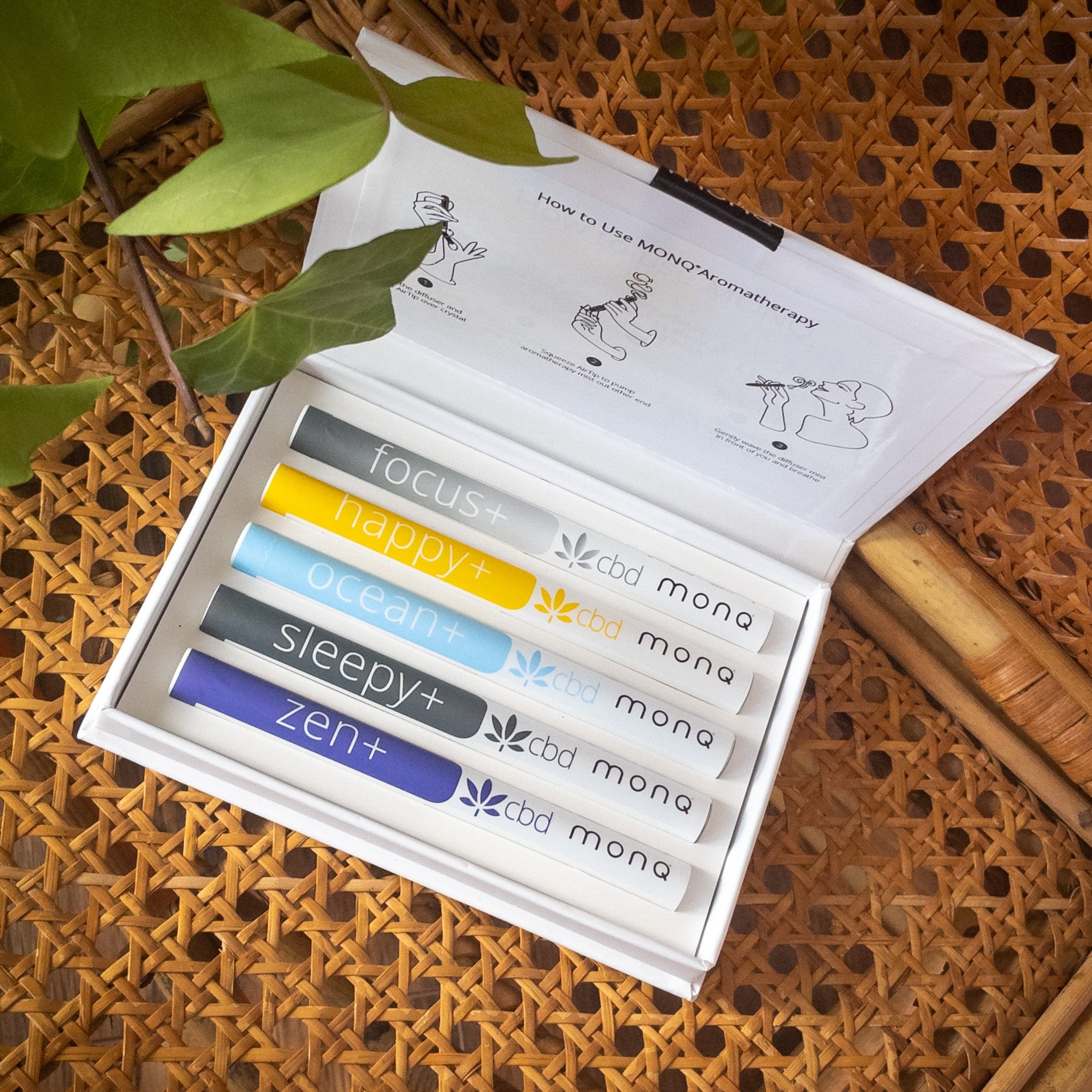
- Portable personal aromatherapy: Sleepy MONQ offers a pen-sized personal diffuser. Inhale gently through the mouth and exhale through the nose, allowing the aromatics to engage the olfactory system via retronasal olfaction. Two to three slow breaths as part of your wind-down routine may help signal to your body that it's time to rest - and the format travels anywhere.
Consistency Is the Key
When you pair a specific scent with the act of winding down consistently, night after night, the scent itself begins to trigger the relaxation response before you've taken any other steps. The best sleep oil is the one you'll actually reach for every night. Start simple: lavender alone is enough. Build from there.
Want to go deeper?
Explore the full science behind aromatherapy and sleep in our comprehensive guide: Aromatherapy for Sleep: A Wellness Guide →
Disclaimer: The above information is provided for general wellness and educational purposes only. Please note that while individual essential oil ingredients may have been shown to exhibit certain independent effects when used alone, the specific blends of ingredients contained in MONQ diffusers have not been tested. No specific claims are being made that use of any MONQ diffusers will lead to any of the effects discussed above. Additionally, please note that MONQ diffusers have not been reviewed or approved by the U.S. Food and Drug Administration. MONQ diffusers are not intended to be used in the diagnosis, cure, mitigation, prevention, or treatment of any disease or medical condition. If you have a health condition or concern, please consult a physician or your alternative health care provider prior to using MONQ diffusers. MONQ blends should not be inhaled into the lungs. Why? It works better that way. No Nicotine Ever. Inhale through the mouth, exhale through the nose. MONQ Diffusers are not intended for individuals under 18, or women who are pregnant or nursing.










Leave a comment