Blood Orange Essential Oil Uses

Blood Orange Essential Oil: What It Is and What It Does
Blood orange essential oil is cold-pressed from the rind of Citrus sinensis var. sanguinello and related blood orange cultivars - distinguished from standard sweet orange by their characteristic crimson flesh, which results from the presence of anthocyanin pigments developed during cool Mediterranean growing seasons. The essential oil itself is not red - it is amber to orange in color - but it carries a scent profile that is distinctly richer and more complex than standard sweet orange oil.
Like all cold-pressed citrus oils, blood orange essential oil is extracted directly from the rind cells by mechanical pressing, preserving the full aromatic profile with minimal heat-induced alteration. The result is an oil dominated by limonene (typically 90-95% of the oil by volume), with smaller amounts of myrcene, linalool, and the characteristic citrus aldehydes that give orange its bright, familiar quality. Blood orange additionally carries faint raspberry and berry-like undertones that set it apart from standard sweet orange.
The Aromatic Profile of Blood Orange Essential Oil
Blood orange essential oil has a bright, sweet citrus scent with added depth - sweeter and slightly richer than standard lemon or lime, less sharp than bergamot, and warmer than grapefruit. The berry-like undertones unique to blood orange create an aromatic profile that is simultaneously uplifting and softly complex, making it a versatile blending note.
As a limonene-dominant oil, blood orange behaves similarly to other citrus peel oils - it is highly volatile, meaning its top notes disperse quickly in open air but deliver an immediate aromatic impact. In a closed-system device like a MONQ diffuser, this volatility is moderated, allowing the fuller aromatic profile to be experienced with more consistency.
Wellness Research on Blood Orange Essential Oil
Much of the research most relevant to blood orange essential oil focuses on its dominant compound, limonene. As detailed in the limonene terpene guide, this citrus monoterpene has been extensively studied for its mood-lifting, and anti-inflammatory properties. Blood orange, as a limonene-rich oil, participates in the same aromatic and biochemical category as lemon, lime, and sweet orange oils.
Studies specifically examining citrus aromas and mood have found consistent associations between citrus scent exposure and positive affect, reduced stress perception, and increased alertness. Research published in psychoneuroendocrinology and environmental psychology journals has used lemon and orange oils as the test stimuli, with outcomes suggesting that limonene-dominant scents may interact with the limbic system to support mood regulation.
Blood orange also contains anthocyanins in the fruit flesh - though these are not transferred significantly to the cold-pressed rind oil. The oil's wellness relevance is primarily through its aromatic terpene profile rather than the pigment compounds that give the fruit its distinctive color.
Blood Orange Essential Oil in Aromatherapy
In aromatherapy, blood orange is used similarly to sweet orange and other citrus oils - as an uplifting, brightening note that elevates mood and creates an energetically positive aromatic environment. It blends well with warm spices (cardamom, ginger), florals (jasmine, ylang ylang), and other citruses.
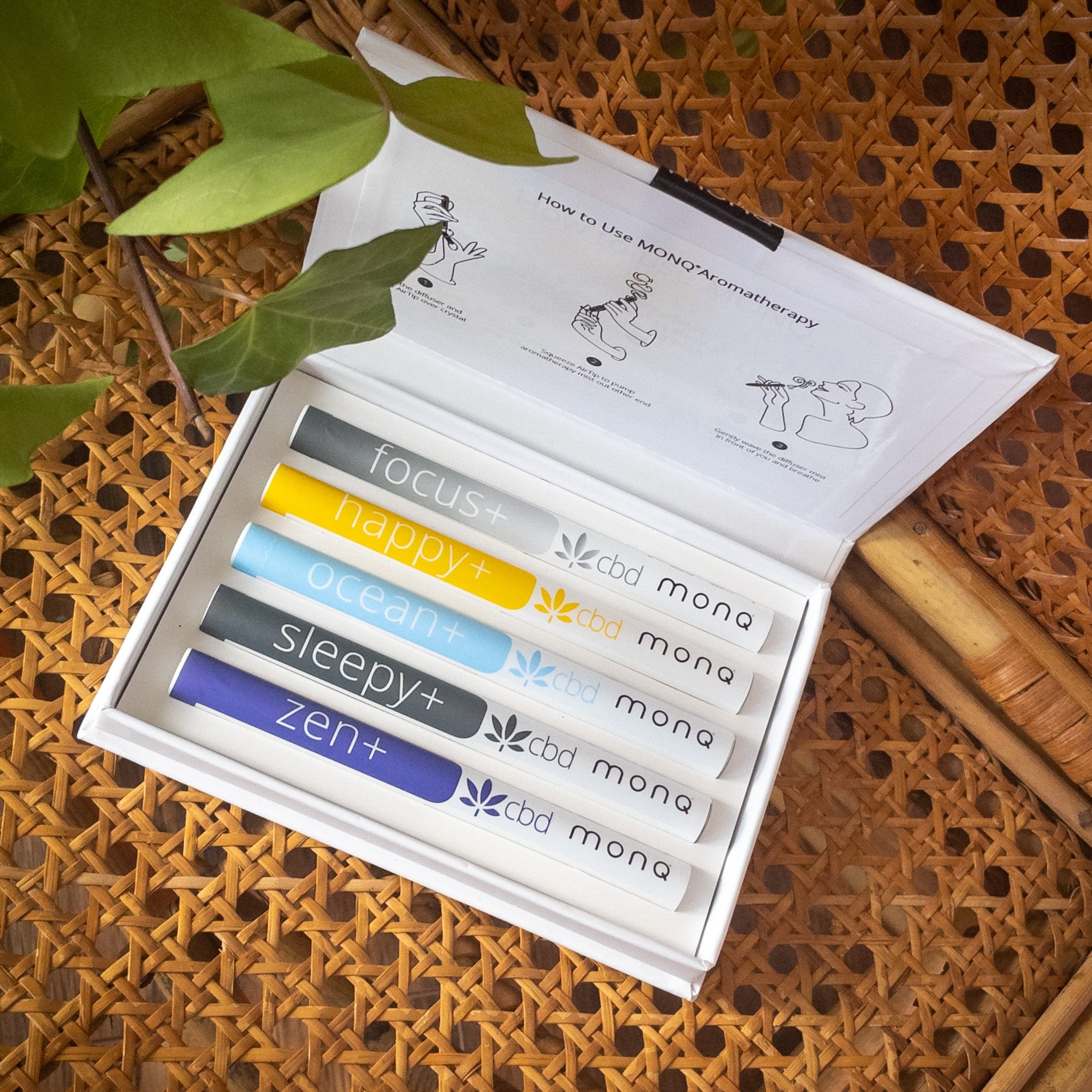
While blood orange is not a confirmed ingredient in MONQ's standard diffuser line, its limonene-rich aromatic profile places it in the same family as the citrus botanicals that contribute brightness to several MONQ blends. Happy MONQ, featuring Fennel, Thyme, and Vanilla, carries the warmth and botanical complexity that pairs naturally with citrus family aromatics. Browse the full MONQ collection to discover blends that share blood orange's uplifting, warm-citrus aromatic family.
Terpene Connections
Blood orange essential oil is part of the limonene terpene family - the same aromatic compound that gives lemons, limes, and grapefruits their characteristic scent. For a deeper look at limonene and its effects, see the limonene terpene profile.
Blood orange also contains small amounts of myrcene, which contributes a soft earthiness beneath the bright citrus top notes. This myrcene content gives blood orange a slightly more grounded aromatic quality than pure limonene sources, part of what distinguishes it from lemon oil in a blend context.
Frequently Asked Questions
- What makes blood orange essential oil different from regular orange oil?
- Blood orange oil has a richer, slightly more complex scent than standard sweet orange - with subtle berry and raspberry-like undertones from the anthocyanin-producing cultivars. Chemically, both are limonene-dominant, but blood orange has a distinctive aromatic depth that sweet orange lacks.
- How is blood orange essential oil extracted?
- Blood orange essential oil is cold-pressed from the rind of the fruit - the same mechanical extraction method used for all citrus peel oils. No heat is used, preserving the fresh, bright aromatic profile.
- Is blood orange oil safe in aromatherapy?
- Blood orange essential oil is considered generally safe for aromatherapy use. Unlike some citrus oils (bergamot, in particular), cold-pressed blood orange is not significantly phototoxic, though caution is always advisable when applying any undiluted essential oil to skin.
- What scents pair well with blood orange essential oil?
- Blood orange pairs naturally with warm spices like cardamom and ginger, with soft florals like ylang ylang and jasmine, with vanilla and sandalwood for a warmer base, and with other citrus oils for a brighter citrus accord.
Learn how to use MONQ for the best aromatic experience →
Disclaimer: The above information is provided for general wellness and educational purposes only. Please note that while individual essential oil ingredients may have been shown to exhibit certain independent effects when used alone, the specific blends of ingredients contained in MONQ diffusers have not been tested. No specific claims are being made that use of any MONQ diffusers will lead to any of the effects discussed above. Additionally, please note that MONQ diffusers have not been reviewed or approved by the U.S. Food and Drug Administration. MONQ diffusers are not intended to be used in the diagnosis, cure, mitigation, prevention, or treatment of any disease or medical condition. If you have a health condition or concern, please consult a physician or your alternative health care provider prior to using MONQ diffusers. MONQ blends should not be inhaled into the lungs. Why? It works better that way. No Nicotine Ever. Inhale through the mouth, exhale through the nose. MONQ Diffusers are not intended for individuals under 18, or women who are pregnant or nursing.