

The Best Essential Oils for Deep, Restful Sleep
Essential oils have been used for centuries to support rest and relaxation. Modern aromatherapy builds on that tradition with a clearer understanding of why it works: scent molecules inhaled through the nose reach the limbic system directly - the brain region that governs emotional regulation, stress response, and sleep cycles. The right botanical blend, used consistently as part of a bedtime ritual, can meaningfully support the quality of your wind-down.
Here are the best essential oils for sleep, and how to use them.
1. Lavender - The Most Studied Sleep Botanical
Lavender is the most well-researched essential oil for sleep support. Its primary active compound, linalool, interacts with the nervous system in ways associated with calming and tension release. Research from the National Center for Complementary and Integrative Health (NCCIH) links lavender inhalation to improved relaxation and sleep quality.
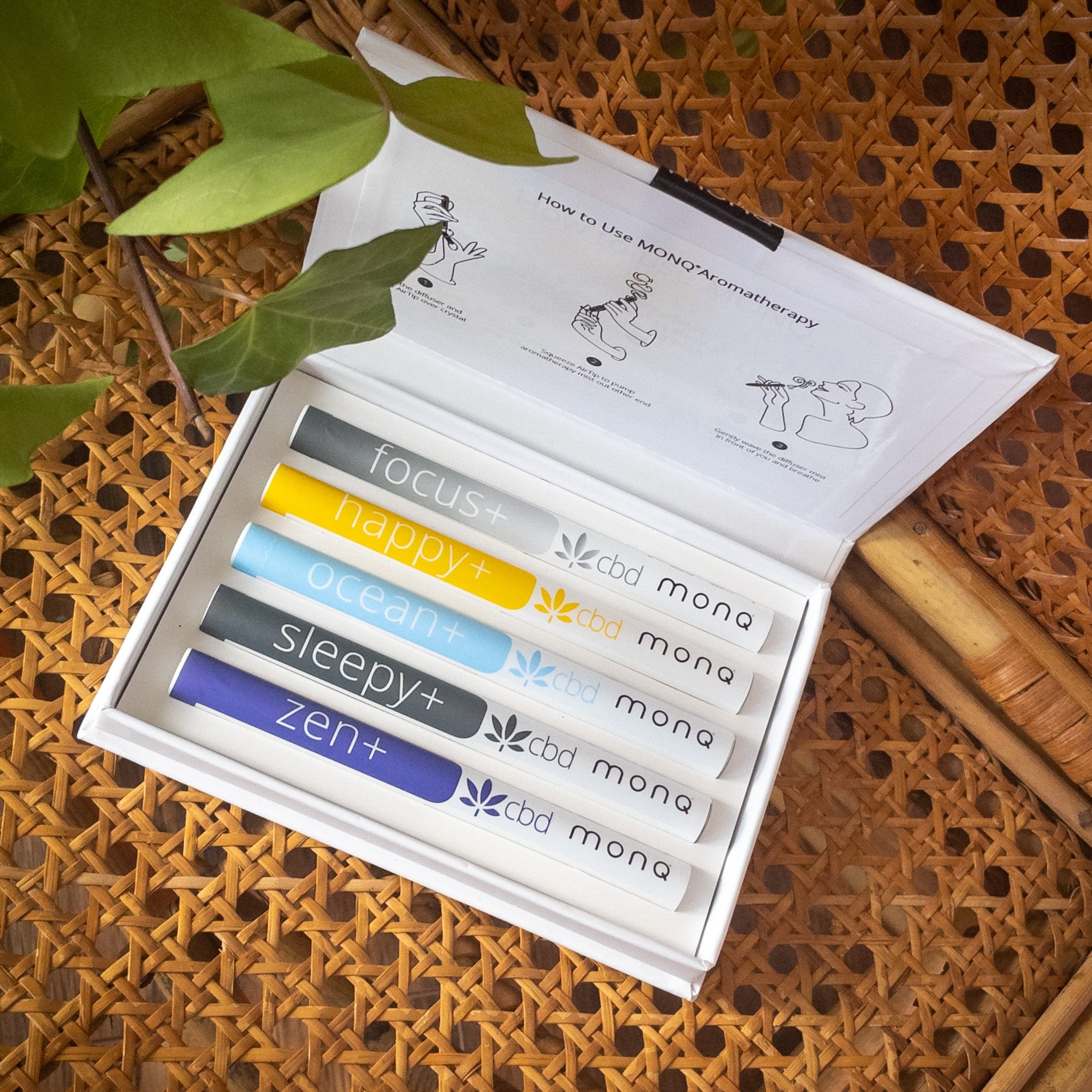
How to use it: Inhale gently through the mouth and exhale through the nose using a targeted sleep support blend built around lavender, chamomile, and bergamot. Two to three breaths before bed is enough.
2. Chamomile - Gentle and Grounding
Chamomile is known for its ability to ease tension and promote a sense of calm. Its primary terpene, bisabolol, has soothing properties that make it a natural choice for pre-sleep aromatherapy. Unlike lavender's sharper floral profile, chamomile is soft and warm - easier for those who find lavender too intense.
How to use it: Add chamomile-rich essential oil to a warm bath, or use a personal aromatherapy diffuser that includes chamomile as a key botanical.
3. Bergamot - Stress Release Before Bed
Bergamot is unusual among sleep-supporting essential oils because it is also gently uplifting. That combination - calming the nervous system while reducing the mental weight of the day - makes it ideal for the transition between wakefulness and sleep. It contains both linalool and limonene, two terpenes associated with stress modulation and mood.
How to use it: Bergamot is one of three key botanicals used to help you relax before bed. Use it as part of an evening breathing ritual - two gentle breaths, exhaled through the nose.
4. Sandalwood - Deep and Quieting
Sandalwood has one of the longest histories in meditative and pre-sleep practices across multiple cultures. Its deep, woody aroma is grounding in a way that lighter florals are not. Alpha-santalol, its primary active compound, is associated with relaxation and nervous system quiet. It is well-suited to those whose minds run fast at night.
How to use it: Use in a personal diffuser or room diffuser as part of your screen-off, lights-low transition ritual.
How to Build a Simple Aromatherapy Sleep Ritual
The most effective aromatherapy practice is a consistent one. A few practical approaches:
- Personal diffuser: To help achieve a deep sleep, deliver lavender, chamomile, and bergamot via the retro-nasal method - inhale through the mouth, exhale through the nose. Two to three breaths. Takes ten seconds.
- Room diffuser: Add a few drops of lavender or chamomile oil to a cold-air diffuser 30 minutes before bed. Creates an ambient scent environment that signals wind-down.
- Bath: Add chamomile or lavender oil to warm water for a combined heat-and-scent relaxation effect.
- Pillow mist: A light spritz of diluted lavender on your pillowcase extends the aromatic signal through the night.
For the complete science behind how aromatherapy interacts with the sleep cycle, see our full guide: Aromatherapy for Sleep: A Wellness Guide.
Go Deeper
Lavender, chamomile, and bergamot each work through distinct olfactory pathways. Our full sleep guide covers the mechanisms, the research, and how to choose the right blend for your sleep disruption type.
Aromatherapy for Sleep: A Wellness Guide →Disclaimer: The above information is provided for general wellness and educational purposes only. Please note that while individual essential oil ingredients may have been shown to exhibit certain independent effects when used alone, the specific blends of ingredients contained in MONQ diffusers have not been tested. No specific claims are being made that use of any MONQ diffusers will lead to any of the effects discussed above. Additionally, please note that MONQ diffusers have not been reviewed or approved by the U.S. Food and Drug Administration. MONQ diffusers are not intended to be used in the diagnosis, cure, mitigation, prevention, or treatment of any disease or medical condition. If you have a health condition or concern, please consult a physician or your alternative health care provider prior to using MONQ diffusers. MONQ blends should not be inhaled into the lungs. Why? It works better that way. No Nicotine Ever. Inhale through the mouth, exhale through the nose. MONQ Diffusers are not intended for individuals under 18, or women who are pregnant or nursing.










Leave a comment