The Effects of Plants on Human Behavior

How Plants and Plant Aromas Shape Human Behavior, Mood, and Cognition
Humans have co-evolved with plants for hundreds of thousands of years. Long before the first cities were built, long before writing or agriculture, our ancestors lived embedded in plant-rich environments - foraging, sheltering beneath trees, breathing air shaped by forests, and navigating a world saturated with botanical aromas. This deep evolutionary relationship has left a lasting imprint on human biology and behavior. Plants do not simply surround us; in many ways, they help regulate us.
Biophilia: The Inborn Bond Between Humans and Nature
The term "biophilia" - coined by biologist E.O. Wilson in 1984 - describes the innate human affinity for the natural world and living systems. Wilson proposed that because humans evolved in natural environments for the vast majority of our species' history, we have developed deep psychological and physiological responses to nature that persist even in modern urban settings.
Research in environmental psychology supports this framework. Studies consistently show that exposure to natural environments - even brief exposure - is associated with reduced physiological markers of stress, improved mood, and enhanced cognitive performance. Hospital patients recovering in rooms with views of trees have been found to require less pain medication and recover more quickly than those in rooms facing walls. Office workers in plant-rich environments report higher levels of concentration and well-being. Children who spend more time in nature show measurably better attention and reduced stress markers.
These effects are not purely psychological - they are physiological. The human nervous system responds to natural environments in measurable ways, shifting from sympathetic (stress-arousal) activation toward parasympathetic (rest-and-restore) states when in contact with plants and natural stimuli.
Phytoncides: The Chemical Language of Forests
One of the most compelling mechanisms by which plants influence human behavior is through the release of phytoncides - volatile organic compounds emitted by trees, grasses, and other plant life. The word comes from the Greek "phyton" (plant) and the Latin "caedere" (to kill), reflecting the original observation that these compounds serve a protective function for plants, deterring insects and inhibiting microbial growth.
For humans, the effects of inhaling phytoncide-rich forest air are now well-documented. The Japanese practice of "Shinrin-yoku" (forest bathing) - simply spending quiet, contemplative time in wooded environments - has been the subject of formal research by the Japanese Forest Therapy Society. Studies measuring participants before and after forest walks have found significant reductions in cortisol, blood pressure, heart rate, and self-reported stress scores. Natural killer (NK) cell activity - a measure of immune function - has also been found to increase after forest bathing sessions.
The primary phytoncides studied include alpha-pinene and beta-pinene (abundant in conifers), limonene (from citrus and many herbs), and linalool (found in lavender, coriander, and many flowering plants). Each of these compounds is also a key constituent of essential oils used in aromatherapy - creating a direct bridge between forest bathing science and the practice of intentional scent use.
The Olfactory System: Plants' Direct Line to the Brain
The mechanism through which plant aromas most directly influence human behavior is the olfactory system - our sense of smell. Of all the human senses, olfaction has the most direct anatomical connection to the limbic brain, the region governing emotion, memory, motivation, and autonomic (involuntary) bodily functions.
When you inhale an aromatic mist or plant fragrance, odor molecules bind to receptor proteins in the olfactory epithelium - a specialized tissue in the upper nasal cavity. The olfactory nerve (cranial nerve I) carries signals from these receptors directly to the olfactory bulb, which projects to the amygdala (emotion processing), hippocampus (memory), hypothalamus (autonomic regulation), and prefrontal cortex (executive function). This pathway bypasses the thalamus - the sensory relay station used by all other senses - which is why scent so often triggers emotion and memory more immediately and powerfully than sight or sound.
This neuroanatomical reality is the scientific basis for aromatherapy. It explains why lavender may support relaxation, why citrus scents are associated with uplift and alertness, and why forest aromas can shift the nervous system toward calm - not through placebo alone, but through direct limbic engagement.
Specific Plants and Their Behavioral Influences
Research on individual plants and their aromatic compounds suggests a nuanced picture of how botanical aromas shape human states:
- Lavender (Linalool-rich): Perhaps the most studied aromatic plant, lavender and its primary compound linalool are associated with reduced autonomic arousal. Studies using EEG (brainwave monitoring) have found increased alpha wave activity - associated with calm, relaxed alertness - following lavender inhalation.
- Rosemary (1,8-cineole-rich): Rosemary aromatherapy has been associated with improved performance on speed and accuracy tasks. Research suggests that inhaling rosemary aroma may support working memory and alertness.
- Citrus (Limonene-rich): Citrus aromatics are consistently associated with positive mood induction. Studies exposing hospital patients to citrus aromatherapy found reduced self-reported distress and improved emotional states.
- Peppermint/Mint (Menthol-rich): Mint aromas are associated with increased alertness, reduced fatigue, and improved exercise performance in some studies. The cooling sensation of menthol has measurable effects on perceived exertion and breathing comfort.
- Frankincense (Incensole acetate-rich): Research has found that frankincense compounds may influence the nervous system in ways associated with emotional warmth, grounding, and reduced arousal. It has been used in ceremonial contexts for thousands of years across multiple cultures - likely because its effects on mood are real and reproducible.
Plants in the Indoor Environment
The influence of plants extends to interior spaces as well. Living plants in indoor environments have been associated with reduced stress, improved air quality perception, and higher cognitive performance. Even the presence of wood-derived materials and natural textures has been found to produce measurable physiological calming effects compared to synthetic environments - a phenomenon studied in the context of biophilic design.
For people living and working primarily indoors - the reality for a growing majority of the global population - bringing intentional botanical elements into daily environments may help bridge the gap between the plant-rich conditions humans evolved in and the built environments we now inhabit.
Aromatherapy as an Intentional Practice
Aromatherapy formalizes what our ancestors practiced instinctively: the use of plant aromas as tools for supporting human wellbeing. By concentrating aromatic compounds from plants into essential oils and delivering them through deliberate inhalation practices, aromatherapy creates a focused, intentional engagement with the plant-human olfactory relationship.
MONQ's personal aromatherapy diffusers are designed around this principle. Each blend combines carefully selected essential oils chosen to support a specific aromatic intention - calm, focus, uplift, or groundedness. The MONQ breathing method (inhale through the mouth, exhale through the nose) ensures the aromatic mist engages the olfactory pathway fully, turning each breath into a mindful, intentional practice.
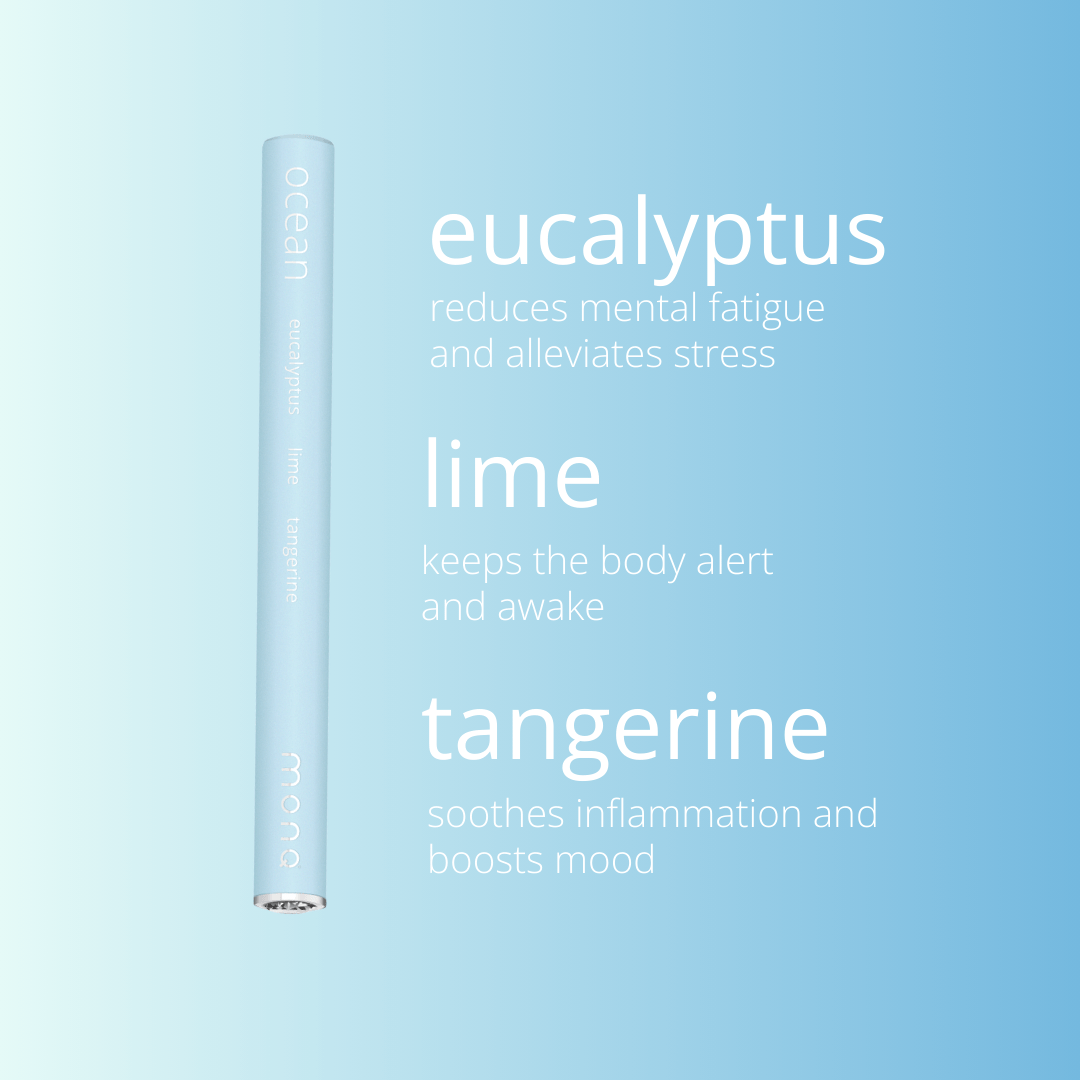
For calm and grounding moments, explore Zen MONQ. For oceanic, expansive experiences that connect to nature's depth, Ocean MONQ draws on marine and botanical essences. To learn more about the science behind how MONQ's blends are formulated, visit our Science Behind MONQ page.
Disclaimer: The above information is provided for general wellness and educational purposes only. Please note that while individual essential oil ingredients may have been shown to exhibit certain independent effects when used alone, the specific blends of ingredients contained in MONQ diffusers have not been tested. No specific claims are being made that use of any MONQ diffusers will lead to any of the effects discussed above. Additionally, please note that MONQ diffusers have not been reviewed or approved by the U.S. Food and Drug Administration. MONQ diffusers are not intended to be used in the diagnosis, cure, mitigation, prevention, or treatment of any disease or medical condition. If you have a health condition or concern, please consult a physician or your alternative health care provider prior to using MONQ diffusers. MONQ blends should not be inhaled into the lungs. Why? It works better that way. No Nicotine Ever. Inhale through the mouth, exhale through the nose. MONQ Diffusers are not intended for individuals under 18, or women who are pregnant or nursing.