Patchouli Essential oil Benefits

What Is Patchouli?
Patchouli essential oil is steam-distilled from the dried and fermented leaves of Pogostemon cablin, a bushy herb in the mint family native to tropical Asia, particularly the Philippines, Indonesia, and India. The plant's leaves must be slightly fermented or dried before distillation to release the full depth of the oil's distinctive earthy, sweet, and musty-rich aroma. Patchouli has been used for millennia across South and Southeast Asia, where it was woven into textile trade, traditional medicine, and spiritual practice long before it became familiar in the West.
Historically, patchouli leaves were packed among Indian and Southeast Asian silks and cashmere shawls exported to Europe to repel insects and moths during long ocean voyages. The scent became so strongly associated with genuine Eastern textiles that European buyers learned to trust a patchouli-scented shawl as a mark of authenticity. In Ayurvedic medicine, patchouli was used to support balance and grounding, and in various Asian and Middle Eastern traditions it appeared in incense, perfumery, and ceremonial contexts. In the 1960s Western counterculture, patchouli became an iconic scent identity - a cultural moment that introduced millions of people to the oil's rich, grounding character.
Today, patchouli remains one of the most important base notes in professional perfumery and aromatherapy. Its remarkable persistence - patchouli actually improves with age, much like fine wood or leather - makes it a staple in formulations where lasting aromatic depth is desired.
The Science Behind Patchouli
Patchouli essential oil is dominated by a group of sesquiterpene alcohols, most notably patchoulol (also called patchouli alcohol), which typically accounts for 25-35% of the oil's composition. Sesquiterpenes are larger, heavier molecules than monoterpenes, which is why patchouli has such excellent fixative properties and why its scent lingers so persistently. Alongside patchoulol, the oil contains alpha-bulnesene, alpha-guaiene, norpatchoulenol, and pogostol - a complex molecular ensemble that gives patchouli its characteristically multi-layered earthy-sweet-woody depth that no single compound could produce on its own.
These sesquiterpene molecules engage the olfactory system's deeper receptor types, many of which are associated with the kind of slow, sustained aromatic experience that supports grounded awareness and a settled emotional state. Research into sesquiterpene aromatics suggests their larger molecular structure creates longer-lasting olfactory engagement, which may explain why patchouli's calming, centering effects feel so enduring compared to lighter citrus or floral botanicals. The signal travels from olfactory receptors to the limbic system, where patchouli's earthiness supports the parasympathetic associations of rest, balance, and ease.
How MONQ Uses Patchouli
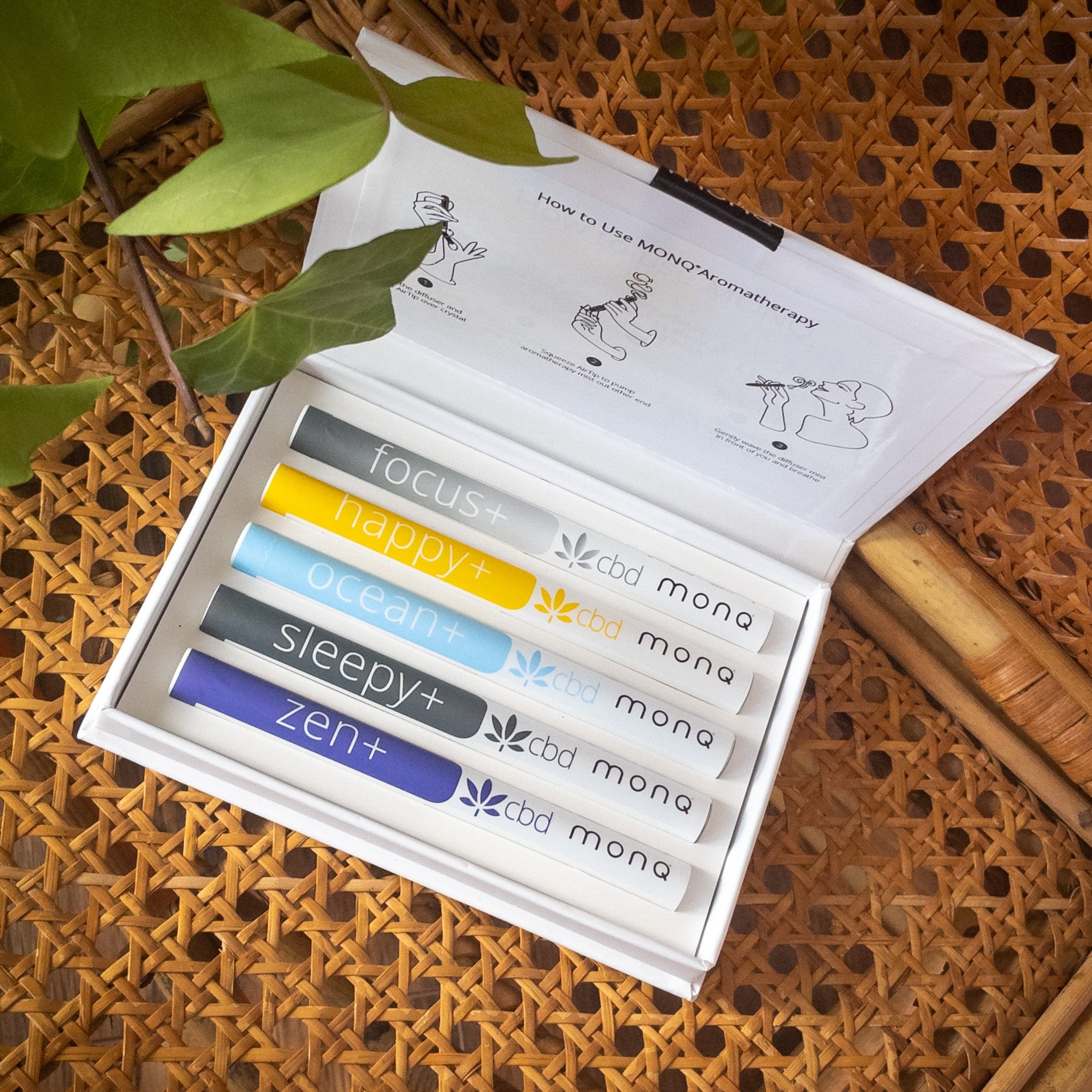
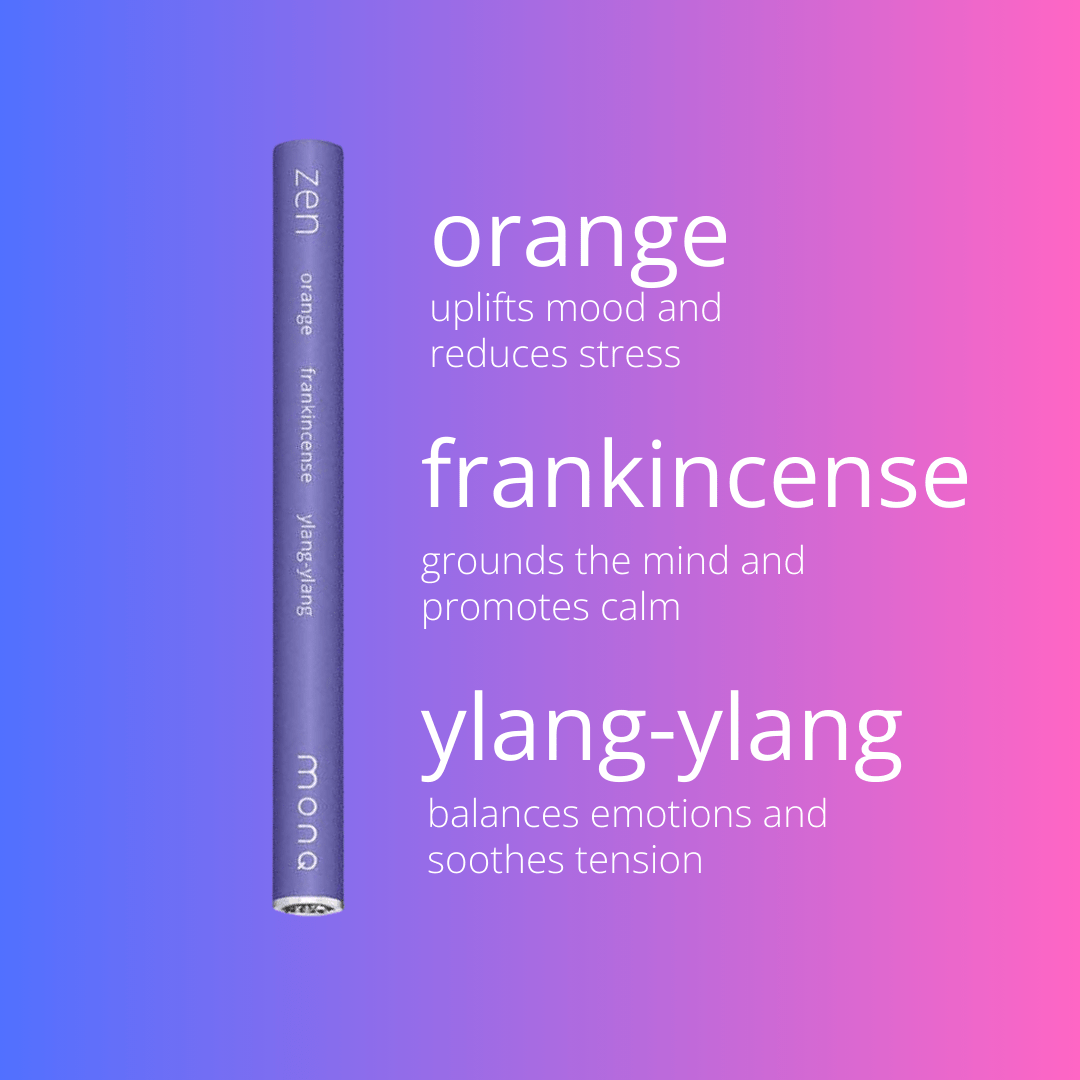
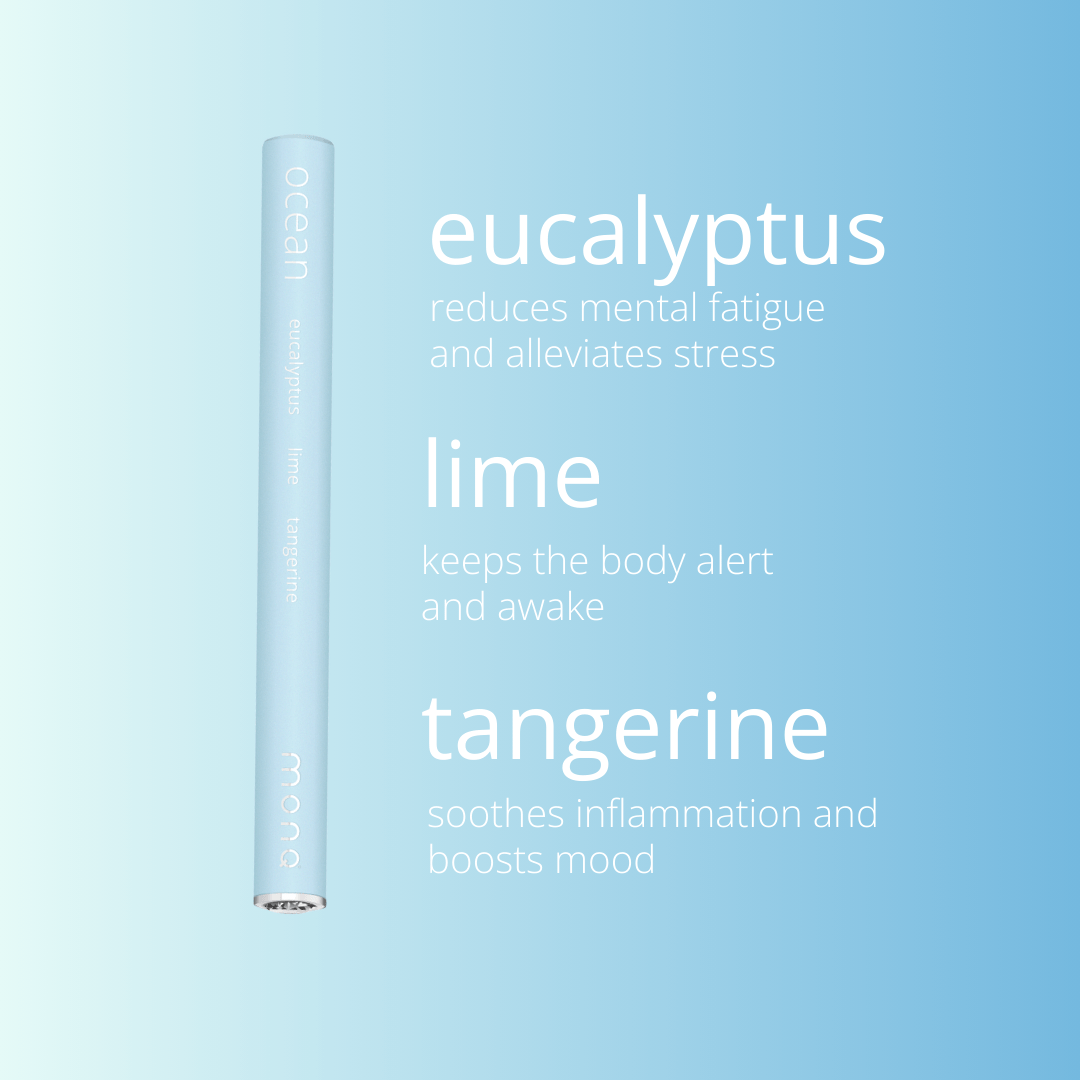
MONQ includes patchouli essential oil in blends where depth, grounding, and lasting aromatic warmth are key qualities. Its role as a base note means it anchors the blend's overall character, preventing lighter top notes from dissipating too quickly and creating a sense of aromatic cohesion that unfolds over time. Blends that contain patchouli benefit from its capacity to carry the aromatic profile into a settled, earthy register that supports moments of quiet focus or intentional rest.
When you exhale through your nose after drawing MONQ's aromatic mist through your mouth, patchouli's sesquiterpene molecules travel the olfactory pathway to engage the brain's limbic centers. The experience is warm, grounded, and distinctly intentional - a botanical breath that carries thousands of years of human relationship with one of the world's most distinctive aromatic plants.
Explore More
Disclaimer: The above information is provided for general wellness and educational purposes only. Please note that while individual essential oil ingredients may have been shown to exhibit certain independent effects when used alone, the specific blends of ingredients contained in MONQ diffusers have not been tested. No specific claims are being made that use of any MONQ diffusers will lead to any of the effects discussed above. Additionally, please note that MONQ diffusers have not been reviewed or approved by the U.S. Food and Drug Administration. MONQ diffusers are not intended to be used in the diagnosis, cure, mitigation, prevention, or treatment of any disease or medical condition. If you have a health condition or concern, please consult a physician or your alternative health care provider prior to using MONQ diffusers. MONQ blends should not be inhaled into the lungs. Why? It works better that way. No Nicotine Ever. Inhale through the mouth, exhale through the nose. MONQ Diffusers are not intended for individuals under 18, or women who are pregnant or nursing.