Vanillin
There is a reason that the scent of vanilla is so universally associated with warmth, comfort, and safety. It is one of the most emotionally resonant aromas in the human experience - present in childhood memories, baked goods, and cozy spaces. At the center of that familiar warmth is vanillin, the primary aromatic compound responsible for vanilla's characteristic scent.
Vanillin has an important role in aromatherapy and botanical wellness that extends far beyond its culinary associations. Understanding what vanillin is, where it comes from, and how it works in aromatic compositions helps explain why it appears in so many beloved wellness blends - including several from MONQ.
What Is Vanillin?
Vanillin is an aromatic aldehyde with the chemical formula C8H8O3. It is the primary component of the essential oil extracted from the vanilla bean, the seed pod of Vanilla planifolia, an orchid native to Mexico and Central America. Vanillin is what gives real vanilla its distinctive sweet, warm, slightly woody, and subtly creamy scent profile.
In the classification system used in aromatherapy and perfumery, vanillin is often categorized as a "base note" aromatic compound. Base notes are the slowest to evaporate and typically the longest-lasting in a blend. They provide depth, warmth, and persistence - the qualities that give a fragrance composition its staying power and its memorable character.
In terms of its aromatic family, vanillin sits within the "oriental" or "gourmand" fragrance category - warm, slightly sweet, comforting scents that feel intimate and grounding rather than bright or sharp. This places it in interesting contrast with the more volatile top notes (like citrus or mint) that make an immediate first impression but fade quickly.
Where Does Vanillin Come From?
Natural vanillin comes primarily from the cured seed pods of the vanilla orchid. Vanilla cultivation is famously labor-intensive: the flowers must typically be hand-pollinated, the pods take many months to mature, and the curing process that develops the aromatic compounds takes additional weeks. This is why natural vanilla has historically been one of the most expensive spices and aromatic ingredients in the world.
Vanillin also occurs naturally in a number of other plant sources. It is present in small amounts in certain wood resins, including some varieties of balsam. It develops during the aging of wine in oak barrels, where enzymatic processes convert precursor compounds in the wood into vanillin. It is found in trace amounts in foods like oats, bran, and certain fruits.
In addition to these natural sources, vanillin can be derived from other botanical precursors - most notably from the lignin found in wood pulp. This has made vanillin one of the most extensively synthesized aromatic compounds in the flavor and fragrance industry. In aromatherapy contexts, the distinction between naturally derived and synthetically produced vanillin is significant, as practitioners generally prefer botanically sourced ingredients.
The Scent Profile: Why Vanillin Feels So Comforting
Vanillin's scent profile is warm, sweet, and gently creamy - with a woody, slightly smoky depth that prevents it from reading as purely sweet. It is a remarkably complex aroma despite being associated with such a simple, comforting concept as vanilla.
From a psychological and neurological perspective, vanillin is one of the most consistently comfort-associated aromas studied in olfactory research. Many people have strong positive emotional associations with vanilla-adjacent scents from early childhood - warm kitchens, baking, cozy domestic environments. This means vanillin in a wellness context carries an unusually powerful capacity to create feelings of ease, warmth, and being at home.
In aromatic blending, vanillin performs several important functions. As a base note, it extends the longevity of an entire composition. It softens sharper, more angular aromatic elements - taking the edge off citrus top notes or calming the brightness of floral ingredients. And it adds a quality of richness and depth that makes a blend feel complete and rounded rather than thin or one-dimensional.
Vanillin in Aromatherapy: Comfort, Calm, and Emotional Ease
In traditional aromatherapy practice, vanilla and vanillin-containing botanicals are most commonly associated with emotional comfort, stress relief, and support for restful states. The warmth and sweetness of vanillin's scent profile makes it particularly useful in blends designed for unwinding and releasing the tension of the day.
Practitioners often describe blends containing vanillin as "wrapping" - an apt metaphor for the way vanillin seems to create a sense of aromatic warmth around the other ingredients. Where sharper aromatics can feel invigorating or clarifying (qualities better suited to focus or morning routines), vanillin-anchored blends tend to feel nourishing and settling.
This makes vanillin-rich blends particularly well-suited for evening wellness rituals, winding-down routines, and any context where the goal is to ease the nervous system rather than activate it. It also pairs exceptionally well with other comforting botanicals like sandalwood, patchouli, or warm spice notes like clove and cardamom.
How MONQ Uses Vanillin
MONQ incorporates vanillin in blends specifically designed to evoke warmth, comfort, and emotional ease.
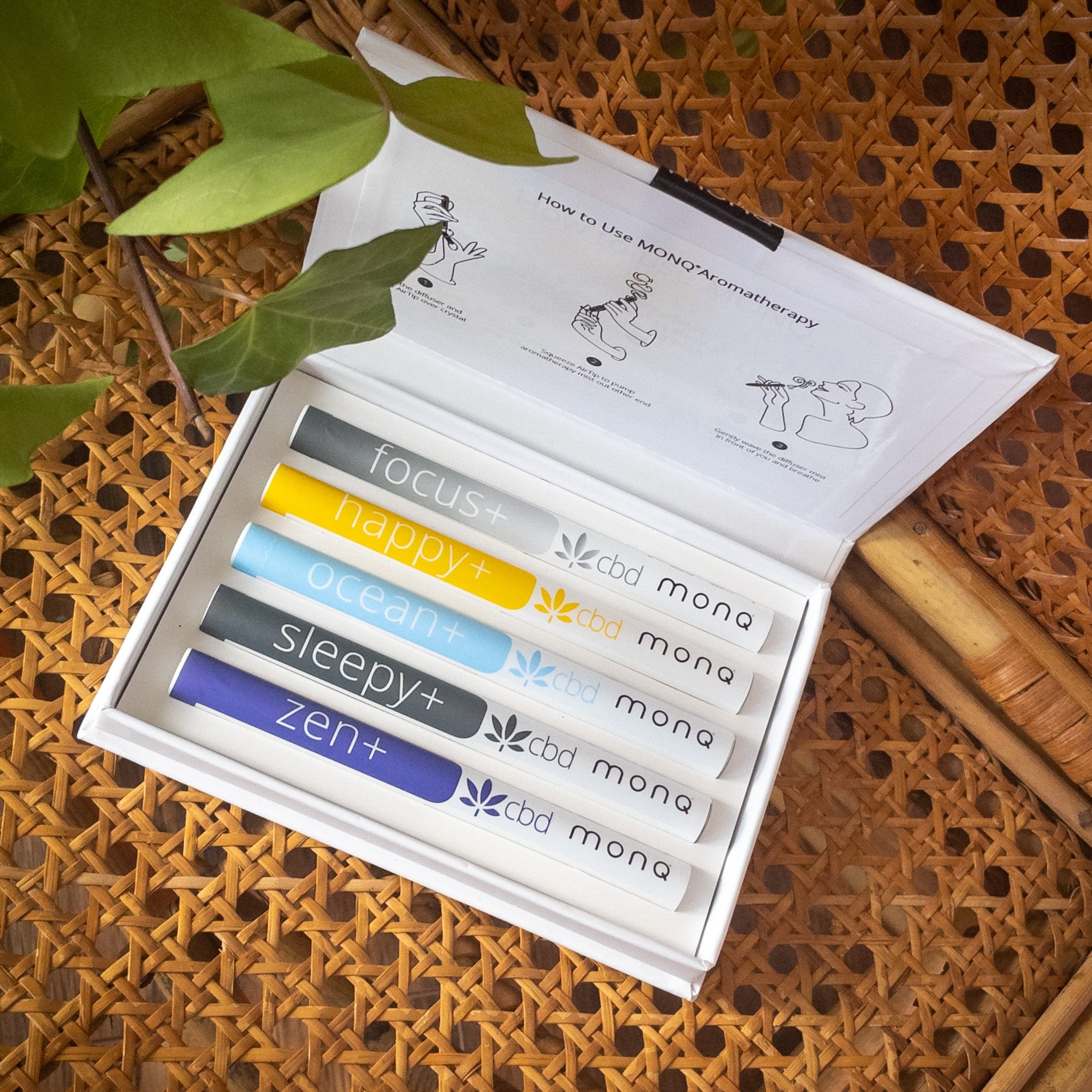
The Happy MONQ blend uses vanillin as a key supporting note, where it works alongside bright citrus and floral ingredients to create a warm, uplifting aromatic experience. The vanillin adds the depth and warmth that keeps Happy from feeling lightweight or fleeting - it is the ingredient that makes the blend feel genuinely joyful rather than simply bright.
The Relieve MONQ blend uses vanillin's comforting, enveloping quality to support its overall theme of ease and release. After a long day or an intense workout, the warmth of vanillin in the Relieve blend contributes to that sense of the body finally being allowed to soften and let go.
The Art of Base Note Aromatics
Understanding vanillin also means understanding the role of base notes in aromatic composition more broadly. A well-constructed aromatherapy blend functions a bit like a piece of music - there are high notes that make an immediate impression, middle notes that carry the melodic body of the composition, and bass notes that provide foundation and resonance.
Vanillin is one of the most reliable and versatile base note ingredients available to aromatherapists. It contributes warmth without heaviness, sweetness without cloying excess, and persistence without overwhelming any of the other aromatic elements it accompanies. These qualities are why vanillin appears in so many beloved fragrance and wellness compositions across so many different traditions and approaches.
Incorporating Warmth Into Your Wellness Practice
If you have not yet explored the role that warming, comforting base note aromatics play in a holistic wellness routine, vanillin-forward blends are an excellent place to start. The effect is immediate, recognizable, and for most people deeply pleasant - there is very little barrier to experiencing why vanillin has been so consistently valued across cultures and throughout history.
Try Happy MONQ for a warm, uplifting blend where vanillin plays a supporting role alongside bright botanical notes. Or explore Relieve MONQ for an experience where vanillin's comforting depth takes center stage in a blend designed for genuine ease and release.
The warmth of vanillin is ancient, familiar, and universally welcoming. There is a reason that the smell of vanilla has been making humans feel at home for millennia.
Disclaimer: The above information is provided for general wellness and educational purposes only. Please note that while individual essential oil ingredients may have been shown to exhibit certain independent effects when used alone, the specific blends of ingredients contained in MONQ diffusers have not been tested. No specific claims are being made that use of any MONQ diffusers will lead to any of the effects discussed above. Additionally, please note that MONQ diffusers have not been reviewed or approved by the U.S. Food and Drug Administration. MONQ diffusers are not intended to be used in the diagnosis, cure, mitigation, prevention, or treatment of any disease or medical condition. If you have a health condition or concern, please consult a physician or your alternative health care provider prior to using MONQ diffusers. MONQ blends should not be inhaled into the lungs. Why? It works better that way. No Nicotine Ever. Inhale through the mouth, exhale through the nose. MONQ Diffusers are not intended for individuals under 18, or women who are pregnant or nursing.