

Creating a Sleep Sanctuary: Scent, Ritual, and Rest
There's a reason we talk about "going to bed" rather than "going to sleep." The bed, the bedroom, the ritual of preparing for rest - these environmental and behavioral elements matter enormously for sleep quality. Sleep isn't just a biological process that happens when you're tired enough. It's a state that your environment, your habits, and your senses work together to invite.
Creating a true sleep sanctuary - a space and a ritual that reliably supports deep, restorative rest - is one of the highest-leverage investments you can make in your own well-being. Scent, as it turns out, is one of the most powerful and underused tools in this project.
The Psychology of the Sleep Environment
Your bedroom should be, in the language of behavioral sleep medicine, a stimulus-controlled environment. This means it should be strongly and exclusively associated with sleep - not work, not stimulation, not screen time, not socializing. Every time you use your bedroom for something other than sleep, you weaken the brain's association between that space and rest.
This principle, sometimes called sleep restriction or stimulus control therapy, is a core component of cognitive behavioral approaches to sleep. The brain learns from repeated associations. When the bedroom environment - its visual cues, sounds, temperature, and scents - consistently precedes sleep, those cues become part of the neural trigger that initiates the physiological transition to rest.
Why Scent Is Uniquely Powerful
Of all the sensory cues you might use to mark your bedroom as a sleep sanctuary, scent has a particular neurological advantage. Olfactory signals bypass the thalamus - the brain's sensory relay station - and connect directly to the limbic system, including the amygdala (emotional processing) and hippocampus (memory formation). This is why scent triggers memories and emotional states more powerfully and immediately than almost any other sense.
A scent associated with a particular place, ritual, or emotional state can trigger that association rapidly and reliably. When you've consistently used the same sleep scent in your bedroom over weeks and months, simply encountering that scent may begin to cue the brain toward rest - even before you've done anything else.
Choosing Your Sleep Scent
For sleep sanctuary work, choose a scent profile that you use only at bedtime. This exclusivity is important - using your sleep scent at other times of day dilutes the association.
Essential oils with traditional associations with rest and calm that are commonly used for sleep sanctuary purposes include:
- Lavender: The most established sleep aromatherapy botanical. Floral, herbaceous, grounding.
- Chamomile: Sweet, gentle, particularly supportive for mental restlessness and tension.
- Bergamot: Uniquely calming despite being a citrus oil; helps clear emotional burden without activating.
- Cedarwood: Warm, woody, deeply comforting. Often used for the grounding phase of a sleep ritual.
- Vetiver: Earthy, smoky, powerfully settling. Best for those who feel scattered or mentally agitated at bedtime.
- Sandalwood: Soft, creamy, associated with stillness and inner quiet across many traditions.
Many people find that a blend works better than a single oil - the complexity and roundedness of a well-formulated blend can be more effective than any single component alone. The lavender-chamomile-bergamot trio found in Sleepy MONQ is a classic example of this layered approach: lavender grounds, chamomile soothes, bergamot clears.
Building the Physical Sanctuary
Scent works best as part of a fully optimized sleep environment. The physical elements:
- Temperature: Most sleep researchers point to a cool room (roughly 65-68 degrees F) as optimal. Your core body temperature naturally drops as you transition to sleep; a cool environment supports this process.
- Darkness: Complete or near-complete darkness supports melatonin production. Blackout curtains or a quality sleep mask can make a meaningful difference, especially in urban environments or during summer months.
- Sound: Silence or consistent background noise (white noise, pink noise, gentle nature sounds) tends to outperform variable noise. The brain is alert to changes in the sound environment - consistent sound reduces this vigilance.
- Comfort: A supportive mattress, appropriate pillow loft for your sleep position, and comfortable temperature-regulating bedding reduce the physical restlessness that disrupts sleep.
The Ritual: Sequence Matters
A sleep sanctuary isn't just a space - it's a set of repeated behaviors that prepare the nervous system for rest. The sequence of your pre-sleep ritual is itself a signal. When you repeat the same sequence in the same order night after night, the brain learns to read that sequence as a prediction of what's coming: sleep.
A simple, effective sleep ritual might look like this:
- 60 minutes before bed: dim all lights in the home, set the thermostat
- 50 minutes: introduce your sleep scent (start your diffuser, or take 2-3 breaths from your personal aromatherapy diffuser)
- 45 minutes: warm shower or bath, gentle stretching
- 30 minutes: reading (physical book preferred), light journaling
- 15 minutes: write down tomorrow's first task, set your intention for morning
- 0 minutes: lights out, slow breathing, body scan from feet to head
Portable Sanctuary: Taking Your Ritual Anywhere
One of the practical challenges of building a sleep ritual is maintaining it when you're away from home. Hotel rooms have different temperatures, different sounds, different smells. Business travel, visiting family, or even a single night in an unfamiliar environment can disrupt sleep patterns.
This is where the portability of personal aromatherapy becomes particularly valuable. Your scent cue is entirely portable. Bringing your sleep scent with you - especially in a compact, easy-to-travel-with format - means your most powerful sleep cue travels everywhere you do.
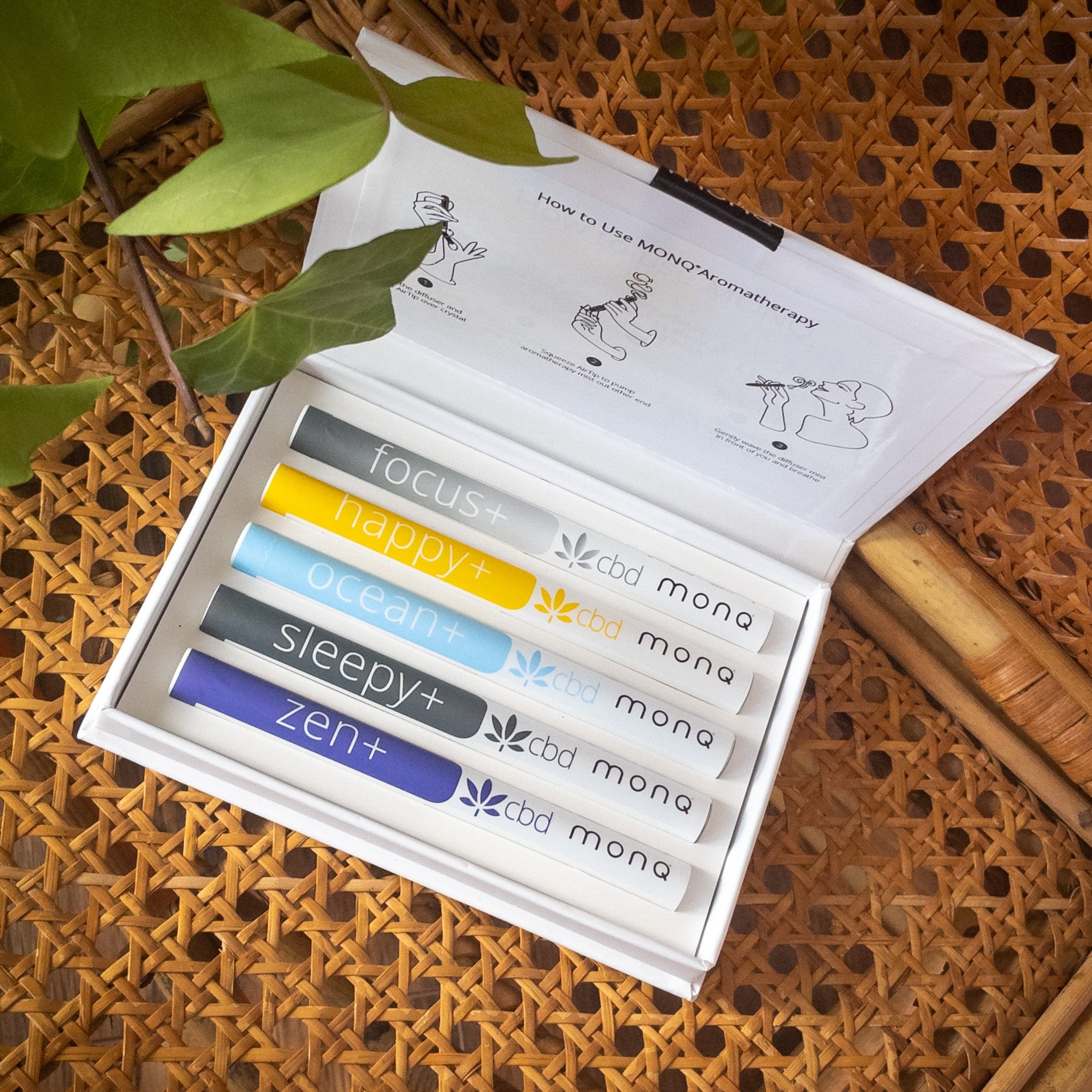
Sleepy MONQ, a pocket-sized personal aromatherapy diffuser containing lavender, chamomile, and bergamot, is specifically designed for this kind of portable ritual use. Inhale through the mouth, exhale through the nose for 2-3 breaths as part of your pre-sleep sequence - the same blend, the same action, the same cue, whether you're in your own bed or a hotel room in another city.
The Long Game
Building a genuine sleep sanctuary - in both the physical and ritualistic sense - is not an overnight project. The associations that make a ritual powerful take time to develop. Give yourself 4-6 weeks of consistent practice before evaluating results. The investment is worth it: a deeply conditioned sleep ritual can become one of the most reliable tools in your well-being toolkit, available to you every night for the rest of your life.
For evidence-based guidance on sleep environment optimization and behavioral sleep approaches, the National Sleep Foundation is an excellent resource.
Want to go deeper?
Explore the full science behind aromatherapy and sleep in our comprehensive guide: Aromatherapy for Sleep: A Wellness Guide →
Disclaimer: The above information is provided for general wellness and educational purposes only. Please note that while individual essential oil ingredients may have been shown to exhibit certain independent effects when used alone, the specific blends of ingredients contained in MONQ diffusers have not been tested. No specific claims are being made that use of any MONQ diffusers will lead to any of the effects discussed above. Additionally, please note that MONQ diffusers have not been reviewed or approved by the U.S. Food and Drug Administration. MONQ diffusers are not intended to be used in the diagnosis, cure, mitigation, prevention, or treatment of any disease or medical condition. If you have a health condition or concern, please consult a physician or your alternative health care provider prior to using MONQ diffusers. MONQ blends should not be inhaled into the lungs. Why? It works better that way. No Nicotine Ever. Inhale through the mouth, exhale through the nose. MONQ Diffusers are not intended for individuals under 18, or women who are pregnant or nursing.










Leave a comment