

The Science of Scent and Sleep: How Aromatherapy Works at Night
We often think of sleep as something we fall into passively - a consequence of tiredness rather than a state we can actively support. But the path from wakefulness to rest involves a cascade of biological signals, and scent can participate in that cascade in ways that few other inputs can match.
The Olfactory System: A Direct Line to the Brain
Your nose is the only sense organ with a direct anatomical connection to the limbic system - the brain region that governs emotion, memory, and internal regulation. Every other sense passes through the thalamus first. Scent takes a shortcut.
When you inhale an aromatic molecule, it binds to olfactory receptors in the nasal cavity. These receptors send signals directly to the olfactory bulb, which connects immediately to the amygdala and hippocampus - two structures deeply involved in emotional processing and memory formation. This is why scent can trigger a powerful emotional response seemingly from nowhere. The circuit is short, direct, and largely pre-conscious.
From Scent to the Relaxation Response
When calming aromatic compounds reach the limbic system, the amygdala - which plays a central role in processing the stress response - receives input that may quiet alarm signals. The hypothalamus, which governs the autonomic nervous system, also receives olfactory input. Shifting toward parasympathetic dominance is precisely what needs to happen for the body to prepare for sleep.
Research published on PubMed has explored how certain essential oil components, including linalool from lavender, may interact with GABA receptors involved in the calming process, potentially supporting reduced neural excitability and a calmer internal state.
Linalool: The Chemistry of Lavender's Calm
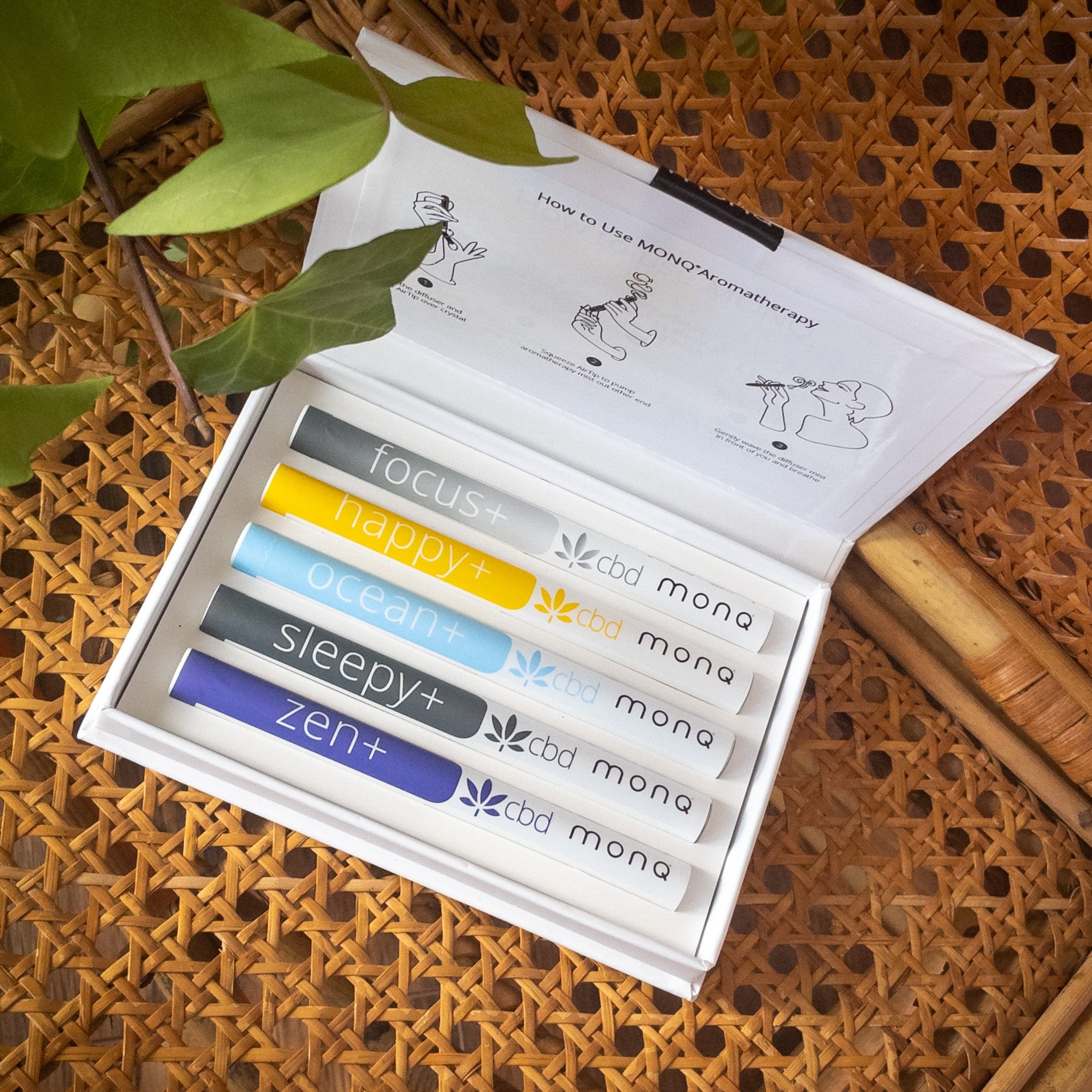
Linalool is the primary active compound in lavender essential oil, and it's also present in bergamot - part of why both oils appear in MONQ's Sleepy blend. When linalool molecules are inhaled and reach the olfactory mucosa, they trigger a cascade that has been measured in multiple research settings.
This doesn't mean a breath of lavender is a sedative. It means lavender may create conditions in which the body's own relaxation processes can proceed more easily. Aromatherapy is a supporting input to your nervous system, not an override of it.
The Role of Chamomile and Bergamot
Chamomile essential oil contains compounds including bisabolol and chamazulene that have been traditionally associated with calming effects. Some research suggests chamomile may complement linalool's effects through slightly different pathways, creating a layered effect in a blended formula.
Bergamot contributes its own linalool content alongside linalyl acetate. The combination of bergamot's bright citrus top notes with lavender's floral depth and chamomile's warmth creates a scent profile that is both pleasant and functionally layered - each component supporting the transition to rest.
Why Retronasal Olfaction Matters
Most people think of smelling as something you do by sniffing through the nose. But there's a second olfactory pathway called retronasal olfaction: aromatic molecules that travel from the back of the mouth, up through the nasopharynx, and into the nasal cavity from behind. This is the pathway that Sleepy MONQ is specifically designed to engage.
When you inhale gently through the mouth and exhale through the nose, aromatic molecules travel the retronasal route, engaging the olfactory system richly and directly. Rather than the diluted, ambient exposure from a room diffuser, this approach delivers a more focused aromatic signal to the olfactory epithelium - a brief, intentional breath that may produce a stronger limbic signal than passive diffusion alone.
Scent Memory and Ritual Conditioning
Because scent is processed directly through the hippocampus, olfactory memories are exceptionally strong and durable. When you pair a specific scent with the act of winding down, night after night, you're building a conditioned association. The scent becomes a trigger. Over time, encountering that scent signals to your brain and body that rest is approaching, and the physiological preparations for sleep can begin earlier in the evening.
This conditioning effect is cumulative. Week three works better than week one, because the neural association has had time to strengthen. Using the same blend consistently - whether through Sleepy MONQ at the nightstand or a room diffuser - accelerates the conditioning effect. The Sleep Foundation notes that consistent pre-bed routines are among the most reliable behavioral approaches to supporting sleep quality.
The Takeaway
Aromatherapy for better rest isn't pseudoscience. It's olfactory neuroscience applied practically. Scent accesses the limbic system directly, bypasses rational resistance, and may begin the physiological shift toward calm before you've taken any other step. Pair that with consistent ritual use, and you're building one of the most efficient behavioral cues available for supporting sleep quality. Start with lavender. Use it consistently. Pay attention to what shifts.
Want to go deeper?
Explore the full science behind aromatherapy and sleep in our comprehensive guide: Aromatherapy for Sleep: A Wellness Guide →
Disclaimer: The above information is provided for general wellness and educational purposes only. Please note that while individual essential oil ingredients may have been shown to exhibit certain independent effects when used alone, the specific blends of ingredients contained in MONQ diffusers have not been tested. No specific claims are being made that use of any MONQ diffusers will lead to any of the effects discussed above. Additionally, please note that MONQ diffusers have not been reviewed or approved by the U.S. Food and Drug Administration. MONQ diffusers are not intended to be used in the diagnosis, cure, mitigation, prevention, or treatment of any disease or medical condition. If you have a health condition or concern, please consult a physician or your alternative health care provider prior to using MONQ diffusers. MONQ blends should not be inhaled into the lungs. Why? It works better that way. No Nicotine Ever. Inhale through the mouth, exhale through the nose. MONQ Diffusers are not intended for individuals under 18, or women who are pregnant or nursing.










Leave a comment