

5 Calming Essential Oils for Restless Nights
Some nights, rest just doesn't come easily. The body is tired but the mind hasn't gotten the message. Or you lie down and a low hum of tension makes the whole idea of settling feel out of reach.
Essential oils can't solve what keeps you awake - but they can create conditions that make it easier for your nervous system to downshift. Here are five of the most effective calming botanicals, what makes each distinctive, and how to use them when the nights get restless.
1. Lavender (Lavandula angustifolia)
Lavender is the most widely used and most studied essential oil for relaxation and sleep support. Its primary active compound, linalool, interacts with the nervous system in ways that may support a calming effect. Lavender's scent is fresh, floral, and slightly herbal - clean rather than heavy.
Why it works for restless nights: Research published on PubMed suggests lavender may reduce the physiological markers of tension and support slower, deeper breathing - both prerequisites for restful sleep.
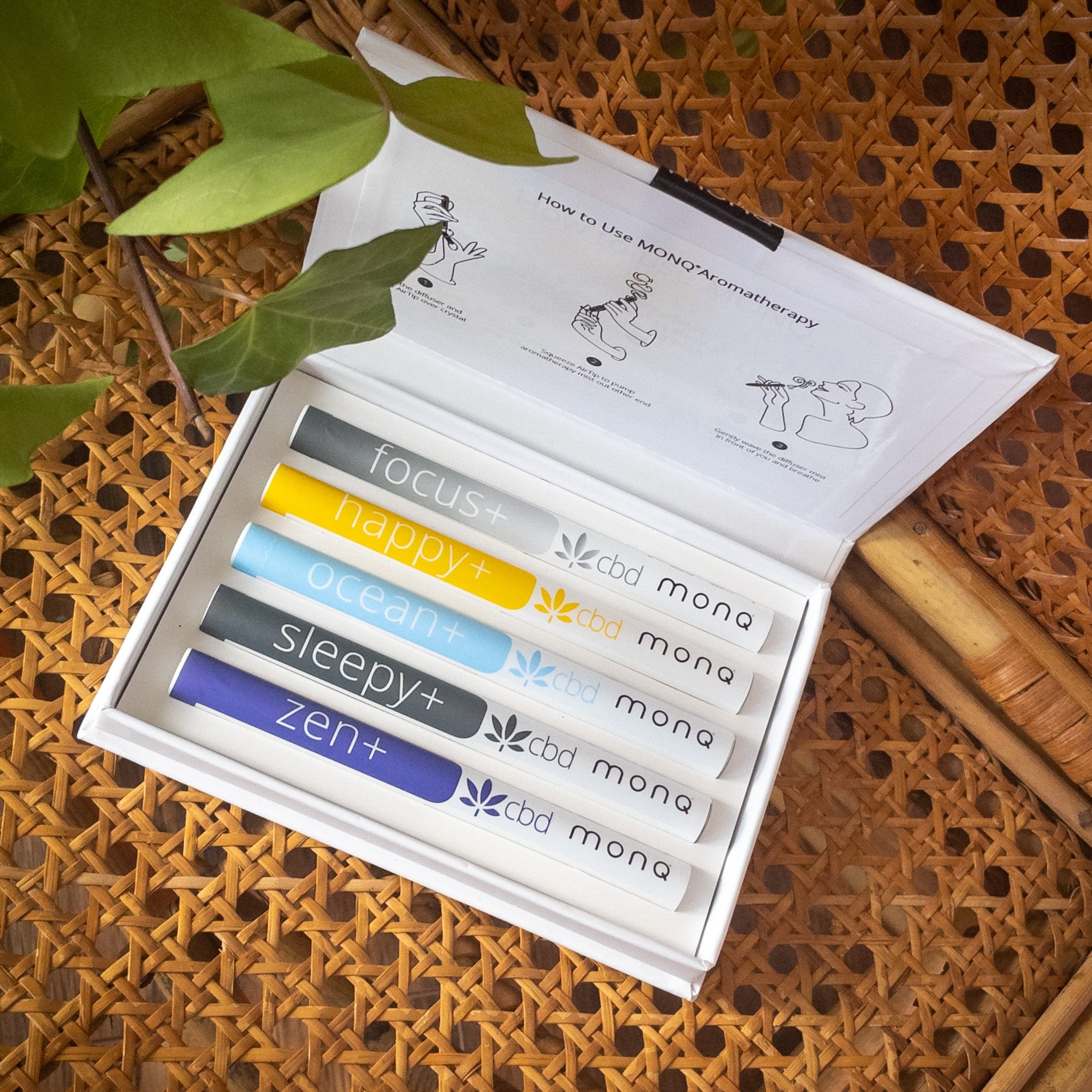
How to use it: Add 5 drops to a room diffuser 30 minutes before bed. Sleepy MONQ contains lavender as a core ingredient - two to three gentle breaths through the personal diffuser (mouth in, nose out) delivers the aromatic signal directly to your olfactory system.
2. Roman Chamomile (Chamaemelum nobile)
Roman chamomile is gentler in scent than lavender - warm, slightly sweet, apple-like. It's been used in traditional herbal practice for centuries as a calming botanical, carrying that same quieting quality in concentrated form.
Why it works for restless nights: Chamomile is particularly well-suited for tension-driven restlessness - the kind that comes from a demanding day that you can't quite put down. For those who find lavender alone feels too fresh, chamomile provides a warmer counterpoint.
How to use it: Blend with lavender in a room diffuser (3 drops lavender, 2 drops chamomile). Chamomile is also in MONQ's Sleepy blend alongside lavender and bergamot - the combination creates a layered calming effect that addresses multiple dimensions of restlessness.
3. Vetiver (Vetiveria zizanoides)
Vetiver is the essential oil that experienced aromatherapy practitioners reach for when the mind simply won't stop. Distilled from the roots of a tropical grass, its scent is deep, earthy, smoky, and intensely grounding - like dark soil and aged wood.
Why it works for restless nights: Where lavender and chamomile work through lighter top-note calming, vetiver grounds from beneath. It's particularly useful for the racing-mind pattern - the late-night review of everything that happened and everything still pending. Vetiver tends to anchor attention in the present moment.
How to use it: Use sparingly - 1-2 drops in a room diffuser alongside lavender is enough. Vetiver is potent and heavy; too much dominates the space. It also blends well with cedarwood for a deeply earthy nighttime atmosphere.
4. Sandalwood (Santalum album or Santalum spicatum)
Sandalwood is warm, creamy, softly woody - one of the most universally pleasing essential oils. True sandalwood has been used in meditation and contemplative practice across cultures for millennia. Its chemistry includes santalol, a sesquiterpene that has been studied for potential calming effects.
Why it works for restless nights: Sandalwood creates a sense of warmth and containment without heaviness. It's the right choice for people who find lavender's floral quality overly sweet, or vetiver too intensely earthy. Sandalwood is approachable, pleasant, and consistently associated with calm in both traditional practice and contemporary research.
How to use it: Diffuse 3-4 drops alone or blend with a drop of lavender. A very small amount applied to the wrists can also provide a gentle ambient scent as you fall asleep.
5. Bergamot (Citrus bergamia)
Bergamot surprises people who expect it to be energizing like other citrus oils. While it has a bright, fresh quality - the distinctive note of Earl Grey tea - bergamot also contains significant linalool that gives it a grounding, calming edge. It's uniquely positioned to lift the heaviness of a difficult day without stimulating.
Why it works for restless nights: Bergamot is particularly useful for the emotional component of restlessness - the tension that comes from stress or residual difficulty from the day. The Sleep Foundation notes that relaxation is one of the key preconditions for good sleep quality, and bergamot may support the emotional release that makes genuine relaxation possible.
How to use it: Bergamot is a top note - it evaporates faster than vetiver or sandalwood. Add it near the beginning of your diffusing window. You'll also find bergamot in Sleepy MONQ alongside lavender and chamomile - three of these five oils, already blended and balanced.
Putting It Together
Simple blends for restless nights:
- Classic Wind-Down: 3 drops lavender + 2 drops chamomile + 1 drop bergamot
- Deep Ground: 2 drops lavender + 2 drops cedarwood + 1 drop vetiver
Or, for the simplest approach, Sleepy MONQ combines lavender, chamomile, and bergamot in a ready-to-use personal diffuser. Inhale gently through the mouth, exhale through the nose, and let the botanicals do their work.
Want to go deeper?
Explore the full science behind aromatherapy and sleep in our comprehensive guide: Aromatherapy for Sleep: A Wellness Guide →
Disclaimer: The above information is provided for general wellness and educational purposes only. Please note that while individual essential oil ingredients may have been shown to exhibit certain independent effects when used alone, the specific blends of ingredients contained in MONQ diffusers have not been tested. No specific claims are being made that use of any MONQ diffusers will lead to any of the effects discussed above. Additionally, please note that MONQ diffusers have not been reviewed or approved by the U.S. Food and Drug Administration. MONQ diffusers are not intended to be used in the diagnosis, cure, mitigation, prevention, or treatment of any disease or medical condition. If you have a health condition or concern, please consult a physician or your alternative health care provider prior to using MONQ diffusers. MONQ blends should not be inhaled into the lungs. Why? It works better that way. No Nicotine Ever. Inhale through the mouth, exhale through the nose. MONQ Diffusers are not intended for individuals under 18, or women who are pregnant or nursing.











Leave a comment