

How to Build a Relaxing Bedtime Aromatherapy Ritual
There's a significant difference between falling into bed exhausted and intentionally transitioning into rest. The first is reactive - your body finally gives out. The second is something you build: a sequence of small acts that tell your nervous system, reliably and clearly, that the day is done.
Aromatherapy is one of the most effective tools for this transition, precisely because scent bypasses rational thought. You don't have to convince yourself to relax when a familiar calming scent is present - the association does the work for you.
Step 1: Set a Hard Stop Time
Establish a hard stop time - the point at which the day's tasks officially end. Pick a time 45-60 minutes before you want to be asleep. During this window: no new tasks, no email, no planning. Just wind-down activities. The consistency matters more than the specific time. Your nervous system is a pattern-recognition machine. It learns from repetition, not intention.
Step 2: Dim the Environment
Bright overhead lighting in the evening tells your brain it's still daytime. Dimming lights - or switching to warm lamps - begins to allow the natural shift toward rest. A slightly cooler bedroom temperature also supports the body's natural temperature drop that accompanies deep rest.
Step 3: Separate From Screens
The screen challenge isn't just about blue light. Screens are designed to generate engagement, which is the opposite of the disengagement you need before sleep. Put the phone in another room if possible. This single change - physical distance from the phone during the transition window - may be the highest-leverage step in this entire ritual.
Step 4: Begin Your Aromatherapy Sequence
Start your aromatherapy the moment you begin your transition window - not at the last moment before sleep, but at the beginning of the wind-down. If you use a room diffuser, load it with your chosen blend (lavender and cedarwood work beautifully together) and start diffusing when you enter the transition window.
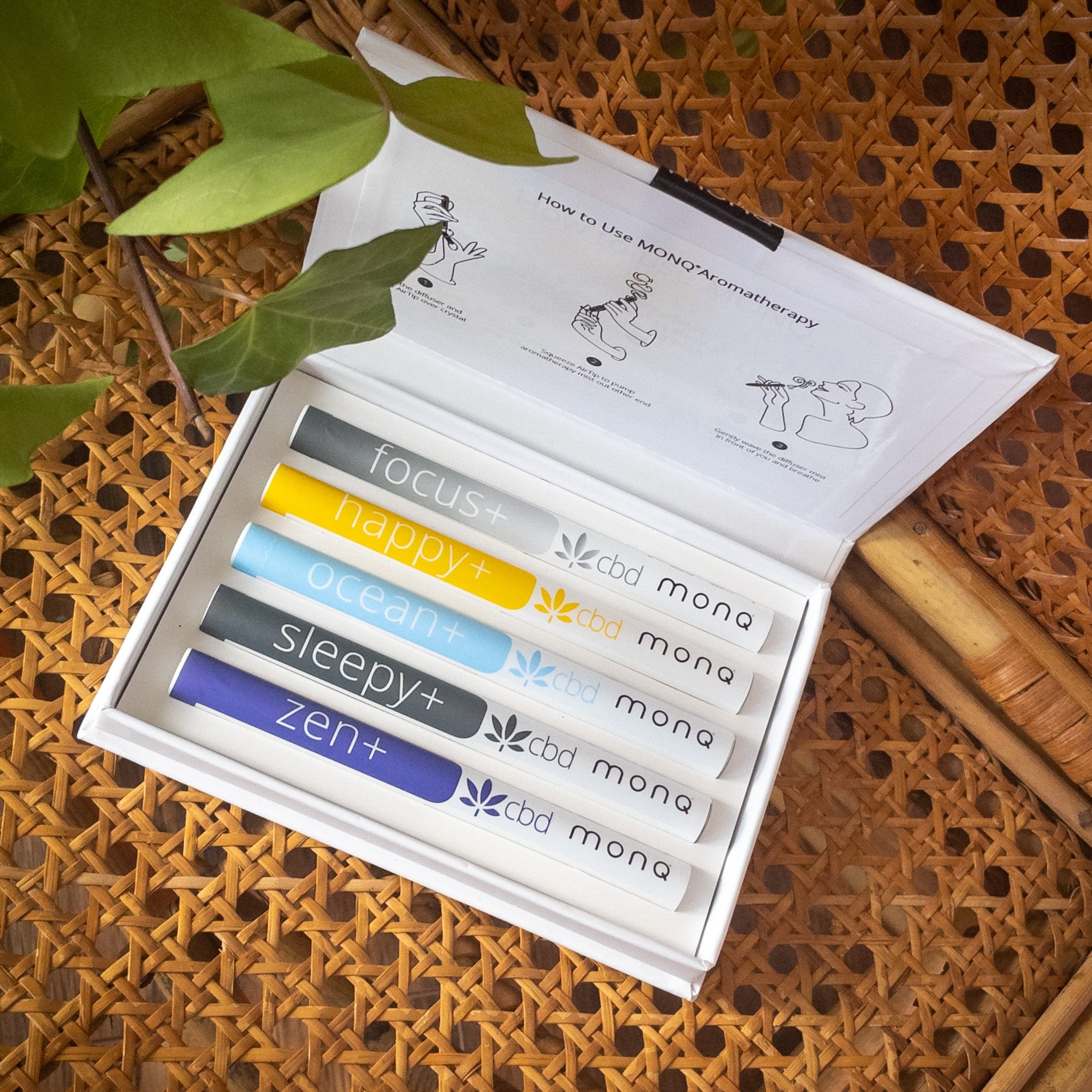
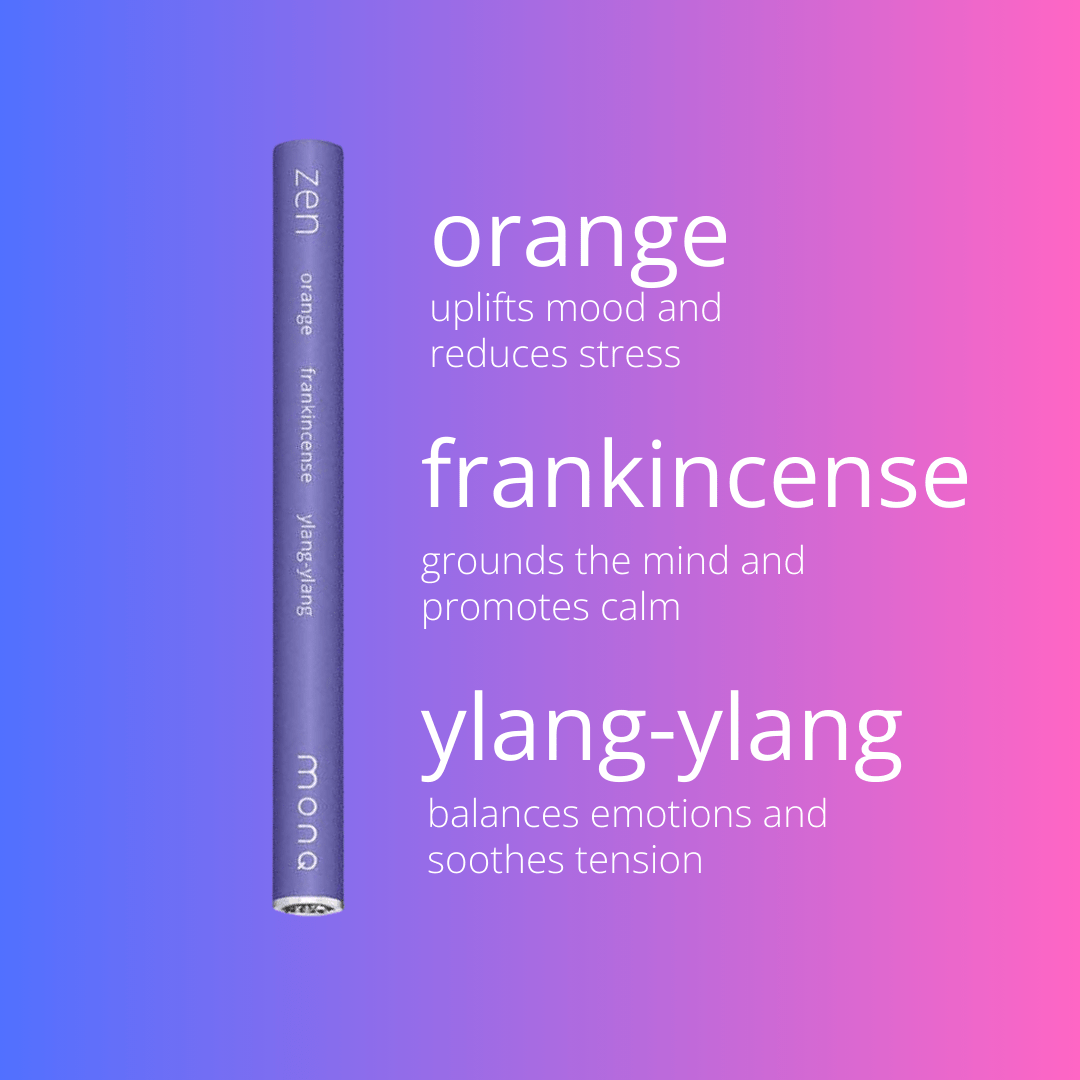
If you prefer a more intentional aromatherapy moment, Sleepy MONQ offers a portable personal diffuser designed specifically for this purpose. A few slow, intentional breaths - mouth in, nose out - with the blend of lavender, chamomile, and bergamot creates a distinct sensory moment that your nervous system will begin to associate with the transition to rest. It takes up no space on your nightstand and works equally well at home or while traveling.
Step 5: Choose a Transition Activity
The activity should be genuinely low-stimulation and absorbing enough to occupy the part of your brain that tends to spin.
- Reading physical books (not tablets - the weight and texture of a real book is part of the signal)
- Gentle stretching or slow yoga
- Journaling - specifically writing tomorrow's task list to externalize it from your mind
- A warm bath or shower (the temperature drop afterward supports rest)
- Low-key conversation with a partner
Step 6: The Final Breath Before Sleep
Build one last intentional moment into the ritual: a brief aromatherapy breath at the moment you're in bed and ready to sleep. This could be a final inhalation from your MONQ diffuser, or simply taking a moment to breathe in the ambient scent in the room. This caps the sequence. Over time, this final breath becomes a reliable signal to your body: the ritual is complete, it's safe to let go.
Why the Ritual Compounds Over Time
The power of a bedtime ritual isn't in any single element - it's in the consistency of the sequence. Scent is uniquely powerful because olfactory memory is extraordinarily durable. A scent you've paired consistently with rest can trigger the relaxation response within seconds of encountering it. The Sleep Foundation notes that consistent pre-bed routines are among the most reliable behavioral supports for good sleep quality. MONQ's Sleepy blend can be a valuable sensory anchor within that routine. Build the ritual. Use it every night. Let the scent do its work.
Want to go deeper?
Explore the full science behind aromatherapy and sleep in our comprehensive guide: Aromatherapy for Sleep: A Wellness Guide →
Disclaimer: The above information is provided for general wellness and educational purposes only. Please note that while individual essential oil ingredients may have been shown to exhibit certain independent effects when used alone, the specific blends of ingredients contained in MONQ diffusers have not been tested. No specific claims are being made that use of any MONQ diffusers will lead to any of the effects discussed above. Additionally, please note that MONQ diffusers have not been reviewed or approved by the U.S. Food and Drug Administration. MONQ diffusers are not intended to be used in the diagnosis, cure, mitigation, prevention, or treatment of any disease or medical condition. If you have a health condition or concern, please consult a physician or your alternative health care provider prior to using MONQ diffusers. MONQ blends should not be inhaled into the lungs. Why? It works better that way. No Nicotine Ever. Inhale through the mouth, exhale through the nose. MONQ Diffusers are not intended for individuals under 18, or women who are pregnant or nursing.










Leave a comment