

How Aromatherapy Can Support Your Bedtime Routine
A consistent bedtime routine is one of the most reliable tools for improving sleep quality. Sleep researchers and behavioral health professionals consistently point to pre-sleep rituals as a powerful way to train the brain to transition from wakefulness to rest - a process sometimes called sleep onset conditioning.
Aromatherapy, when used regularly as part of this routine, can become one of the most effective cues in that conditioning process. Here's how to build a bedtime routine that uses scent strategically to support deeper, more restorative rest.
Why Routines Work: The Science of Sleep Cues
Your brain is a pattern-recognition machine. When you repeat the same sequence of behaviors at the same time each evening, the brain begins to anticipate what comes next. Over time, even the first step in the sequence - whether that's dimming the lights, brushing your teeth, or catching the first note of a calming scent - begins to trigger the downstream states associated with sleep.
This is why bedtime routines are recommended for children and adults alike. The content of the routine matters less than its consistency. Aromatherapy is particularly well-suited to this role because scent is processed directly by the limbic system - the emotional and memory center of the brain - making it a powerful and fast-acting cue.
Step 1: Start with Light
About 60 to 90 minutes before your target bedtime, begin dimming the lights in your home. Bright overhead lighting signals daytime to your brain and suppresses melatonin production. Shift to lamps, warm-toned bulbs, or candlelight. Put your phone face-down or switch to night mode.
This isn't just a nice idea - light is the single most powerful external regulator of your circadian rhythm. Beginning the light-dimming process early gives your brain a clear signal that the day is winding down.
Step 2: Introduce Your Scent
Once the lights are dimmed, introduce your chosen aromatherapy. This is the anchor point of your routine - the sensory cue that your brain will begin to associate most strongly with sleep.
Options include:
- Starting your bedroom diffuser with a sleep blend (lavender, chamomile, vetiver, cedarwood)
- Using a few drops of essential oil on a personal inhaler or cloth
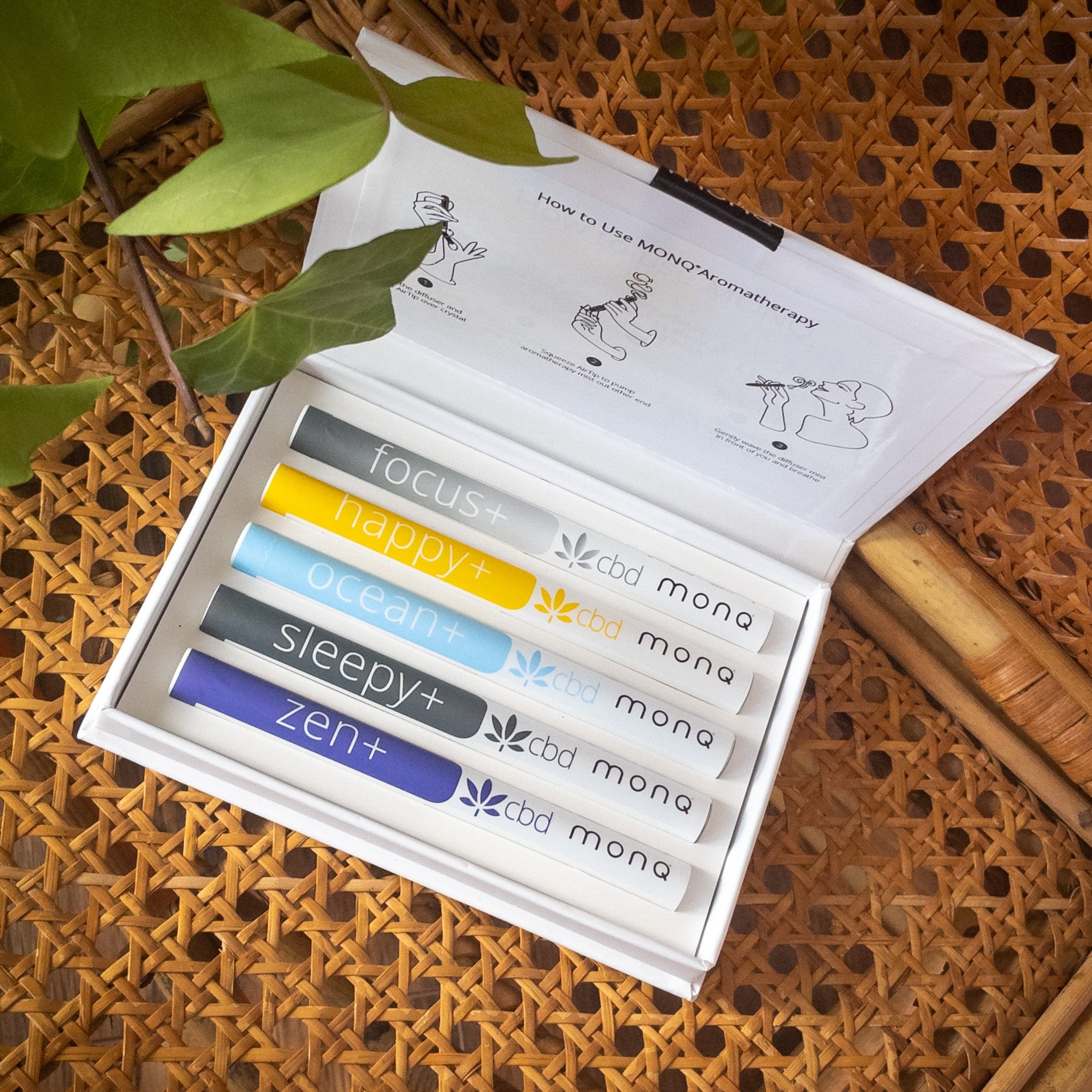
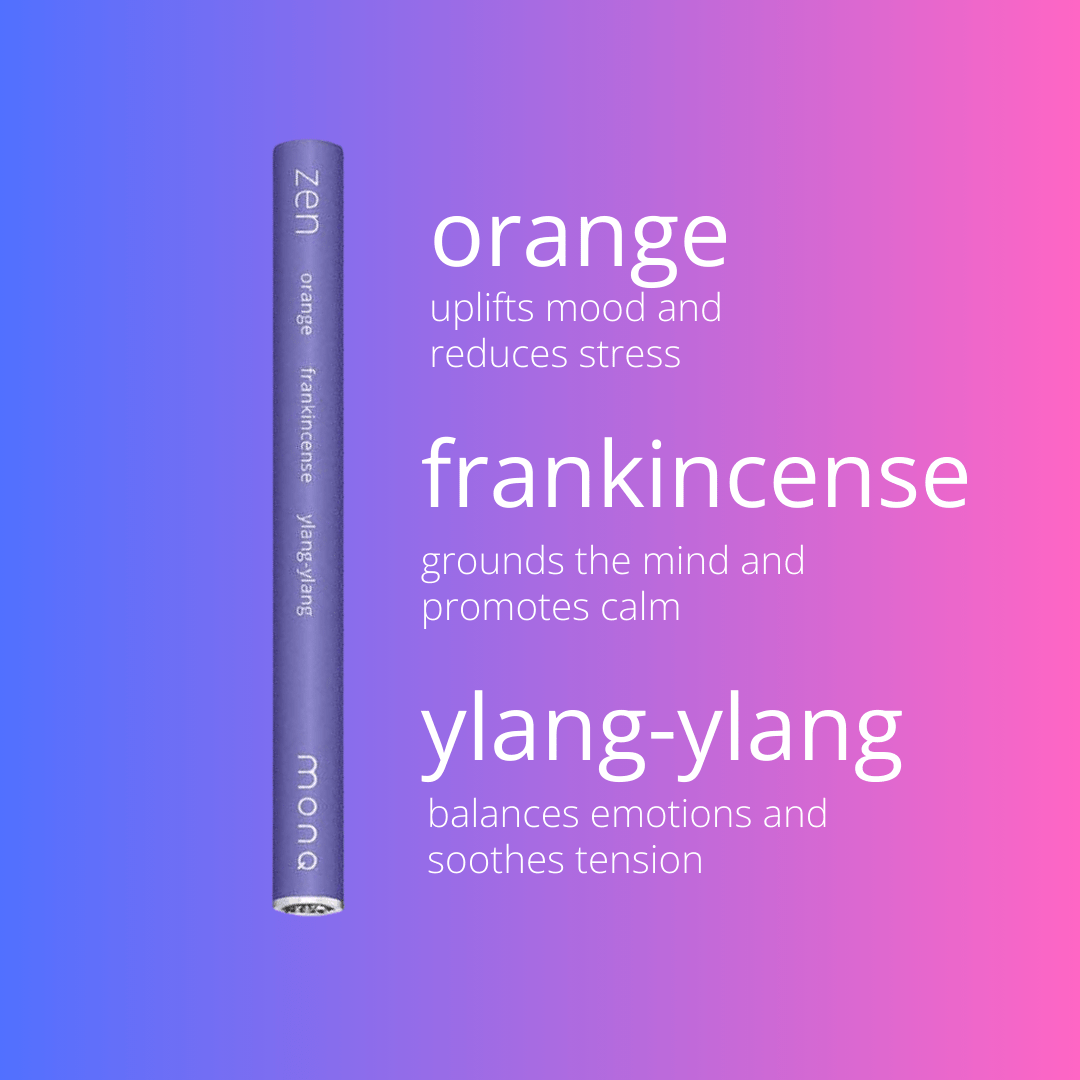
- Using a portable option like Sleepy MONQ - a pocket-sized personal aromatherapy diffuser containing lavender, chamomile, and bergamot. Inhale through the mouth, exhale through the nose for 2-3 breaths. Simple, consistent, portable.
The important thing is to use the same scent profile in the same context every night. Variation reduces the conditioning effect.
Step 3: Wind Down Your Body
Use the next 30-45 minutes for low-stimulation activities that support physical relaxation. Some options:
- A warm bath or shower (the drop in body temperature afterward promotes sleepiness)
- Gentle stretching or restorative yoga poses
- Reading a physical book (not a screen)
- Journaling - getting thoughts out of your head and onto paper
- Light conversation or calm music
Avoid exercise, emotionally activating content (news, social media, intense shows), stressful conversations, or work tasks during this window.
Step 4: Wind Down Your Mind
Many people find the mental wind-down harder than the physical one. A restless mind is one of the most common complaints among people who struggle with sleep. A few practices that many people find helpful:
- The brain dump: Write down everything that's on your mind, including tomorrow's tasks, worries, and unfinished thoughts. This offloads working memory and reduces rumination.
- Gratitude journaling: Shifting attention toward appreciation may support a more positive, settled state of mind.
- Breathwork: Simple slow breathing (inhale for 4 counts, exhale for 6-8 counts) activates the parasympathetic nervous system. Pair this with your aromatherapy for a compound effect.
- Body scan: Lying in bed, bring attention slowly through each part of the body from feet to head, consciously releasing tension.
Step 5: Create Your Sleep Environment
Your bedroom itself should be optimized as a sleep environment. Key factors:
- Temperature: Cool rooms (around 65-68 degrees F) are associated with better sleep quality
- Darkness: Blackout curtains or a sleep mask if needed
- Sound: White noise, nature sounds, or complete silence
- Scent: If using a passive diffuser, run it on a timer so it shuts off after an hour or two
A Sample 60-Minute Routine
- T-60 min: Dim lights throughout the home, put screens away
- T-50 min: Begin aromatherapy (diffuser on, or 2-3 breaths with Sleepy MONQ)
- T-45 min: Warm shower or bath
- T-30 min: Gentle stretching or reading
- T-15 min: Brain dump journal, tomorrow's intentions
- T-0: Lights out, slow breathing, body scan
The Payoff: Consistency Over Time
The full benefit of this kind of routine typically takes 2-4 weeks of consistent practice to develop. Don't expect dramatic results in the first few days. What you're doing is building a neurological association between these behaviors and the state of sleep. The longer and more consistently you practice, the stronger that association becomes - and the easier sleep will come.
For more on sleep hygiene and evidence-based approaches to rest, the National Sleep Foundation offers extensive resources.
Want to go deeper?
Explore the full science behind aromatherapy and sleep in our comprehensive guide: Aromatherapy for Sleep: A Wellness Guide →
Disclaimer: The above information is provided for general wellness and educational purposes only. Please note that while individual essential oil ingredients may have been shown to exhibit certain independent effects when used alone, the specific blends of ingredients contained in MONQ diffusers have not been tested. No specific claims are being made that use of any MONQ diffusers will lead to any of the effects discussed above. Additionally, please note that MONQ diffusers have not been reviewed or approved by the U.S. Food and Drug Administration. MONQ diffusers are not intended to be used in the diagnosis, cure, mitigation, prevention, or treatment of any disease or medical condition. If you have a health condition or concern, please consult a physician or your alternative health care provider prior to using MONQ diffusers. MONQ blends should not be inhaled into the lungs. Why? It works better that way. No Nicotine Ever. Inhale through the mouth, exhale through the nose. MONQ Diffusers are not intended for individuals under 18, or women who are pregnant or nursing.










Leave a comment